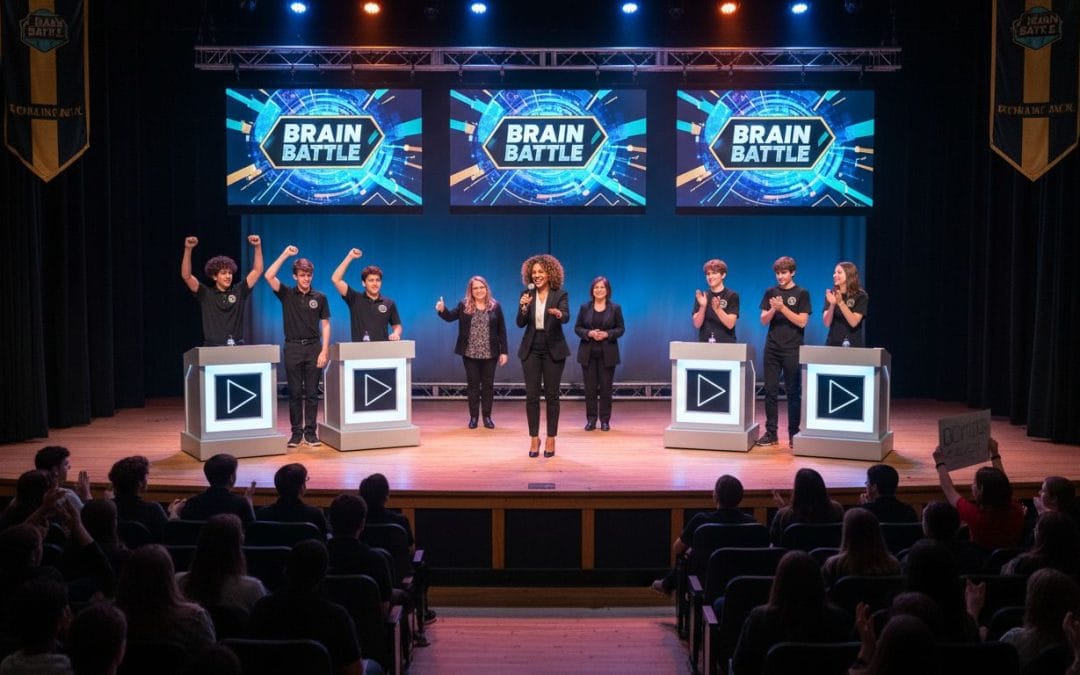
Over 80 percent of students say they remember assemblies that felt interactive and fun. Turning a routine school assembly into a high-energy game show can spark excitement and boost engagement for everyone in the room. By focusing on your goals, understanding your audience, and picking formats that truly resonate, you can create an assembly experience that makes students eagerly anticipate the next one.
Quick Summary
| Key Point | Explanation |
|---|---|
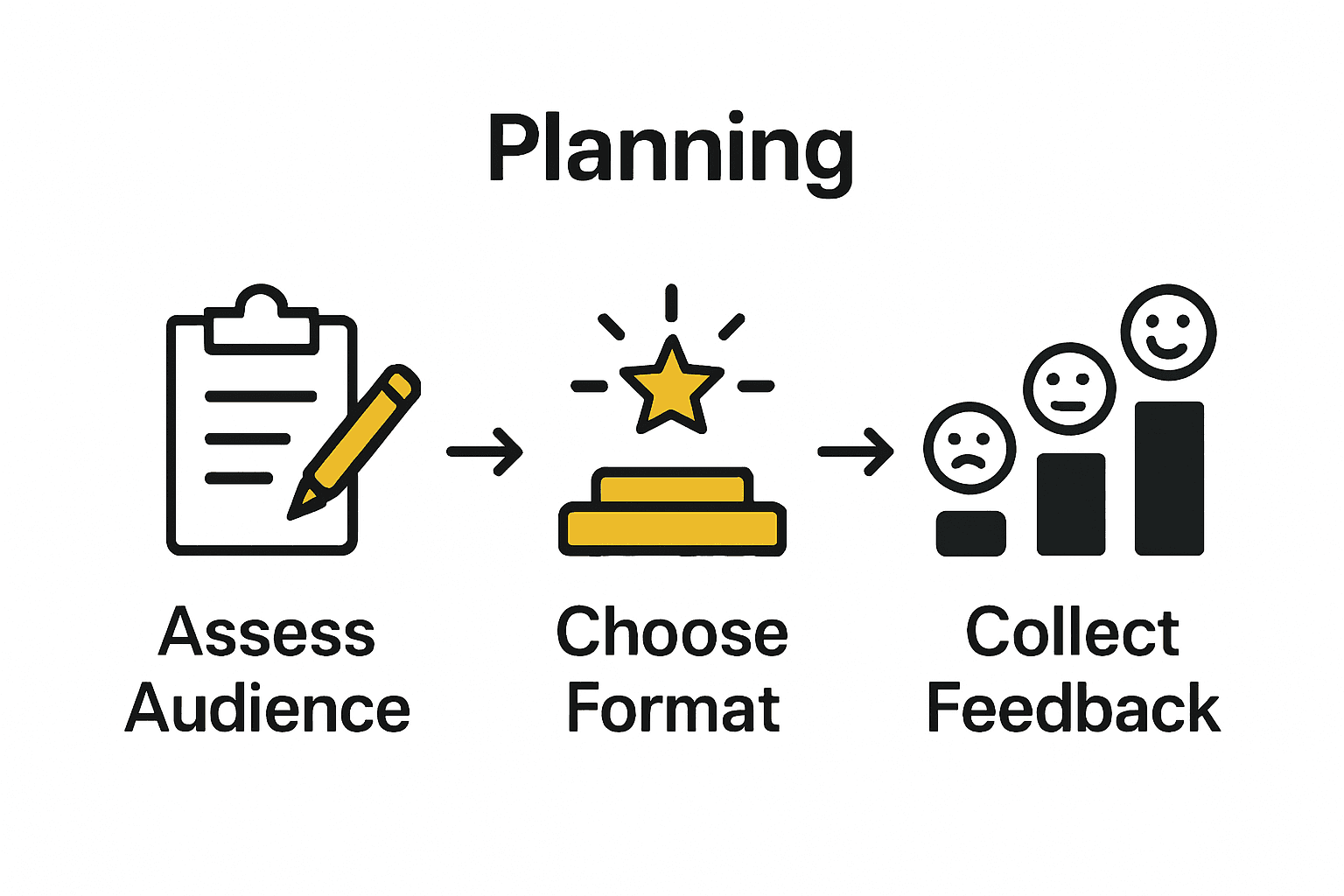
| 1. Assess audience goals and needs | Understand your audience’s age, interests, and learning styles to tailor your assembly effectively. |
| 2. Choose engaging game-show formats | Incorporate interactive formats that align with educational goals to captivate and retain student interest. |
| 3. Design age-appropriate challenges | Create questions that suit different age groups, ensuring they are stimulating without being overwhelming. |
| 4. Plan logistics meticulously | Ensure all equipment and space are ready, and have backup plans to address any potential issues seamlessly. |
| 5. Gather feedback to improve | Collect both quantitative and qualitative feedback to evaluate the assembly’s impact and enhance future events. |
 |
|
Step 1: Assess your assembly goals and audience
Transforming a campus assembly into an electrifying game show experience starts with strategic goal setting and audience understanding. According to the National Student Support Accelerator, aligning assembly objectives with community stakeholders’ priorities ensures your event will be both measurable and motivating.
Begin by conducting a comprehensive audience assessment. The Institute of Education Sciences recommends identifying your target audience by carefully considering their specific needs and potential engagement with the assembly content. For a game show style assembly, this means understanding student age groups, interests, attention spans, and learning preferences. Are you working with elementary school children who love interactive experiences? Or high school students who appreciate more sophisticated challenges? How about college students, getting them engaged in interaction with others?
To nail your assessment, create a quick survey or conduct brief interviews with student representatives, teachers, and professors. Ask questions about preferred entertainment styles, what makes learning fun for them, and what topics they find most engaging. This research will help you design a game show format that feels tailored and exciting rather than generic.
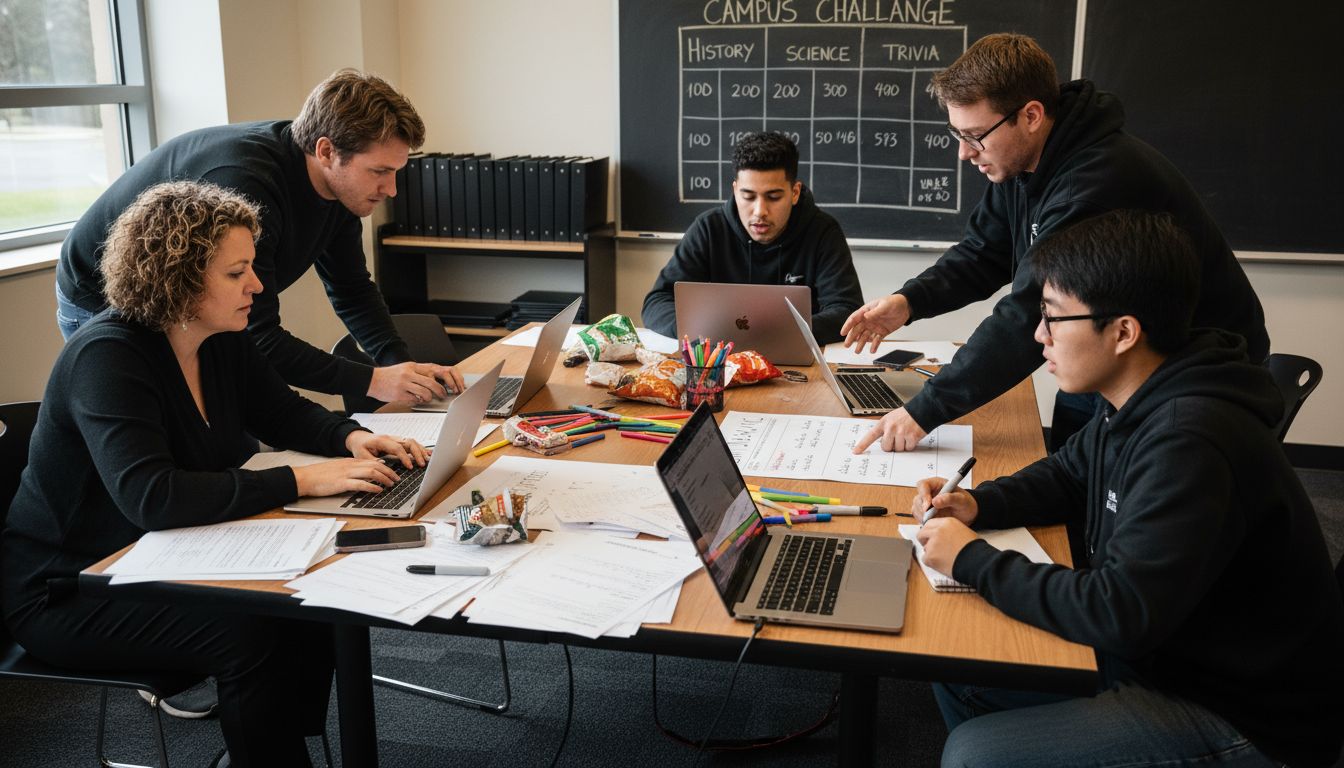 Your goal is to transform a traditional assembly into an unforgettable learning experience that students will actually look forward to attending.
Pro Tip: Always leave room for flexibility in your planning. The best game show assemblies have a structured framework but can adapt based on real time audience energy and participation. Your ultimate objective is creating an interactive learning environment that feels more like entertainment than instruction.
Step 2: Select the right game-show format and themes
Selecting the perfect game-show format and theme is your key to creating an unforgettable assembly experience. The National Science Teaching Association highlights the critical importance of choosing interactive formats that resonate deeply with your audience.
Start by exploring diverse game-show styles that match your educational objectives. Mad Science DC demonstrates how different themes can be expertly tailored to capture student interest. Consider formats like quiz-based competitions, team challenges, rapid-fire knowledge rounds, or problem-solving tournaments. The key is matching the format to your specific learning goals. A science assembly might feature a Jeopardy-style quiz about scientific discoveries, while a character education event could use a team-based challenge that rewards collaborative problem solving.
When brainstorming themes, think beyond traditional academic subjects. Pull inspiration from popular TV game shows students already love. Create rounds that feel like segments from Family Feud, Who Wants to Be a Millionaire, or Are You Smarter Than a 5th Grader? Incorporate multimedia elements like sound effects, countdown timers, and dramatic scoring graphics to amplify the excitement. Remember that variety keeps students engaged interactive elements prevent boredom, and maintain high energy levels throughout the assembly.
Pro Tip: Always build in moments of surprise and spontaneity. The most memorable game show assemblies have unexpected twists that keep students on the edge of their seats, wondering what might happen next.
Step 3: Customize questions and challenges for students
Creating truly engaging game-show style assembly challenges requires a thoughtful approach to question design and difficulty. According to the Carnegie Science Center, successful interactive programs demand precise age-appropriate content that sparks curiosity and maintains student interest.
The National Science Teaching Association emphasizes the importance of tailoring interactive activities to students’ developmental levels. This means crafting questions that challenge without overwhelming. For elementary students, focus on simple multiple-choice formats with visual clues. Middle school participants can handle more complex problem-solving scenarios. High school and college students will appreciate questions that require critical thinking and demonstrate deeper subject comprehension.
When designing challenges, create a progressive difficulty structure. Start with easier warm-up questions that build confidence, then gradually increase complexity. Incorporate multimedia elements like short video clips, audio snippets, or visual puzzles to keep engagement high. Mix academic content with fun trivia questions that allow students to showcase their unique knowledge. Consider including bonus rounds where teams can earn extra points through creative problem-solving or collaborative challenges.
Pro Tip: Always include a wildcard element that allows unexpected student talents to shine. These surprise moments create memorable assembly experiences and keep everyone excited about participation.
Step 4: Arrange logistics and secure resources
Preparing the perfect game-show style assembly requires meticulous logistical planning and resource management. Carnegie Science Center emphasizes the critical importance of coordinating audience accommodations and technical support to ensure smooth program delivery.
Begin by creating a comprehensive equipment checklist. You will need audiovisual equipment like projectors, sound systems, microphones, scoring displays, and backup technology. Secure multiple devices to prevent potential technical failures. Consider the physical space requirements too. Map out your staging area ensuring clear sightlines for all students, designated team zones, and sufficient room for movement and interactive challenges. Confirm electrical outlets availability and test all equipment at least one day before the event.
Develop a detailed run of show that includes precise timing for each segment, transition moments, and backup plans for potential interruptions. Recruit volunteer staff or student assistants who can help manage scorekeeping, equipment management, and audience participation. Create clear role descriptions for each team member to prevent confusion during the assembly. Practice your complete game show format with your support team to identify and resolve potential logistical challenges before the actual event.
Pro Tip: Always have a contingency plan. Technical glitches happen, and unexpected circumstances arise. Your ability to smoothly pivot and maintain student engagement separates an average assembly from an extraordinary one.
Step 5: Host and facilitate an interactive game-show assembly
Hosting an electrifying game-show style assembly requires masterful facilitation and dynamic presentation skills. The National Science Teaching Association highlights the importance of engaging presentation techniques that transform traditional assemblies into interactive learning experiences.
As recommended by Mad Science DC, your role as host is crucial in maintaining high energy and student engagement. Start by developing a charismatic hosting persona that combines enthusiasm with clear communication. Use dramatic pauses, exciting vocal inflections, and theatrical gestures to build anticipation. Introduce each game segment with compelling storytelling that connects the challenge to real world learning. Move quickly between segments to maintain momentum and prevent student attention from wandering.
Encourage maximum student participation by creating inclusive moments that allow every audience member to feel involved. Use audience response techniques like group cheering for correct answers, inviting volunteers for bonus rounds, and recognizing team efforts. Implement a point system that rewards not just correct answers but also creative thinking teamwork. Balance competitive elements with collaborative moments that celebrate collective learning. Monitor the rooms energy and be prepared to adjust your facilitation style in real time based on student responses.
Pro Tip: Your body language and tone are powerful tools. Smile often maintain an excited demeanor and students will mirror your enthusiasm. When you demonstrate genuine excitement learning becomes an adventure.
Step 6: Evaluate engagement and gather participant feedback
Assessing the success of your game-show style assembly requires strategic feedback collection and meaningful engagement analysis. Boys & Girls Clubs of America emphasize the critical importance of implementing exit polls and targeted feedback mechanisms to gain valuable insights for future improvements.
Design a comprehensive evaluation strategy that captures both quantitative and qualitative student responses. The National Science Teaching Association recommends creating multi-dimensional assessment tools that go beyond simple satisfaction ratings. Develop a short survey with a mix of rating scales and open ended questions. Ask students about specific moments they enjoyed most engaging segments that challenged them and areas where they felt most motivated to learn. Include digital options like quick online forms or mobile surveys to increase response rates.
Implement real time feedback collection during the assembly by observing student reactions monitoring participation levels and noting spontaneous engagement moments. Use digital tools like live polling apps or physical response cards to capture immediate student impressions. Pay attention to non verbal cues such as student body language energy levels and spontaneous interactions. Compile and analyze this data to understand the assembly’s impact and identify opportunities for future improvements. Remember that feedback is a continuous improvement tool not just a one time assessment.
Pro Tip: Create a feedback loop by sharing survey results and planned improvements with students. This demonstrates that you value their input and are committed to creating increasingly engaging educational experiences.
Bring Your Game-Show Assembly Vision to Life with Academic Entertainment
Transforming a traditional campus assembly into a thrilling game-show experience takes careful goal setting, interactive content, and seamless logistics. You want an assembly that sparks excitement and keeps students fully engaged while reinforcing important lessons. The challenge is creating age-appropriate, dynamic programming that matches your school’s unique needs and inspires participation from every student.
Academic Entertainment offers a wide selection of live and virtual school assembly programs designed to energize your campus and deepen learning. With over 40 years of experience tailoring shows to K-12 schools across the U.S., you can trust us to provide engaging themes, customizable content, and expert facilitation support. Whether you want a science-themed quiz show, a character education challenge, or a fun cultural performance, we help you deliver a memorable, interactive assembly that feels more like entertainment than instruction.
Ready to elevate your next campus assembly? Visit Academic Entertainment today to explore our programs and discover how easy it is to book an event that matches your goals and student interests. Start planning an unforgettable experience that motivates, educates, and excites every student. Don’t wait to bring energy and learning together in a way your school will celebrate long after the final buzzer.
Explore our variety of live and virtual shows and customize your assembly to fit exactly what your students need. Take the first step toward an electrifying game-show assembly now.
Frequently Asked Questions
How can I assess my audience for a game-show style assembly?
Begin by creating a quick survey or conducting brief interviews with student representatives and teachers. Focus on their interests, preferred entertainment styles, and learning preferences to tailor the event effectively.
What game-show formats work best for a campus assembly?
Explore formats like quiz competitions, team challenges, or problem-solving tournaments that align with your educational objectives. Consider themes from popular TV game shows to make the assembly relatable and fun for students.
How do I create engaging questions for the game-show assembly?
Design questions that are age-appropriate and progressively challenging, starting with simple queries and moving to complex problem-solving scenarios. Incorporate multimedia elements like video clips or visual puzzles to enhance engagement.
What logistical considerations should I keep in mind for hosting a game-show assembly?
Create a detailed equipment checklist covering audio-visual needs, space arrangements, and backup technologies. Plan out the event structure with precise timing and designate team roles for smooth operation.
How can I evaluate participant engagement after the assembly?
Implement a combination of exit polls and real-time feedback tools to gather student impressions. Ask about their favorite moments and challenging sections to assess the assembly’s impact and identify improvement areas.
What steps can I take to ensure flexibility during the assembly?
Maintain a structured plan but stay alert to the audience’s energy and participation levels throughout the event. Be ready to adjust your approach and incorporate spontaneous moments that keep students engaged.
Recommended
- How to Play Classroom Virtual Game Shows – Academic Entertainment
- Unique Game Show – Academic Entertainment
- How to Make School Assemblies Even More Fun – Academic Entertainment
- Best High School Assembly Activities and Games Idea for Students
- Understanding Examples of Game Show Formats for Events – Blog