Did you know that schools practicing respect education see a drop in bullying rates by up to 30 percent? Fostering respect goes far beyond classroom rules because it shapes how students interact, build trust, and solve problems together. When respect becomes central to education, students gain confidence to speak up, connect across differences, and thrive emotionally as well as academically.
Key Takeaways
| Point | Details |
|---|---|
| Core Principles of Respect Education | Respect education focuses on mutual understanding, active listening, empathy, conflict resolution, and personal boundaries to foster positive school environments. |
| Benefits of Teaching Respect | Implementing respect education leads to improved communication, enhanced emotional intelligence, and increased academic performance among students. |
| Challenges in Implementation | Barriers such as cultural resistance and inconsistent training hinder respect education, requiring deliberate efforts to overcome them. |
| Collaboration Between Educators and Families | A collaborative approach involving educators and families is essential to model respect and support students’ social and emotional development. |
Defining Respect Education and Its Core Principles
Respect education represents a foundational approach to developing positive interpersonal dynamics and social awareness within school environments. According to CharacterCounts, respect in educational settings involves adhering to core principles like following the Golden Rule, accepting differences, maintaining courtesy, and addressing conflicts peacefully.
Respect education goes beyond simple politeness. It is a comprehensive framework that teaches students how to interact constructively with diverse individuals, manage disagreements, and create supportive learning atmospheres. As CLRN highlights, respect within schools is crucial for generating optimal educational outcomes where students feel secure enough to express ideas and take intellectual risks.
The core principles of respect education center on several key dimensions:
- Mutual Understanding: Recognizing and valuing individual differences
- Active Listening: Genuinely hearing and considering others’ perspectives
- Empathy: Developing emotional intelligence and compassion
- Conflict Resolution: Learning peaceful problem-solving strategies
- Personal Boundaries: Understanding and honoring personal and collective space
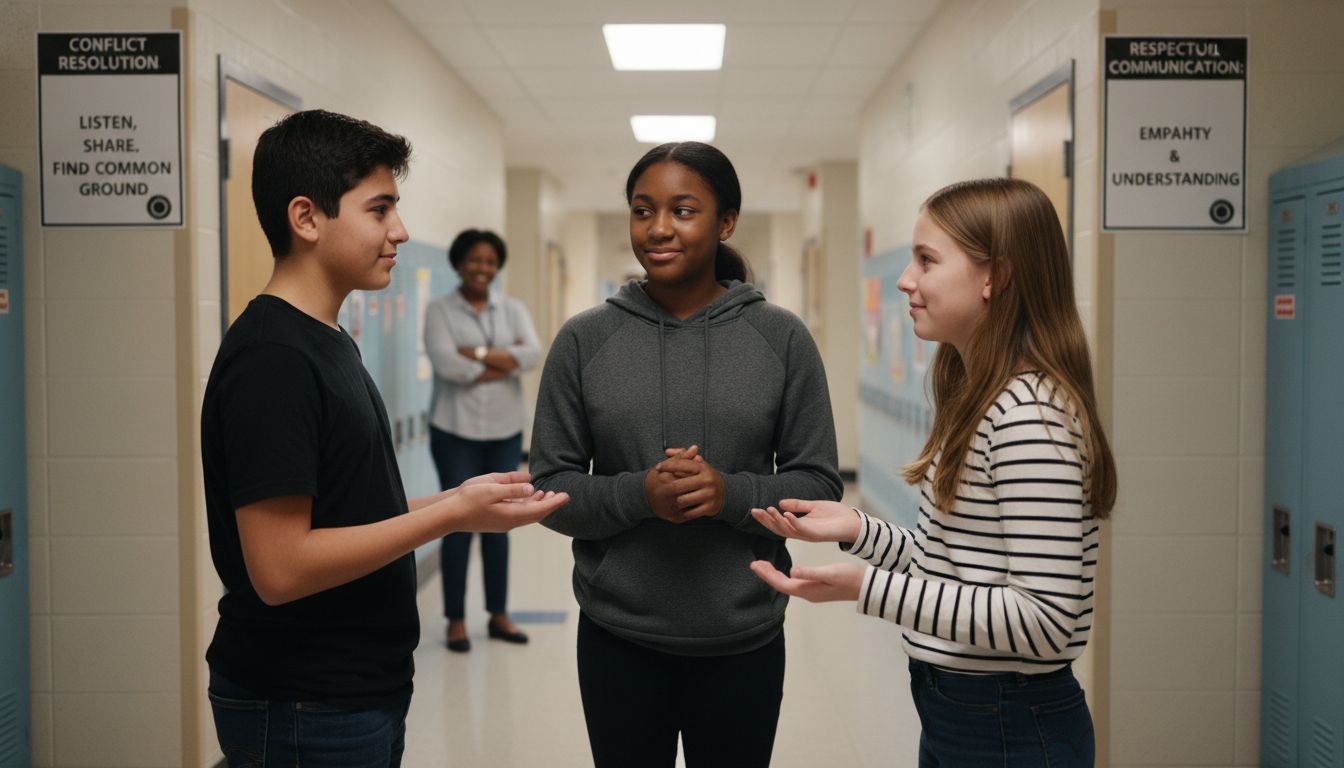
By integrating these principles, schools can transform their cultural environment from mere rule enforcement to genuine character development.
 Learn more about character education programs that can support this transformative approach.
Key Benefits of Teaching Respect in Schools
Teaching respect in schools extends far beyond simple classroom management. According to CDC, implementing restorative practices can dramatically transform school environments by strengthening student-teacher relationships, improving overall school climate, and enhancing academic engagement while simultaneously reducing disruptive behaviors.
Emotional and social development emerges as a critical benefit of respect education. Ripple Kindness research highlights that intentional respect training leads to significant improvements in students’ psychological well-being, including increased peer acceptance, enhanced self-esteem, and improved mental health outcomes.
The key benefits of teaching respect in schools include:
- Improved Communication Skills: Learning to listen and communicate effectively
- Conflict Resolution: Developing peaceful problem-solving strategies
- Enhanced Emotional Intelligence: Understanding and managing personal and others’ emotions
- Increased Academic Performance: Creating a supportive learning environment
- Social Competence: Building stronger interpersonal relationships
Schools committed to respect education create transformative learning spaces.
Explore effective character education examples to see how these principles can be practically implemented in educational settings.
Common Challenges in Implementing Respect Education
Implementing respect education is far from straightforward. According to UNESCO, educators consistently face significant challenges in addressing school-related violence and bullying, which can fundamentally undermine efforts to foster genuine respect and safety within educational environments.
Systemic barriers often prevent comprehensive respect education from taking root. Department of Education research highlights that creating positive school climates requires deliberate, consistent efforts to prevent misbehavior and establish clear expectations—a process that proves challenging to implement effectively across diverse school settings.
The most prevalent challenges in respect education include:
Here’s a summary of the main challenges and solutions for respect education:
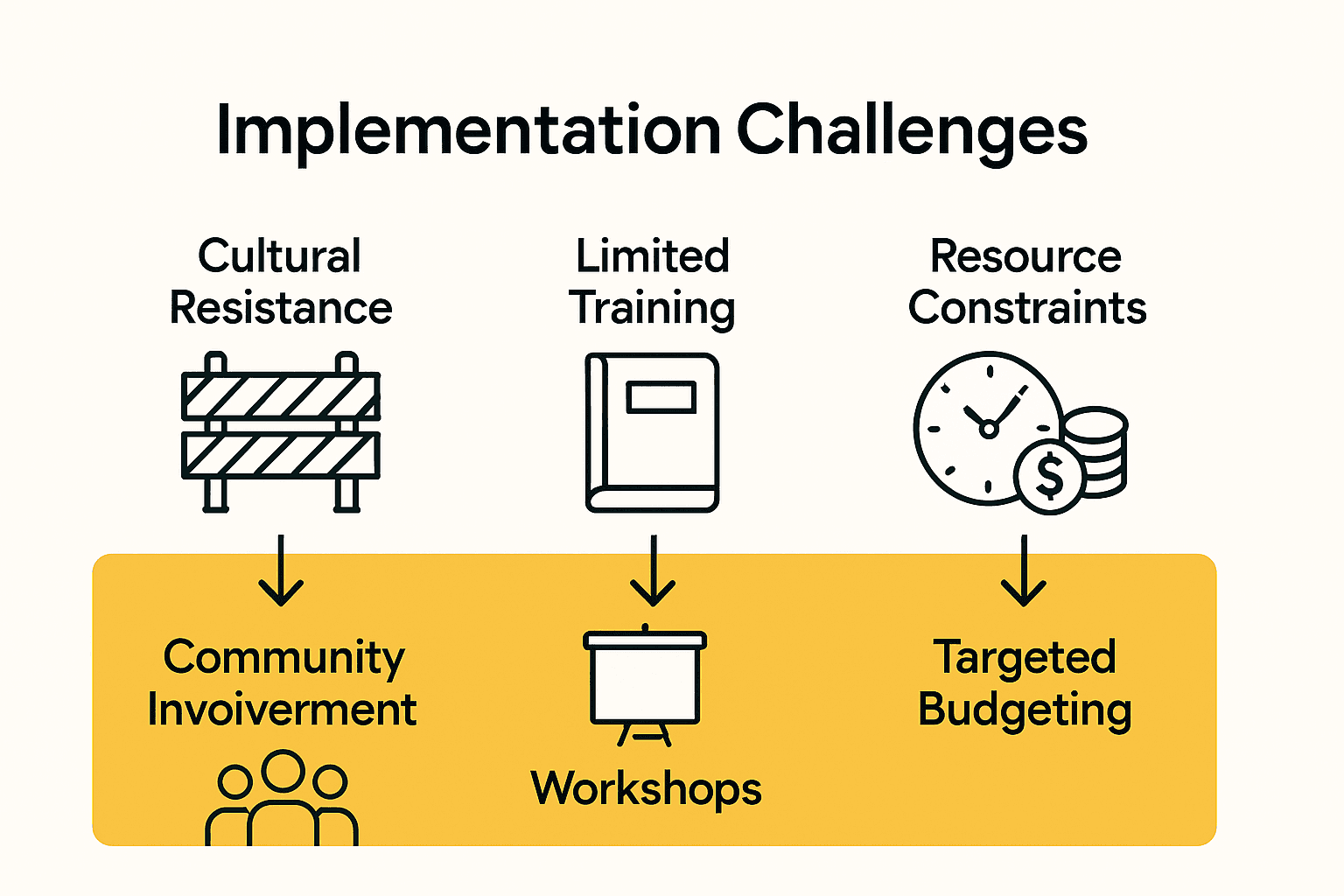
| Challenge | Impact on Schools | Potential Solutions |
|---|---|---|
| Cultural Resistance | Hinders behavioral change | Ongoing education Community involvement |
| Limited Training | Unprepared educators | Professional development Workshops |
| Resource Constraints | Insufficient time and funding | Targeted budgeting Grant programs |
| Inconsistent Implementation | Unequal student experiences | Clear policies Accountability systems |
| Generational Communication Gaps | Misunderstandings Disconnected relationships | Intergenerational dialogues Mentorship |
- Cultural Resistance: Overcoming deeply ingrained behavioral patterns
- Limited Training: Insufficient professional development for educators
- Resource Constraints: Lack of time and financial support
- Inconsistent Implementation: Uneven application of respect principles
- Generational Communication Gaps: Bridging understanding between students and staff
Successful respect education demands a holistic approach. Explore our character education checklist to understand how schools can systematically address these complex challenges and create meaningful cultural change.
Effective Approaches and Program Examples for Schools
Addressing respect education requires strategic, multifaceted approaches that go beyond traditional discipline models. According to the CDC, restorative practices have emerged as a powerful methodology, utilizing proactive circles and formal conferences to balance accountability and support while simultaneously reducing disciplinary issues and fostering positive school climates.
Comprehensive intervention strategies are critical for meaningful change. UNESCO’s ‘Connect with Respect’ program demonstrates how targeted professional development can equip educators with sophisticated tools to prevent and respond to school violence, creating safer and more inclusive learning environments.
Effective respect education programs typically incorporate:
- Peer Mediation: Training students to resolve conflicts constructively
- Interactive Workshops: Experiential learning about empathy and communication
- Social-Emotional Curriculum: Integrated lessons on emotional intelligence
- Reflection Circles: Regular group discussions about interpersonal dynamics
- Accountability Frameworks: Clear, consistent expectations and consequences
Discover inspiring examples of educational programs that can help schools transform their approach to respect and character development.
Roles of Educators and Families in Fostering Respect
Fostering respect requires a collaborative effort between educators and families, creating a comprehensive support system for students. According to Safe Supportive Learning, teachers play a critical role in establishing safe, supportive learning environments by building positive relationships and intentionally cultivating a culture of respect through their daily interactions and instructional approaches.
Family engagement is equally crucial in this developmental process. Global Indian School emphasizes that families contribute significantly by encouraging kindness through demonstrative actions and teaching children the fundamental principles of treating themselves and others with genuine respect and empathy.
Key responsibilities for educators and families include:
- Modeling Respectful Behavior: Demonstrating positive interaction strategies
- Consistent Communication: Sharing expectations and reinforcing respect principles
- Active Listening: Creating safe spaces for dialogue and understanding
- Conflict Resolution Training: Teaching constructive problem-solving skills
- Recognizing and Celebrating Respectful Actions: Positive reinforcement techniques
Explore our character education pillars to understand how schools and families can work together in developing a comprehensive respect-focused approach.
Bring Respect Education to Life with Engaging School Programs
The challenges of implementing effective respect education are real and pressing. From overcoming cultural resistance to ensuring consistent communication and conflict resolution skills, schools need solutions that truly resonate with students. By integrating principles like empathy, active listening, and peaceful problem solving into dynamic experiences, educators can transform school culture and empower young learners.
Discover how Academic Entertainment offers a wide range of live and virtual school assembly programs designed to support respect education goals. With over 40 years of experience, our tailored shows focus on character development, kindness, and social-emotional learning that complements the core principles discussed in “The Essential Guide to Respect Education in Schools.” Explore our full selection of educational programs to engage students meaningfully and foster a positive environment today. Visit Academic Entertainment to take the next step in creating a respectful, inclusive, and vibrant school community.
Frequently Asked Questions
What is respect education in schools?
Respect education is a framework designed to help students develop positive interpersonal skills and social awareness by teaching them the importance of mutual understanding, active listening, empathy, conflict resolution, and respecting personal boundaries.
What are the core principles of respect education?
The core principles of respect education include mutual understanding, active listening, empathy, conflict resolution, and recognizing personal boundaries, which help foster a respectful and supportive learning environment.
What are the benefits of teaching respect in schools?
Teaching respect in schools leads to improved communication skills, enhanced emotional intelligence, increased academic performance, and stronger interpersonal relationships among students.
What challenges do schools face when implementing respect education?
Common challenges include cultural resistance, limited training for educators, resource constraints, inconsistent implementation of respect principles, and generational communication gaps, which can hinder effective respect education efforts.
Recommended
- 7 Essential Steps for Your Character Education Checklist – Academic Entertainment
- 7 Examples of Character Education Programs for Schools – Academic Entertainment
- 8 Effective Character Education Examples for Schools – Academic Entertainment
- How School Assemblies support Social Emotional Learning (SEL) Initiatives – Academic Entertainment