

Virtual school programs are turning the old idea of education on its head. Most people picture remote learning as a backup plan for snow days, but the numbers tell a different story. Students in virtual programs now report up to 30 percent higher digital literacy compared to peers in traditional schools. Turns out, this shift is not just about location. It is about building tech-savvy learners who thrive in any environment.
Table of Contents
- Defining Virtual School Programs: Key Features And Benefits
- The Significance Of Virtual School Programs In Education
- How Virtual School Programs Operate: Framework And Technologies
- Exploring The Learning Experience In Virtual School Settings
- Challenges And Opportunities In Implementing Virtual School Programs
Quick Summary
| Takeaway | Explanation |
|---|---|
| Virtual school programs offer flexibility. | Students can learn at their own pace, allowing for personalized scheduling and academic progression. |
| Access education from anywhere with technology. | Geographic independence allows students from various locations to enjoy quality educational opportunities that may not be locally available. |
| Fosters critical 21st-century skills. | Learners develop essential skills like self-directed learning, digital communication, and technological adaptability through engaging online environments. |
| Democratizes education in underserved areas. | Provides educational opportunities specifically to rural or disadvantaged communities, combating inequalities in access to quality learning resources. |
| Integrates advanced learning management systems. | Robust digital infrastructures are essential for effective curriculum delivery, student assessment, and engaging interaction with educators online. |
Defining Virtual School Programs: Key Features and Benefits
A virtual school program represents an innovative educational approach that leverages digital technology to deliver comprehensive learning experiences outside traditional classroom settings. Unlike conventional schooling, these programs utilize online platforms, interactive digital tools, and sophisticated learning management systems to provide students with flexible, accessible, and personalized educational opportunities.
Core Characteristics of Virtual School Programs
Virtual school programs are distinguished by their unique structural and technological features. They typically involve remote learning environments where students access curriculum, participate in classes, submit assignments, and interact with educators through web-based platforms.
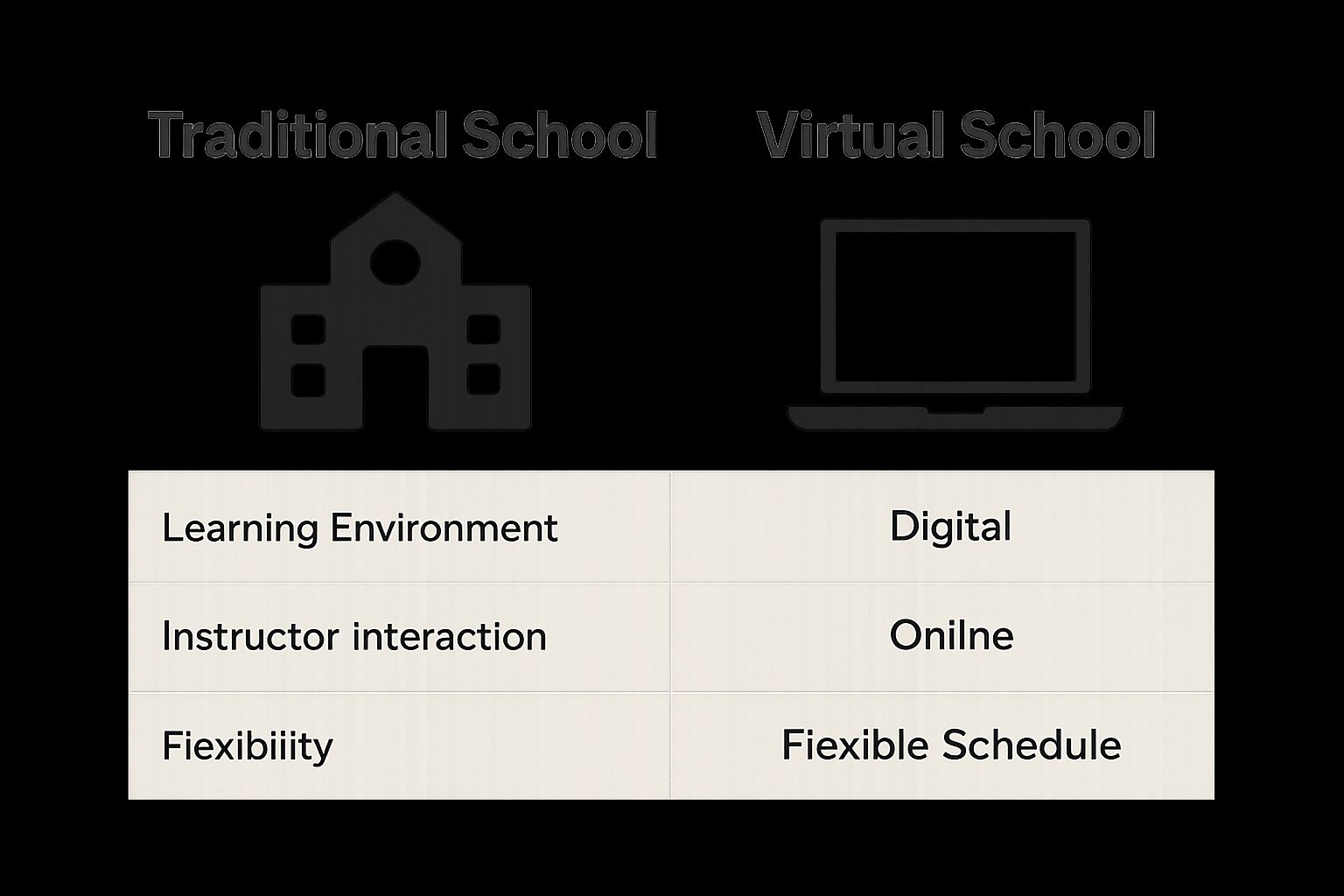 Academic Entertainment’s guide to virtual school programs highlights several key characteristics:
- Fully online curriculum delivery
- Asynchronous and synchronous learning options
- Comprehensive digital classroom infrastructure
- Personalized learning pathways
- Integrated technological resources
Benefits and Educational Advantages
The emergence of virtual school programs has transformed educational accessibility and learning dynamics. According to research from EdSurge, these programs offer significant advantages for students across diverse backgrounds:
- Flexibility: Students can learn at their own pace and schedule
- Geographic Independence: Access quality education from anywhere
- Technological Skill Development: Enhanced digital literacy through consistent technological engagement
- Personalized Learning: Customized educational experiences matching individual learning styles
These programs represent more than just a technological substitute for traditional education. They are a sophisticated educational model that reimagines learning as a dynamic, student-centered experience adaptable to individual needs and contemporary technological capabilities.
To clarify the main differences between traditional and virtual school programs, the following table compares key characteristics of each educational model.
| Feature | Traditional School | Virtual School Program |
|---|---|---|
| Location of Learning | Physical classroom | Online/remote through digital platforms |
| Scheduling | Fixed timetable | Flexible, self-paced or scheduled |
| Interaction with Teachers | Face-to-face | Digital (video, chat, forums) |
| Curriculum Delivery | In-person instruction | Fully online via Learning Management Systems |
| Technology Use | Supplementary | Central to all learning and communication |
| Access | Geographic limitations | Accessible from anywhere |
| Adaptability to Student Needs | Standardized curriculum | Personalized learning pathways |
The Significance of Virtual School Programs in Education
Virtual school programs have emerged as a transformative educational paradigm, redefining how students access, engage with, and experience learning. By transcending traditional geographical and structural limitations, these programs represent a significant evolution in educational delivery and accessibility.
Expanding Educational Opportunities
One of the most profound impacts of virtual school programs is their ability to democratize education. How to Schedule the BEST VIRTUAL School Assemblies underscores the potential of digital platforms to connect students with diverse learning resources. According to research from the Rand Corporation, virtual school programs are particularly crucial for students in rural or underserved communities, providing access to educational experiences previously unavailable.
Key Opportunities Virtual School Programs Create:
- Access to specialized curriculum not available locally
- Learning opportunities for students with physical disabilities
- Educational continuity during unexpected disruptions
- Global classroom interactions

- Individualized learning pace and style
Technological and Social Learning Transformation
Virtual school programs are not merely technological substitutes for traditional classrooms but represent a comprehensive reimagining of educational engagement. They integrate advanced technological tools with pedagogical strategies, fostering digital literacy and preparing students for an increasingly interconnected global environment.
These programs cultivate essential 21st-century skills such as:
- Self-directed learning
- Digital communication
- Technological adaptability
- Collaborative online interaction
- Independent time management
By enabling students to develop these competencies within structured yet flexible digital environments, virtual school programs are creating a more adaptive, responsive educational ecosystem that mirrors the complexity of modern professional and social landscapes.
How Virtual School Programs Operate: Framework and Technologies
Virtual school programs function through sophisticated digital infrastructures that seamlessly integrate advanced technological platforms with comprehensive educational methodologies. These systems create dynamic learning environments that transcend traditional classroom constraints, enabling students to access education through innovative digital approaches.
Learning Management System Architecture
Understanding the Guide to Virtual School Shows highlights the critical technological foundations of these programs. Learning Management Systems (LMS) serve as the central technological framework, providing comprehensive digital platforms where students interact with curriculum, educators, and learning resources. According to EdTech Magazine, these systems typically include:
- Centralized course content repositories
- Interactive multimedia learning modules
- Real-time progress tracking mechanisms
- Student assessment and feedback tools
- Integrated communication channels
Technological Interaction and Engagement Mechanisms
Virtual school programs leverage multiple technological tools to create immersive learning experiences. These digital platforms incorporate various interactive technologies that simulate traditional classroom dynamics while offering unprecedented flexibility:
- Synchronous video conferencing platforms
- Collaborative digital workspaces
- Adaptive learning algorithms
- Interactive simulation environments
- Personalized learning path generators
These technologies enable students to engage with educational content through diverse modalities, transforming passive information consumption into active, participatory learning experiences. By integrating sophisticated technological infrastructure with pedagogical strategies, virtual school programs create comprehensive educational ecosystems that adapt to individual student needs and learning preferences.
Exploring the Learning Experience in Virtual School Settings
Virtual school settings create unique learning environments that challenge traditional educational paradigms, offering students unprecedented opportunities for personalized, flexible, and technology-enhanced educational experiences. These digital platforms transform how students interact with educational content, instructors, and their learning process.
Student Engagement and Learning Dynamics
What is Visual Learning? illuminates the critical role of visual and interactive technologies in digital education. According to research from the University of Pennsylvania, students in virtual learning environments experience distinctive engagement patterns that require advanced self-regulation skills:
- Enhanced personal responsibility for learning progress
- Greater autonomy in scheduling and content navigation
- Increased need for self-motivation
- Complex time management requirements
- Direct control over learning pace and depth
Psychological and Social Learning Dimensions
Virtual school settings are not merely technological platforms but complex social learning ecosystems. They challenge students to develop sophisticated digital communication skills and emotional intelligence within online collaborative environments. These programs cultivate:
- Interpersonal communication through digital interfaces
- Collaborative problem solving in virtual teams
- Cross-cultural interaction and global perspectives
- Technological adaptability
- Digital etiquette and professional online behavior
By reimagining educational experiences through technological mediation, virtual school settings prepare students for an increasingly interconnected, digital-first professional landscape, emphasizing adaptability, independent learning, and technological proficiency.
Challenges and Opportunities in Implementing Virtual School Programs
Implementing virtual school programs requires navigating complex technological, pedagogical, and social landscapes. These digital educational platforms present both significant challenges and transformative opportunities for educational institutions, educators, and students.
Technological and Infrastructure Challenges
What Is A Virtual Field Trip? underscores the technological sophistication required for successful virtual learning environments. According to The International Society for Technology in Education, implementation involves addressing critical infrastructure challenges:
- Unequal technology access across different socioeconomic groups
- Significant initial technology investment costs
- Need for robust internet connectivity
- Continuous technological infrastructure maintenance
- Complex cybersecurity and data protection requirements
Pedagogical and Human Adaptation Strategies
Successful virtual school program implementation demands fundamental shifts in educational approaches and professional development. Educator readiness becomes a critical factor in program effectiveness, requiring comprehensive training and psychological preparation:
- Redesigning curriculum for digital delivery
- Developing new instructional methodologies
- Creating engaging online interaction strategies
- Supporting educators’ technological skill development
- Addressing potential teacher resistance to technological change
By proactively addressing these challenges, educational institutions can transform potential obstacles into opportunities for innovation, creating more flexible, accessible, and personalized learning ecosystems that prepare students for an increasingly digital global environment.
The table below summarizes some core challenges and corresponding opportunities related to implementing virtual school programs, as highlighted in the article.
| Implementation Challenge | Corresponding Opportunity |
|---|---|
| Unequal technology access | Democratize education in underserved areas |
| High initial technology investment | Develop robust digital infrastructure for long-term use |
| Need for robust internet connectivity | Expand digital access and improve infrastructure |
| Curriculum redesign for digital delivery | Enable personalized, engaging learning experiences |
| Educator professional development needs | Foster adoption of innovative teaching strategies and growth |
| Cybersecurity and data protection requirements | Advance digital safety guidelines and protect student privacy |
Bring Virtual Learning to Life With Engaging Experiences
Are you facing the challenges and opportunities of building meaningful connections in a virtual school setting? The article highlights how students need more than just digital tools. They crave interactive ways to boost engagement, cultivate essential skills, and foster a genuine sense of community online. Traditional screen-time often fails to deliver this level of inspiration and personalized learning.
Academic Entertainment specializes in transforming virtual school programs into unforgettable journeys. Our live and virtual shows provide interactive assemblies designed for K-12 students, addressing topics like character development, anti-bullying, health, and diversity. With over forty years of experience, we know how to make remote learning both dynamic and impactful. See how you can tailor an assembly or school event that aligns with your educational goals and keeps students excited to learn. Visit Academic Entertainment today to explore programs and book your next virtual school experience. Ignite inspiration in your virtual school community right now.
Frequently Asked Questions
What is a virtual school program?
A virtual school program is an educational approach that uses digital technology to provide learning experiences outside traditional classrooms. To explore this option, research various programs in your area or online platforms to find one that suits your educational needs.
How does a virtual school program work?
A virtual school program operates through web-based platforms where students access courses, participate in classes, and submit assignments. Begin by enrolling in a program, setting up your online account, and familiarizing yourself with the learning management system to navigate your coursework effectively.
What are the benefits of enrolling in a virtual school program?
Enrolling in a virtual school program offers flexibility, personalized learning experiences, and access to a broader range of courses. To maximize these benefits, create a structured schedule that aligns with your personal learning pace and utilize the technology offered for interactive engagement.
What challenges might I face in a virtual school program?
Challenges in a virtual school program can include technological access issues and the need for strong self-regulation skills. To mitigate these, assess your technology resources before starting and develop a routine that helps you manage your time and workload efficiently.
How can I engage effectively in a virtual school program?
Effective engagement in a virtual school program requires active participation in discussions and collaboration with peers. To enhance your engagement, set specific goals for interactions each week and take advantage of collaborative features within the digital platform.
What skills can I expect to develop in a virtual school program?
In a virtual school program, you can expect to develop skills such as self-directed learning, digital communication, and technological adaptability. Focus on applying these skills in real-world contexts by participating in group projects or online discussions to reinforce your learning in practical situations.
Recommended
- Virtual School Programs and Virtual Learning – Academic Entertainment
- What Is A Virtual Field Trip? – Academic Entertainment
- How to Schedule the BEST VIRTUAL School Assemblies – Academic Entertainment
- Virtual Assemblies ARE the Future of Educational Entertainment – Academic Entertainment


