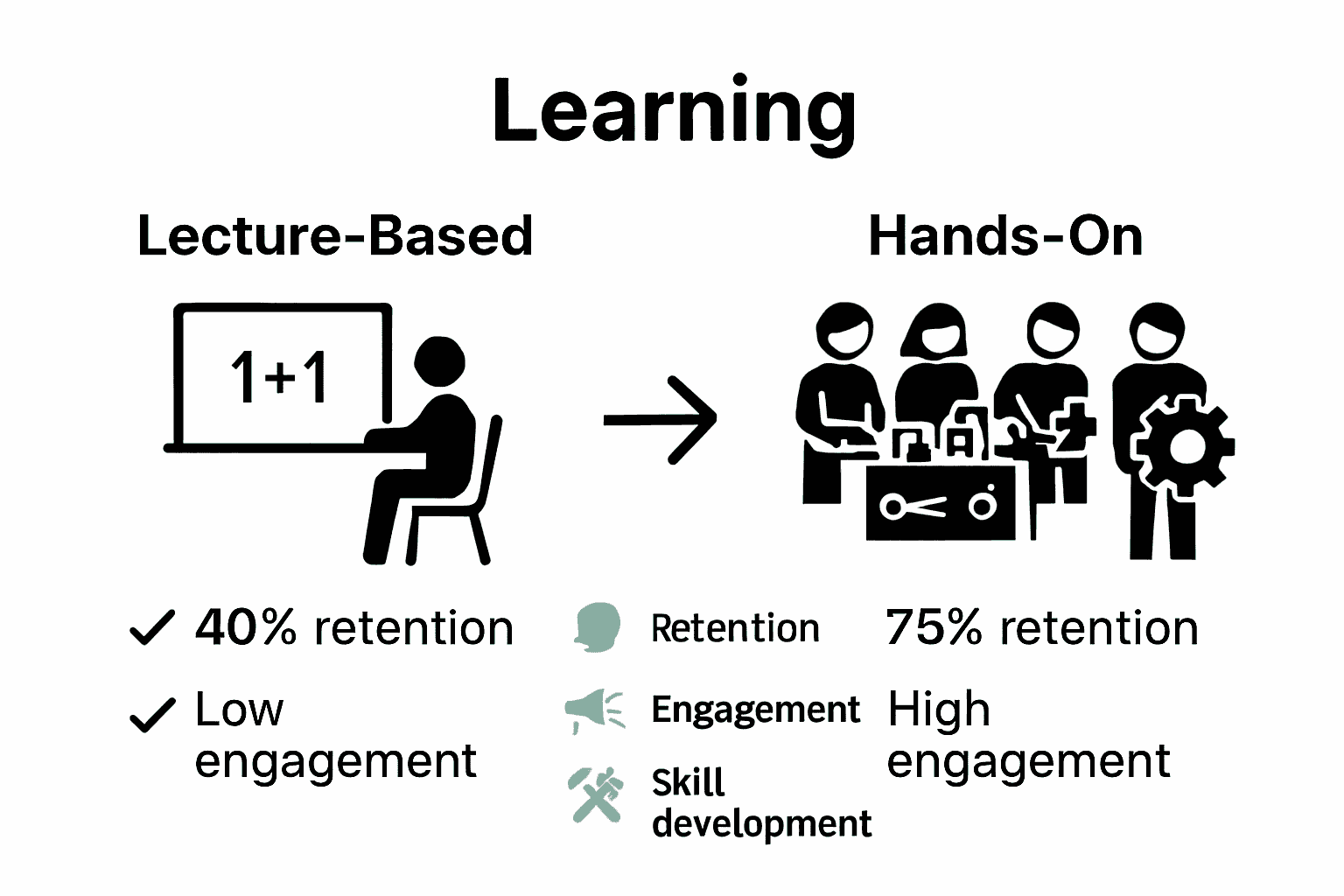
Research shows that students in american classrooms who learn through direct experience achieve higher retention rates and critical thinking skills than those relying on lecture alone. As traditional instruction gives way to interactive methods, more families and educators are looking for ways to keep learning both meaningful and engaging. Uncover how hands-on learning transforms classrooms into active spaces where curiosity and real-world problem solving take center stage.
Key Takeaways
| Point | Details |
|---|---|
| Hands-on learning promotes active engagement | This approach transforms students into active participants, significantly enhancing their cognitive pathways and understanding. |
| Diverse experiential programs are essential | Schools should adopt a range of hands-on initiatives, such as internships and projects, to connect real-world experiences with learning objectives. |
| Integration of safety protocols is crucial | Establishing clear safety guidelines and supervision methods is vital to facilitate hands-on learning in a secure environment. |
| Benefits extend beyond academics | Hands-on learning fosters critical life skills, including teamwork, problem-solving, and increased motivation among students. |
Defining Hands-On Learning in Education
Hands-on learning represents an interactive educational approach where students directly engage with materials, objects, and experiences to construct meaningful understanding. According to research from ERIC, this methodology involves “the use of concrete materials in activities both inside and outside the classroom,” allowing students to derive understanding through direct interaction.
The core philosophy of hands-on learning transcends traditional lecture-based instruction by transforming students from passive recipients to active participants in their educational journey. When students physically manipulate objects, conduct experiments, or solve real-world problems, they activate multiple cognitive pathways simultaneously. EDC emphasizes that effective hands-on learning isn’t just about physical engagement but critically “combines physical engagement with cognitive processes” to develop deeper conceptual understanding.
In practice, hands-on learning can manifest through various educational strategies:
- Science experiments that allow students to test hypotheses
- Mathematical modeling using tangible manipulatives
- Historical reenactments and role-playing scenarios
- Art and design projects requiring practical skill application
- Technology workshops involving direct equipment interaction
Educators in suburban Detroit school districts, such as those in Rochester and Farmington Hills, have increasingly recognized the transformative potential of hands-on learning approaches. By creating immersive, interactive experiences, these teaching professionals help students move beyond memorization toward genuine comprehension and critical thinking skills. The key is not just doing, but reflecting on and analyzing the experiences to extract meaningful insights.
Types of Hands-On Programs for Schools
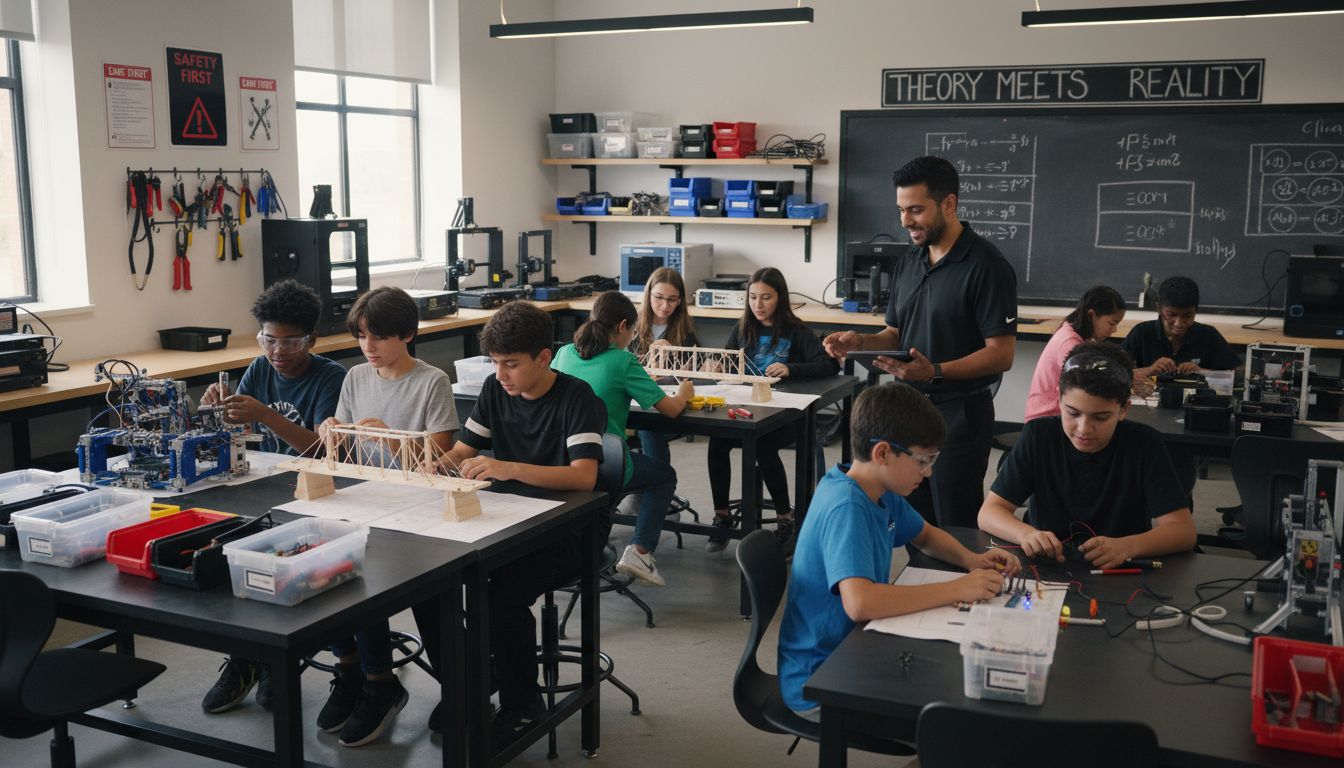
Experiential learning offers schools a diverse range of hands-on programs designed to transform traditional educational approaches. According to Knowway, these programs encompass “projects, simulations, fieldwork, internships, and service-learning,” all aimed at engaging students directly with real-world experiences to enhance practical knowledge and skills.
Schools can implement a variety of hands-on learning approaches that cater to different student interests and learning objectives. OCASA highlights several creative programs that “foster creativity, critical thinking, and practical skill development,” including:
- Arts and crafts workshops
- Model building projects
- Cooking and culinary skills clubs
- Sewing and textile design programs
- School gardening and agricultural initiatives
In suburban Detroit school districts like Rochester and Farmington Hills, educators are increasingly adopting innovative hands-on programs that go beyond traditional classroom instruction. These programs might include STEM exploration workshops, community service projects, entrepreneurship challenges, and collaborative problem-solving experiences. The goal is to create immersive learning environments that not only teach academic concepts but also develop critical life skills such as teamwork, creativity, and practical problem-solving.
To maximize the impact of hands-on learning, schools should consider integrating programs that connect classroom learning with real-world applications. This might involve partnerships with local businesses, community organizations, and K-12 Virtual STEM Shows that provide interactive, engaging educational experiences that inspire students to explore and understand complex concepts through direct, meaningful interaction.
Key Benefits for K-12 Students and Educators
Hands-on learning offers transformative benefits for both students and educators, fundamentally reshaping the educational experience. According to Invent, this approach “enhances problem-solving skills by allowing students to interact directly with materials and real-world situations,” leading to increased engagement and deeper conceptual understanding.
NAA highlights several critical advantages of hands-on learning for K-12 students:
- Improved critical thinking capabilities
- Enhanced practical skill development
- Better socialization and teamwork skills
- Easier transition to real-world professional environments
- Increased student motivation and learning retention
For educators in suburban Detroit school districts like Rochester and Farmington Hills, hands-on learning represents a powerful pedagogical approach that goes beyond traditional instruction. Experiential learning enables teachers to create dynamic classroom environments where students actively construct knowledge rather than passively receive information. This approach helps educators address diverse learning styles, making complex concepts more accessible and engaging for students with different cognitive strengths.
To maximize these benefits, schools can leverage 5 Benefits of School Enrichment Programs that complement hands-on learning strategies. By integrating interactive experiences, collaborative projects, and real-world problem-solving activities, educators can create comprehensive learning ecosystems that prepare students not just academically, but also for future professional and personal challenges.
Spotlight: Top Assembly Shows in Detroit Suburbs
Suburban Detroit schools have become hotspots for innovative and engaging educational assembly programs that transform traditional learning experiences. Three standout shows consistently capture students’ imagination and deliver powerful educational messages across Rochester, Troy, and Farmington Hills school districts.
The top assembly shows in these areas include:
- Wacky Science: An electrifying science demonstration show that turns complex scientific concepts into interactive, mind-blowing experiences
- Mathical Mystery Tour: A dynamic mathematics performance that makes numbers and problem-solving feel like an exciting adventure
- Supermarket Science: An immersive exploration of nutrition, food science, and healthy living through hands-on demonstrations
These assembly programs go beyond traditional presentations by creating immersive learning environments that engage students through interactive storytelling and live demonstrations. Educators in the Detroit suburbs appreciate how these shows complement classroom learning by introducing complex concepts through entertaining and memorable experiences.
To help schools select the perfect assembly program, How to Find the BEST School Assembly Program provides comprehensive guidance. By carefully selecting programs that align with educational objectives and student interests, schools can transform ordinary assemblies into extraordinary learning opportunities that inspire curiosity, critical thinking, and academic enthusiasm.
How to Integrate Hands-On Learning Safely
Safety and engagement are paramount when implementing hands-on learning experiences in K-12 classrooms. According to Brookings, successful integration involves “designing activities that are dynamic, relevant, and applied, ensuring that students are actively engaged while maintaining a secure learning environment.”
Key strategies for safely implementing hands-on learning include:
- Establishing clear classroom safety protocols
- Providing appropriate protective equipment
- Conducting thorough pre-activity risk assessments
- Maintaining appropriate student-to-supervisor ratios
- Developing age-appropriate activity guidelines
- Creating structured supervision and monitoring systems
Teach for Life emphasizes the importance of educators facilitating “exploration and discovery in a controlled and supervised setting.” This means carefully designing interactive learning environments that balance student curiosity with structured safety measures. In suburban Detroit school districts like Rochester and Farmington Hills, teachers have developed robust frameworks for managing hands-on learning experiences across various disciplines.
To further support safe implementation, schools can understand what makes interactive learning effective by developing comprehensive guidelines that prioritize student safety while maintaining the dynamic, engaging nature of hands-on educational experiences. This balanced approach ensures that students can explore, experiment, and learn without unnecessary risk.
Bring Hands-On Learning to Life with Engaging Educational Assemblies
Many schools face the challenge of transforming hands-on learning from abstract theory into dynamic, real-world experiences that truly engage students. This article highlights the need for immersive activities that activate critical thinking, practical skills, and teamwork while keeping safety and supervision top of mind. The goal is to move beyond passive instruction and spark curiosity through interactive methods that connect classroom knowledge with exciting, tangible applications.
At Academic Entertainment, we understand how vital it is to complement hands-on learning with vibrant assembly programs that inspire and educate. Our carefully curated selection includes live and virtual shows designed to captivate K-12 students with topics in science, math, character education, and more. These programs create memorable experiences that reinforce classroom lessons, boost student motivation, and develop critical life skills like problem solving and collaboration.
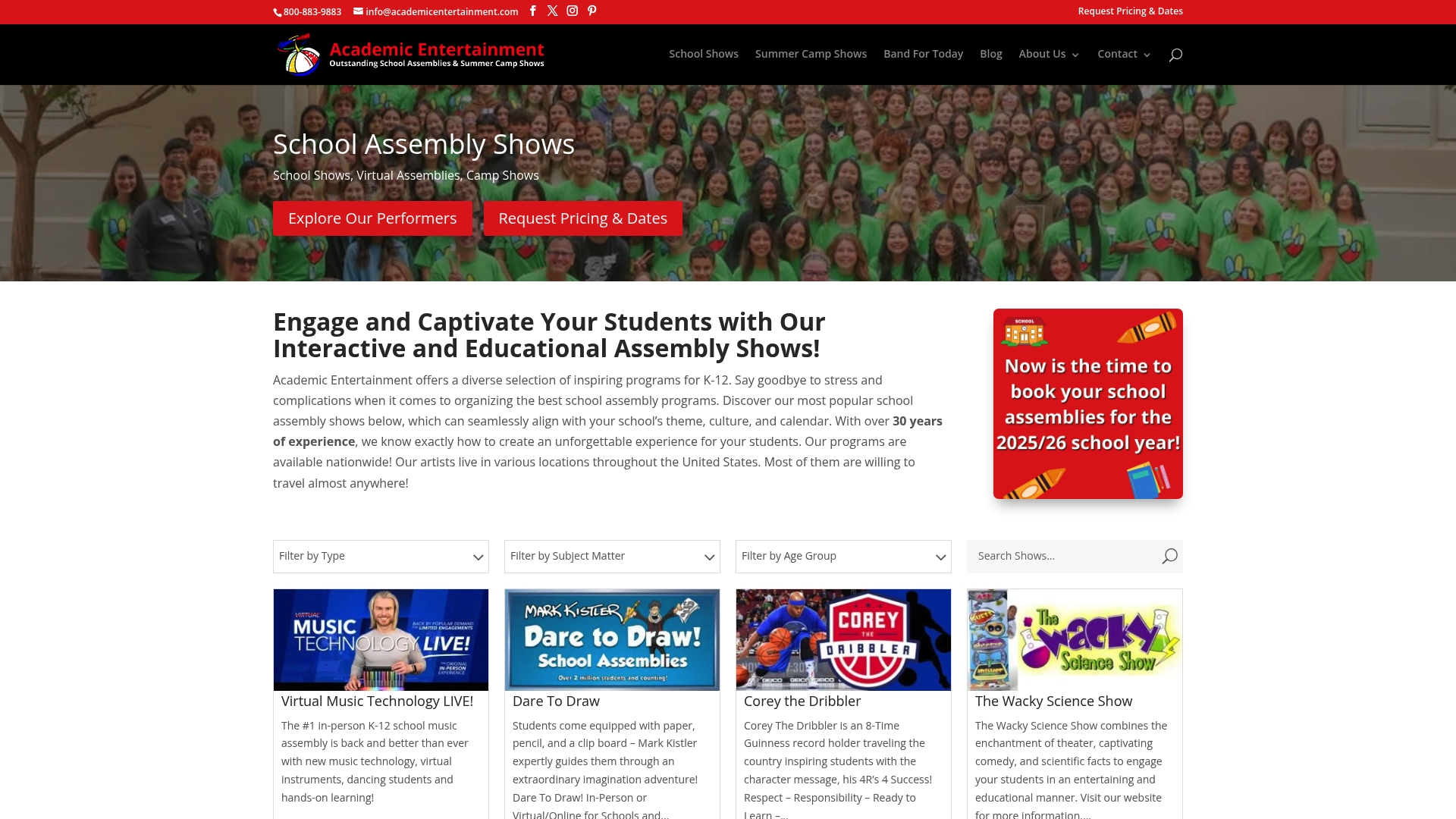
Discover how you can seamlessly integrate hands-on educational experiences into your school environment today. Explore our wide range of innovative assembly options at Academic Entertainment and empower your educators and students with programs that bring learning to life immediately. Don’t wait to transform your classrooms into vibrant spaces of discovery and active participation. Visit Academic Entertainment now to find the perfect show tailored to your school’s unique needs.
Frequently Asked Questions
What is hands-on learning?
Hands-on learning is an interactive educational approach where students engage directly with materials and experiences to construct meaningful understanding, rather than solely relying on traditional lecture-based instruction.
What are the benefits of hands-on learning for students?
Hands-on learning enhances critical thinking skills, improves practical skill development, fosters teamwork and social skills, increases motivation, and helps with retention of knowledge by connecting real-world applications to classroom learning.
How can schools implement hands-on learning effectively?
Schools can implement hands-on learning by incorporating experiential learning programs such as projects, simulations, internships, and community service initiatives that connect classroom concepts with real-world experiences.
What safety measures should be considered for hands-on learning activities?
To ensure safety, schools should establish clear safety protocols, provide protective equipment, conduct risk assessments, maintain appropriate supervision ratios, and create structured activity guidelines to manage hands-on learning experiences.
Recommended
- 5 Benefits of Group Learning for Students – Academic Entertainment
- What is Visual Learning? – Academic Entertainment
- Understanding Interactive Learning Experiences for Educators – Academic Entertainment
- Understanding What is Interactive Learning in Education – Academic Entertainment