

TL;DR:
- Customized assemblies connect better with school culture, increasing student engagement and message retention.
- Effective programs start with needs assessment, clear goals, and interactive, age-appropriate content.
- Ongoing follow-up and whole-school strategies are essential for long-term impact.
Generic school assemblies often leave students disengaged and administrators wondering if the time was worth it. A one-size-fits-all program rarely speaks to your school’s unique culture, student demographics, or learning priorities. But when you take a deliberate, customized approach, the results shift dramatically. Students pay attention, retain lessons, and carry those values back into the classroom. This guide walks you through every stage of building a customized assembly program, from assessing your school’s real needs to measuring outcomes that prove the investment was worthwhile. Whether your focus is character development, diversity, or social-emotional learning (SEL), customization is what turns a forgettable event into a lasting experience.
Key Takeaways
| Point | Details |
|---|---|
| Assess and plan first | Start by gathering insights from your school community and setting specific objectives before customizing any program. |
| Prioritize engagement | Choose interactive formats and content tailored to your students’ needs for higher engagement and lasting impact. |
| Align with real needs | Work with providers to reflect your school’s unique demographics, character priorities, and cultural context. |
| Use data to improve | Collect feedback and measure outcomes to refine each assembly for even greater results next time. |
| Go beyond one-time events | Embed customized assemblies into long-term school culture efforts for the greatest transformation. |
Assess needs and set clear objectives
Every effective customized assembly starts long before a performer steps on stage. It starts with honest questions: What does your school actually need right now? Where are students struggling? What values or skills do staff wish students practiced more consistently?
Start by mapping your school’s priorities. These typically fall into a few key categories:
- Social-emotional learning (SEL): Empathy, self-regulation, conflict resolution
- Diversity and inclusion: Cultural awareness, representation, belonging
- Character traits: Respect, responsibility, perseverance, integrity
- Subject integration: Connecting assembly themes to science, history, or language arts
- Behavioral goals: Reducing disciplinary incidents, improving peer relationships
Once you have a priority list, gather real data. Review discipline records, survey teachers, and talk to school counselors. Student voice matters too. A quick pre-assembly survey can reveal what topics resonate most and what students feel is missing from their school experience.
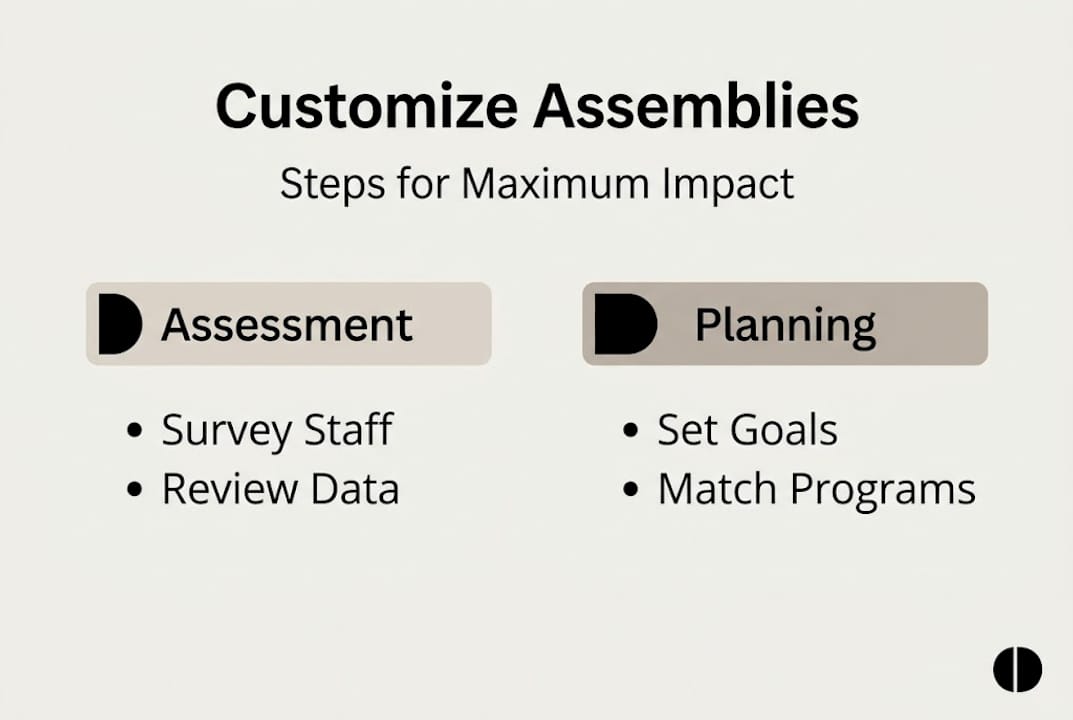
Pro Tip: Run a short anonymous survey with students and staff before booking any program. Ask what character traits they want to see more of and what topics feel most relevant. This builds consensus and gives you concrete direction for customizing school programs that actually land.
With data in hand, set SMART goals. SMART stands for Specific, Measurable, Achievable, Relevant, and Time-bound. Instead of “improve school culture,” try “reduce behavioral referrals by 15% over the next semester following three character-focused assemblies.” That kind of goal gives you something to track.
Best practices for assemblies confirm that assessing demographics and SMART objectives are foundational to any program that actually moves the needle. Skipping this step is the most common reason assemblies feel disconnected from real school needs.
Here is a quick reference for matching school priorities to program types:
| School priority | Recommended program type | Example focus |
|---|---|---|
| SEL development | Interactive workshops | Empathy and conflict resolution |
| Diversity and inclusion | Cultural performances | Multicultural storytelling |
| Character education | Motivational speakers | Integrity and leadership |
| Subject integration | STEM or arts shows | Curriculum-connected content |
| Behavioral improvement | Peer-led discussions | Anti-bullying, respect |
Also make sure your goals align with state standards and district-level expectations. This makes it easier to justify the program to leadership and ensures the content reinforces what teachers are already doing in the classroom. You can also explore options for customizing assemblies for curriculum alignment to strengthen that connection even further.
Design the program: content and logistics
Once your needs and goals are set, it is time to build a program that serves them effectively. This is where the real creative work happens, and where most schools either get it right or default back to generic programming.
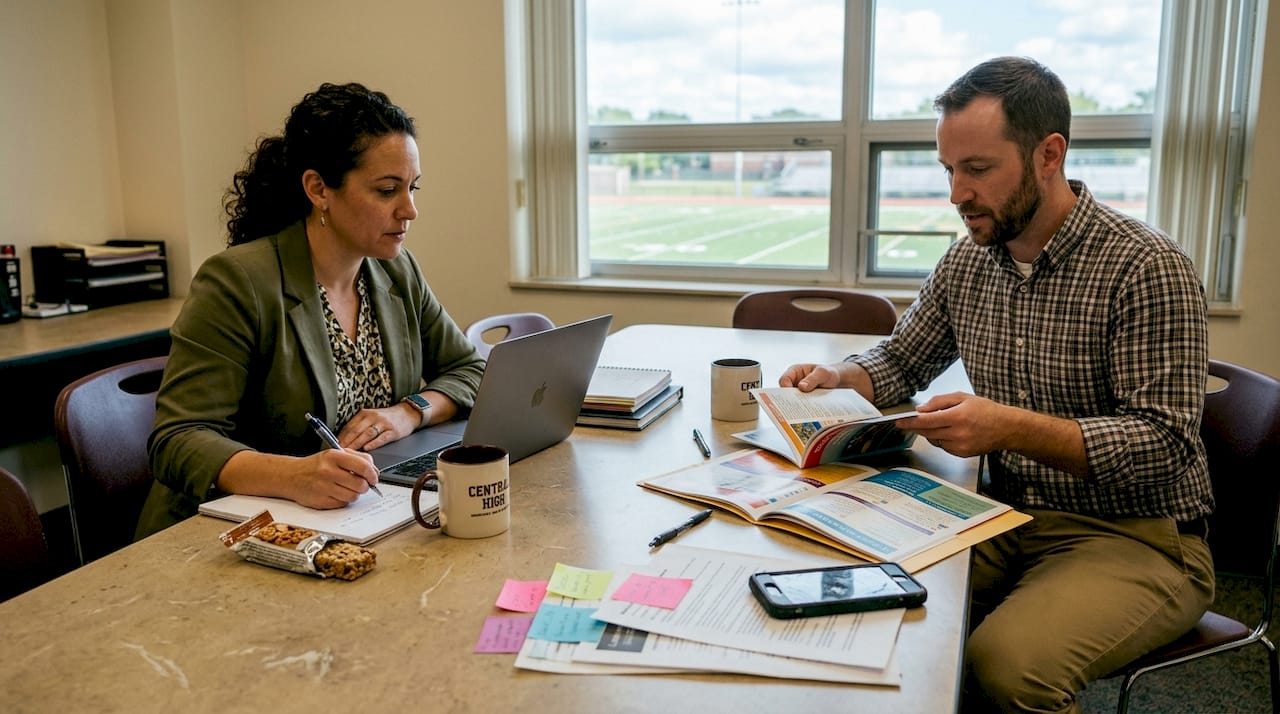
Map each of your goals to a content type. SEL goals pair well with interactive workshops or storytelling-based performances. Diversity goals benefit from culturally authentic performances, spoken word, or music-driven programs. Character education goals often land best through motivational formats that combine narrative, humor, and audience participation.
Format matters as much as content. Interactive assembly programs consistently outperform passive presentations. Interactive assemblies yield 30% higher engagement and 60% better retention compared to lecture-style formats. That is a significant difference, especially when you are trying to make a message stick.
Here is a side-by-side comparison of traditional versus interactive approaches:
| Approach | Format | Engagement level | Retention rate | Best for |
|---|---|---|---|---|
| Traditional | Lecture or slideshow | Low to moderate | Lower | Information delivery |
| Interactive | Workshop, performance, Q&A | High | Higher | Behavior and values change |
Developmental appropriateness is another critical factor. What works for fifth graders will not land the same way with high schoolers, and vice versa. Younger students respond well to storytelling, puppetry, and high-energy performances. Middle schoolers engage more with peer-led formats and relatable scenarios. High school students want authenticity and real-world relevance.
Pro Tip: Involve a student advisory group in the planning process. Even a 15-minute conversation with a small group of students from different grade levels can surface insights that adults miss entirely. Students know what feels relevant to them.
On the logistics side, think through scheduling carefully. Will you run one large all-school assembly or smaller grade-level sessions? Smaller groups often allow for more meaningful interaction. Consider your available space, technology needs, and how the program connects to diversity-focused assemblies or character-building assemblies you may already have planned for the year.
Key logistics to confirm before booking:
- Venue capacity and setup (stage, seating, AV equipment)
- Session length (45 to 60 minutes is typically optimal)
- Grade-level groupings (separate or combined)
- Teacher preparation (pre-assembly context for students)
- Follow-up plan (classroom integration after the event)
Customization in action: tailoring for character, diversity, and inclusion
Having chosen content and logistics, here is how true customization delivers lasting character and diversity outcomes. This stage is about going beyond selecting a topic and actually shaping the program to reflect your school’s specific community.
Start by consulting directly with your program provider. Share your school’s demographic data, current challenges, and cultural makeup. A strong provider will use that information to adapt stories, examples, and messaging so students see themselves in the content. Generic programs talk at students. Customized programs talk with them.
Align your program with both state standards and recognized character education frameworks. Many schools use frameworks like PBIS (Positive Behavioral Interventions and Supports) or SEL competency models. A well-designed assembly can reinforce those frameworks rather than exist separately from them.
Empathy-building is one of the most powerful tools in character education. Programs that embed real stories, lived experiences, and culturally authentic voices create emotional connections that outlast the event itself. Explore multicultural assembly ideas that bring those voices to life in ways students genuinely respond to.
Assemblies customized for cultural relevance and empathy-building can meaningfully reduce behavioral incidents and improve school climate when implemented with intentionality and follow-through.
Offer multiple formats within your program calendar. A single performance is a starting point, not a solution. Consider rotating between:
- Live performances with culturally diverse artists or speakers
- Student-led discussions facilitated by trained peer leaders
- Storytelling sessions that highlight underrepresented voices
- Interactive workshops where students practice skills in real time
- Panel formats featuring community members or alumni
For deeper resources on fostering diversity and unity in assemblies, look for programs that treat cultural celebration not as a one-time event but as an ongoing part of school identity. Avoid programs that feel like a checkbox. Students notice when diversity content feels tokenized, and it undermines the message you are trying to send. Adapt every program to the grade level and community context where it will be delivered.
Implement, measure, and refine your customized program
After designing and customizing, execution and evaluation make success sustainable. A great program that is never measured is a missed opportunity to improve and justify future investment.
Follow these steps for a successful rollout and ongoing refinement:
- Prepare staff in advance. Brief teachers on the assembly theme so they can prime students with context beforehand.
- Execute with intention. Assign staff roles during the event: facilitators, monitors, and note-takers who observe student reactions.
- Debrief immediately after. Hold a short staff check-in within 24 hours to capture fresh observations.
- Collect student feedback. Use a simple post-assembly survey to gauge what resonated and what did not.
- Integrate into classroom instruction. Follow-up discussions, journaling prompts, or project-based activities extend the learning.
- Analyze your metrics. Compare pre and post data on behavioral referrals, attendance, and survey responses.
- Adjust for next time. Use what you learned to refine the next program in your calendar.
The data behind this approach is compelling. Empirical benchmarks show 15-20% knowledge gains and 30-60% better engagement for sustained, interactive programs. One study reported an N-Gain score of 0.789, indicating strong learning effectiveness for character education approaches that combine structured programming with follow-up reinforcement.
For tracking measuring SEL gains, use pre and post assessments tied to your SMART goals. Track boosting student engagement with assemblies by monitoring participation rates and teacher-reported classroom behavior. Review character assemblies’ impact over a full semester to see trends rather than one-time snapshots. You can also reference character education research to benchmark your results against broader findings.
Long-term success comes from treating assemblies as part of a year-round strategy, not isolated events. Schools that integrate programs into their broader school culture work see the most sustained gains.
The truth about customized school programs: Why one-off assemblies aren’t enough
Here is something most assembly vendors will not tell you: a single event, no matter how well-designed, has limited long-term impact on its own. Single assemblies have limited impact without embedding them in whole-school approaches that reinforce the message over time.
We have seen schools invest in a powerful diversity or character program and then move on without any follow-up. Six weeks later, the energy has faded and behavior patterns have returned. The assembly was not the problem. The isolation was.
Real transformation happens when assemblies serve as a launch point. They spark conversations, introduce frameworks, and create shared experiences. But the follow-up is what builds culture. That means structured debriefs, teacher-led discussions, student leadership opportunities, and periodic check-ins throughout the year.
For schools serious about lasting change, a complete character education guide can help you build the scaffolding around your assembly programming. Think of assemblies as the ignition, not the engine. Whole-school structures that support ongoing learning are what sustain the momentum an assembly creates.
Bring high-impact assemblies to your school
If you are ready to move beyond generic programming and invest in experiences that genuinely connect with your students, the right provider makes all the difference. Academic Entertainment has spent over 40 years helping K-12 schools across the U.S. design and deliver customized assembly programs that align with real school goals.
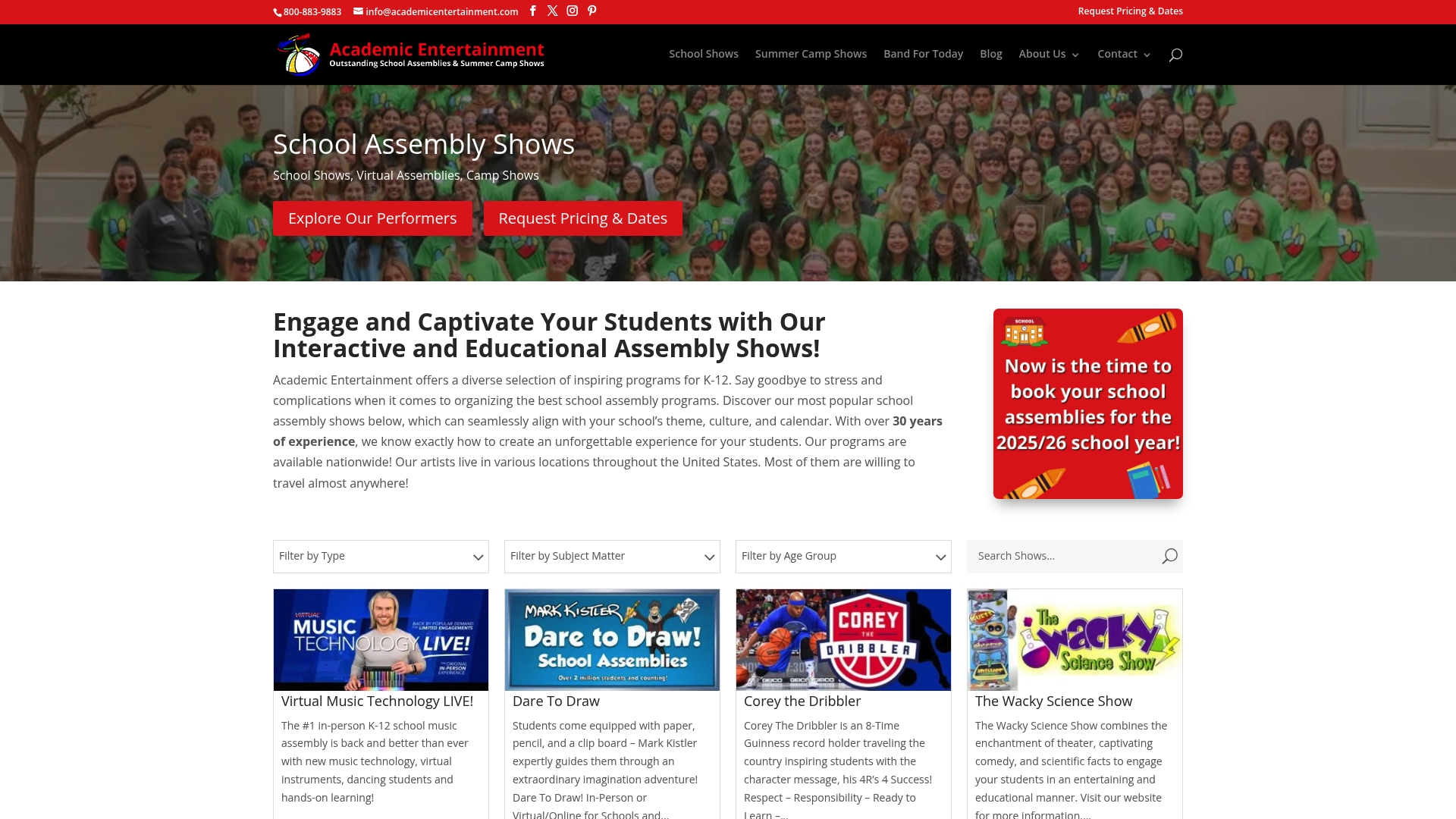
From character education assemblies rooted in proven frameworks to high-energy STEM assemblies that make learning come alive, every program can be tailored to your school’s demographics, themes, and objectives. Our consultation process ensures your needs are heard before a single booking is confirmed. Reach out today to start building a program your students will actually remember.
Frequently asked questions
How can we ensure assemblies are age-appropriate for all grade levels?
Consult with your provider about tailoring content by age group, and consider running separate sessions for different developmental stages to maximize relevance and impact.
What evidence is there that customized programs improve student outcomes?
Customized assemblies are linked to 15-20% knowledge gains, improved behavior, and significantly higher engagement rates across multiple studies.
How do we measure the impact of a customized assembly program?
Use surveys, follow-up classroom discussions, and track engagement, behavioral incidents, and knowledge retention. Interactive formats yield measurably higher retention, making outcome tracking more straightforward.
How much follow-up is needed after an assembly for maximum benefit?
Structured debriefs and periodic classroom integration over several months significantly increase retention. Post-assembly classroom discussions are one of the most effective tools for sustaining the impact of any assembly program.
Recommended
- How to Customize School Programs for Maximum Impact – Academic Entertainment
- Can assemblies be customized to fit our school’s curriculum or theme week? – Academic Entertainment
- How to Find the BEST School Assembly Program – Academic Entertainment
- Assembly Programs Benefits – Academic Entertainment
- Mass Customization Services


