Finding the right educational entertainment program for your school can feel challenging when every student community has unique needs. Midwest schools aiming to strengthen character development and promote cultural awareness cannot rely on one-size-fits-all solutions. By focusing on customized programming that aligns with your school’s specific goals and cultural priorities, administrators and event coordinators set the stage for deeper student engagement and lasting positive impact throughout the year.
Quick Summary
| Key Point | Explanation |
|---|---|
| 1. Assess Specific School Needs | Understand the unique challenges your students face through comprehensive needs assessments involving all key stakeholders. |
| 2. Select Targeted Educational Programs | Choose programs aligned with identified needs, focusing on evidence-based approaches that enhance student learning outcomes. |
| 3. Align Programs with School Priorities | Ensure that selected programs connect with existing initiatives to provide consistent messaging and deeper impact. |
| 4. Collaborate for Effective Customization | Work closely with program presenters to tailor content that directly addresses your school’s specific culture and challenges. |
| 5. Evaluate Program Success | Collect feedback and measure outcomes immediately after the program to assess its effectiveness and guide future improvements. |
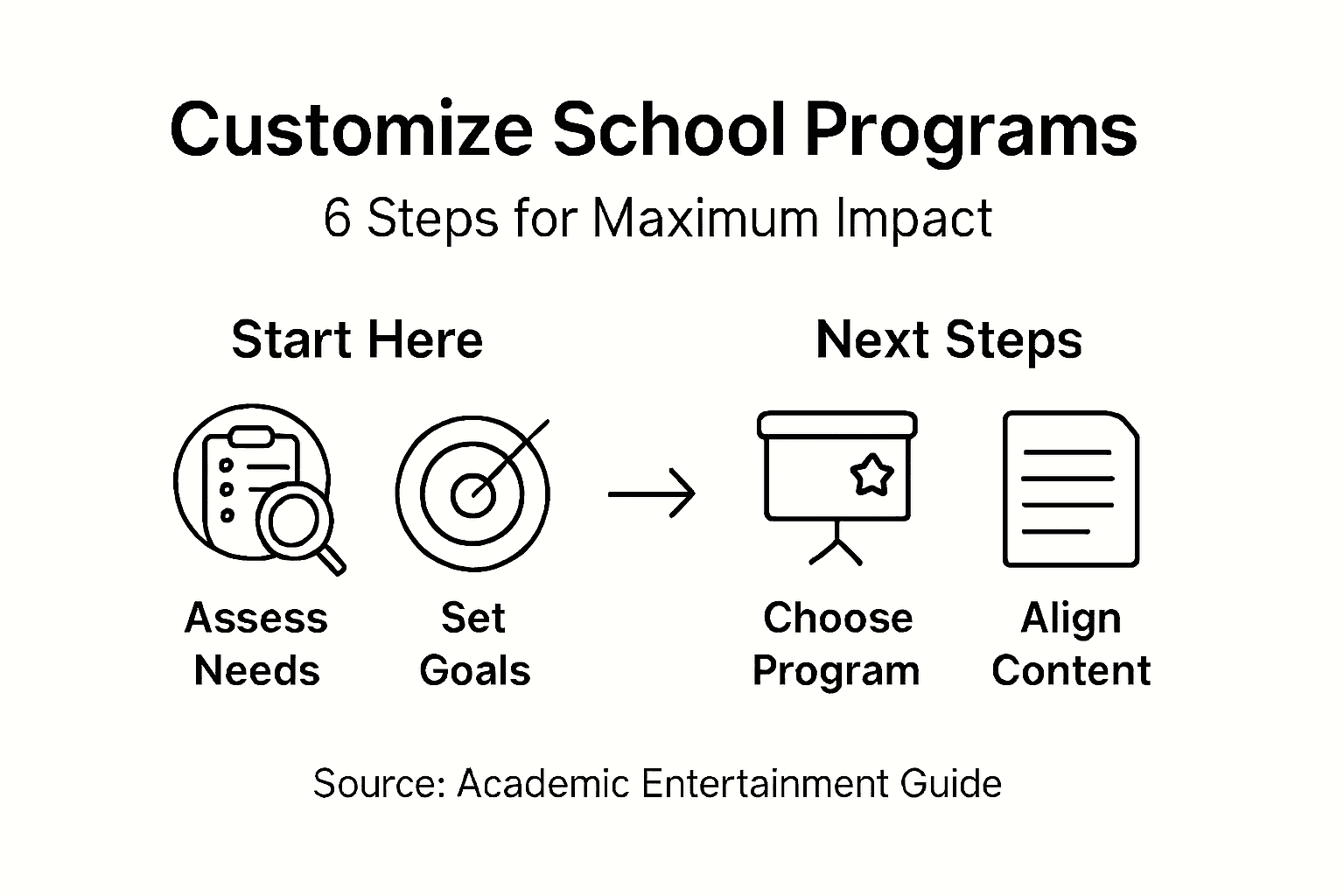
Step 1: Assess School Needs and Goals
Before you can customize a school program that actually resonates with your students, you need to understand exactly what your school community needs. This step forms the foundation for every decision that follows. You’re essentially asking yourself: What are our students struggling with? What does our school culture need? What gaps exist between where we are now and where we want to be?
Start by clarifying your purpose. Are you trying to address bullying concerns? Build cultural awareness? Strengthen character development? Or perhaps you’re responding to feedback from teachers and parents about what students lack. Conducting comprehensive needs assessments means identifying key stakeholders early on. This typically includes teachers, administrators, counselors, parents, and students themselves. Each group sees different angles of what your school community needs. A teacher might notice that students struggle with empathy in peer interactions, while a parent observes that their child comes home talking negatively about students from different backgrounds. Both perspectives matter.
Next, gather existing data about your school. Look at behavioral incidents, discipline referrals, attendance patterns, and student survey responses. What themes emerge? If you’re seeing clusters of bullying incidents in certain grade levels or at specific times, that tells you something. If student feedback consistently mentions feeling disconnected from peers who are different from them, that’s valuable intelligence. Analyzing gaps between current conditions and desired outcomes helps you target programs that address actual problems rather than guessing what might work. Talk to staff members informally. Ask teachers what behaviors concern them most. Ask counselors what issues they see in student interactions. These conversations often reveal patterns that data alone might not.
Once you’ve gathered information, identify your specific goals. Instead of saying “we want better school culture,” narrow it down: “We want sixth graders to show greater respect for cultural differences by spring” or “We want to reduce peer conflicts related to social exclusion.” When selecting educational programs tailored to your school’s specific goals, you’ll want to reference these clear targets. This clarity transforms customization from a vague concept into an actionable strategy. Your goals become the lens through which you evaluate every program option.
Pro tip: Document your findings in a simple one-page summary that lists your top 3-4 needs and corresponding goals, then share it with your entertainment provider when discussing program options. This ensures every customization conversation directly addresses what actually matters to your school.
Step 2: Select Relevant Educational Programming
Now that you understand your school’s needs and goals, it’s time to find the right educational programs that actually align with those priorities. This step separates schools that stumble through generic assembly programs from those that create meaningful impact. You’re looking for programs that speak directly to the challenges and opportunities you identified in your needs assessment.
Start by considering what types of programming address your specific goals. If your needs assessment revealed that students struggle with understanding cultural differences, look for programs focused on cultural awareness and diversity. If peer conflict and bullying emerged as key issues, prioritize character development and anti-bullying content. If you’re working with younger elementary students, you’ll want age-appropriate messaging and interactive formats that hold their attention. Evidence-based educational programs tend to deliver stronger results because they’ve been tested and refined. This doesn’t mean only choosing programs with published research studies behind them, but rather selecting providers who can explain how their content connects to actual learning outcomes and behavior change.
When evaluating specific programs, ask critical questions about customization options. Can the provider tailor content to your school’s culture? Will they address the particular grade levels you’re targeting? Can they weave in your school’s values or current initiatives? A program about respect might look completely different when delivered to sixth graders versus high schoolers, and a provider who understands this distinction will help you achieve stronger results. Look for examples of educational programs in your content area to see what customization possibilities exist. Talk directly with providers about your needs. Share that one-page summary you created earlier. The best providers will ask follow-up questions to understand your school context, not just pitch their standard offering.
Also consider the delivery format. Live performances, virtual programs, and interactive workshops each create different experiences and engagement levels. Your budget, logistics, and student population might favor one approach over another. Some schools find that live assemblies create powerful school-wide impact, while others use virtual programming for flexibility or smaller group sessions for deeper engagement. Programs addressing inclusive education and tailored approaches to learning tend to work better when they’re designed around your specific situation. Think about timing too. Will this program launch before or after a related classroom unit? Will you follow it up with classroom activities to reinforce the message? Programs that connect to ongoing school efforts generate more impact than standalone events.
Finally, verify that the program quality matches your investment. Check references from other Midwest schools. Read testimonials. Ask about student feedback mechanisms and what outcomes the provider tracks. A program that costs more but delivers measurable behavior change is often a smarter investment than a cheaper option that creates a fun assembly but little lasting impact.
Pro tip: Request a trial presentation or watch a recorded sample before fully committing, and ask the provider how they’ll measure success with your specific goals so you can track impact beyond just student enjoyment.
Step 3: Align Program Content with School Priorities
Selecting a program is one thing. Making sure that program actually connects to your school’s broader mission and immediate priorities is another. This step ensures that your educational entertainment investment doesn’t exist in isolation but rather becomes part of your school’s cohesive approach to student development. When programs align with your existing initiatives, their impact multiplies.
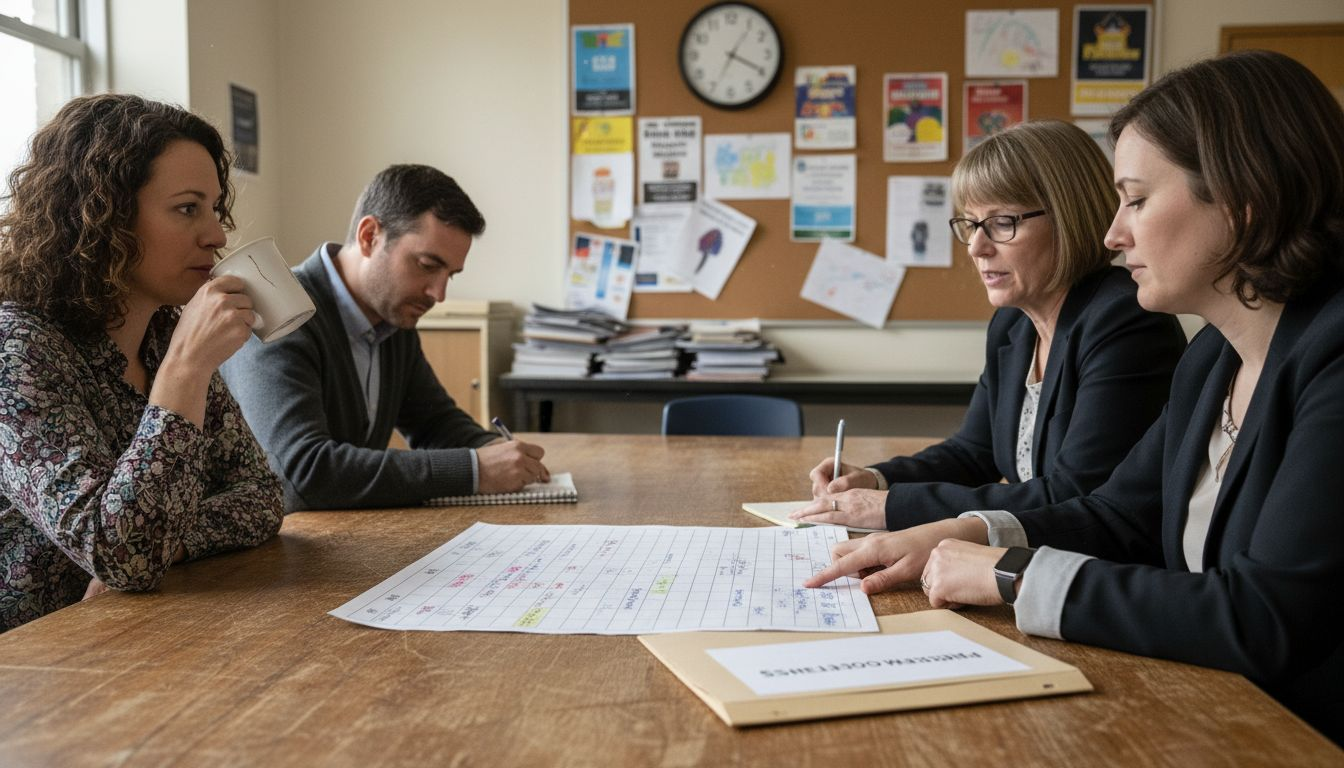
Start by mapping your program choice against your school’s current focus areas. What initiatives are already underway? Is your school emphasizing social emotional learning? Are you running a kindness campaign? Do you have classroom units on diversity happening in the spring? The more your educational program connects to these existing efforts, the more reinforcement students receive. If your school is launching a social emotional learning initiative, look for programs that align with your school’s SEL goals. Programs focused on character development, empathy, and conflict resolution naturally complement SEL work happening in classrooms. When teachers can reference the assembly program during lessons, students make stronger connections to the material. Talk with your instructional leadership team about what your school is emphasizing this year and next. Ask about curriculum themes, school-wide behavior expectations, and any special focus areas. Is one grade level diving deep into cultural studies? Are you addressing bullying in specific months? Are there school values or character traits you emphasize repeatedly? This conversation reveals opportunities for tight alignment.
Next, discuss customization details with your program provider. Share your school calendar, planned theme weeks, and specific grade-level needs. Can they weave in your school’s vocabulary or mission statements? Will they reference specific grade-level challenges you identified during your needs assessment? Programs customized to fit your curriculum and theme weeks deliver stronger results because students see consistent messaging across their school experience. A provider who takes time to understand your context can tailor their performance to hit your exact priorities. They might adjust examples, emphasize certain messages, or incorporate your school’s specific language around respect, diversity, or character. This personalization transforms a generic program into something that feels made for your community.
Consider the timing carefully as well. When will you schedule this program relative to classroom units? Will you ask teachers to do pre-assembly activities that prepare students for what they’ll see? Will you provide follow-up resources that extend learning after the program? The most impactful schools treat the program as a centerpiece of concentrated learning rather than a standalone event. Some schools build themed weeks around programs, embedding related classroom activities, discussion circles, and reflection activities. Others use programs to launch a unit or reinforce lessons already taught. Both approaches work when the program content actually addresses what your school is trying to accomplish.
Finally, get buy-in from your team. Share your program choice with teachers and ask them how they might connect it to their instruction. When classroom teachers see the program as supporting their work rather than interrupting it, they’ll reinforce messages afterward. This collaborative approach to alignment transforms a one-hour assembly into a meaningful touchstone for the entire school year.
Pro tip: Create a simple one-page alignment document showing how your chosen program connects to your SEL goals, current classroom units, and school priorities, then share it with teachers so they can plan connections and follow-up activities.
Step 4: Collaborate with Presenters for Customization
You’ve selected a program that aligns with your priorities. Now comes the work that separates average programs from transformative ones: actually collaborating with your presenter to customize the content for your specific school community. This step requires genuine partnership and clear communication. The best presenters view themselves as part of your team, not just vendors delivering a service.
Start this collaboration early. Don’t wait until two weeks before the event to contact your presenter. Reach out during the planning phase and explain what you’re trying to accomplish. Share your needs assessment findings, your school goals, and your current initiatives. Tell them about your specific student population. Are you dealing with a significant bullying issue? A recent conflict between student groups? A particular grade level that struggles with empathy or cultural understanding? Are you launching a school-wide kindness initiative? The more context you provide, the more meaningfully they can customize. Effective educational partnerships involve joint planning and identifying shared goals to ensure customization actually addresses your needs rather than just superficial tweaks. This means setting up real conversations, not just email exchanges where you tick boxes on a form.
During these conversations, be specific about what customization actually means to you. Does it mean incorporating your school’s name and values? Adjusting examples to reflect your student population’s interests and experiences? Emphasizing particular character traits or behaviors you’re emphasizing this year? Referencing current classroom learning? Including interactive elements that connect to something your students are studying? A presenter who asks clarifying questions is worth their weight in gold because they’re genuinely trying to understand your vision. Ask them what they can and cannot customize. Most quality presenters have significant flexibility, but understanding their boundaries helps you set realistic expectations. Ask to see examples of how they’ve customized for other schools. What did they change? How did teachers respond? Did it actually improve student engagement and learning? Resource sharing and adaptable presentations customized to school needs enhance program relevance far more than standard off-the-shelf offerings.
Don’t underestimate the power of pre-program communication either. Ask your presenter what context would help students get the most from the program. Should teachers introduce the topic the day before? Should students understand a particular concept beforehand? Some presenters provide discussion prompts or pre-assembly activities that prepare students mentally for what they’ll experience. Taking advantage of these resources deepens impact significantly. Request feedback mechanisms too. Ask how the presenter will know if the program connected with your students. Some use post-program surveys, others gather teacher feedback, still others use behavior tracking. Understanding how success will be measured ensures you’re on the same page about what customization should actually deliver.
Finally, establish a timeline for customization conversations. Ideally, you want to discuss details at least four to six weeks before the program. This gives the presenter time to prepare meaningful customization without rushing. It also gives you time to communicate details to teachers and prepare them to reinforce messages afterward. A presenter who seems rushed or dismissive of customization requests should raise a red flag. Quality providers understand that customization is where the real impact happens.
Pro tip: Create a customization brief document with five to seven specific requests or details you want the presenter to incorporate, then follow up with a phone call or video meeting to ensure they understand your vision and can deliver it authentically.
Step 5: Promote and Implement Customized Programs
You’ve done the groundwork. You’ve assessed needs, selected the right program, aligned it with your priorities, and collaborated with your presenter. Now comes the critical phase: actually promoting the program to your school community and executing it in a way that maximizes impact. How you roll this out determines whether students, teachers, and families see it as a meaningful part of your school culture or just another assembly.
Start your promotion well in advance. Don’t announce the program the week before it happens. Begin talking about it four to six weeks out so anticipation builds and teachers have time to plan connections. Explain to your school community why you selected this program. What needs were you addressing? How does it connect to your school’s mission? When parents and students understand the reasoning, they take it more seriously. Use multiple communication channels. Send information home to families. Post about it on your school website and social media. Have teachers discuss it in class. Some schools create posters or bulletin boards building excitement. The goal is creating genuine investment, not just showing up for an event. Promoting student engagement for impactful school events requires intentional communication that helps your community understand what makes this program worth their time and attention.
As you approach the implementation date, communicate specific details to your staff. Share your customization brief with teachers so they know what the program emphasizes. Provide them with discussion prompts or classroom activities to use before and after the program. Some teachers might introduce related vocabulary or concepts the day before. Others might facilitate reflection discussions the day after. The schools that see the biggest impact treat the program as a centerpiece of concentrated learning, not a standalone event. Make sure your presentation setup is solid too. Test audio and video if the program uses it. Know where the presenter will enter and exit. Understand the timing and what students should bring or know beforehand. A logistical hiccup can undermine what could have been a powerful experience. Successful implementation requires clear vision, adaptable planning, and strong stakeholder engagement throughout the rollout process.
During the actual program, be present and attentive. Watch how students respond. Notice which messages resonate. Pay attention to behavior and engagement. After the program, gather feedback quickly. Ask teachers what they observed. Distribute a brief student survey to gauge what stuck. Did students understand the main messages? What parts did they respond to most strongly? This data helps you understand what worked and informs future program selections. Within a week or two, follow up with classroom activities or discussions that reinforce the program’s messages. This continuation signals that the program mattered and extends its impact far beyond the one-hour event. Some schools use student journals, discussion circles, or behavior tracking tied to program themes. Others have teachers integrate program messages into ongoing lessons.
Finally, document your success. Keep copies of student feedback, teacher reflections, and any behavior data connected to the program. Take photos or videos if your presenter allows. Build a case study of what worked so you can reference it when selecting future programs or communicating program value to stakeholders. This documentation also helps you refine your approach for next time.
Pro tip: Create a simple one-page implementation checklist two weeks before the program that includes staff communication deadlines, pre-assembly activities, technology setup tasks, and post-program follow-up plans so nothing falls through the cracks.
Step 6: Evaluate Program Effectiveness and Gather Feedback
The program is over. Students are buzzing about what they experienced. Teachers are talking about the messages. Now comes the part that separates schools committed to continuous improvement from those that simply check a box: evaluating whether the program actually delivered the impact you hoped for. This step determines if your customization worked and informs every future program decision you make.
Start by collecting feedback from multiple sources immediately after the program. Teachers observed student reactions firsthand, so their perspectives are invaluable. Ask them what they noticed. Did students seem engaged? Which messages seemed to resonate most? Did any parts confuse or disconnect? Did you observe any behavior changes in the days following the program? Student feedback matters too. A simple survey asking what students learned, what they found most memorable, and how they felt about the program provides concrete data. Ask open-ended questions that let students share genuine reactions rather than just rating scales. You might ask, “What was one idea from this program that stuck with you?” or “How did this program help you understand something better?” Parent feedback offers another angle. What are families hearing their children talk about at home? Did the program spark conversations about the topics you emphasized? Employing multiple methods such as surveys and interviews to gather feedback ensures you capture a comprehensive picture rather than relying on a single perspective.
Use this table as a quick guide to types of data and feedback sources for evaluating program effectiveness:
| Data Source | What to Collect | Insight Provided |
|---|---|---|
| Teacher Observations | Engagement and behavior shifts | Real-time classroom impact |
| Student Surveys | Key takeaways and memorable moments | Student learning and feelings |
| Discipline Records | Behavior incidents before/after | Concrete change in school climate |
| Parent Feedback | Conversations reported at home | Home understanding and lasting impressions |
Next, evaluate the program against your original goals. Remember those specific, measurable goals you set during your needs assessment? This is where they prove their value. Did you want to increase student understanding of cultural differences? Track whether student responses show deeper awareness. Were you addressing bullying? Look at referral data in the weeks following the program to see if there’s any shift. Did you aim to strengthen character awareness? Ask teachers if they notice students referencing program messages in their behavior or conversations. Rigorous program evaluation measures learning outcomes and guides ongoing adjustments to improve effectiveness. The key is connecting the program to concrete changes in your school community. Some changes happen immediately and visibly. Others develop over weeks as messages take root and influence behavior. Both matter.
Consider timing in your evaluation too. Collect immediate feedback the day of or day after while the experience is fresh. Then gather data again two to three weeks later to see what students retained and how behavior has shifted. This longer-term view shows whether the program’s impact lasted or faded. Document everything you learn. Create a simple one-page evaluation summary that captures what worked, what didn’t, and what you’d do differently next time. Include student quotes that show what resonated. Include teacher observations about engagement and behavior changes. Include any measurable data you tracked. This documentation becomes your reference point when selecting future programs and defending your program choices to stakeholders. Over time, you build a portfolio showing which types of programs create real impact in your school community.
Finally, close the loop with your presenter. Share your evaluation results with them. If the program succeeded, tell them specifically what worked and why. If something fell short, discuss what might have contributed. Quality presenters want to know how their work landed in your school. This feedback helps them refine their approach for you and other schools. It also strengthens your partnership for future programs.
Pro tip: Create a simple evaluation template before the program that includes spaces for teacher observations, student survey results, behavior data, and goal alignment so you can quickly document findings while they’re still fresh in everyone’s minds.
Here’s a quick comparison of key steps to effectively customize and implement school programs:
| Step | Main Focus | Key Outcome | Common Pitfall |
|---|---|---|---|
| Assess Needs | Identify specific needs and goals | Clear program objectives | Vague or overly broad goals |
| Select Programs | Match offerings to needs | Relevant, impactful programming | Choosing generic content |
| Align Content | Connect to school priorities | Consistent messaging and buy-in | Isolated, one-off events |
| Collaborate for Customization | Work with presenters on details | Program tailored for audience | Last-minute or unclear requests |
| Promote & Implement | Communicate and coordinate launch | Strong engagement and smooth execution | Poor staff or community involvement |
| Evaluate & Gather Feedback | Measure outcomes and collect input | Evidence of impact and improvement | Ignoring feedback or data collection |
Unlock the Full Potential of Your School Programs with Expert Customization
Customizing school assemblies to match your unique needs can feel overwhelming when trying to pinpoint specific goals and align content with your school community’s priorities. This challenge often leads to generic programs that miss the mark on issues like anti-bullying, cultural awareness, or character development. If you are seeking measurable impact from your educational events and want a program that truly resonates with your students, you need a partner who understands how to turn your goals into engaging experiences.
At Academic Entertainment, we specialize in helping K-12 schools across the U.S. craft personalized live and virtual programs designed to target your specific challenges and enhance your school culture. With over 40 years of experience, our wide selection of shows—ranging from science and music to character education and diversity programs—can be tailored to fit your unique school themes and priorities. From initial needs assessment to collaborating on custom content and seamless implementation, we support you every step of the way to ensure your program creates lasting change.
Discover how easy it can be to transform your school assemblies into powerful learning experiences. Visit Academic Entertainment now to explore customizable programs that align perfectly with your school’s goals. Take the first step toward a more engaged and inspired student body today.
Frequently Asked Questions
How can I identify specific needs for our school program?
To identify specific needs, conduct a comprehensive needs assessment that includes input from teachers, parents, and students. Gather data from behavioral incidents, attendance patterns, and surveys to pinpoint key concerns within your school community.
What types of educational programs should I consider for my school’s goals?
Select educational programs that directly address the specific goals identified in your needs assessment. For example, if bullying is a concern, prioritize programs that focus on character development and anti-bullying initiatives.
How can I ensure the program aligns with our school’s existing initiatives?
Map the selected program against current school initiatives to ensure they complement one another. Look for ways to weave the program content into ongoing topics, such as social emotional learning or specific classroom units, for maximum impact.
What should I discuss with the presenter to customize the program effectively?
Communicate your specific needs, goals, and any relevant school context to the presenter. Be clear about what customization means for your school, such as incorporating your school’s values or tailoring examples to your students’ experiences.
How can I promote the program to maximize student engagement?
Promote the program at least four to six weeks before the event to build anticipation. Use various communication channels—like newsletters, social media, and classroom discussions—to explain the program’s purpose and connection to your school’s mission.
What steps should I take to evaluate the program’s effectiveness after implementation?
Immediately collect feedback from teachers, students, and parents following the program. Use surveys to assess what students learned and track behavior changes over the following weeks to evaluate whether the program met its original goals.
Recommended
- Can assemblies be customized to fit our school’s curriculum or theme week? – Academic Entertainment
- How to Promote Student Engagement for Impactful School Events – Academic Entertainment
- Understanding Educational Program Benefits for Schools – Academic Entertainment
- From Black History Month to Earth Day: Plan Impactful Assemblies – Academic Entertainment