

Across American schools, over half of educators report that student behavior challenges disrupt learning daily. With expectations rising, many administrators are searching for practical, lasting solutions that extend beyond basic discipline. Social and Emotional Learning assemblies offer a direct way to help students build skills like empathy, self-control, and teamwork in real moments. Discover how integrating these assemblies can motivate and prepare students for both academic and personal growth.
Key Takeaways
| Point | Details |
|---|---|
| SEL assemblies cultivate essential life skills | These experiences systematically develop students’ emotional intelligence and interpersonal skills, integrating them into the school environment. |
| Behavior transformation is a critical outcome | Targeted SEL assemblies significantly enhance behaviors, reducing disciplinary incidents and improving classroom dynamics. |
| Engagement is key to academic success | SEL programs create inclusive learning environments that foster student motivation and connection through meaningful participation. |
| Strategic implementation enhances effectiveness | Comprehensive planning and a commitment to SEL principles can lead to transformative changes in school climates and student support systems. |
Defining SEL Assemblies and Their Core Purpose
Social and Emotional Learning (SEL) assemblies represent strategic educational experiences designed to cultivate students’ critical interpersonal and intrapersonal skills beyond traditional academic instruction. Understanding the comprehensive framework of SEL reveals these assemblies as intentional platforms for developing students’ emotional intelligence, behavioral regulation, and social competence.
At their core, SEL assemblies aim to integrate essential life skills directly into the school environment. These structured programs focus on five key competency areas: self-awareness, self-management, social awareness, relationship skills, and responsible decision-making. By creating interactive, engaging experiences, schools can transform abstract social-emotional concepts into tangible learning opportunities that resonate with students across different age groups and backgrounds.
The purpose of SEL assemblies extends far beyond momentary engagement. These programs serve as critical interventions that systematically build students’ capacity to understand themselves, interact positively with others, and navigate complex social dynamics. Schools implementing robust SEL assembly programs recognize that emotional intelligence is not an inherent trait but a skill set that can be deliberately cultivated through targeted, developmentally appropriate experiences.
Pro tip: Select SEL assembly content that matches your student population’s specific developmental stage to maximize engagement and learning effectiveness.
Here’s a quick summary of the five core SEL competencies and their impact on student growth:
| SEL Competency | Main Focus | School Impact |
|---|---|---|
| Self-Awareness | Understanding emotions | Builds student confidence |
| Self-Management | Controlling impulses | Improves classroom behavior |
| Social Awareness | Recognizing others’ feelings | Fosters empathy and respect |
| Relationship Skills | Building healthy connections | Strengthens peer interactions |
| Responsible Decision-Making | Choosing positive actions | Enhances problem-solving |
Key Components and Formats of SEL School Assemblies
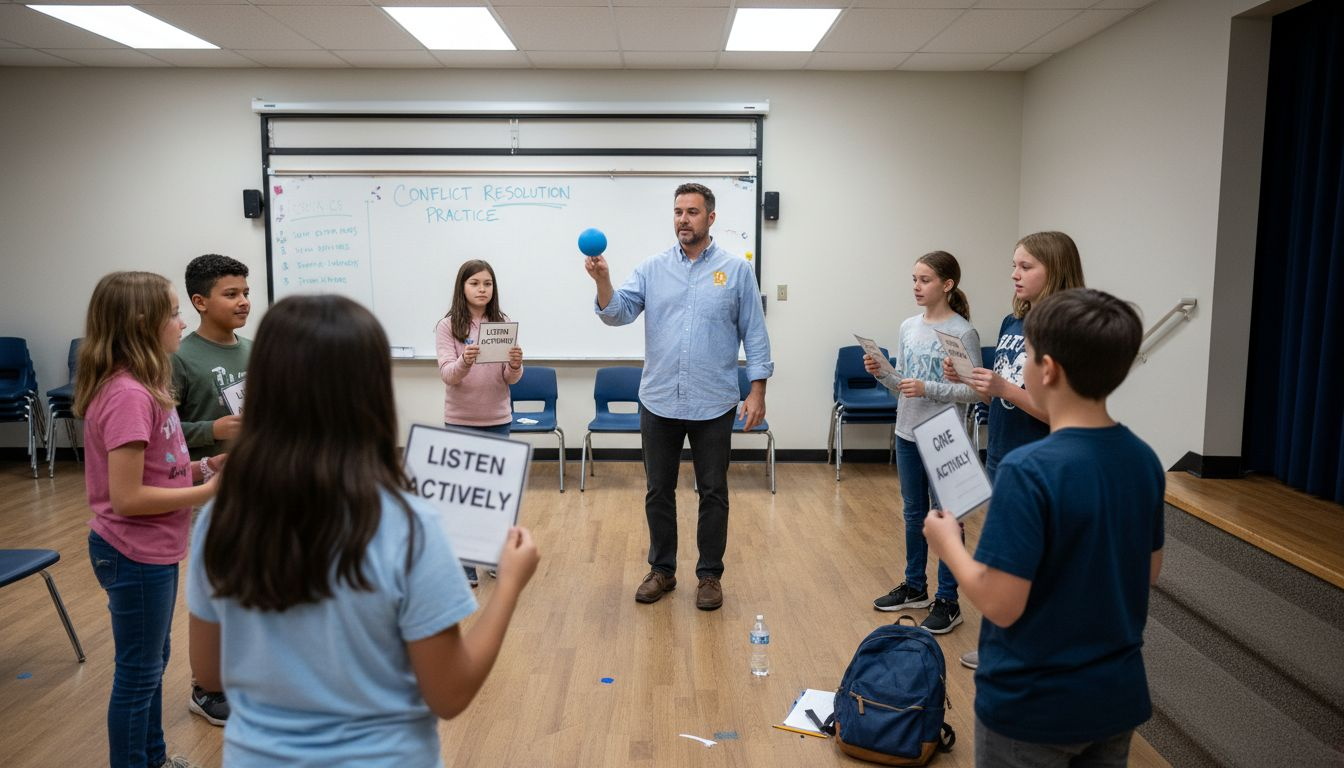
Social-Emotional Learning (SEL) school assemblies are comprehensive experiences designed to systematically develop students’ emotional intelligence through structured, engaging formats. Schoolwide SEL integration involves carefully crafted approaches that transform traditional assembly models into powerful learning opportunities across multiple competency domains.
These assemblies typically incorporate several key components that promote holistic student development. Key formats include:
- Interactive presentations that encourage student participation
- Storytelling sessions highlighting emotional growth narratives
- Role-playing scenarios demonstrating social skill application
- Group activities designed to build collaborative understanding
- Reflective exercises promoting self-awareness
Strategic assembly designs focus on creating positive social-emotional climates through structured engagement. Successful programs incorporate welcoming activities, interactive learning strategies, and optimistic closure techniques that help students internalize critical social skills while maintaining an engaging, supportive environment.
Pro tip: Design SEL assembly content with clear learning objectives and interactive elements to maximize student engagement and skill retention.
How SEL Assemblies Improve Student Behavior
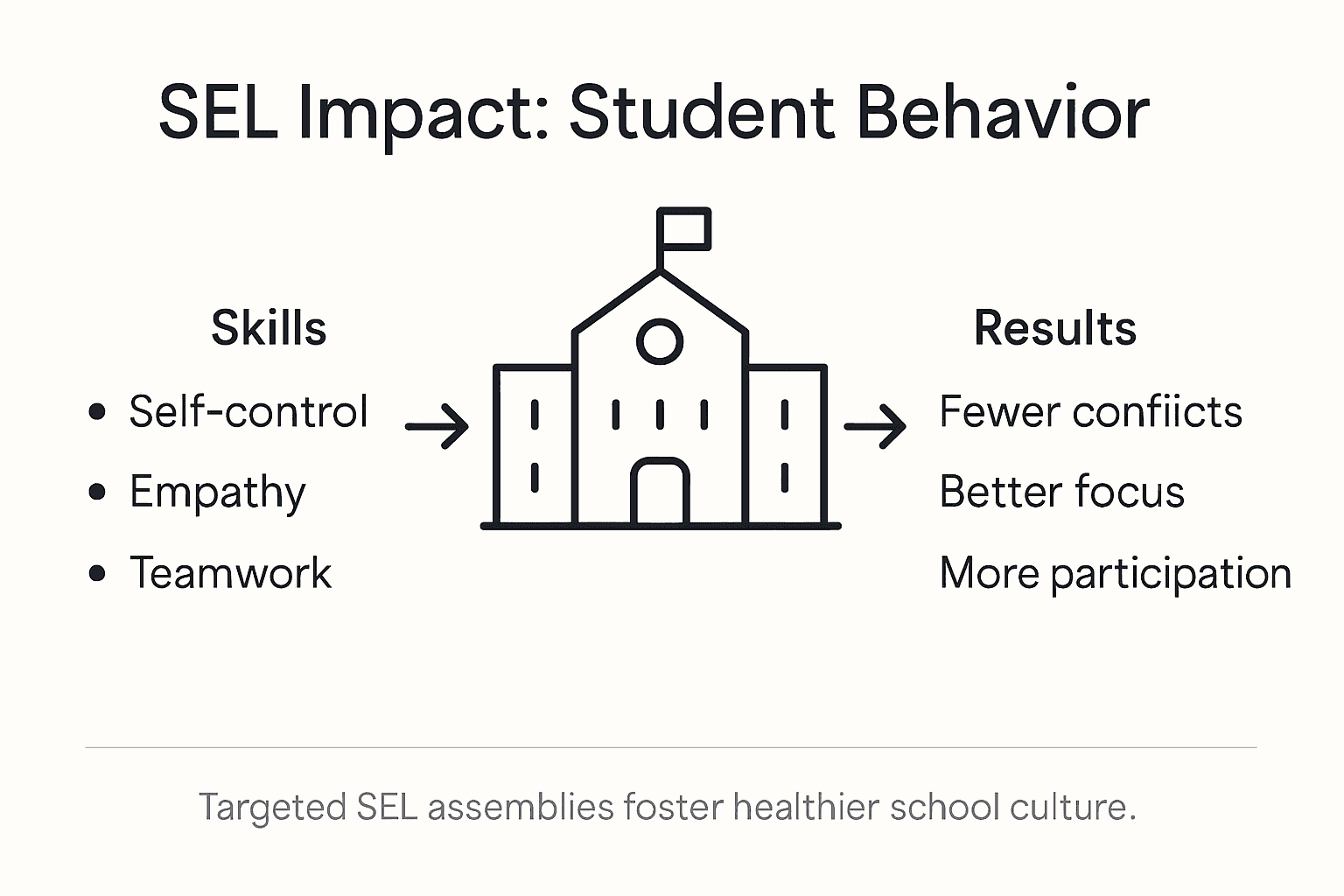
Student behavior transformation is a critical outcome of well-designed Social-Emotional Learning (SEL) assemblies. Comprehensive research demonstrates significant behavioral improvements through targeted SEL interventions, revealing how structured assemblies can dramatically reduce disciplinary incidents and enhance positive student interactions.
The behavioral benefits of SEL assemblies manifest in multiple dimensions. Students develop essential skills that directly impact classroom dynamics:
- Enhanced emotional regulation
- Improved conflict resolution abilities
- Increased empathy and understanding
- Reduced aggressive responses
- Better interpersonal communication strategies
Extensive meta-analyses confirm that targeted SEL programs significantly decrease behavioral problems and emotional distress. By teaching students critical coping mechanisms, resilience-building techniques, and emotion identification strategies, these assemblies create a foundational framework for healthier psychological and social development. The result is a more positive classroom environment where students can focus on learning and personal growth rather than managing emotional challenges.
Pro tip: Implement consistent SEL assembly themes that build upon each other, creating a cohesive behavioral skill development pathway throughout the academic year.
Supporting Student Engagement Through SEL Programs
Student engagement represents a critical foundation for academic success, and Social-Emotional Learning (SEL) programs offer a powerful framework for cultivating meaningful student involvement. SEL strategies create classroom environments that systematically support student motivation and connection, enabling students to feel genuinely valued and intellectually empowered.
The engagement mechanisms of SEL programs manifest through multiple interconnected dimensions:
- Developing strong interpersonal relationships
- Enhancing emotional self-regulation skills
- Promoting cognitive participation
- Encouraging authentic classroom interactions
- Building intrinsic motivation for learning
Research consistently demonstrates that comprehensive SEL approaches significantly improve student engagement by addressing both academic and social-emotional needs. By emphasizing skills like perseverance, collaboration, and self-awareness, these programs create inclusive learning environments where students feel supported, understood, and motivated to actively participate. The result is a transformative educational experience that goes beyond traditional academic instruction, nurturing students’ holistic development and long-term academic potential.
Pro tip: Design SEL engagement strategies that provide multiple participation pathways, allowing students with different learning styles and comfort levels to meaningfully contribute.
Practical Strategies for Successful SEL Implementation
Social-Emotional Learning (SEL) implementation requires a strategic, multifaceted approach that goes beyond simple program adoption. Comprehensive SEL implementation demands careful planning and systemic commitment from educational leaders, teachers, and support staff to create meaningful transformation in school environments.
Successful SEL integration involves several critical strategic components:
- Establishing clear organizational goals and shared language
- Providing targeted professional development for educators
- Embedding SEL principles across academic curricula
- Creating supportive, inclusive school climates
- Developing robust assessment and feedback mechanisms
Effective SEL strategies require a holistic approach, involving multiple stakeholders and creating comprehensive systems of support. By fostering adult SEL competencies, engaging student leadership, and maintaining continuous data-driven reflection, schools can develop nuanced, responsive programs that address the complex social-emotional needs of their student populations. This approach transforms SEL from a standalone initiative to an integrated, sustainable framework for student development.
Pro tip: Conduct periodic stakeholder surveys to continuously refine and align SEL implementation strategies with the evolving needs of your school community.
Comparing SEL Assemblies to Other Schoolwide Approaches
School-based intervention strategies represent complex ecosystems of support designed to nurture student growth and development. SEL assemblies distinguish themselves from other schoolwide approaches by emphasizing proactive social-emotional skill development rather than solely focusing on behavioral management or academic performance.
Key distinctions between SEL assemblies and alternative approaches include:
- MTSS: Focuses on tiered academic and behavioral interventions
- PBIS: Primarily addresses behavior management systems
- SEL Assemblies: Centralize social-emotional competency building
- Traditional Approaches: Often reactive, SEL is proactive
- Comprehensive SEL: Integrates skill development across multiple contexts
Comprehensive schoolwide SEL implementation transcends traditional intervention models, creating holistic environments that support student development through interconnected strategies. By combining classroom instruction, family engagement, community partnerships, and targeted assemblies, schools can develop nuanced approaches that address students’ complex social-emotional needs more effectively than fragmented, single-dimensional interventions.
Pro tip: Create cross-functional teams that include administrators, teachers, counselors, and student representatives to design integrated SEL strategies that leverage the strengths of multiple intervention approaches.
Below is a comparison of SEL assemblies with two popular schoolwide approaches:
| Approach | Primary Focus | Strengths | Typical Outcomes |
|---|---|---|---|
| SEL Assemblies | Social-emotional skill growth | Proactive life skills development | Sustained behavior improvement |
| MTSS | Tiered academic/behavioral | Targeted interventions at all levels | Broad academic support |
| PBIS | Positive behavior systems | Encourages consistent expectations | Reduced discipline incidents |
Enhance Student Behavior and Engagement with Expert SEL Assemblies
Successfully addressing the challenges of boosting student behavior and engagement calls for dynamic and impactful solutions. The article highlights the power of Social-Emotional Learning assemblies to develop core competencies like self-awareness, responsible decision-making, and relationship skills. Schools face the goal of creating emotionally intelligent, motivated learners who thrive in supportive environments.
Academic Entertainment offers a diverse selection of educational assembly programs tailored for K-12 students across the United States. Our carefully designed live and virtual shows bring social-emotional skills to life through compelling storytelling, interactive performances, and culturally inclusive content. These assembly shows perfectly complement your SEL goals by fostering empathy, resilience, and positive classroom behavior in an engaging way. Shows like: Mr. Peace, Mystery of the Character Surprise, Confident Concerts, and Cory the Dribbler. There are many more to choose from, depending on the location of your school.
Ready to transform your school culture with assemblies that support SEL goals and captivate your students? Explore our offerings and customize programs that align with your developmental needs. Discover trusted solutions that have enhanced student engagement for over 40 years by visiting Academic Entertainment. Get started today to create meaningful learning experiences that empower your students and reinforce key SEL competencies. Find the perfect fit for your school’s vision now.
Frequently Asked Questions
What are SEL assemblies and their main purpose?
SEL assemblies are structured educational experiences aimed at developing students’ social and emotional skills. Their core purpose is to integrate essential life skills like self-awareness, self-management, social awareness, relationship skills, and responsible decision-making into the school environment.
How do SEL assemblies improve student behavior?
SEL assemblies improve student behavior by teaching critical skills such as emotional regulation and conflict resolution. Research shows that these targeted interventions can reduce disciplinary incidents and enhance positive interactions among students, creating a better classroom environment.
What are the key components of an effective SEL assembly?
Effective SEL assemblies typically include interactive presentations, storytelling, role-playing, group activities, and reflective exercises. These components promote engagement and build a positive social-emotional climate in the school.
How can schools implement SEL programs successfully?
Schools can implement SEL programs successfully by establishing clear goals, providing professional development for educators, embedding SEL in the curriculum, and creating supportive school climates. Regular assessment and stakeholder feedback are also important for continually refining the program.
Recommended
- Understanding the Role of Assemblies for Elementary Students – Academic Entertainment
- How School Assemblies support Social Emotional Learning (SEL) Initiatives – Academic Entertainment
- What Are Interactive Assemblies? Understanding Their Impact – Academic Entertainment
- 6 Keys: From Passive to Participating—Why Interactive School Assemblies Keep Students Engaged Longer – Academic Entertainment


