Over 80 percent of American schools report increased student engagement when assemblies are used for character education. Administrators face growing challenges in addressing bullying, emotional intelligence, and respect in ways that actually impact daily student life. This guide spotlights proven assembly strategies that help American educators transform school culture, encourage genuine ethical growth, and inspire student participation in social responsibility programs.
Key Takeaways
| Point | Details |
|---|---|
| Character Education Assemblies | These structured gatherings foster discussions on values like respect and empathy beyond traditional classroom learning. |
| Diverse Assembly Strategies | Motivational speakers, interactive performances, and peer leadership are effective types of assemblies that engage students in character development. |
| Effective Core Elements | Clear moral objectives, experiential learning, and consistent reinforcement are crucial for impactful character education. |
| Importance of Community Engagement | Involving families and local communities enhances character education initiatives and strengthens student support systems. |
Assemblies as Tools for Character Education
School assemblies have emerged as powerful platforms for advancing character education initiatives beyond traditional classroom instruction. These structured gatherings provide unique opportunities to engage students collectively in meaningful discussions about ethical behavior, social responsibility, and personal development.
At their core, character education assemblies aim to cultivate fundamental values like respect, integrity, empathy, and accountability. By presenting compelling narratives, interactive performances, and motivational presentations, schools can create immersive experiences that transcend typical academic learning. These programs strategically introduce complex moral concepts through engaging storytelling techniques that resonate with students across different age groups.
Effective character education assemblies typically incorporate several key elements to maximize impact. These include interactive presentations that encourage student participation, real-world scenario demonstrations, personal storytelling from inspirational speakers, and structured reflection opportunities. Schools can leverage these assemblies to address critical social issues like bullying prevention, emotional intelligence, conflict resolution, and community building.
Pro tip: When designing character education assemblies, focus on creating interactive experiences that allow students to actively reflect on and practice the values being discussed, rather than passive lecture-style presentations.
Types of Character-Focused School Assemblies
Schools can leverage multiple character education assembly strategies to cultivate positive student behaviors and social skills. These specialized assemblies are strategically designed to address different aspects of character development, targeting specific age groups and educational objectives.
The first category includes Motivational Speaker Assemblies, which feature inspirational individuals sharing personal stories of overcoming challenges, demonstrating resilience, and promoting ethical decision-making. These presentations typically focus on themes like personal responsibility, goal setting, and self-respect. Professional speakers often use engaging storytelling techniques that help students connect emotionally with core character values.
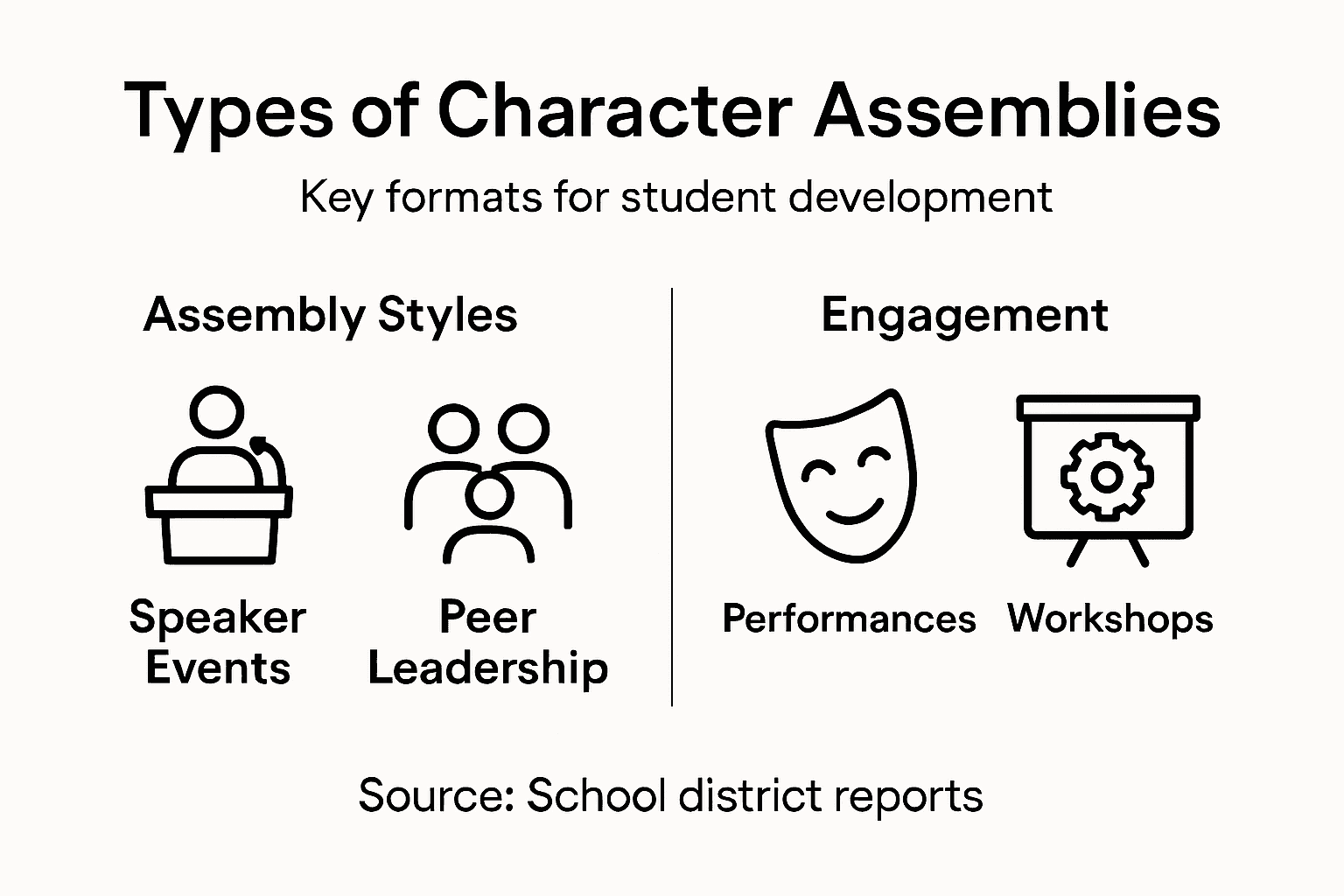
Another prominent type is Interactive Performance Assemblies, which utilize theatrical productions, music, dance, or multimedia presentations to communicate character lessons. These dynamic programs transform abstract moral concepts into memorable, entertaining experiences. By combining artistic expression with educational content, schools can effectively communicate complex social skills like empathy, cooperation, and conflict resolution in ways that resonate with students.
The third category encompasses Peer Leadership Assemblies, which empower student representatives to share experiences, demonstrate positive behaviors, and model character traits for their peers. These assemblies create powerful opportunities for student-to-student learning, allowing younger students to see character development modeled by relatable role models from within their own school community.
Pro tip: When designing character-focused assemblies, prioritize interactive elements that encourage student reflection and active participation to maximize learning impact.
Here’s a comparison of popular character-focused school assembly types and their distinctive benefits:
| Assembly Type | Key Focus | Engagement Method | Impact on Students |
|---|---|---|---|
| Motivational Speaker | Resilience, ethics | Storytelling, personal life | Inspires and builds aspiration |
| Interactive Performance | Empathy, cooperation | Theater, music, multimedia | Promotes active understanding |
| Peer Leadership | Student role modeling | Peer sharing, demonstrations | Fosters community and connection |
Core Elements of Effective Character Assemblies
Schools seeking to develop robust character education programs must understand the foundational principles of character development. These core elements go beyond simple instruction, creating comprehensive approaches that transform school culture and student behavior through strategic, intentional programming.
The first critical element involves establishing Clear Moral Objectives. Effective character assemblies must articulate specific values and behavioral expectations with precision. This means defining concrete skills like empathy, integrity, respect, and responsibility in ways students can understand and implement. By providing clear, actionable guidance, schools create a framework that helps students translate abstract moral concepts into practical daily actions.
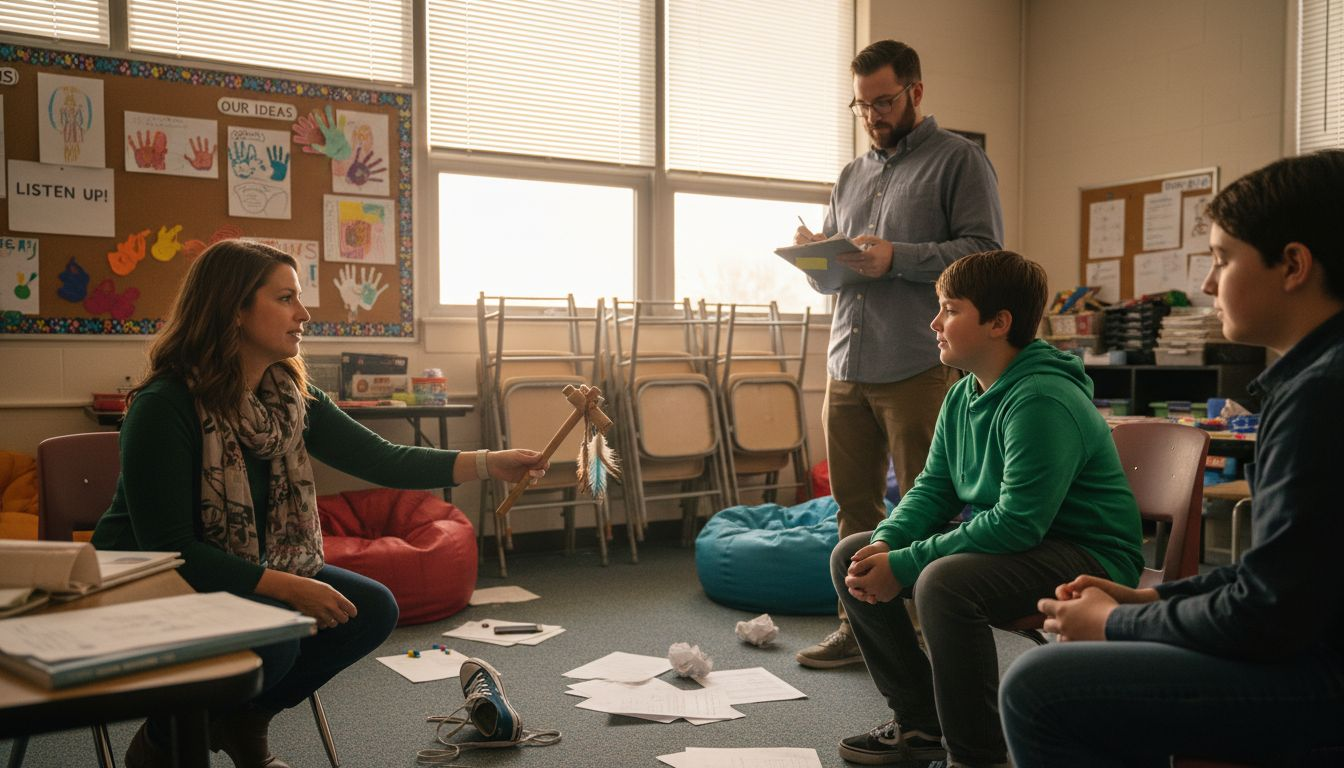
Another essential component is Experiential Learning Strategies. Character assemblies should move beyond lecture-style presentations to create immersive, interactive experiences that allow students to practice and internalize character traits. This approach might include role-playing scenarios, student-led discussions, real-world problem-solving activities, and opportunities for personal reflection. The goal is to engage students emotionally and intellectually, making character development a dynamic, participatory process.
The final key element centers on Consistent Reinforcement. Character education is not a one-time event but a continuous journey that requires ongoing support from educators, administrators, and the entire school community. Successful assemblies create momentum by connecting classroom lessons, extracurricular activities, and school policies into a unified approach to character development.
Pro tip: Design character assemblies with measurable outcomes and built-in reflection mechanisms to ensure meaningful, sustainable impact on student behavior.
Key Roles for Educators and Administrators
Educators and administrators are fundamental architects of character education leadership, implementing strategic approaches that transform school environments. Their responsibilities extend far beyond traditional academic management, encompassing a holistic approach to student development that integrates character building into every aspect of school life.
The first critical role involves Instructional Leadership. Administrators must design comprehensive character education frameworks that align with academic goals, creating systemic approaches that integrate character development across curriculum and school culture. This requires developing professional development programs, establishing clear character education policies, and creating evaluation mechanisms that measure the impact of character-building initiatives.
Another essential responsibility is Active Modeling. Educators serve as primary role models, demonstrating the character traits they wish to cultivate in students. This means consistently exhibiting values like integrity, respect, empathy, and accountability in their daily interactions. School leaders must create opportunities for staff to showcase these traits through transparent decision-making, collaborative problem-solving, and genuine commitment to ethical behavior.
The third key role centers on Community Engagement. Successful character education requires building robust partnerships between schools, families, and local communities. Administrators must develop communication strategies that involve parents, local organizations, and community leaders in character development efforts, creating a unified support system that reinforces positive behavioral expectations beyond school walls.
Pro tip: Develop a consistent feedback mechanism that allows students, teachers, and parents to provide input on character education initiatives, ensuring continuous improvement and adaptation.
Below is a reference table highlighting roles educators and administrators play in strong character programs:
| Role | Core Responsibility | Example Action |
|---|---|---|
| Instructional Leader | Aligns character and academic objectives | Designs schoolwide value policies |
| Active Model | Demonstrates positive traits daily | Leads with empathy and fairness |
| Community Builder | Forges partnerships with families/groups | Organizes joint school events |
Common Pitfalls and Success Strategies
Navigating character education requires understanding critical challenges in character formation. Schools must proactively identify potential obstacles and develop strategic approaches to create meaningful, sustainable character development programs.
One significant pitfall involves Superficial Implementation. Many schools approach character education as a checklist item rather than a comprehensive cultural transformation. This happens when administrators merely host occasional assemblies without creating consistent, integrated systems that reinforce character values across all school interactions. Successful programs develop holistic frameworks that embed character education into academic curricula, extracurricular activities, disciplinary approaches, and daily communication patterns.
Another critical challenge is Misaligned Motivational Strategies. Schools often rely on external rewards or punitive measures that undermine intrinsic moral development. Instead of fostering genuine ethical understanding, these approaches can create transactional mindsets where students pursue good behavior for rewards rather than developing authentic internal values. Effective character education programs focus on helping students understand the inherent value of positive character traits, encouraging self-reflection and personal growth.
The final key consideration centers on Cultural Sensitivity. Character education must recognize and respect diverse cultural perspectives while maintaining core ethical principles. This requires creating inclusive approaches that validate students’ individual backgrounds while promoting universal values like respect, empathy, and personal responsibility. Schools must engage families, community leaders, and students themselves in developing character education strategies that feel authentic and meaningful.
Pro tip: Create ongoing feedback mechanisms that allow students to provide input on character education initiatives, ensuring the approach remains dynamic and genuinely student-centered.
Elevate Your School’s Character Assemblies with Engaging Programs
Character education assemblies play a crucial role in building respect, empathy, and accountability among students. Yet, schools often face challenges such as superficial implementation and lack of interactive experiences that truly inspire lasting change. Academic Entertainment understands these pain points and offers a rich selection of assembly programs designed to create immersive, meaningful moments that bring core values to life. From motivational speakers to interactive performances, our offerings align perfectly with the principles of effective character education discussed in the article.
Discover how you can transform your school culture by booking assemblies tailored to foster student reflection, participation, and leadership. Visit Academic Entertainment now to explore our extensive lineup of educational and character-focused assemblies. Take the next step to inspire your students with trusted programs backed by over 40 years of experience. Start shaping a positive school environment today by browsing our opportunities for character education assemblies and learn how to seamlessly integrate ethical learning with entertaining presentations.
Frequently Asked Questions
What are character education assemblies?
Character education assemblies are structured gatherings in schools aimed at promoting ethical behavior, social responsibility, and personal development by engaging students in discussions about core values like respect, integrity, and empathy through interactive presentations and storytelling.
How can schools implement effective character education assemblies?
Schools can implement effective character education assemblies by focusing on key elements such as establishing clear moral objectives, utilizing experiential learning strategies, and ensuring consistent reinforcement of character traits throughout the school culture.
What types of assemblies are best for promoting character development?
There are several types of assemblies, including Motivational Speaker Assemblies, Interactive Performance Assemblies, and Peer Leadership Assemblies, each designed to engage students through storytelling, artistic expression, and peer role modeling to communicate important character lessons.
What role do educators play in character education assemblies?
Educators play a crucial role as instructional leaders and active role models, helping to establish character education frameworks, demonstrating positive traits, and fostering community engagement to create a supportive environment for character development.
Recommended
- Building Better Students: Character Assemblies’ Impact – Academic Entertainment
- Understanding the Role of Assemblies for Elementary Students – Academic Entertainment
- Benefits of Assemblies: Complete Guide for Schools – Academic Entertainment
- What’s The Purpose Of An All-School Assembly – Academic Entertainment