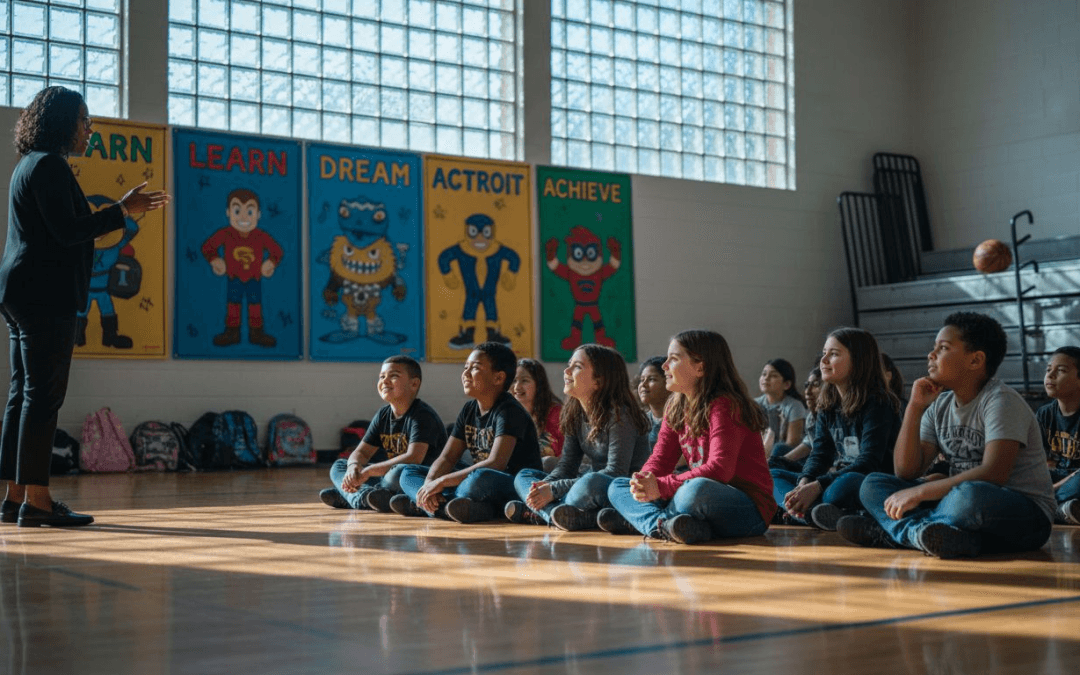
Busy Detroit area schools often struggle with finding effective ways to shape positive student behavior and build a supportive school culture. Administrators need more than quick fixes—they want proven solutions that reach beyond the classroom. Comprehensive social-emotional learning experiences like character development assemblies give students opportunities to practice respect, responsibility, and empathy in real time, helping schools move closer to lasting change.
Key Takeaways
| Point | Details |
|---|---|
| Character Development Assemblies Improve Behavior | Assemblies create immersive learning environments that effectively foster emotional regulation, prosocial behavior, and ethical decision-making among students. |
| Diverse Program Approaches | Various strategies, such as interactive assemblies and peer leadership programs, can be tailored to meet different student needs and learning styles. |
| Alignment with School Culture is Essential | Successful assemblies must connect with the school’s mission and reflect its cultural values to enhance engagement and effectiveness. |
| Ongoing Evaluation and Adaptation | Continuous feedback and assessment are vital for refining assembly content and ensuring long-term impact on student behavior and growth. |
Defining Character Development Assemblies
Character development assemblies represent strategic educational experiences designed to cultivate students’ moral and ethical capabilities beyond traditional academic instruction. These specialized programs go far deeper than simple motivational talks, instead offering comprehensive social-emotional learning opportunities that help young people understand and internalize positive behavioral principles.
At their core, these assemblies are deliberate school-based activities focused on developing critical character traits such as:
- Respect for self and others
- Personal responsibility
- Trustworthiness
- Fairness
- Compassion and caring
Unlike traditional classroom lessons, character development assemblies create immersive environments where students can actively engage with ethical concepts through interactive presentations, storytelling, and participatory experiences. These events view character not as a fixed attribute, but as a dynamic developmental system that continuously evolves through social interactions and emotional learning.
Here’s a summary showing the differences between character development assemblies and traditional classroom lessons:
| Aspect | Character Development Assemblies | Traditional Lessons |
|---|---|---|
| Approach | Interactive, immersive | Lecture-based, structured |
| Focus | Moral and social growth | Academic content |
| Engagement | Student participation | Passive learning |
| Outcome | Lasting behavior change | Knowledge retention |
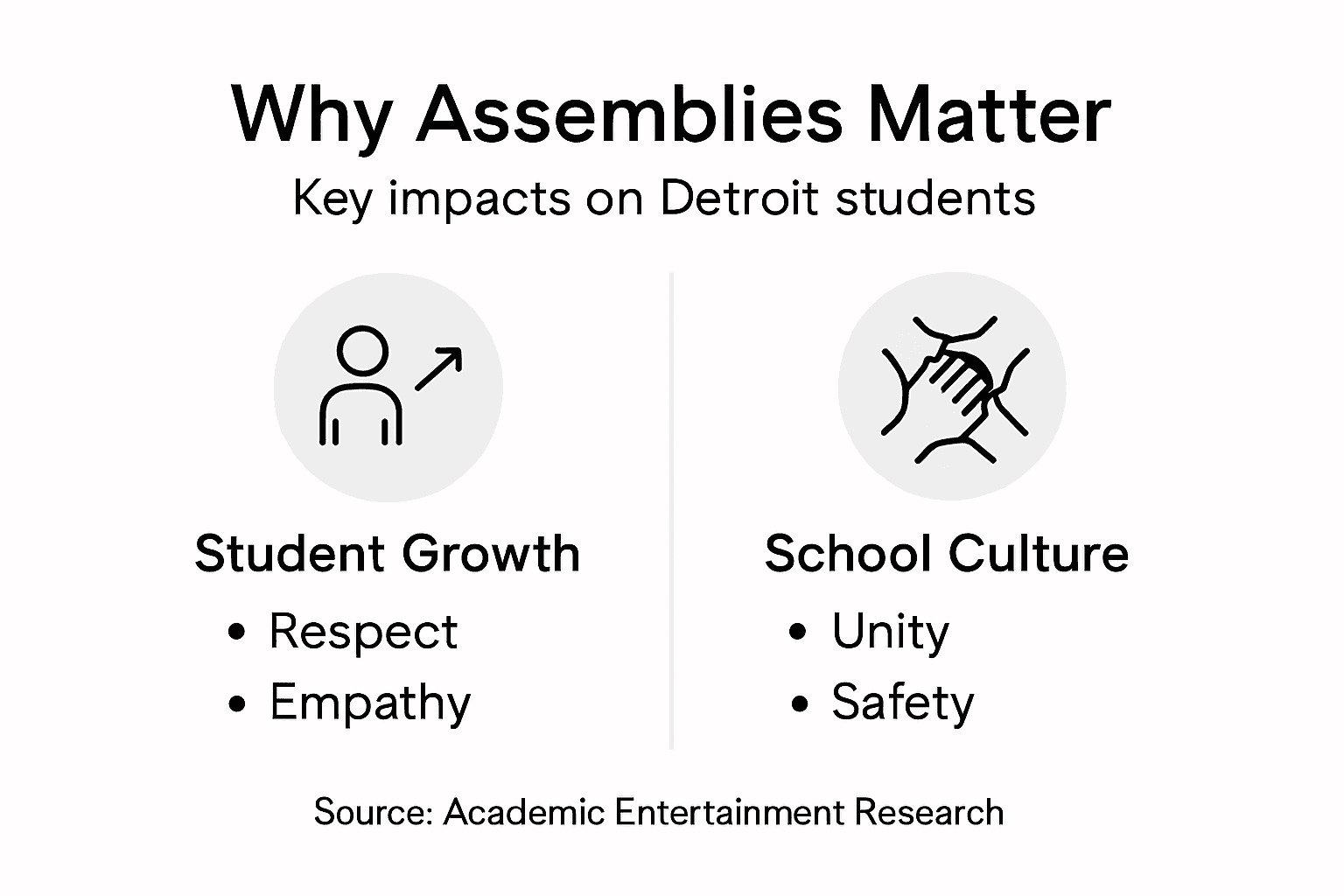
Research indicates that well-designed character development assemblies can significantly impact student behavior by providing structured opportunities for moral reasoning and social-emotional skill building. Multifaceted character development models emphasize context-responsive growth, recognizing that character formation is a complex, nuanced process involving cognitive, emotional, and social dimensions.
Pro tip: Evaluate character development assembly effectiveness by observing subsequent student interactions and measuring improvements in social-emotional competencies.
Key Features and Types of Programs
Character development programs in Detroit schools encompass a diverse range of approaches designed to foster ethical growth and social-emotional learning. Comprehensive character education initiatives typically incorporate multiple strategies to engage students across different learning styles and developmental stages.
Key program types include:
- Interactive Assemblies: Large-group presentations focusing on moral storytelling and collective reflection
- Peer Leadership Programs: Student-led initiatives that develop mentorship and positive role modeling
- Small Group Workshops: Targeted sessions addressing specific character traits and social skills
- Experiential Learning Projects: Community service and collaborative activities that demonstrate ethical principles in action
- Classroom Integration Modules: Curriculum-based lessons embedding character development within academic subjects
These programs are not one-size-fits-all but are carefully designed to meet the unique needs of different student populations. Contextual adaptation plays a crucial role in ensuring that character development strategies resonate with students’ lived experiences and cultural backgrounds.
Successful character development programs go beyond simple lectures, creating immersive experiences that allow students to actively explore and internalize ethical principles. By combining multiple approaches, schools can create a holistic framework that supports students’ moral and social growth throughout their educational journey.
Pro tip: Design character development programs with flexibility, allowing for customization based on specific school community needs and student demographics.
How Assemblies Influence Student Behavior
Character development assemblies play a transformative role in shaping student behavior by creating powerful opportunities for moral learning and social skill development. Evidence demonstrates significant behavioral improvements through structured educational experiences that go beyond traditional classroom instruction.
The key behavioral impacts of these assemblies include:
- Emotional Regulation: Teaching students strategies for managing complex feelings and responding constructively to challenges
- Prosocial Behavior: Encouraging empathy, cooperation, and positive interactions among peers
- Conflict Resolution: Providing tools and frameworks for understanding and resolving interpersonal disagreements
- Self-Reflection: Developing students’ capacity to critically examine their own actions and motivations
- Ethical Decision-Making: Building foundational skills for making principled choices in various social contexts
These assemblies work by creating immersive learning environments that engage students through storytelling, interactive experiences, and relatable scenarios. By presenting moral concepts through compelling narratives and real-world examples, they help students internalize complex ethical principles more effectively than traditional lecturing.
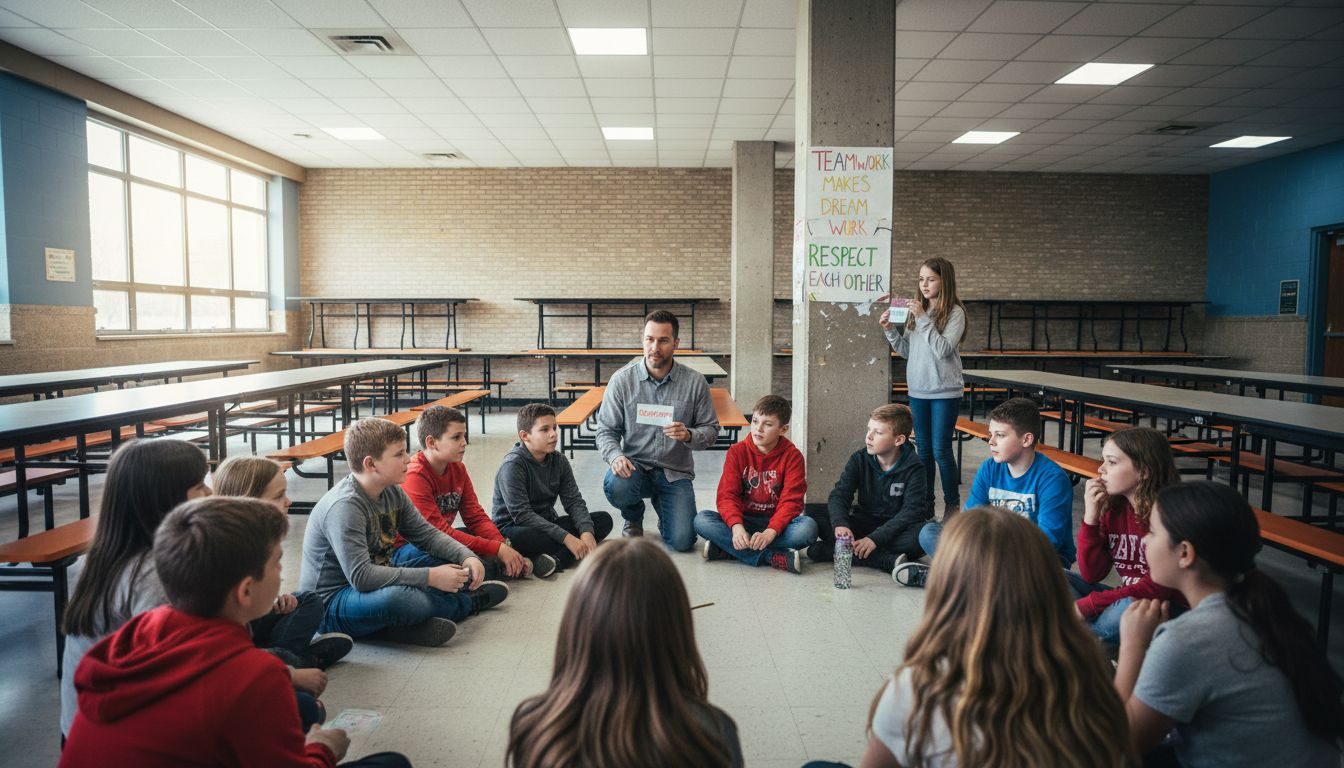
Moreover, character development assemblies are particularly powerful because they address behavioral patterns systemically, targeting not just individual actions but the underlying thought processes and emotional responses that drive student conduct. This holistic approach ensures that learning extends beyond the assembly itself, fostering lasting positive changes in students’ social interactions and personal growth.
Pro tip: Design assembly content with interactive elements that encourage student participation and personal reflection to maximize behavioral impact.
Aligning Assemblies With School Culture Goals
Successful character development assemblies require strategic alignment with each school’s unique cultural context and institutional objectives. Culture-based assemblies in schools must be carefully designed to reflect and reinforce the specific values and behavioral expectations of the educational community.
Key strategies for alignment include:
- Mission Integration: Directly connecting assembly themes to the school’s core mission and vision
- Values Mapping: Identifying specific character traits that resonate with the school’s existing cultural framework
- Stakeholder Collaboration: Engaging administrators, teachers, and student representatives in assembly content development
- Contextual Relevance: Tailoring stories, examples, and scenarios to reflect the school’s demographic and social landscape
- Continuous Feedback: Implementing mechanisms to assess and refine assembly impact on school culture
Detroit schools can particularly benefit from this approach by creating culturally responsive character development experiences that speak directly to the diverse backgrounds and lived experiences of their student populations. By recognizing the unique challenges and strengths of urban educational environments, assemblies can become powerful tools for building collective identity and shared values.
The most effective character development assemblies function as more than isolated events; they become integral components of a comprehensive approach to school culture transformation. This requires ongoing commitment, strategic planning, and a willingness to adapt programming to meet evolving community needs.
This table highlights ways assemblies can be aligned with school culture goals for maximum effectiveness:
| Alignment Strategy | Description | Expected Benefit |
|---|---|---|
| Mission Integration | Connects themes to school’s vision | Stronger value reinforcement |
| Stakeholder Collaboration | Involves teachers and students | Higher program buy-in |
| Contextual Relevance | Reflects student demographics | Improved cultural resonance |
| Continuous Feedback | Adapts programs based on data | Sustained behavior improvement |
Pro tip: Create a cross-functional team representing different school stakeholders to design and evaluate character development assembly content for maximum cultural resonance.
Practical Steps for Effective Implementation
Implementing character development assemblies requires a strategic, comprehensive approach that goes beyond surface-level programming. Collaborative implementation strategies demand careful planning, stakeholder engagement, and systematic execution.
Key implementation steps include:
- Leadership Commitment: Securing active support from school administration and district leadership
- Resource Allocation: Identifying and securing necessary financial and human resources
- Staff Training: Developing comprehensive professional development programs for educators
- Program Design: Creating a structured framework with clear objectives and measurable outcomes
- Stakeholder Engagement: Involving teachers, students, and community partners in program development
Successful implementation requires a holistic and adaptive approach that recognizes the unique challenges of urban educational environments. Schools must develop flexible frameworks that can be customized to meet specific institutional needs while maintaining core character development principles.
Continuous evaluation is critical to the long-term success of character development assemblies. This involves establishing clear metrics, collecting ongoing feedback, and being willing to modify approaches based on real-world performance and student responses. By treating implementation as an iterative process, schools can create more impactful and responsive character education programs.
Pro tip: Develop a pilot program with a small group of schools to test and refine implementation strategies before full-scale rollout.
Elevate Your Detroit School’s Character Development with Engaging Assemblies
Addressing the need for immersive and impactful character development assemblies that resonate with Detroit students can be challenging. This article highlights the importance of interactive programs that nurture traits like personal responsibility, respect, and ethical decision-making while fostering lasting behavior change. Schools seeking meaningful social-emotional learning experiences can benefit greatly from tailored assemblies designed to reflect their unique culture and student demographics.
At Academic Entertainment, we understand the urgency of transforming school culture through dynamic programming. Our diverse selection of character education assemblies offers interactive storytelling, peer leadership initiatives, and community-focused experiences that align perfectly with your school’s mission. With over 40 years of experience customizing programs to support values like anti-bullying, diversity, and compassion, our live and virtual shows create immersive environments for students to develop lasting ethical skills.
Ready to inspire real behavioral transformation in your Detroit school community? Explore our full range of character development and educational assemblies at Academic Entertainment and take the first step toward empowering your students today. Connect with us now to design a customized program that amplifies your school’s values and builds stronger student character from the inside out.
Frequently Asked Questions
What are character development assemblies?
Character development assemblies are strategic educational experiences designed to cultivate students’ moral and ethical capabilities through interactive presentations and participatory activities, focusing on critical character traits like respect, responsibility, and empathy.
How do character development assemblies differ from traditional classroom lessons?
Unlike traditional lessons, which are often lecture-based, character development assemblies are immersive and interactive, emphasizing moral and social growth rather than purely academic content.
What are some key features of effective character development programs?
Effective character development programs include interactive assemblies, peer leadership initiatives, small group workshops, experiential learning projects, and integrated curriculum modules tailored to meet students’ diverse needs and cultural backgrounds.
How can schools implement character development assemblies effectively?
Schools can implement character development assemblies effectively by securing leadership commitment, allocating resources, training staff, designing structured programs, engaging stakeholders, and continuously evaluating and refining their approach based on feedback.
Recommended
- Building Better Students: Character Assemblies’ Impact – Academic Entertainment
- Assemblies and Character Building in Schools – Academic Entertainment
- What is Character Development? Understanding Its Importance – Academic Entertainment
- Understanding the Character Education Assembly Guide – Academic Entertainment