Over 80 percent of students say they feel most connected at school when their backgrounds are celebrated. As classrooms become more diverse, finding real ways to include every student’s heritage is not just thoughtful—it is critical for building trust and unity. Culture-based school assemblies offer more than performances or announcements, giving students a chance to experience, participate, and truly belong within the fabric of their school community.
Key Takeaways
| Point | Details |
|---|---|
| Importance of Culture-Based Assemblies | These assemblies promote inclusivity and understanding by celebrating diverse cultural backgrounds within the school community. |
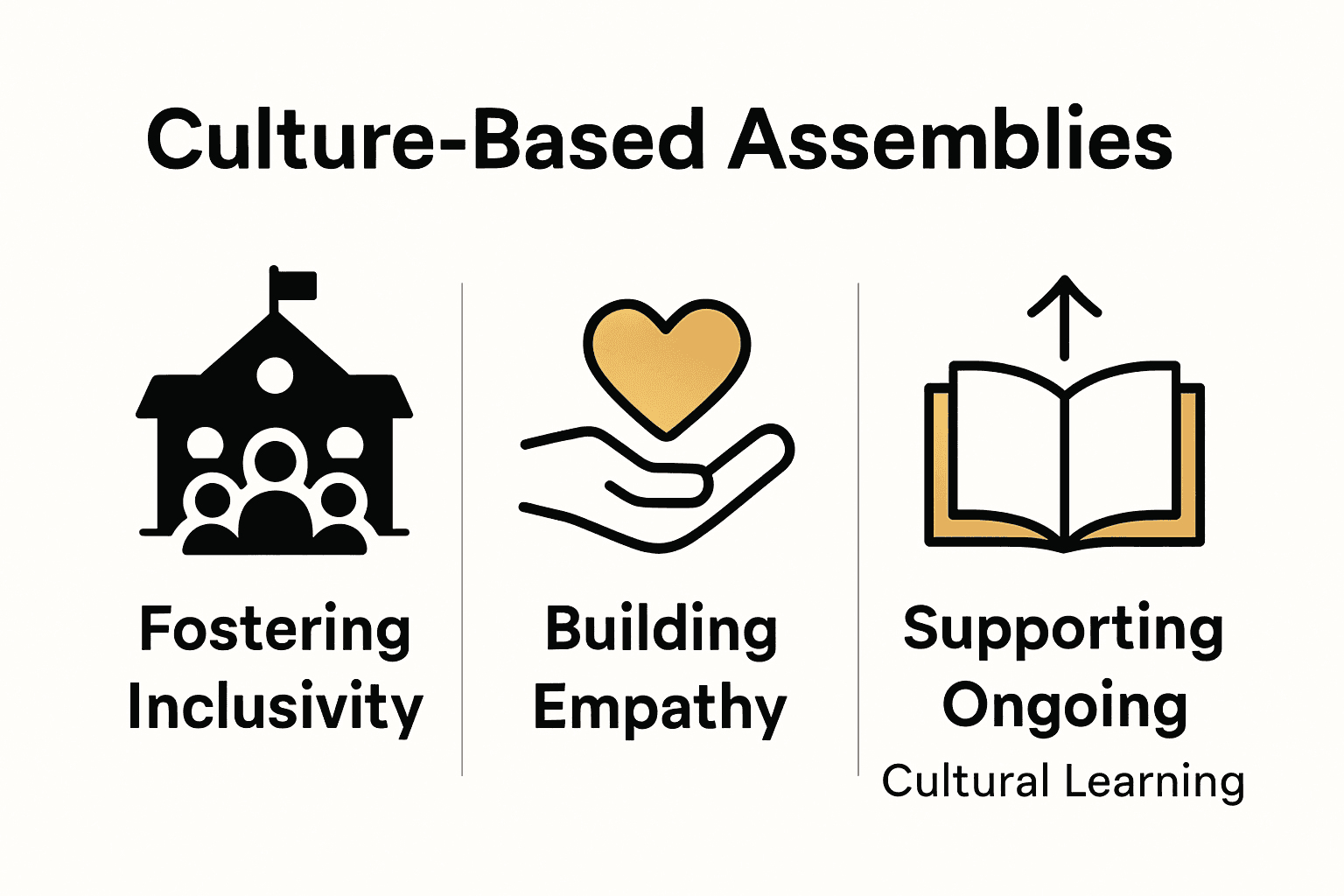
| Interactive Engagement Strategies | Effective assemblies should involve students actively through performances, discussions, and participatory activities, fostering deeper connections. |
| Ongoing Cultural Education | Schools must design cultural assemblies as part of a continuous educational experience rather than isolated events, ensuring meaningful engagement. |
| Addressing Challenges | Careful planning is required to avoid tokenism and stereotypes while engaging cultural representatives to create authentic presentations. |
Defining Culture-Based School Assemblies
Culture-based school assemblies are transformative educational experiences designed to celebrate, explore, and honor the diverse cultural backgrounds within a school community. Unlike traditional assemblies that might focus purely on entertainment or academic announcements, these specialized events intentionally create spaces where students can learn about, appreciate, and engage with different cultural narratives and perspectives.
According to ASCD, these assemblies are critical in creating an inclusive environment where students from various cultural backgrounds feel genuinely valued and connected. By integrating students’ cultural experiences into school activities, these assemblies help break down barriers, promote understanding, and foster a sense of belonging among diverse student populations.
The core purpose of culture-based assemblies goes beyond mere representation. As Learner explains, these events enable students to create meaningful connections, access their prior knowledge, and develop cultural competence by incorporating authentic cultural experiences into the learning environment. Effective culture-based assemblies typically include interactive elements such as:
- Performances showcasing traditional music, dance, or storytelling
- Presentations by cultural representatives or community leaders
- Student-led demonstrations of cultural traditions
- Multimedia presentations exploring cultural history and significance
- Interactive workshops that allow hands-on cultural learning
By thoughtfully designing these assemblies, schools can transform them from simple events into powerful platforms for cross-cultural understanding, empathy development, and community building.
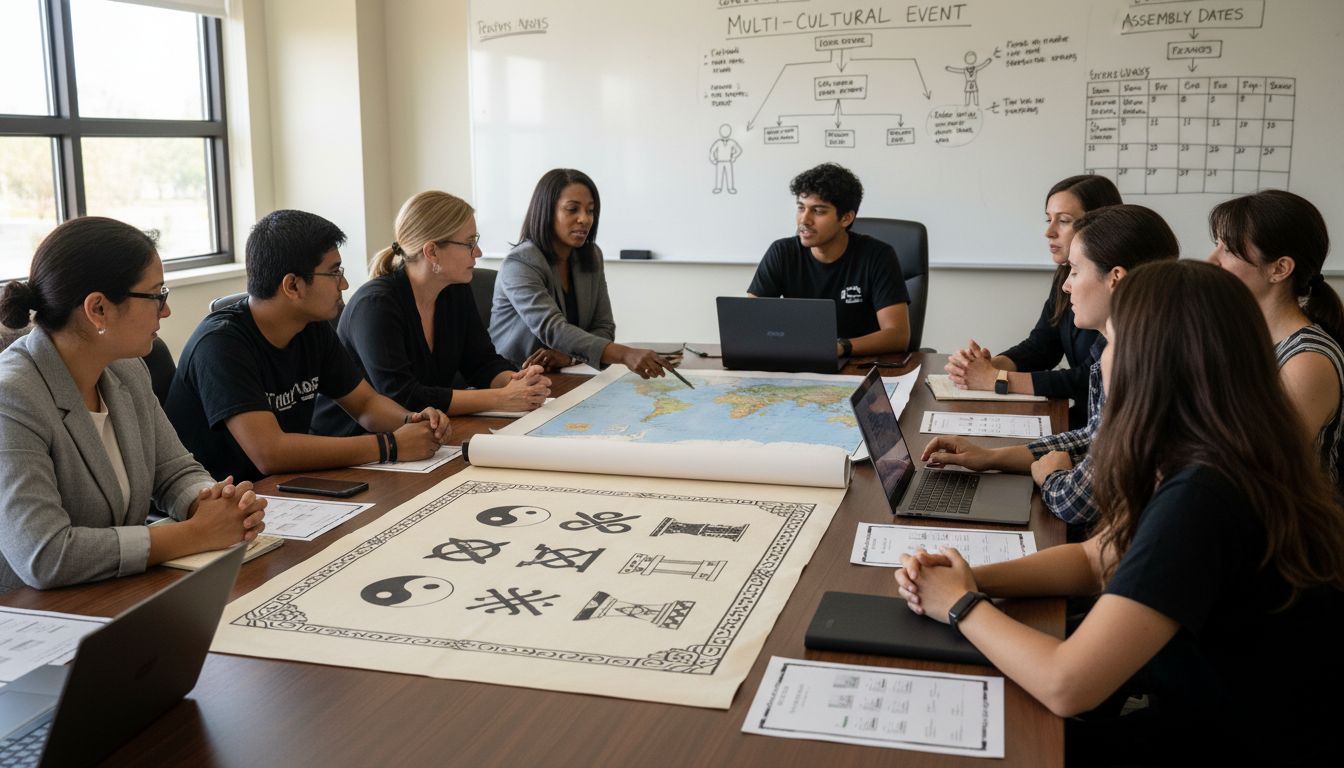 The goal is not just to observe cultural differences, but to celebrate them as essential components of a rich, dynamic educational landscape.
Types of Culture-Based Assemblies Available
Culture-based assemblies come in diverse formats, each designed to engage students and illuminate different aspects of cultural heritage and understanding. These assemblies range from performance-driven experiences to interactive educational programs that invite students to explore and appreciate cultural diversity through multiple sensory and learning channels.
According to Global Education Center, some of the most impactful culture-based assemblies include music and dance programs like ‘Rhythms of Africa’ and ‘Rhythms of the Afro-Latin Diaspora’. These performances do more than entertain – they serve as powerful educational tools that help students understand cultural traditions, historical contexts, and artistic expressions from around the world.
From Edutopia’s research, we understand that culture-based assemblies can also incorporate daily ritual elements that foster community and cultural appreciation. These might include:
- Drum call performances that showcase traditional musical techniques
- Cultural storytelling sessions with community elders or representatives
- Language and poetry recitations from specific cultural traditions
- Traditional dance demonstrations with historical context
- Costume and artifact exhibitions explaining cultural significance
The most effective culture-based assemblies are those that move beyond passive observation and create opportunities for active student engagement.
Explore our guide on multicultural assembly ideas to discover innovative ways schools can transform these events into meaningful cross-cultural learning experiences that celebrate diversity, promote understanding, and inspire student curiosity about the world’s rich cultural tapestry.
How Interactive Presentations Engage Students
Interactive presentations transform traditional school assemblies from passive listening experiences into dynamic, participatory learning opportunities that capture students’ attention and foster deep engagement. By breaking down the traditional barriers between presenters and audience, these innovative approaches create memorable educational moments that resonate far beyond the assembly hall.
According to Edutopia, interactive elements like student recognition moments and rhythmic drum calls can significantly deepen connections between students and educators. These techniques not only energize the assembly but also create a sense of collective identity and mutual respect within the school community.
The Association for Middle Level Education emphasizes that interactive assemblies build positive school culture by directly involving students in the presentation process. Effective engagement strategies include:
- Inviting student volunteers for on-stage demonstrations
- Creating call-and-response participation moments
- Incorporating student-led performances
- Using interactive technology or multimedia elements
- Designing small group challenge activities during the presentation
Discover creative ways to make assemblies more engaging by understanding that true student engagement happens when participants feel like active contributors, not passive observers. The most successful interactive presentations create a collaborative environment where students become co-creators of the learning experience, transforming assemblies from mandatory events into anticipated, exciting opportunities for personal and collective growth.
Case Study: Latino Dance Duo’s Lasting School Impact
Cultural performances have the extraordinary power to transform educational experiences, bridging gaps between diverse student populations and creating profound moments of understanding. The story of a Latino dance duo demonstrates how a single assembly can spark curiosity, challenge stereotypes, and inspire students to explore cultural narratives beyond their immediate experiences.
According to Global Education Center, cultural performances like those presented by Latino dance groups can have remarkable educational impacts. In this particular case, the dance duo did more than perform – they created an immersive experience that educated students about Latino traditions, musical rhythms, and historical contexts through dynamic movement and storytelling.
The ASCD emphasizes how incorporating cultural elements into school activities creates an inclusive environment that genuinely values students’ diverse backgrounds. The Latino dance duo’s assembly achieved this by:
- Providing historical context for traditional dance movements
- Explaining cultural significance of specific rhythms and costumes
- Inviting student participation during the performance
- Sharing personal stories that humanized cultural experiences
- Demonstrating connections between music, movement, and cultural identity
Explore Hispanic Heritage Month school assembly programs that can deliver similar transformative experiences. The most powerful cultural assemblies are those that go beyond entertainment, creating genuine connections that challenge preconceptions and inspire students to see the world through a more nuanced, empathetic lens.
Transformative Benefits for School Communities
Culture-based assemblies represent far more than simple educational events – they are powerful catalysts for transformation within school communities, breaking down social barriers and creating environments of mutual understanding and respect. These carefully designed experiences go beyond traditional learning, providing students and staff with opportunities to connect, grow, and appreciate the rich diversity that surrounds them.
According to Edutopia, daily assemblies incorporating cultural elements can fundamentally reshape school dynamics by fostering a profound sense of belonging and mutual respect among students and staff. These experiences create shared moments that transcend individual differences, building a collective school identity that values every student’s unique background.
The Association for Middle Level Education emphasizes how culture-based assemblies contribute to positive school culture by promoting shared values and enhancing overall community connections. Specific transformative benefits include:
- Creating platforms for authentic cross-cultural dialogue
- Reducing prejudice and stereotyping
- Developing empathy and cultural competence
- Celebrating diversity as a strength, not just a demographic fact
- Providing students with opportunities for personal and collective growth
Explore our comprehensive guide on school assembly benefits to understand how these experiences can fundamentally reshape educational environments. The most meaningful school communities are those that recognize diversity not as a challenge to overcome, but as a rich, dynamic resource that enriches every student’s learning journey.
Key Challenges and Strategies for Success
Implementing culture-based assemblies is not without its complexities. Schools must navigate a delicate landscape of representation, authenticity, and meaningful engagement, balancing the desire to celebrate diversity with the need to avoid superficial or tokenistic approaches that can potentially reinforce existing stereotypes.
According to ASCD, creating a truly inclusive environment requires deliberate and thoughtful strategies. This means moving beyond simple representation and actively involving the entire school community in the assembly planning and execution process. The key is to ensure that cultural presentations are not just performative displays, but genuine opportunities for learning, understanding, and mutual respect.
The Learner program highlights the importance of understanding students’ cultural contexts as a fundamental strategy for success. Critical challenges and corresponding strategies include:
Challenge: Potential cultural misrepresentation
Strategy: Collaborate directly with cultural representatives and community leadersChallenge: Unintentional reinforcement of stereotypes
Strategy: Develop nuanced, multifaceted presentations that show cultural complexityChallenge: Limited student engagement
Strategy: Create interactive elements that invite personal storytelling and participationChallenge: Lack of ongoing cultural education
Strategy: Design assemblies as part of a broader, sustained cultural learning approach
Discover comprehensive strategies for creating meaningful cultural assemblies that transcend traditional boundaries. The most successful schools recognize that culture-based assemblies are not isolated events, but part of an ongoing journey of mutual understanding, respect, and collective growth.
Bring Culture-Based Assemblies to Life with Academic Entertainment
Culture-based assemblies offer incredible opportunities to create inclusive environments, deepen cultural competence, and celebrate diversity within your school community. Yet challenges like ensuring authentic representation and engaging students actively can feel overwhelming. If your goal is to transform these assemblies from passive events into interactive, meaningful experiences that foster empathy and connection, Academic Entertainment can help.
Explore a wide range of carefully curated cultural programs and performances designed to align perfectly with your school’s values and themes. Whether you are seeking Latino dance presentations, multicultural music shows, or interactive workshops that bring cultural stories to life, our platform offers over 40 years of expertise in delivering engaging, educational assemblies that build school unity and student growth. Visit Academic Entertainment today and find the perfect program tailored to your needs. Start creating memorable moments that inspire respect and understanding among your students now.
Frequently Asked Questions
What are culture-based school assemblies?
Culture-based school assemblies are educational events that celebrate and honor the diverse cultural backgrounds within a school community, integrating interactive elements to promote understanding and engagement.
How can interactive presentations enhance student engagement during assemblies?
Interactive presentations engage students by inviting participation, breaking down barriers between presenters and the audience, and creating memorable educational experiences through student involvement and community interaction.
What types of performances can be included in culture-based assemblies?
Culture-based assemblies can feature various performances such as traditional music, dance, storytelling, student-led presentations, and workshops that allow hands-on cultural learning.
What are the benefits of implementing culture-based assemblies in schools?
Culture-based assemblies promote empathy, reduce prejudice and stereotyping, cultivate a sense of belonging, and enhance overall community connections, transforming the school environment into one that values diversity as a strength.
Recommended
- What Makes Your Assemblies Different from Others? Explained – Academic Entertainment
- Benefits of Assemblies: Complete Guide for Schools – Academic Entertainment
- Understanding the Role of Assemblies for Elementary Students – Academic Entertainment
- How to Make School Assemblies Even More Fun – Academic Entertainment