Character development sounds like a buzzword tossed around in schools and self-help books, but its impact is far deeper. Schools that focus on character growth see a direct link between emotional development and better academic results, with programs reducing disciplinary incidents and improving school climate. This might seem like something only for classrooms, yet personal transformation through character growth shapes how people succeed in the real world far beyond homework and quizzes.
Table of Contents
- Defining Character Development: An Essential Overview
- The Importance Of Character Development In Education
- Key Concepts In Character Development: Traits And Growth
- How Character Development Influences Student Success
- Real-World Applications Of Character Development Strategies
Quick Summary
| Takeaway | Explanation |
|---|---|
| Character development enhances personal growth. | Fostering internal qualities leads to profound self-transformation and better interactions with others. |
| Schools should integrate character development. | Combining academic learning with personal development practices nurtures well-rounded students prepared for life. |
| Personal qualities drive academic success. | Traits like resilience and motivation significantly improve students’ performance and engagement in learning. |
| Character traits can be cultivated. | Intentional practices allow individuals to develop critical emotional and ethical qualities through reflection and consistent effort. |
| Structured interventions effectively promote growth. | Implementing organized programs and activities helps individuals achieve meaningful character development in various settings. |
Defining Character Development: An Essential Overview
Character development represents a profound psychological and educational process through which individuals evolve their internal qualities, personal attributes, and behavioral patterns. At its core, character development is about transforming an individual’s fundamental understanding of themselves and their interactions with the world around them.
The Fundamental Essence of Character Growth
What makes character development truly significant is its holistic approach to personal transformation. Our comprehensive guide on character development for students reveals that this process is not merely about acquiring skills but about cultivating deeper personal qualities that shape one’s entire life trajectory.
Character development involves several key dimensions:
- Emotional intelligence and self-awareness
- Ethical decision making capabilities
- Resilience and adaptability
- Interpersonal communication skills
- Moral reasoning and integrity
According to psychological research from the American Psychological Association, character development is a dynamic process influenced by multiple factors including personal experiences, social interactions, educational environments, and individual motivation.
Understanding the Psychological Framework
Psychologists view character development as a continuous journey of personal growth and self improvement. It goes beyond simple behavioral modification and delves into the deeper psychological mechanisms that drive human behavior. The process involves understanding one’s internal motivations, challenging existing belief systems, and consciously choosing to develop more constructive and empathetic ways of engaging with the world.
Key psychological theories suggest that character development is not a static destination but an ongoing process of reflection, learning, and intentional personal transformation. Individuals who actively engage in character development demonstrate greater emotional resilience, stronger interpersonal relationships, and a more nuanced understanding of themselves and others.
The Importance of Character Development in Education
Character development plays a critical role in transforming educational environments from mere academic instruction centers into comprehensive personal growth platforms. Schools are increasingly recognizing that academic achievement is fundamentally interconnected with students emotional and ethical development.
Bridging Academic and Personal Growth
Our guide on character education pillars highlights the profound impact of integrating character development strategies within educational frameworks. The significance extends far beyond traditional learning metrics, focusing on nurturing well rounded individuals capable of navigating complex social landscapes.
Key educational benefits of character development include:
- Enhanced student engagement and motivation
- Improved classroom behavior and interpersonal dynamics
- Development of critical social emotional skills
- Increased resilience and adaptability
- Stronger ethical decision making capabilities
According to research from the California Department of Education, character development programs are directly correlated with reduced disciplinary incidents and improved overall school climate.
Long Term Educational Impact
Educational institutions serve not just as knowledge transmission centers but as environments where young individuals learn fundamental life skills. Character development provides students with essential tools for personal and professional success. By intentionally creating spaces that encourage self reflection, empathy, and personal growth, schools prepare students to become thoughtful, responsible citizens who can positively contribute to their communities.
The transformative power of character development lies in its ability to help students understand themselves, develop meaningful relationships, and cultivate a strong moral compass that guides their interactions and decisions throughout their lives.
Key Concepts in Character Development: Traits and Growth
Character development emerges as a complex psychological process that transforms individual potential into meaningful personal growth. Understanding the intricate mechanisms behind character evolution requires exploring the fundamental traits and developmental pathways that shape human potential.
Core Character Traits and Psychological Foundations
Our comprehensive guide on character education examples illuminates how specific character traits serve as critical building blocks for personal transformation. These foundational characteristics are not static but dynamic qualities that can be cultivated and refined through intentional practice and reflection.
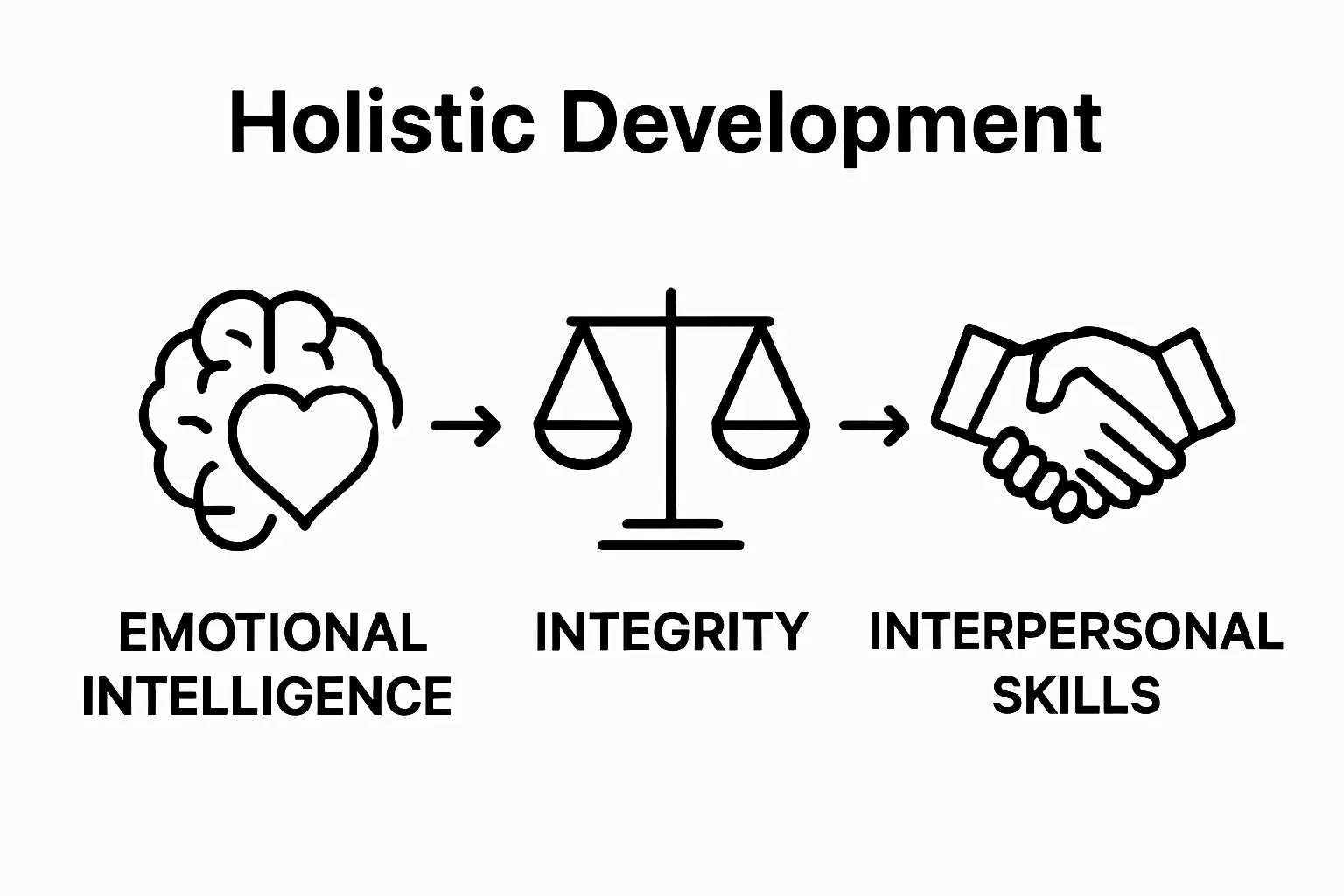
Key psychological character traits include:
- Self regulation and emotional control
- Intrinsic motivation and goal orientation
- Empathy and social awareness
- Intellectual curiosity and adaptability
- Personal integrity and ethical reasoning
According to research from the Harvard Center on the Developing Child, character development involves building core capabilities that support individuals in navigating complex personal and professional challenges.
To clarify the distinction between core character traits and their psychological foundations discussed in this section, the following table summarizes each trait and its foundational role in personal development:
| Character Trait | Psychological Foundation |
|---|---|
| Self-regulation | Emotional control and impulse management |
| Intrinsic motivation | Drive to pursue meaningful goals |
| Empathy | Social awareness and perspective-taking |
| Intellectual curiosity | Openness to learning and adaptability |
| Personal integrity | Ethical reasoning and moral consistency |
Developmental Pathways of Character Growth
Character growth is not a linear progression but a nuanced journey of continuous learning and self discovery. Individuals develop character through a combination of personal experiences, social interactions, intentional reflection, and deliberate skill building. This multifaceted approach recognizes that character is not predetermined but can be actively shaped through conscious effort and supportive environments.
The most profound character development occurs when individuals engage in deep self examination, challenge existing belief systems, and remain open to personal transformation. By understanding that character is malleable, people can take proactive steps toward becoming more resilient, compassionate, and authentic versions of themselves.
How Character Development Influences Student Success
Character development serves as a transformative catalyst that directly impacts academic performance and long term student achievement. Beyond traditional academic metrics, these foundational personal qualities create a robust framework for comprehensive educational success.
Academic Performance and Personal Capabilities
Our examples of character education strategies demonstrate how intentional character development dramatically enhances students learning potential. The connection between personal growth and academic achievement is profound and multifaceted.
Key ways character development influences academic success include:
- Enhanced problem solving capabilities
- Increased intrinsic motivation
- Greater emotional resilience
- Improved self regulation skills
- Stronger interpersonal communication
According to research published through the National Institutes of Health, students engaged in character development programs demonstrate significantly improved academic outcomes and behavioral engagement.
Holistic Learning and Future Readiness
Character development transcends traditional academic boundaries by preparing students for complex real world challenges. Students who develop strong character traits learn to approach learning as a dynamic, continuous process rather than a static set of achievements. This perspective cultivates adaptability, critical thinking, and a growth mindset that becomes increasingly valuable as students progress through their educational journey and enter professional environments.
By emphasizing character growth, educational institutions create learning ecosystems that nurture not just intellectual capabilities but also emotional intelligence, ethical reasoning, and personal agency. These comprehensive developmental approaches ultimately produce students who are academically accomplished, personally resilient, and socially conscious.
Real-World Applications of Character Development Strategies
Character development strategies transform theoretical concepts into practical, actionable approaches that can be implemented across educational and personal growth environments. These strategies provide concrete mechanisms for individuals to cultivate meaningful personal transformation and ethical behavior.
Structured Intervention Approaches
Our guide on character education pillars highlights the importance of systematic, intentional character development interventions. Educational institutions and organizations increasingly recognize the need for structured programs that go beyond traditional academic instruction.
Effective character development strategies typically include:
- Reflective journaling and self assessment techniques
- Mentorship and peer support programs
- Goal setting and personal accountability frameworks
- Experiential learning opportunities
- Collaborative problem solving activities
According to Character Lab research, strategic interventions that incorporate purposeful exercises can significantly enhance individual character growth and social emotional learning.
The article explains several structured approaches to character development. The table below organizes these intervention strategies with brief descriptions of how each method supports personal growth:
| Strategy | Description |
|---|---|
| Reflective journaling | Encourages self-assessment and personal awareness |
| Mentorship and peer support | Provides guidance and fosters supportive relationships |
| Goal setting frameworks | Structures personal accountability and progress |
| Experiential learning | Promotes hands-on experiences for deeper understanding |
| Collaborative problem solving | Builds teamwork and decision-making skills |
Practical Implementation in Diverse Settings
Character development strategies are versatile and can be adapted across multiple contexts including schools, youth organizations, professional training programs, and community initiatives. The key is creating environments that encourage continuous personal reflection, ethical decision making, and authentic self improvement. By providing structured yet flexible frameworks, these strategies empower individuals to take ownership of their personal growth journey.
Successful character development requires a holistic approach that recognizes individual uniqueness while offering universal principles of ethical behavior, emotional intelligence, and personal responsibility. Through intentional practice and supportive environments, individuals can systematically develop the core qualities that enable personal and professional excellence.

Transform Your School’s Culture With Powerful Character Development Programs
Recognizing the importance of character development is just the beginning. Building resilience, empathy, and meaningful student relationships can be challenging for any school community. The journey from understanding character traits and emotional intelligence to actually nurturing these qualities in real students takes more than theory. That’s where real-life engagement matters most. Imagine assemblies that blend unforgettable entertainment with core values like anti-bullying, diversity, and ethical decision making.

Ready to move from ideas to impactful results? Bring character development to life at your school with Academic Entertainment. Our interactive assembly programs are expertly designed to address real-world needs outlined in the article, making abstract concepts relatable and memorable for K-12 students. Explore how our character education assembly programs and examples of interactive learning can help your students grow. Act now to transform your school’s climate and help students thrive in every aspect of their lives.
Frequently Asked Questions
What is character development?
Character development is the process through which individuals evolve their internal qualities, personal attributes, and behavioral patterns, aiming for personal transformation and self-improvement.
Why is character development important in education?
Character development is important in education because it enhances student engagement, improves classroom behavior, and fosters essential life skills, contributing to both academic success and personal growth.
What are the key components of character development?
Key components of character development include emotional intelligence, ethical decision-making, resilience, interpersonal communication skills, and moral reasoning.
How can character development strategies be implemented?
Character development strategies can be implemented through reflective journaling, mentorship programs, goal-setting frameworks, experiential learning activities, and collaborative problem-solving exercises.
Recommended
- What is Character Development for Students: Understanding the Basics – Academic Entertainment
- 8 Effective Character Education Examples for Schools – Academic Entertainment
- 7 Key Character Education Pillars for Schools – Academic Entertainment
- Character Building, Education, and PBIS School Assemblies – Academic Entertainment