TL;DR:
- Short, student-driven assemblies with mentoring produce the most measurable character growth.
- Peer-led and arts/multicultural programs show high engagement, inclusivity, and impact.
- Effective assembly planning includes clear goals, pre/post assessments, and follow-up reflection.
Choosing the right assembly program feels straightforward until you’re sitting in a planning meeting with a tight budget, a packed school calendar, and the pressure to deliver something that actually moves the needle for your students. Most administrators want programs that inspire, build character, and celebrate diversity, but sorting genuinely effective options from flashy one-off performances is harder than it looks. A meta-analysis of 214 character education studies covering over 307,000 students confirms that the right assembly design produces real, measurable growth, and the wrong design can actually work against your goals.
Key Takeaways
| Point | Details |
|---|---|
| Mentoring multiplies impact | Assemblies with a peer mentoring focus achieve significantly greater gains in student character than standard formats. |
| Shorter is better | Concise, focused assemblies lead to stronger, more sustainable outcomes compared to lengthy or diffuse programs. |
| Creative formats build empathy | Integrating arts, storytelling, and multicultural elements improves empathy and intergroup understanding among students. |
| Measure what matters | Effectiveness improves when programs use data—like pre/post surveys—to evaluate and adapt assemblies over time. |
| Student voice drives change | Student-led initiatives in assemblies produce lasting school culture improvements and higher engagement. |
How to choose the right inspirational assembly for your school
Selecting an assembly program goes well beyond picking a topic that sounds good. The best administrators treat this decision like any other instructional purchase: they ask hard questions, look for evidence, and match the program to specific student needs.
Here are the criteria that matter most:
- Student engagement and interaction. Passive audiences check out fast. Programs that put microphones in students’ hands, invite volunteers on stage, or use call-and-response formats produce far stronger recall and attitude shifts.
- Evidence of measurable outcomes. Ask the provider directly: do you offer pre/post assessments, behavior tracking data, or post-event survey tools? Programs that cannot answer this question clearly are a risk.
- Diversity and inclusivity of content. Your student body represents multiple cultures, learning styles, and family backgrounds. The best assemblies speak to all of them without flattening or stereotyping any group.
- Alignment with school values or core educational goals. A school focused on Social Emotional Learning (SEL), for example, needs a program that explicitly reinforces empathy, self-regulation, and responsible decision-making, not just general motivation.
- Practical logistics. Budget, run time, and group size all affect impact. A program that costs too much to repeat annually or requires splitting your school into twelve micro-sessions loses its scalability.
- Aftercare and classroom follow-up materials. The best programs hand teachers a packet of discussion questions, activity sheets, or reflection prompts. Learning should not stop when the lights come back on.
Pro Tip: Research shows that brief, focused programs with mentoring outperform longer, passive ones, and they are also easier to measure through pre/post assessments and behavior tracking. When in doubt, choose the focused program over the marathon.
Reviewing assembly best practices before you start shopping will help you set a strong framework. You can also explore character assemblies’ impact data to understand what specific outcomes schools are actually achieving. For broader school activity inspiration, there are excellent examples of how other schools structure their event calendars around both entertainment and learning.
Once you know what to prioritize, it’s time to explore standout assembly program types.
Peer-led and mentoring-focused assemblies
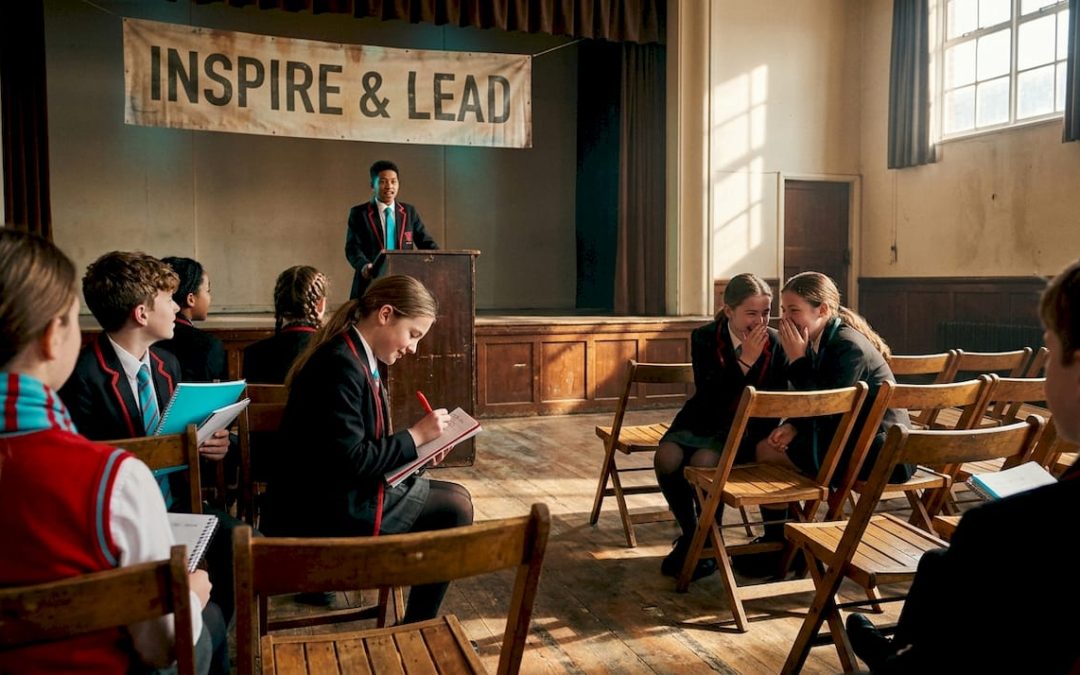
Few things resonate with a middle schooler more than seeing a fellow student own a stage. Peer-led assemblies capitalize on this reality by putting students in leadership roles during the event itself, not just in the planning committee.
Key features of effective peer-led programs include:
- Student voice as the centerpiece. Whether it is a senior addressing freshmen or a fifth-grader sharing a personal story about resilience, peer narration creates immediate credibility.
- Collaborative structure. These assemblies often involve group activities, peer-to-peer challenges, or shared goal-setting exercises that build team cohesion in real time.
- Positive peer modeling. Research consistently shows that students are more likely to adopt new behaviors when they see peers, rather than adults, modeling them. This is especially true for attitudes toward kindness, inclusion, and academic perseverance.
Mentoring takes this concept one step further by pairing older and younger students in structured relationships that extend beyond a single assembly. Buddy programs, mentorship workshops, and peer recognition ceremonies all build on this model.
“Programs that incorporate mentoring show a substantially greater effect size (g=0.39) compared to those without any mentoring component,” according to the meta-analysis of character education programs. That is a meaningful difference when you are trying to justify program spending to a school board.
Strong character education outcomes are not accidental. They come from deliberate design choices, and peer mentoring is one of the most powerful levers available to you.
Peer-led models offer a strong foundation, but alternative formats can further diversify your assembly calendar.
Arts, storytelling, and multicultural assemblies
Not every student connects through structured peer dialogue. Some students unlock when they see their own culture represented on stage, or when a story mirrors something they have been quietly carrying. Arts and storytelling-based assemblies meet students where they are emotionally.
Strong programs in this category typically use:
- Interactive performances. Music, dance, theater, and spoken word are not just entertainment. They carry cultural history, prompt reflection, and generate classroom conversations that last for weeks.
- Multicultural shows that showcase traditions, languages, and stories from communities represented in your school. Representation on stage signals belonging off stage.
- Literature-focused discussions where student panels respond to books, poems, or short films centered on themes like identity, courage, or community.
One study measuring the effect of behavioral counseling combined with arts integration found that character scores rose N-Gain=0.789 across student groups, indicating strong gains when arts and intentional counseling work together. The research also found that literary discussions improved intergroup attitudes in grades 4 and 5, making story-centered assemblies particularly valuable for elementary schools working on empathy and peer relationships.
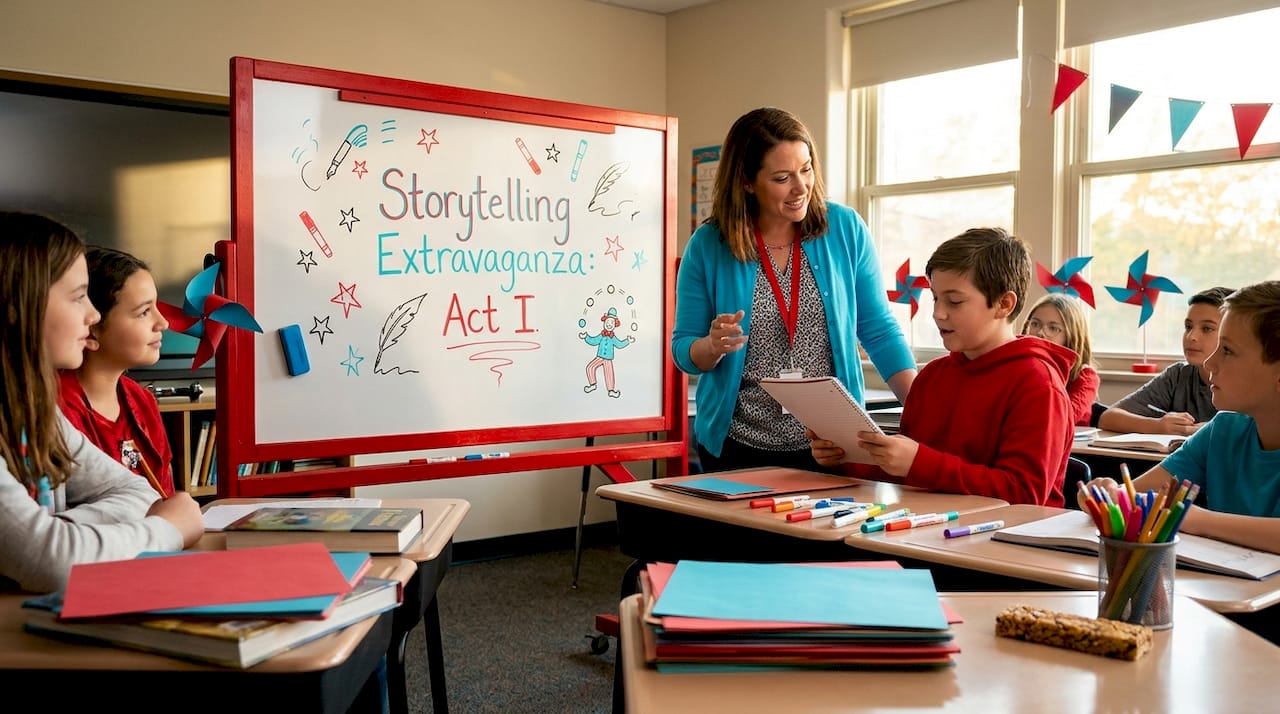
Pro Tip: Choose assemblies that use storytelling as the core delivery mechanism rather than a side feature. Stories shift attitudes in ways that lectures simply cannot. A student who watches a live performance about a refugee family navigating a new school will carry that perspective into the cafeteria long after the assembly ends.
If you are building out your events calendar, explore reading and arts assemblies as a dedicated program category. They consistently generate the most post-event classroom discussion and teacher follow-up, which is exactly the kind of ripple effect you want.
With both peer-led and arts-driven options covered, you can now evaluate at-a-glance which model fits your needs using side-by-side data.
Comparing inspirational assembly types: What works best?
Every school has a different culture, budget, and set of goals. This comparison table helps you match assembly format to real-world needs.
| Assembly type | Student engagement | Inclusivity | Evidence of impact | Typical cost range |
|---|---|---|---|---|
| Peer-led and mentoring | Very high | High | Strong (g=0.39) | Low to moderate |
| Arts and storytelling | High | Very high | Strong (N-Gain=0.789) | Moderate to high |
| Traditional keynote speaker | Moderate | Variable | Modest (g=0.24) | Moderate |
| Standard motivational show | Moderate | Variable | Limited | Low to moderate |
| Multicultural performance | High | Very high | Moderate to strong | Moderate |
The data tells a clear story. Mentoring-based programs outperform general character assemblies on measured character outcomes, with an effect size of g=0.39 compared to g=0.24 for programs without a mentoring component. That gap represents real students making real behavioral changes.
For schools working on anti-bullying, kindness initiatives, or PBIS (Positive Behavioral Interventions and Supports) goals, assemblies and character building research points toward peer-led and arts formats as the most cost-effective investments.
When deciding which model fits your school, consider these simple decision rules. If you are launching a new culture initiative, start with peer-led mentoring to build internal momentum. If your student body is highly diverse or your goals include reducing intergroup tension, lead with a multicultural arts program. If your budget is tight and you need something repeatable, look for short, focused programs that include follow-up classroom materials rather than single, expensive keynote events. For student group project ideas that can extend assembly themes into the classroom, there are excellent frameworks that tie directly to assembly outcomes.
Each format offers unique advantages, but make sure your assemblies have lasting impact with these pro implementation steps.
How to maximize your assembly’s impact: Implementation tips
An assembly without a follow-up plan is a missed opportunity. Here is a step-by-step approach that turns a single event into a sustained culture shift.
- Set clear, specific goals before you book. “Improve student kindness” is too vague. “Reduce reported instances of exclusionary behavior by 15% over one semester” is measurable. Start there.
- Include peer participation in the program design. Work with the provider to identify roles your students can play during the event itself. Even small moments of student involvement significantly increase retention and engagement.
- Administer pre-event surveys or assessments. A simple five-question survey on student attitudes toward inclusion, respect, or responsibility gives you a baseline. Run the same survey four to six weeks post-event.
- Build follow-up into the schedule. Reserve 20 minutes of class time in the week following the assembly for teacher-led reflection. Tie discussion questions to specific moments from the program.
- Recognize and celebrate visible behavior changes. If students demonstrate the values highlighted in the assembly, acknowledge them publicly. This closes the loop between inspiration and action.
| Implementation phase | Action item | Measurement tool |
|---|---|---|
| Pre-assembly (2 weeks before) | Set goals, distribute pre-survey | Baseline survey results |
| Day of assembly | Peer participation, follow-up packet distributed | Attendance, engagement observation |
| Post-assembly week 1 | Classroom reflection sessions | Teacher feedback forms |
| Post-assembly weeks 2 to 4 | Behavioral tracking begins | Discipline referral data |
| Post-assembly week 6 | Post-survey administered | Comparative attitude scores |
High-quality studies show that character program effect sizes range from g=0.11 to g=0.17 when programs are well-designed but lack mentoring, and climb significantly when short, focused formats include peer leadership. The measurement phase is not optional. It is what allows you to make a compelling case for continued investment.
Pro Tip: Build a short, three to five question survey into your school’s regular communication tool so students complete it digitally within 48 hours of the assembly. Response rates are far higher than paper forms, and the data feeds directly into your semester-end program report.
The hosting successful assemblies guide and student engagement strategies resource both offer additional depth on logistics and student participation design.
The overlooked key: Why short, student-driven assemblies consistently outperform
Here is something most assembly planning guides will not tell you: longer is not better, and more prestigious speakers do not automatically mean more impact.
Conventional wisdom in school programming tends to favor big names, long keynote addresses, and elaborate productions. Administrators assume that a 90-minute program from a nationally known speaker delivers more value than a 45-minute peer-led workshop. The research says otherwise. Brief, student-centered programs with mentoring consistently exceed traditional approaches on measured character development outcomes and student engagement scores.
Why does shorter work better? Attention is a finite resource. Students in grades K-12 lose focus in passive listening settings after 15 to 20 minutes. Shorter assemblies front-load their highest-impact content, leave students wanting more, and allow more time for the follow-up reflection that actually cements learning.
Student-driven formats work because they redistribute authority. When a peer leads a session, the implicit message is: “This is possible for you, too.” That message does not land the same way from an adult on a stage. Schools that build student voice into their assembly programs see culture changes that last because students own the narrative rather than receiving it passively.
The most overlooked lever we see schools miss is the integration of ongoing mentoring roles, not just a peer appearance in a single program, but a structured relationship that continues in hallways, lunch tables, and classrooms. Assemblies that launch or reinforce mentoring relationships have ripple effects that a one-time speaker simply cannot match.
Making assemblies fun and making them academically substantive are not competing goals. The best programs accomplish both by putting student energy at the center of the experience rather than on the periphery.
Bring exceptional inspirational assemblies to your school
Finding programs that check all the boxes, engaging, research-backed, diverse, and logistically realistic, takes expertise and a curated network of performers and educators.
At Academic Entertainment, we have spent over 40 years connecting K-12 schools across the U.S. with assemblies that actually deliver. Whether you are looking for PBIS school assemblies that align with your behavioral framework, innovative assemblies that push past the standard keynote format, or multicultural assembly ideas that celebrate the full spectrum of your student community, our catalog makes it easy to find the right fit. Every program is vetted for educational value, age appropriateness, and measurable impact, so your next assembly is an investment, not a gamble.
Frequently asked questions
What makes an assembly truly inspirational for students?
Assemblies that feature peer involvement, real-life stories, and opportunities for student reflection drive the most engagement and impact. Mentoring boosts outcomes significantly, supporting peer-led designs as the most evidence-backed format for genuine inspiration.
How can schools measure the effectiveness of assemblies?
Use pre/post assessments, behavioral tracking, and student surveys to evaluate how assemblies impact student attitudes and behavior. Brief, focused programs with mentoring produce the clearest, most trackable outcome data when these measurement tools are in place.
Are shorter assemblies more effective than longer ones?
Yes, evidence shows shorter, focused assemblies with a mentoring component produce better and more lasting student outcomes. High-quality studies confirm that effect sizes increase when programs are concise, intentional, and include peer or mentor participation.
Do arts and literature programs improve student relationships?
Yes, literary discussion-based assemblies have been shown to improve intergroup attitudes among students, especially in elementary grades. Literary discussions in grades 4 to 5 produced measurable improvements in how students perceive and interact with peers from different backgrounds.
Recommended
- Empowering School Assemblies for SEL, Anti-Bullying & Charter Education
- STEM School Assemblies – Academic Entertainment
- Innovative School Assemblies – Academic Entertainment
- Why Assemblies Build Community in Schools – Academic Entertainment
- Why sharing success stories fuels growth and wellbeing