Structured assemblies are one of the most underused tools in summer camp programming, yet the research behind them is striking. Structured summer camp experiences consistently improve youth mental, emotional, and social health competencies through experiential learning. That means how you design an assembly, not just whether you hold one, determines whether students leave camp fundamentally changed or simply entertained for an hour. This guide walks you through the evidence, the frameworks, and the specific strategies that turn ordinary gatherings into powerful moments of student growth, giving K-12 administrators and event coordinators a clear path from planning to measurable impact.
Key Takeaways
| Point | Details |
|---|---|
| Assemblies improve MESH | Structured summer camp assemblies significantly boost mental, emotional, and social health outcomes for K-12 students. |
| Balance is crucial | Combining planned and flexible assembly time maximizes engagement, learning, and creativity. |
| Measure impact | Regularly track student participation and outcomes to ensure assemblies support development and equity. |
| Practical formats matter | Energizers, reflections, and sharing circles make assemblies engaging and effective. |
Why Summer Camp Assemblies Matter in K-12 Education
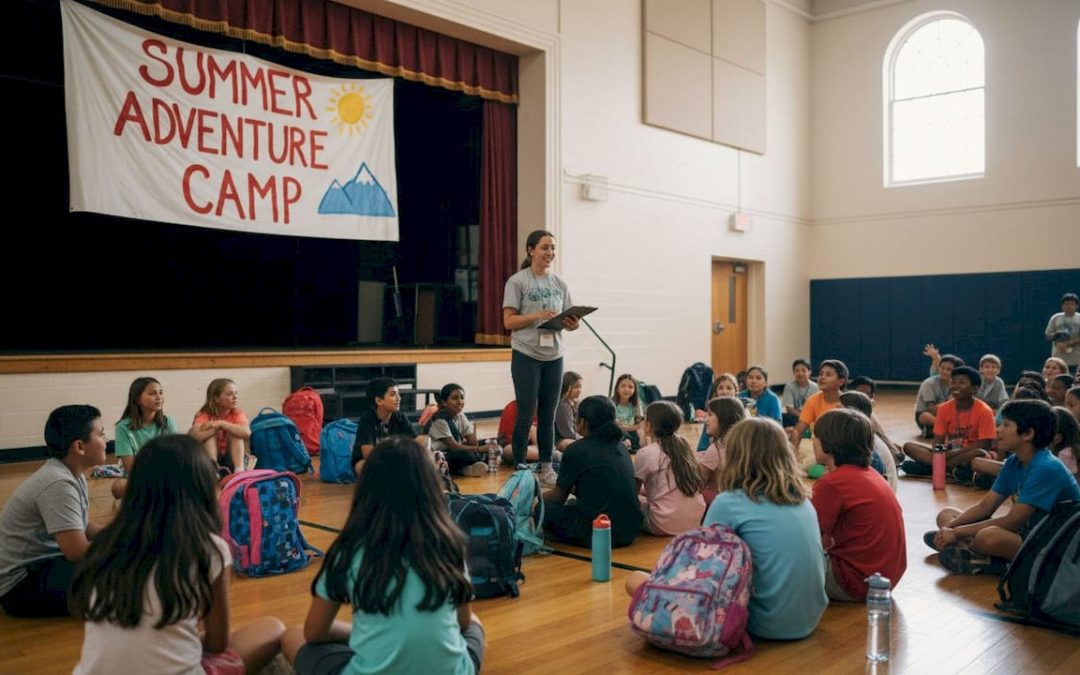
Most camp planners treat assemblies as a logistical necessity. You need a way to gather everyone, share announcements, and maybe squeeze in a fun game before the day’s activities begin. But that mindset leaves enormous developmental potential on the table. Assemblies, when designed with purpose, function as the connective tissue of your entire camp experience.
The evidence base for structured summer programming has grown significantly. A systematic review of 21 studies found that organized summer camp experiences, including assemblies and group activities, consistently improve youth MESH outcomes. MESH stands for mental, emotional, and social health, and it covers the competencies students need to manage their emotions, build relationships, and navigate challenges. These are not soft outcomes. MESH skills directly correlate with academic performance, long-term well-being, and career readiness.
The summer camp benefits go well beyond fun. Consider what structured assemblies provide that informal camp time does not:
- A shared experience that builds community identity across all groups
- A predictable rhythm that reduces anxiety and increases psychological safety
- A platform for recognizing student achievements and reinforcing values
- A vehicle for delivering curriculum-aligned content in an engaging format
- A natural transition point that helps students shift mentally between activities
Physical health outcomes are equally compelling. A randomized controlled trial involving 422 low-income elementary children found that free structured summer day camps increased moderate-to-vigorous physical activity (MVPA) by 15 minutes per day, reduced sedentary time by 30 minutes per day, and cut screen time by 14 minutes per day compared to unstructured summers. On actual camp days, the effects were even stronger, with MVPA up by 26 minutes and sedentary time down by 64 minutes.
“The difference between structured and unstructured summer time is not marginal. For students in low-income communities especially, a well-run camp assembly can represent the most socially rich and physically active hour of their entire day.”
These numbers matter enormously for schools serving Title I populations or students with limited access to enrichment outside of school hours. Health assemblies built into the camp day are not just programming filler. They are direct interventions against summer learning loss, sedentary behavior, and social isolation.
Understanding this foundation changes how you approach every single assembly on your schedule. You are not planning a 45-minute event. You are designing a developmental experience that compounds across the full camp session.
Essential Elements for Engaging Assemblies
Knowing why assemblies matter is just the starting point. The real question is what separates a forgettable assembly from one that students talk about for weeks. The answer comes down to intentional structure and the specific ingredients you build into each session.
Evidence-backed scheduling from summer camp planning experts points to three core elements: energizers, sharing circles, and reflection sessions. Each serves a distinct purpose, and together they create a learning arc within a single assembly.
Here is a reliable sequence for building an effective summer camp assembly:
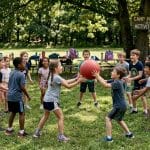
- Open with an energizer. A brief, high-energy activity that gets students moving, laughing, and oriented toward each other rather than their own thoughts. This could be a call-and-response chant, a quick physical game, or a collaborative challenge that requires every student to participate. Energizers dissolve social barriers quickly and signal that this is an active space, not a passive one.
- Introduce the day’s theme or lesson. Keep this focused. One clear message, story, or concept that connects to your camp’s broader goals. Whether your theme is leadership, resilience, teamwork, or creativity, anchor it in a concrete story, demonstration, or guest performance that students can visualize.
- Run a sharing circle. Divide students into small groups of four to six and give them one guided question to discuss. Sharing circles build the SEL initiatives in assemblies that research links to improved student outcomes consistently. They also give every student a voice, including the quiet kids who rarely raise their hands in large groups.
- Layer in a skill-based or creative activity. This is where the entertainment value of the assembly merges with its educational purpose. A science demonstration, a music performance, a character education skit. The activity should illustrate the theme and invite students to engage with their hands, voices, or imagination.
- Close with a structured reflection. Ask students to name one thing they learned, one thing they will try, or one person they want to thank. This closing ritual reinforces learning and creates emotional closure, making the experience more memorable. Research on student engagement shows that reflection is one of the most powerful retention tools available.
One important nuance from the research: while broad MESH-focused assemblies build community and emotional health, some camps with specialized missions (sports academies, arts intensives, STEM programs) may need to intentionally balance skill-building with broader SEL goals. The risk is that heavily skill-focused schedules crowd out the community-building moments that make the whole program more than the sum of its parts.
Pro Tip: Recruit student emcees to lead portions of the assembly. Giving students ownership of the program dramatically increases both their engagement and the engagement of their peers. It also builds leadership skills that no worksheet can replicate.
Balancing Structure and Flexibility: The 80/20 Rule
One of the most practical frameworks for summer camp assembly planning comes directly from camp scheduling research: the 80/20 rule. Plan 80% of your assembly content in advance and leave 20% deliberately flexible. This balance gives you the consistency students need to feel safe and the spontaneity that keeps programming alive and responsive.
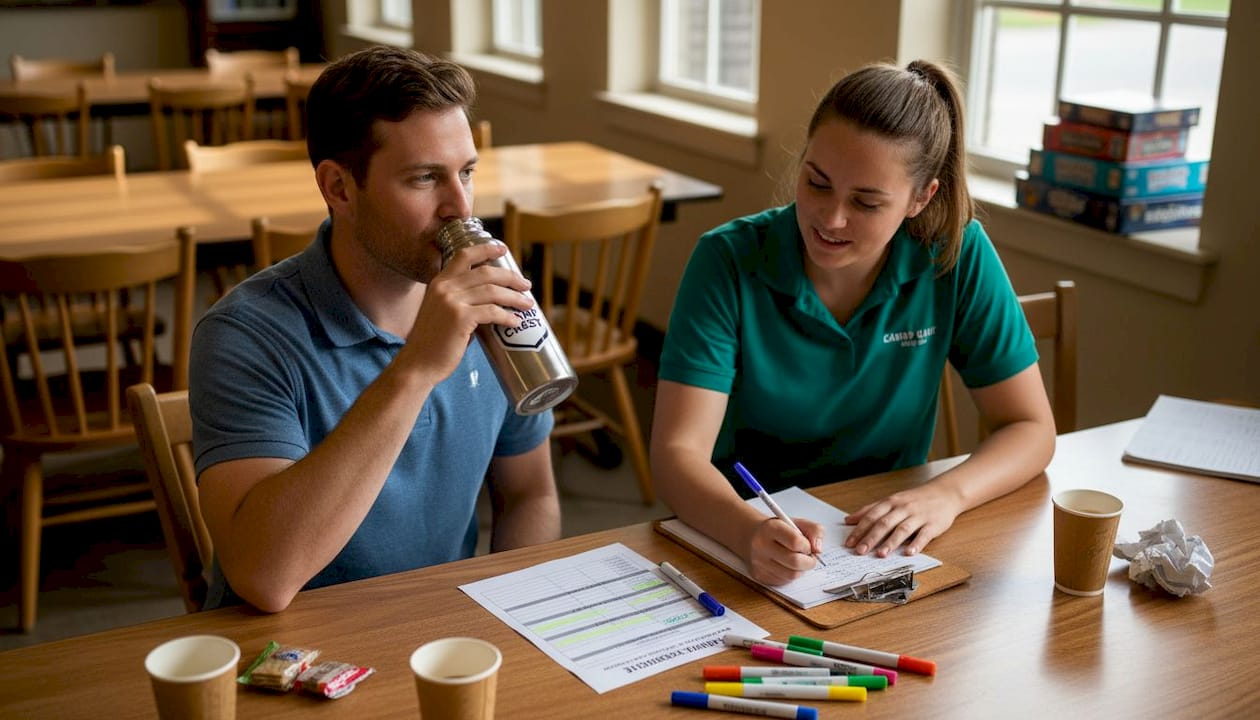
Structure is not the enemy of creativity. It is what makes creativity possible. When students know what to expect from the opening ritual, the sharing circle format, and the closing reflection, they use their mental energy on engagement rather than confusion. Predictable structure also makes your assemblies easier to staff, easier to replicate across multiple camp sessions, and easier to evaluate.
The flexible 20% is where the magic often happens. This might be an open Q&A with a presenter, an unscripted moment where a student shares something unexpected, or an improvisational activity that responds to the group’s energy that day. Skilled facilitators watch the room and know when to follow the plan and when to release it.
Here is a comparison of how structured and flexible assembly time each contributes to student outcomes:
| Assembly component | Structured time (80%) | Flexible time (20%) |
|---|---|---|
| Primary purpose | Consistency, skill-building, MESH | Creativity, personal expression |
| Student experience | Predictability, psychological safety | Spontaneity, authentic connection |
| Facilitator role | Guide and deliver planned content | Observe, respond, and adapt |
| Measurement ease | High, outcomes are trackable | Lower, requires qualitative notes |
| Best for | New groups, younger students | Established groups, older students |
| Risk if overused | Rigidity, disengagement | Inconsistency, lost learning goals |
This balance applies equally whether you are running summer camp games as part of an assembly or integrating a full camp entertainment program. The framework scales from a 30-minute morning gathering to a 90-minute all-camp showcase.
Pro Tip: Build your flexible 20% around the moments students initiate. Ask an open-ended question and genuinely respond to what comes up. When students see their input shaping the room, their investment in the whole program increases. Sports camps have used this principle effectively, as shown in team development research, where structured practice paired with student-driven reflection produces stronger team cohesion than rigid drill alone.
The 80/20 model also protects facilitators. Running 100% scripted assemblies is exhausting and tends to produce robotic delivery. Leaving intentional white space gives your team room to breathe and respond authentically.
Measuring Assembly Impact and Ensuring Equity
Planning a strong assembly is only half the job. The other half is knowing whether it worked. Without measurement, you are making programming decisions based on gut feeling rather than evidence, and that is how inequitable outcomes persist quietly beneath the surface of a well-intentioned camp.
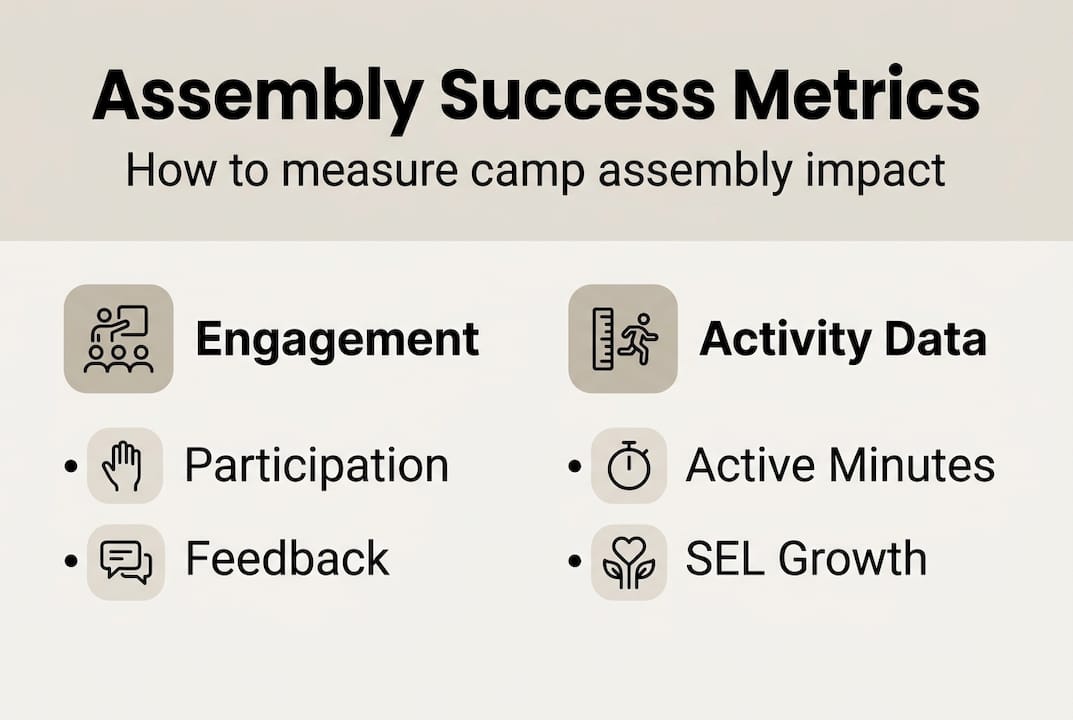
Start by tracking the metrics that research has already validated. Physical activity data is the most concrete starting point. Low-income elementary students in structured camp programs showed MVPA gains of 15 minutes per day across the full camp period, with on-camp days showing gains of 26 minutes. If your assemblies include movement-based components, you should be able to see similar patterns in your own data.
Here is a practical tracking framework you can adapt for your camp:
| Metric | Measurement method | Frequency | Target benchmark |
|---|---|---|---|
| MVPA (daily activity minutes) | Pedometers or activity logs | Weekly | 15 min increase vs. baseline |
| MESH self-report scores | Pre/post student surveys | Start and end of camp | Measurable increase in SEL measures |
| Screen time reduction | Family survey | Bi-weekly | 14 min/day decrease |
| Assembly engagement | Facilitator observation rubric | Each assembly | 80% active participation |
| Reflection quality | Written or verbal response review | Weekly | Growth in depth and specificity |
Beyond the numbers, qualitative data tells you what surveys cannot. Direct observation during assemblies, notes from counselors, and informal student conversations reveal whether your programming is landing the way you intend. Train your staff to notice which students are disengaged and why. That information is gold.
The equity dimension deserves explicit attention. Structured camp experiences show the most lasting gains for at-risk youth, the same students most likely to experience summer learning loss, social isolation, and increased sedentary behavior when camp is not available. Designing assemblies with these students in mind is not about lowering expectations. It is about building in accessibility, representation, and connection that makes every student feel the assembly is for them.
“At-risk students often arrive at camp carrying more invisible weight than their peers. An assembly that opens with belonging rather than performance changes the entire trajectory of their day.”
Reviewing your high school camp activities alongside your elementary programming also reveals age-specific gaps. High schoolers often disengage from assemblies that feel childish, while younger students can be overwhelmed by content pitched too abstractly. Stratify your data by age group so you can refine each program independently. Following assembly best practices means revisiting your metrics every session and adjusting before problems become patterns.
Our Perspective: The Hidden Power of Intentional Assemblies
Here is what most planning guides miss: assemblies fail not because schools lack resources or talent, but because they treat assemblies as routine rather than intentional. An assembly that happens simply because it is on the schedule is a missed opportunity. An assembly designed around a specific developmental goal, executed with genuine energy, and measured for actual impact is something else entirely.
The research is clear that structured camp programs build strong MESH outcomes across diverse student populations. But it also flags a real tension: skills-focused camps sometimes crowd out the SEL and community-building elements that make those skills meaningful. A basketball camp that produces better shooters but no better teammates has partially failed its students. The same logic applies to academic camps that build knowledge without building belonging.
Intentional assembly design is how you resolve that tension. When you bring skill-building and SEL together in the same 45 minutes, you are not choosing between development and fun. You are proving they were never separate to begin with. The camps that get this right consistently produce students who return year after year, not because the activities are novel, but because the experience feels genuinely transformative.
Explore Engaging Assembly Programs for Your School
Putting these strategies into practice is much easier when you have access to programs that are already designed for impact. Whether your summer camp focuses on the arts, STEM, or character development, there are ready-built options that align with the research frameworks in this guide.
Academic Entertainment offers a wide range of customizable programs built specifically for K-12 audiences, including arts education assemblies, STEM assemblies, and special event assemblies that can anchor your entire summer camp schedule. With over 40 years of experience working with schools across the U.S., our programs are tailored to different age groups, camp themes, and learning goals. Booking is straightforward, and every program can be adapted to fit your specific student population and summer timeline.
Frequently Asked Questions
How do assemblies contribute to student social-emotional learning?
Assemblies promote connection, reflection, and collaboration, building key SEL competencies through structured group engagement. Structured camp experiences consistently improve MESH outcomes, including the emotional regulation and relationship skills that define strong social-emotional development.
What is the ideal balance of structured and flexible assembly time?
The most effective approach follows the 80/20 rule, with 80% of content planned and 20% left flexible to allow for student-driven moments, spontaneity, and responsive facilitation.
How can assemblies increase student physical activity?
Structured assemblies in summer camps are linked to real physical gains. Structured camp programs increased daily MVPA by 15 minutes and reduced sedentary time by 30 minutes compared to unstructured summer time for elementary and at-risk youth.
How should camp assemblies be measured for effectiveness?
Track student outcomes including MESH scores, MVPA minutes, screen time, and facilitator-observed engagement, then compare results to baseline surveys. Structured camp experiences show the most lasting gains for at-risk youth, making equity-focused measurement especially important.
Recommended
- End-of-year assembly planning: steps for engaging K-12 programs – Academic Entertainment
- How to Customize School Programs for Max Assembly Impact – Academic Entertainment
- Best Practices for Assemblies: Engage Your School Community – Academic Entertainment
- How to Engage Students in Assemblies Effectively – Academic Entertainment