Most schools treat the end-of-year assembly as a checkbox. Get everyone in the gym, hand out a few awards, play a song, dismiss. But when you look at what these events can actually accomplish, settling for “fine” is a missed opportunity. A well-crafted assembly can reinforce your school’s values, celebrate the full spectrum of student identity, and leave every kid walking out feeling genuinely seen. The challenge is knowing how to build that experience on purpose, not by accident. This end-of-year assembly planning guide gives you a clear, step-by-step framework that does exactly that.
Key Takeaways
| Point | Details |
|---|---|
| Purpose-driven planning | Align your assembly goals with school values for a more meaningful impact. |
| Diverse, interactive elements | Mix celebration with character and cultural programming for higher engagement. |
| Logistics and inclusivity | Build a planning team early and ensure all student groups are represented. |
| Measure for growth | Evaluate success with surveys and feedback to guide next year’s improvements. |
Start With Purpose: Aligning Assembly Goals With School Values
Before you book a performer or reserve the auditorium, you need to answer one question: what do you want students to walk away feeling? That answer shapes every decision that follows. Assemblies aligned with school goals are far more likely to produce outcomes you can measure and repeat.
Your assembly can serve multiple goals at once, but clarity on your top priority is what prevents a scattered program. The most common objectives fall into four categories:
- Celebration: Honoring academic achievement, personal growth, or milestone transitions
- Reflection: Giving students space to process the year and look ahead with intention
- Character development: Reinforcing values like respect, empathy, and responsibility
- Cultural awareness: Spotlighting the diverse backgrounds that make your school community whole
Once you know your primary focus, check it against your school’s mission statement. If your mission emphasizes belonging and excellence, a program heavy on character and cultural recognition fits naturally. If your goal is motivating students heading into a new grade level, celebration with forward momentum might lead. Programs that focus on character and diversity consistently show positive effects on school climate, which makes them worth prioritizing regardless of your other goals.
Involve key stakeholders early. Teachers know which students need a confidence boost. Student council representatives can tell you what their peers actually care about. Cultural liaisons ensure the program reflects the real makeup of your community, not just the most visible groups. Bringing these voices in before the planning solidifies creates buy-in and surfaces ideas you wouldn’t have found on your own.
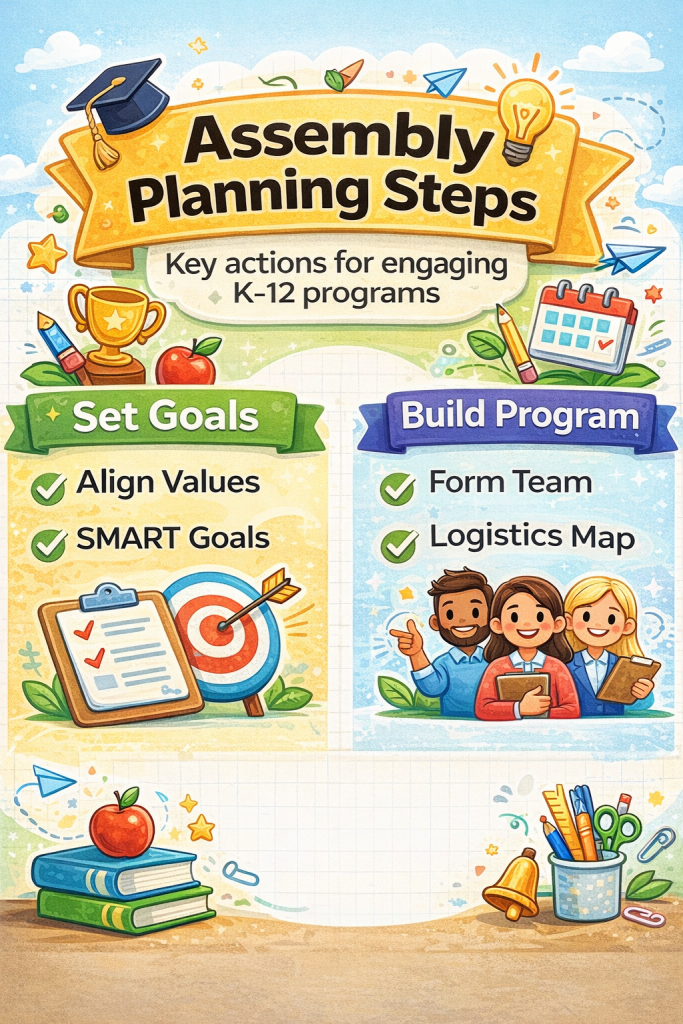
Setting SMART goals, meaning Specific, Measurable, Achievable, Relevant, and Time-bound goals, gives your team a shared standard. For example: “80% of students will report feeling proud of their school community in post-assembly surveys” is a SMART goal. “Make it fun” is not.
| Assembly goal | What success looks like | Key program element |
|---|---|---|
| Celebration | Student recognition rates high in surveys | Award segments, memory videos |
| Reflection | Students can name one personal growth moment | Journaling, guided discussion |
| Character development | Reduction in behavioral referrals post-event | Motivational speakers, skits |
| Cultural awareness | Students report feeling more connected to peers | Cultural performances, storytelling |
Pro Tip: Write your purpose statement in one sentence before you plan anything else. Share it with every team member so every decision, from the guest performer to the closing song, gets filtered through that lens. This also helps you review the end-of-year assembly impact when the event is done.
Build Your Planning Team and Nail Event Logistics
A clear purpose only goes as far as the team executing it. With objectives set, you need the right people in the right roles, and a logistics plan that leaves nothing to chance.
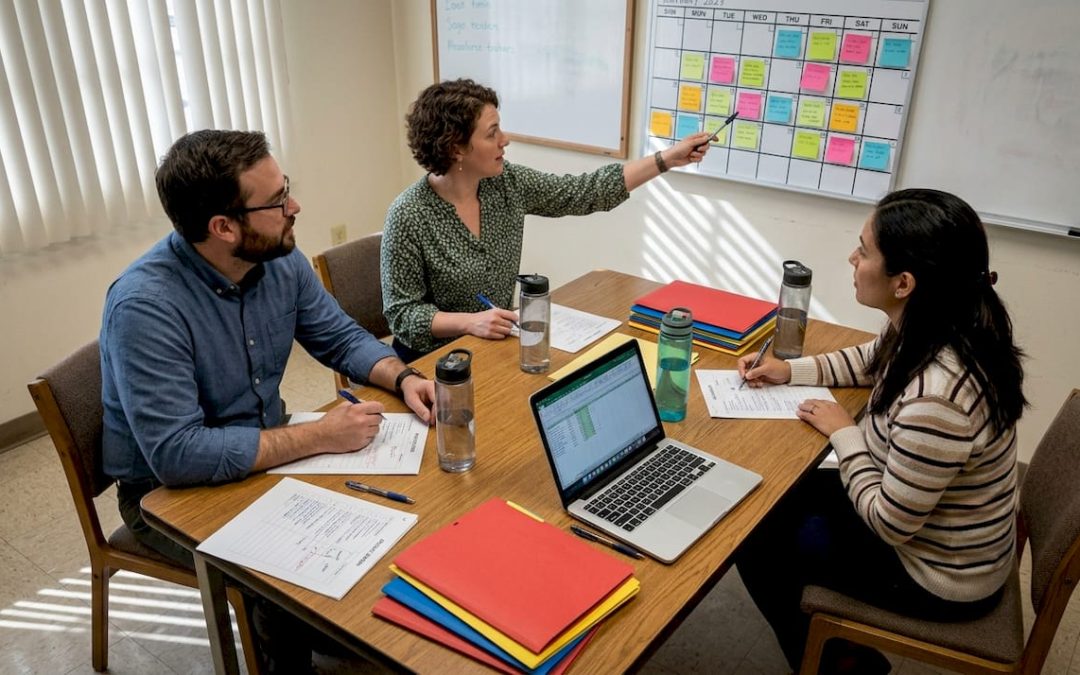
Assign five distinct roles before your first planning meeting:
- Event coordinator: Owns the overall vision, keeps the team on track, and serves as the primary decision-maker
- Logistics lead: Handles venue, equipment, scheduling, and physical setup
- Program director: Curates the content, books performers, and sequences the run of show
- Communications lead: Manages outreach to families, staff, and students
- Evaluation lead: Designs feedback mechanisms and tracks outcomes against your SMART goals
Once roles are assigned, map your logistics. Venue capacity, audiovisual needs, microphone counts, seating arrangements, and accessibility accommodations all need attention well before the event date. Students with sensory sensitivities, for example, may need designated seating away from speakers. A detailed planning checklist prevents oversights that feel minor until they derail the whole event.
For large schools or those with multiple campuses, a hybrid or virtual option is worth considering. Streaming portions of the assembly ensures no student misses recognition because of a scheduling conflict or attendance barrier. You can use platforms your school already has, like Google Meet or Zoom, without adding budget pressure.
Timing matters more than most planners expect. Adapting duration by age group keeps energy high and reduces behavioral disruptions. Elementary students typically max out at 45 minutes. Middle and high schoolers can sustain 60 to 75 minutes if the program stays dynamic.
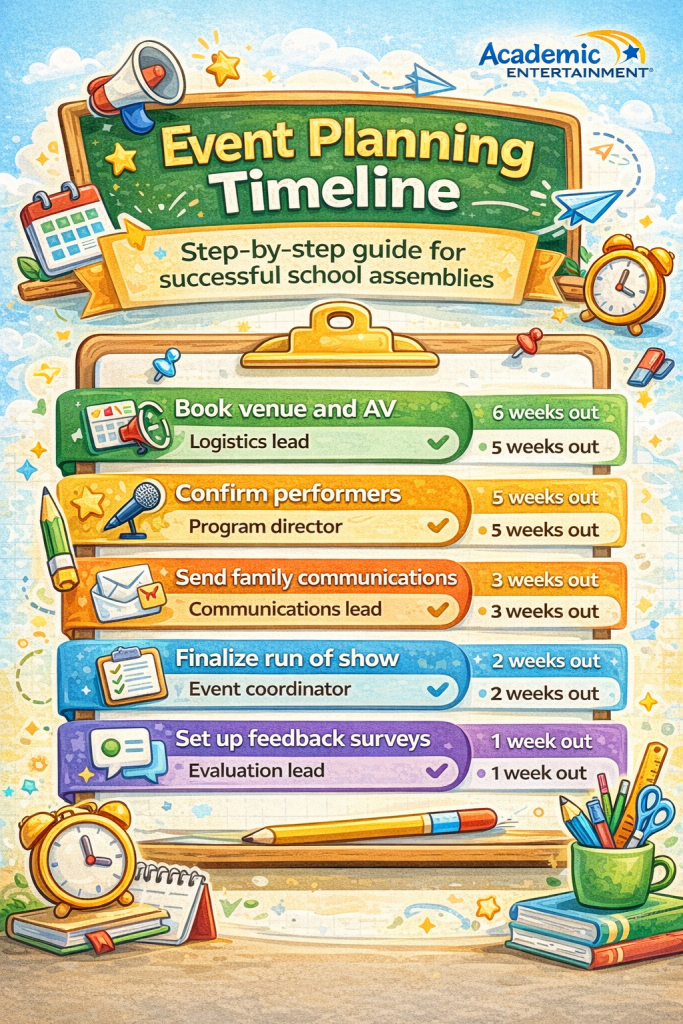
When organizing your cultural assembly logistics, build in time for performer sound checks and any rehearsals involving students. Also, review scheduling school assemblies around testing periods and field trips that might thin attendance.
Pro Tip: Send a reminder to all stakeholders exactly three weeks before the event, two weeks out, and the day before. Three touchpoints dramatically reduce last-minute surprises and no-shows.
Design Engaging Program Elements: From Character Building to Celebration
With logistics handled, you can shape the experience. The mix of activities you choose will define whether your assembly feels like an obligation or a genuine community moment.
The strongest assemblies layer passive and interactive elements. Students who watch a performance stay attentive for a while. Students who participate in it remember it for years. Consider blending:
- Student-led skits that dramatize real scenarios around respect, inclusion, or resilience
- Award ceremonies that recognize character, not just grades, so more students feel honored
- Memory stations or video montages that capture shared experiences from the year
- Participatory ceremonies like pledge readings, collaborative art, or community chants
- Live performances from student groups, cultural dance teams, or professional educational entertainers
Character development programs that feature motivational speakers or values-based curricula have a measurable impact. Schools using structured character programs report fewer behavioral referrals and stronger school culture metrics. Pairing those programs with your assembly amplifies the effect because the message lands in a communal setting.
“Assemblies with interactive elements foster up to 23% more engagement and social-emotional growth.”
Reflection activities that ask students to name one thing they are proud of or one person who helped them this year lead to 18% greater academic progress. That is a meaningful return for a five-minute program addition.
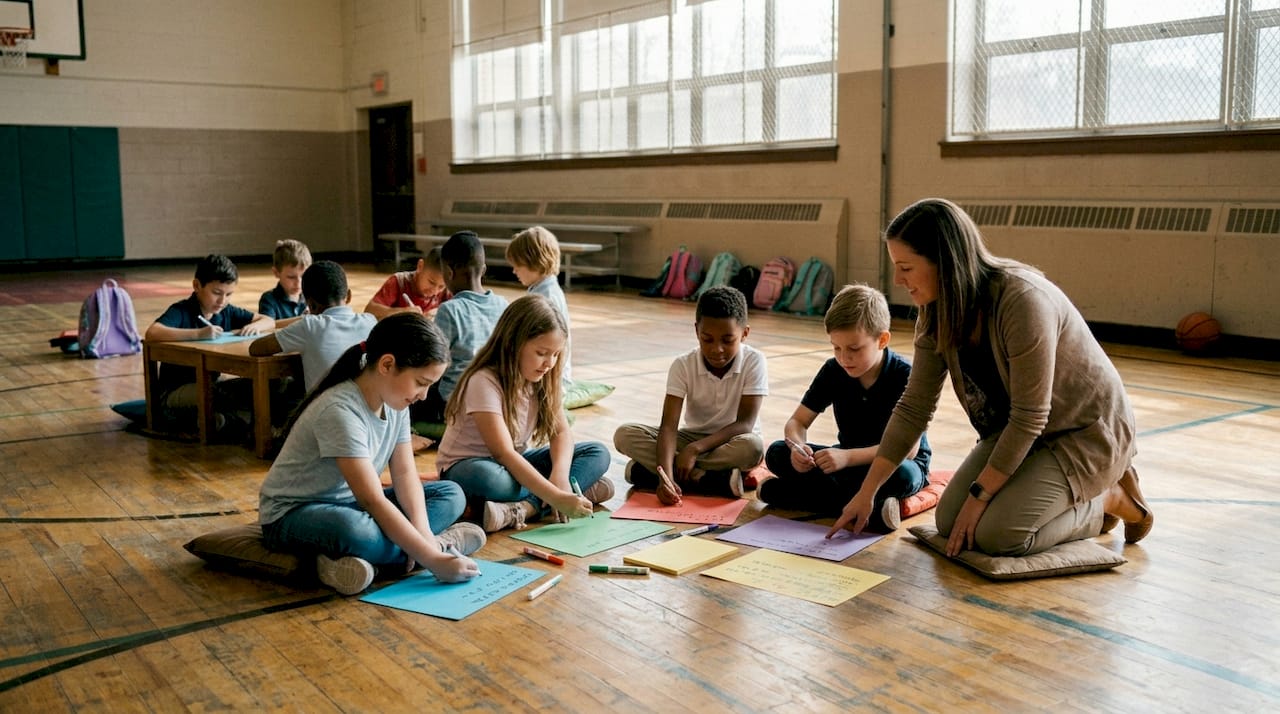
Explore character program assemblies that are already designed for school settings, and look at interactive assembly ideas for formats that work across grade levels. Moving from passive viewing to active participation, as explored in participatory assembly strategies, is the single biggest lever you have for boosting student engagement.
Also consider data-driven assembly outcomes when making programming decisions. If your school data shows a spike in disciplinary events near year-end, a character-focused segment timed just before the final weeks can serve a preventive function.
Pro Tip: Give at least three students a speaking role, even a small one. Student voice signals that the assembly belongs to them, not just the adults running it.
Promote Cultural Awareness and Inclusivity Through Meaningful Programming
Beyond celebration and character, the most impactful assemblies make every student feel that their background matters. That does not happen by accident.
Follow these four steps to build culturally aware programming:
- Collaborate: Reach out to student groups, families, and cultural liaisons before planning begins. Ask what traditions, stories, or performances they want to share
- Curate: Select performances and content that reflect genuine representation, not stereotypes. Work with the groups being featured to review materials
- Communicate: Let the school community know in advance what cultures will be featured and why, so students can look forward to seeing their background honored
- Celebrate: Frame every cultural element as a source of pride for the whole school, not just a lesson for the majority
Effective cultural programming can include:
- Interactive workshops on traditions, crafts, or language basics
- Music and dance performances representing the school’s demographic mix
- Art or photo exhibits displayed in the assembly space
- Story-sharing segments where students or family members speak briefly
- Themed visual elements like flags, textiles, or maps that stay up after the event
Cultural assemblies increase connectedness for more than 80% of students, and 60% report feeling more connected to their peers as a result. That is not a soft outcome. It directly affects how safe students feel at school and how willing they are to engage academically.
Avoid tokenism, which means featuring one culture briefly without real depth or collaboration. Collaborating with cultural representatives to review content before the event is the single most effective guard against misrepresentation. You can also browse multicultural assembly ideas designed specifically for K-12 settings, and look at strategies for engaging diverse students throughout the event.
For practical logistics around inclusive events, review cultural awareness day tips to anticipate needs you might otherwise overlook.
Pro Tip: Send a brief post-event survey to students asking one question about cultural connection. Track it year over year. You will see the data shift when programming is genuinely inclusive.
Why a Purpose-Driven Assembly Creates Lasting Community Change
Here is the uncomfortable truth most administrators do not say out loud: most year-end assemblies are forgettable. Not because schools do not care, but because they plan the event instead of planning the experience. There is a real difference.
When you design an assembly around purpose, student voice, and cultural affirmation, you are not just filling 60 minutes on the calendar. You are modeling what your school community values. Students watch how adults treat recognition, diversity, and belonging. They take that with them long after the chairs are folded up.
The schools that consistently report strong culture metrics are the ones that treat assemblies as strategic investments, not logistical obligations. They build student voice into the program. They feature authentic cultural representation. They close with something that connects students rather than just dismissing them.
If you want to understand the full scope of what intentional planning can produce, start with how to host school assemblies at a level that genuinely shifts school climate. The assembly you plan this year has the potential to become the story students still tell in ten years.
Plan an Unforgettable End-of-Year Assembly With Expert Support
If you are ready to put this framework into action, Academic Entertainment has the resources to help you move from planning to execution with confidence. With over 40 years of experience designing K-12 programs, we offer live and virtual shows built specifically to align with your school’s values, grade levels, and event goals.
Explore our full range of assembly entertainment programs to find options that fit your timeline, budget, and theme. If character development is a priority, our character-building assembly ideas offer proven formats that engage students and reinforce school values. Reach out today to schedule a consultation and get personalized program recommendations for your year-end event.
Frequently Asked Questions
How far in advance should I start planning an end-of-year assembly?
Plan at least 3 weeks ahead to allow sufficient time for logistics, programming selection, and family communication. Starting earlier, around six weeks out, gives you more flexibility for booking performers.
What are some effective activities for student engagement during assemblies?
Interactive assemblies promote higher engagement than passive formats. Workshops, student-led skits, award ceremonies, live performances, and memory stations all keep students attentive and emotionally invested.
How can we ensure cultural inclusivity during our assembly?
Collaborate with cultural reps before finalizing any content, feature traditions with genuine depth rather than surface-level inclusion, and avoid tokenism by giving each featured culture meaningful time and context.
What impact do character education assemblies have?
Character programs reduce behavioral issues and support stronger academic outcomes. Schools using structured character-based programming report improved school climate and lower disciplinary referral rates.
How can we evaluate the success of our assembly?
Use post-event surveys to measure student connectedness, engagement, and alignment with your stated goals. Tracking responses year over year reveals whether your programming is creating real cultural change.
Recommended
- Guide to School Assembly Programming in Michigan – Academic Entertainment
- 7 Steps for School Assembly Planning Timeline: A Step-by-Step Checklist for Principals and PTOs – Academic Entertainment
- School Assembly Planning Guide: Step-by-Step Event Success – Academic Entertainment
- Best Practices for Assemblies: Engage Your School Community – Academic Entertainment