

Over 85 percent of American K-12 principals say that well-organized school assemblies shape a positive campus culture, yet finding time to plan them can be challenging in busy urban schools. The right approach turns assemblies into moments that spark curiosity and build student unity. This guide offers practical steps for American education leaders to create engaging, purpose-driven assemblies without added stress.
Quick Summary
| Takeaway | Explanation |
|---|---|
| 1. Define Clear Goals and Objectives | Establishing specific goals transforms your assembly into a meaningful learning experience aligned with educational priorities. |
| 2. Build a Diverse Planning Team | Select a small group with varied expertise to effectively collaborate and enhance the assembly’s impact. |
| 3. Choose Relevant Themes and Programs | Align assembly themes with students’ needs to create engaging, educational content that resonates and motivates. |
| 4. Coordinate Logistics Early | Secure venues and arrange technical needs 12 to 24 months in advance to avoid disruptions on assembly day. |
| 5. Evaluate and Gather Feedback | Collect comprehensive feedback using surveys and discussions to improve future assemblies based on participant experiences. |
1. Set Clear Assembly Goals and Objectives
Planning a school assembly starts with defining precise goals and objectives that transform an ordinary event into a powerful learning experience. Goals represent the broad vision for your assembly, while objectives provide the specific, measurable steps to achieve that vision.
Establishing clear assembly goals helps you design targeted programs that directly support student learning and school priorities. When you write goals using the SMART framework, you create a roadmap that ensures every aspect of the assembly contributes to meaningful student outcomes.
To develop effective goals, start by connecting your assembly to broader educational objectives. Ask yourself: What specific learning, behavioral, or cultural outcomes do we want to achieve? Are you aiming to build character, introduce new academic concepts, celebrate diversity, or address a specific school challenge?
When crafting objectives, focus on making them specific and actionable. Instead of a vague goal like “improve student understanding,” create a precise objective such as “Students will identify three key strategies for conflict resolution during the assembly presentation.”
The instructional design process emphasizes that well-defined objectives help identify appropriate content, structure presentations, and guide meaningful activities. This approach ensures your assembly is not just an event, but a strategic educational experience.
Pro tip: Schedule a brief planning meeting with key staff members to brainstorm and refine your assembly goals, ensuring alignment with school mission and student needs.
2. Form an Assembly Planning Team
Building a strong assembly planning team is the backbone of a successful school event. Your team will transform strategic goals into an engaging, impactful experience for students and staff.
A well-constructed planning team requires careful consideration of skills, roles, and collaborative potential. Effective team formation involves selecting members with complementary expertise and a shared commitment to the assembly’s objectives. Think of your team as a group of skilled professionals who bring diverse perspectives to the planning process.
Key Team Members to Consider:
- School Principal
- Lead Teacher
- PTO Representative
- Student Council Advisor
- Potential Student Representatives
When assembling your team, prioritize members who demonstrate strong communication skills and a genuine interest in creating meaningful educational experiences. The goal is to create a compact yet dynamic group that can collaborate efficiently and bring creative solutions to assembly planning.
Team Composition Best Practices:
- Keep the team small (4 to 6 members)
- Ensure representation from different school stakeholders
- Define clear roles and responsibilities
- Establish a communication protocol
Annual planning approaches used by organizations like scouting provide excellent models for creating collaborative planning teams. By gathering diverse perspectives and soliciting input from team members, you create a more comprehensive and engaging assembly plan.
Pro tip: Schedule an initial team kickoff meeting where each member shares their unique perspective and commits to specific planning responsibilities.
3. Select Relevant Assembly Themes and Programs
Selecting the right themes and programs is critical to creating meaningful school assemblies that engage and inspire students. Your assembly should be more than just a break from routine; it should be a powerful educational experience that resonates with students’ current needs and interests.
Compelling Assembly Theme Categories:
- Character Development
- Social Awareness
- Academic Motivation
- Mental Health and Wellness
- Career Exploration
- Cultural Understanding
- Environmental Responsibility
Educational leaders recommend choosing themes that address students’ academic, social, and emotional development. When selecting programs, consider topics that are both relevant and transformative.
For secondary schools, focus on themes that connect directly to students’ real world experiences and future aspirations. This might mean exploring programs about college readiness, career pathways, leadership skills, or critical social issues that matter to young people.
Program Selection Strategies:
- Align themes with school improvement goals
- Gather student input through surveys or focus groups
- Consider age-appropriate content and delivery
- Seek interactive and engaging presentation styles
Theme based assemblies can effectively celebrate diversity while creating a sense of school unity by bringing students together around meaningful shared experiences.
Pro tip: Create a student advisory committee to help brainstorm and validate assembly theme ideas, ensuring the programs truly resonate with their interests and needs.
4. Coordinate Dates, Venues, and Logistics
Coordinating assembly dates, venues, and logistics is a critical planning step that can make or break your entire event. Strategic planning ensures a smooth, well-executed assembly that maximizes student engagement and minimizes potential disruptions.
Key Logistics Considerations:
- Academic calendar conflicts
- School facility availability
- Technical equipment requirements
- Audience capacity
- Student transportation schedules
Effective logistics coordination requires early planning, often 12 to 24 months in advance. This proactive approach allows you to secure preferred dates and venues while giving ample time for detailed preparation.
Venue Selection Checklist:
- Confirm room capacity matches expected audience
- Assess audiovisual equipment availability
- Check acoustics and visibility
- Evaluate accessibility for all students
- Identify potential backup locations
Technical preparedness is crucial for preventing assembly day disruptions. Confirm sound systems, projection equipment, and internet connectivity well before the event to ensure a seamless presentation.
Remember that timing is everything. Coordinate with school administrators to select dates that minimize academic interruptions and maximize student participation.
Pro tip: Create a detailed logistics spreadsheet with color-coded timelines for venue reservation, equipment setup, and presenter coordination to streamline your planning process.
5. Communicate Details to Staff and Families
Communicating assembly details effectively is the bridge between planning and successful execution. Your communication strategy can transform an ordinary event into a community-wide engagement opportunity.
Communication Channels to Utilize:
- School newsletters
- Email updates
- Digital messaging platforms
- Parent-teacher meetings
- School website announcements
Effective communication involves frequent, multi-channel updates that outline event purpose and logistics to keep everyone informed and aligned.
Key Information to Share:
- Assembly date and time
- Location details
- Purpose and expected learning outcomes
- Dress code or special instructions
- Opportunities for family involvement
Promoting family engagement through considerate communication helps create a welcoming school environment. The goal is to provide clear, positive messaging that encourages participation and support.
Consider translating communications for families who speak languages other than English and provide multiple formats to accommodate different communication preferences.
Timing matters. Send initial communications at least two weeks before the assembly, with a reminder one week before, and then a few days prior to the event.
Pro tip: Create a standardized assembly communication template that can be quickly customized for each event, ensuring consistent and professional messaging across all platforms.
6. Arrange Technical Needs and Materials
Technical preparation can make or break a school assembly. Anticipating and arranging equipment needs well in advance ensures a smooth, professional presentation that keeps students engaged and learning.
Essential Technical Equipment Checklist:
- Microphones
- Projector and screen
- Sound system
- Laptop or presentation computer
- Backup power strips
- Adapters and connectors
- Wireless remote
A comprehensive needs assessment helps schools identify existing resources and technical gaps before investing in additional equipment. This strategic approach saves time and budget.
Technical Preparation Strategies:
- Test all equipment at least one week prior
- Confirm compatible connection ports
- Have technical support personnel on standby
- Create a backup presentation plan
- Arrange for a technical rehearsal
Developing a detailed support plan outlines responsibilities for setup, operation, and potential troubleshooting. This proactive approach minimizes potential disruptions during the assembly.
Consider creating a technical readiness checklist that can be quickly referenced on assembly day. This document should include equipment inventory, setup responsibilities, and contact information for technical support.
Pro tip: Designate a specific team member as the technical point person who understands all equipment and can quickly resolve any unexpected technical challenges.
7. Evaluate Assembly Impact and Gather Feedback
Evaluating an assembly is not just about checking a box it is about understanding the true impact of your educational experience. Gathering meaningful feedback helps you continuously improve and make future assemblies more effective.
Comprehensive Feedback Collection Strategies:
- Student surveys
- Teacher observations
- Staff reflection meetings
- Parent feedback forms
- Student focus groups
Defining clear evaluation questions aligned with your original assembly goals is crucial for meaningful assessment. Your evaluation should look beyond surface-level reactions and dig into substantive learning outcomes.
Evaluation Metrics to Consider:
- Knowledge retention
- Attitude changes
- Behavioral indicators
- Engagement levels
- Long term impact
A structured evaluation approach supports continuous learning by collecting, analyzing, and adapting based on participant perspectives. This means looking at feedback from multiple stakeholder groups: students, teachers, and families.
Consider creating both quantitative surveys with rating scales and qualitative open-ended questions that allow participants to share detailed insights. Digital survey tools can help streamline this process and make data analysis more straightforward.
Remember that evaluation is not about criticism but about growth. Frame your feedback requests positively and show participants how their input directly contributes to improving future school experiences.
Pro tip: Design a standardized feedback template that can be quickly adapted for different types of assemblies, allowing for consistent comparison across events.
Below is a comprehensive table summarizing the main strategies and insights discussed throughout the article regarding planning, organizing, and evaluating effective school assemblies.
| Key Aspect | Description | Strategies/Recommendations |
|---|---|---|
| Setting Goals and Objectives | Establish clear, measurable goals for the assembly that align with educational outcomes. | Use the SMART framework for practical and impactful objectives. |
| Assembling the Planning Team | Create a focused, dynamic team with diverse members sharing a commitment to the objectives. | Include representatives from various stakeholders and ensure strong communication among members. |
| Choosing Themes and Programs | Select meaningful themes that engage students and relate to current needs. | Align with school improvement objectives, gather student input, and prioritize interactive content. |
| Coordinating Logistics | Plan assembly dates, venues, and necessary arrangements early for smooth execution. | Use checklists and timelines to secure venues, equipment, and resolve potential scheduling conflicts. |
| Communicating Effectively | Share detailed information with staff and families to ensure participation and support. | Use multiple communication channels, provide clear messaging, and address diverse language needs. |
| Arranging Technical Resources | Prepare technical equipment to ensure smooth performance during assembly events. | Test equipment in advance, designate a technical lead, and maintain a backup plan. |
| Evaluating and Gathering Feedback | Assess the impact of the assembly to refine future implementations. | Use surveys, observations, and structured reflection to identify successful elements and areas for improvement. |
Transform Your School Assemblies with Expert Planning and Engaging Programs
Planning a successful school assembly requires clear goals, a strong planning team, thoughtful theme selection, and flawless logistics. This step-by-step approach can often feel overwhelming for principals and PTOs aiming to create meaningful student experiences while managing busy school schedules. From coordinating dates and venues to arranging technical needs and gathering actionable feedback, every detail counts toward an impactful event that inspires and educates.
Academic Entertainment is your trusted partner with over 40 years of experience providing engaging, educational assembly programs tailored to your school’s unique themes and objectives. Whether you want to highlight character development, celebrate diversity, or motivate academic success, our wide variety of live and virtual shows deliver powerful messages that resonate with K-12 students. Explore how our expert programs can seamlessly integrate with your assembly planning timeline to captivate your school community.
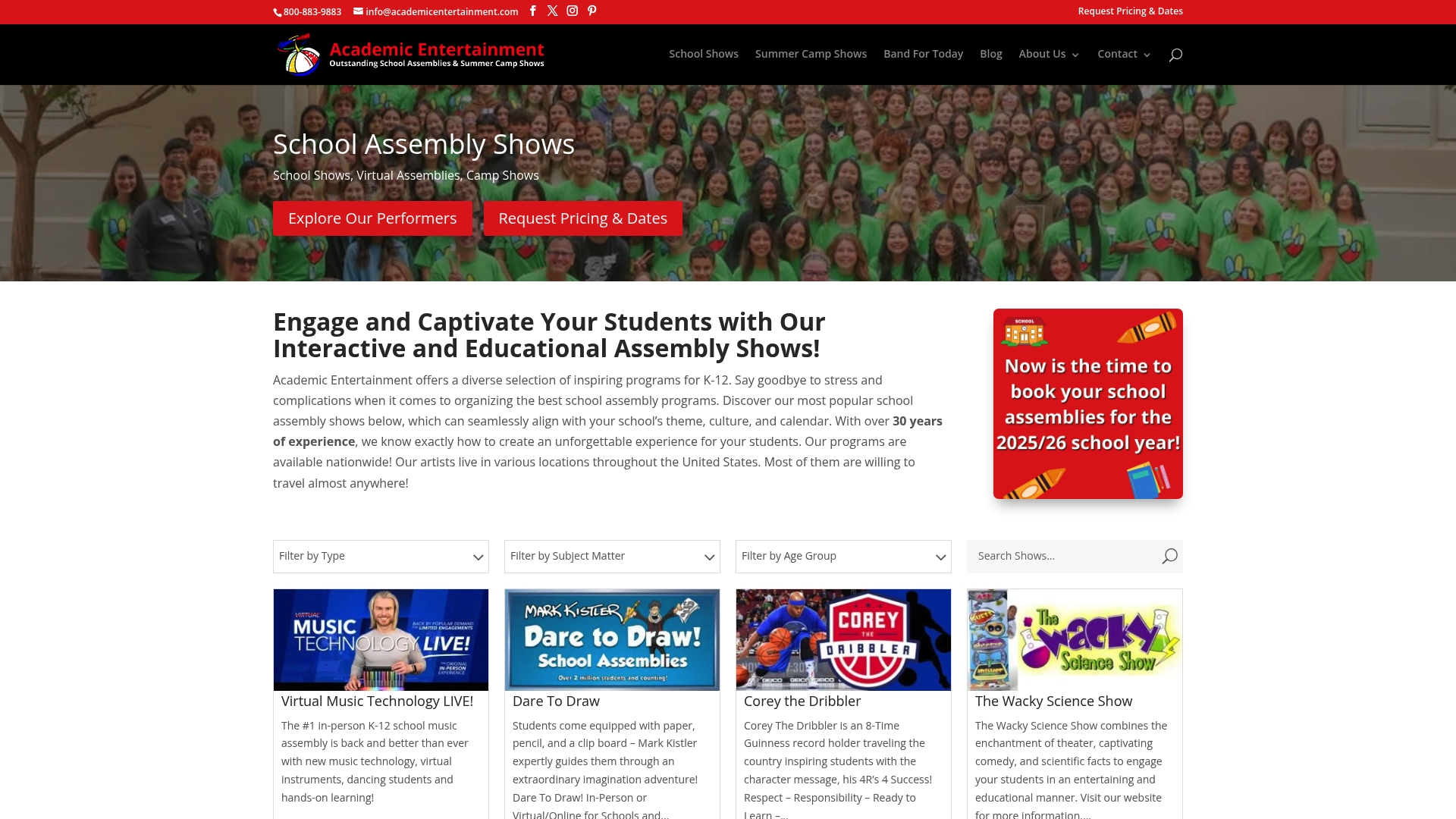
Take the next step in elevating your school assemblies by visiting Academic Entertainment. Discover programs perfectly matched to your educational goals and streamline your booking process today. Let us help you turn every assembly into an unforgettable learning experience that supports your school’s mission and builds lasting student engagement.
Frequently Asked Questions
What are the first steps in the school assembly planning timeline?
Start by setting clear goals and objectives for your school assembly. Define what you want to achieve and ensure these goals are aligned with student learning priorities.
How do I form an effective assembly planning team?
Build a planning team by selecting members with complementary skills, including a Principal, Lead Teacher, and other stakeholders. Aim for a small group of 4 to 6 members to facilitate effective collaboration.
What themes should I consider for the assembly?
Choose assembly themes that address character development, social awareness, or career exploration to resonate with student interests. Gather student input to ensure the themes are relevant and engaging for them.
How can I ensure effective communication about the assembly?
Communicate assembly details through multiple channels, like newsletters and emails, to keep everyone informed. Share key information at least two weeks prior, including the date, purpose, and any special instructions.
What logistical elements do I need to coordinate for the assembly?
Coordinate essential logistics such as date selection, venue availability, and technical equipment needs early in the planning process. Create a detailed logistics spreadsheet to track all arrangements and responsibilities.
How should I evaluate the effectiveness of the assembly after it concludes?
Gather feedback from students, teachers, and parents using surveys and focus groups to evaluate assembly impact. Use this input to refine future assemblies by assessing knowledge retention and engagement levels.
Recommended


