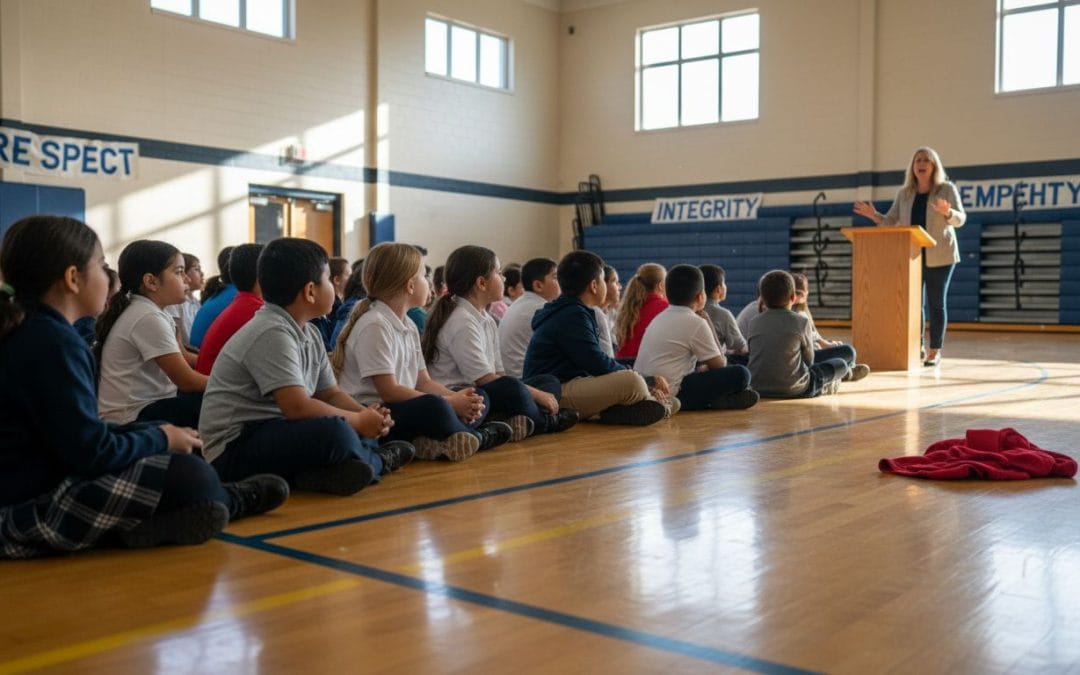
More than 80 percent of American schools report incorporating character education assemblies to strengthen student values and social skills. For families and educators, these gatherings are not just school traditions. They are fundamental tools for building respectful, responsible, and compassionate communities. By exploring how character education assemblies work, you will discover fresh strategies to help every American student develop lifelong ethical habits.
Key Takeaways
| Point | Details |
|---|---|
| Holistic Development | Character education assemblies promote social, emotional, and ethical growth beyond academic instruction. |
| Interactive Engagement | Effective assemblies utilize dynamic presentations and storytelling to engage students in meaningful learning experiences. |
| Inclusivity Promotion | Assemblies encourage a culture of respect and understanding by highlighting diverse perspectives and fostering genuine connections. |
| Community Involvement | Successful implementation of character education requires collaboration among administrators, educators, parents, and students for lasting impact. |
Defining Character Education Assemblies in Schools
Character education assemblies are strategic school-wide gatherings designed to cultivate positive student behaviors, social skills, and ethical values. School assemblies serve as powerful platforms for disseminating important information and reinforcing fundamental character development principles across entire student populations.
These specialized programs go beyond traditional academic instruction, focusing on holistic student growth by addressing critical social emotional learning components. Character education assemblies typically feature interactive presentations, engaging performances, and dynamic storytelling that help students understand complex ethical concepts through memorable experiences. By introducing themes like respect, integrity, empathy, and personal responsibility, these assemblies create transformative learning environments that extend well beyond standard classroom curricula.
Key characteristics of effective character education assemblies often include:
- Live, interactive performances
- Age-appropriate messaging
- Engaging storytelling techniques
- Clear moral lessons or ethical frameworks
- Opportunities for student reflection and discussion
Schools increasingly recognize that character development cannot be confined to textbooks or isolated lessons. Character education programs provide comprehensive approaches that integrate valuable life skills into students’ educational experiences, helping young learners develop the social and emotional competencies necessary for future success.
Essential Elements of Effective Assemblies
Character education assemblies require carefully crafted strategies to maximize their impact on student learning and development. Successful character education programs involve comprehensive approaches that integrate core ethical values throughout the educational experience.
Fundamental elements of impactful assemblies include creating an environment of genuine engagement and meaningful learning. Effective character education initiatives focus on fostering students’ intrinsic motivation while building a supportive school community that reinforces positive behavioral expectations. This requires thoughtful design that goes beyond mere lecture-style presentations.
Key components of high-quality character education assemblies encompass:
- Interactive and dynamic presentation styles
- Authentic storytelling that resonates with student experiences
- Clear demonstrations of ethical decision-making
- Opportunities for student reflection and personal connection
- Age-appropriate content that speaks directly to developmental stages
Strategic planning is crucial for assembly effectiveness. School assembly tips emphasize the importance of aligning content with specific educational goals, ensuring that each assembly provides actionable insights that students can integrate into their daily lives. By creating immersive, engaging experiences, schools can transform character education from abstract concepts into tangible, meaningful learning opportunities.
Popular Program Types and Unique Approaches
Character education assemblies have evolved to address diverse student needs through innovative and targeted programming. National character education programs strategically develop assemblies that tackle critical issues like bullying, peer pressure, and digital safety, ensuring age-appropriate and meaningful interventions across different educational levels.
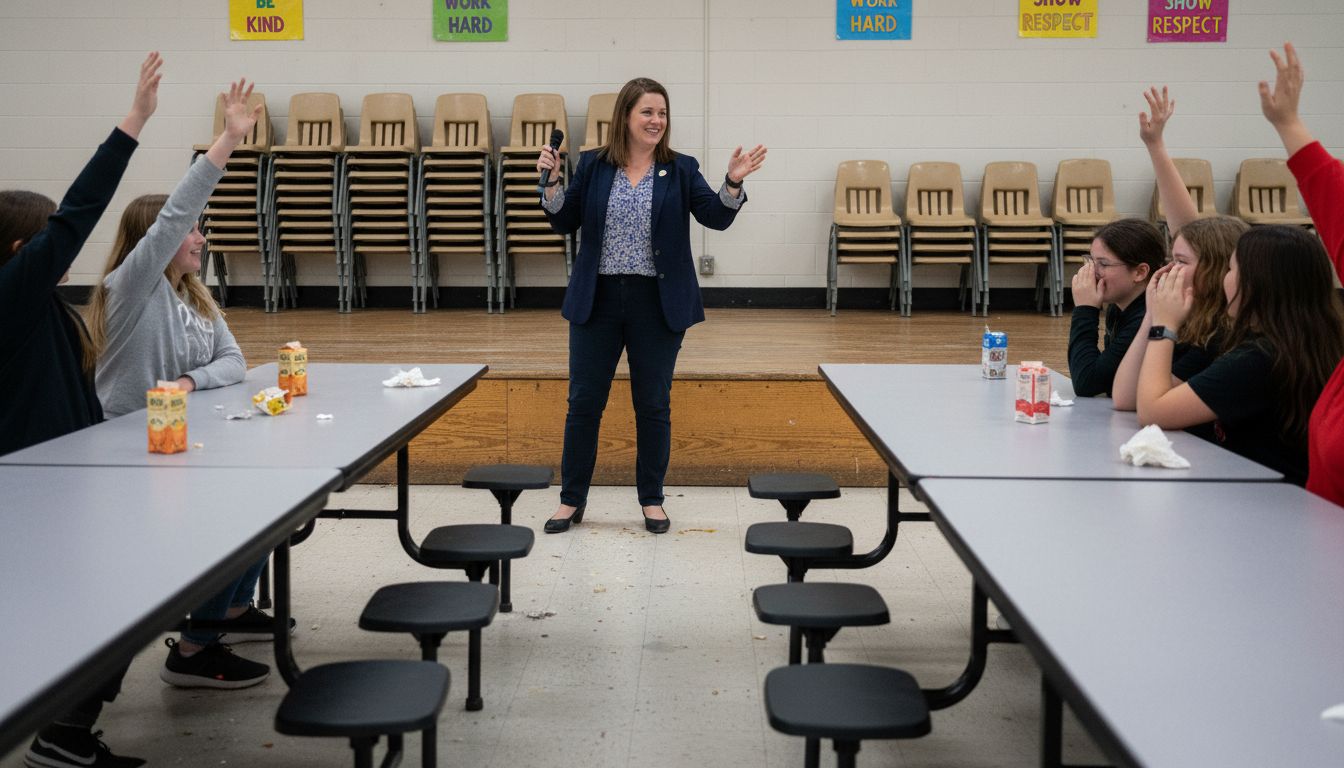
Schools now recognize the importance of specialized approaches that go beyond traditional lecture formats. These programs typically fall into several distinctive categories, each designed to engage students through unique storytelling and interactive methodologies. Performance-based assemblies, interactive workshops, motivational presentations, and experiential learning experiences provide multiple avenues for character development and social emotional learning.
Popular program types include:
- Cultural diversity and inclusion presentations
- Anti-bullying and conflict resolution workshops
- Leadership and personal empowerment seminars
- Mental health awareness performances
- Social responsibility and ethical decision-making programs
Specific approaches like Academic Entertainment’s themed shows demonstrate how character education can be transformed into engaging, memorable experiences. By incorporating dynamic storytelling, live performances, and interactive elements, these programs create powerful learning moments that resonate with students far beyond traditional classroom instruction, helping young learners develop critical social skills and ethical understanding.
Shaping Inclusive School Culture Through Assemblies
School culture transformation begins with intentional strategies that promote understanding, respect, and mutual appreciation among diverse student populations. Creating a caring school community requires systematic approaches that foster genuine connections and breakdown potential barriers between students from different backgrounds.
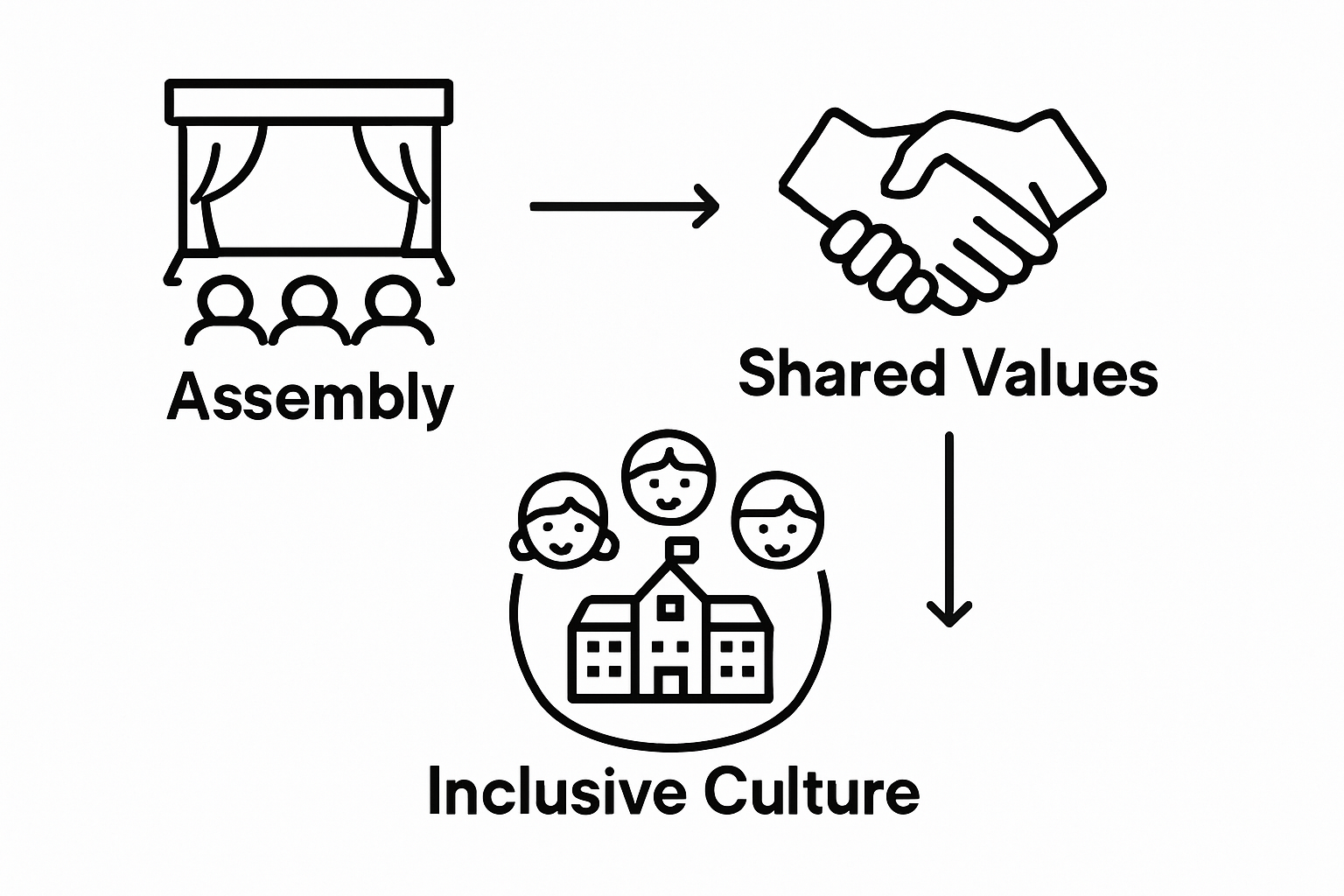
Character education assemblies serve as powerful platforms for cultivating inclusivity by introducing meaningful dialogue and shared experiences. Cultural awareness programs demonstrate how targeted educational interventions can systematically build empathy, encourage cross-cultural understanding, and create environments where every student feels valued and represented.
Key strategies for promoting inclusive school cultures through assemblies include:
- Highlighting diverse cultural perspectives
- Challenging stereotypes through storytelling
- Celebrating individual and collective identities
- Providing platforms for student voices
- Modeling respectful communication
Theme-based school assemblies play a critical role in breaking down social barriers by creating shared narratives that transcend individual differences. By presenting engaging, interactive experiences that showcase the richness of human diversity, schools can transform assemblies from routine gatherings into transformative moments of connection, understanding, and collective growth.
Practical Strategies for Successful Implementation
Character education implementation requires a comprehensive and strategic approach that goes beyond isolated programs. Integrating character education into the curriculum demands a holistic methodology that embeds ethical learning across multiple school systems and interactions.
Successful implementation hinges on creating a consistent, sustained approach that involves multiple stakeholders. Whole community involvement transforms character education from a standalone activity into a comprehensive cultural transformation within educational institutions. School administrators, teachers, parents, and students must collaborate to create meaningful, lasting impact.
Key implementation strategies include:
- Developing clear, measurable character development objectives
- Creating consistent messaging across school platforms
- Training educators in effective character education delivery
- Establishing student leadership and peer mentorship programs
- Designing ongoing assessment and feedback mechanisms
School assembly tips emphasize the importance of tailoring programs to specific school contexts and student needs. By approaching character education as a dynamic, evolving process rather than a static program, schools can create adaptive strategies that respond to changing student demographics, emerging social challenges, and evolving educational best practices.
Enhance Your School’s Character Education with Engaging Assemblies
Building better students goes beyond textbooks and lectures. The article highlights the challenge schools face in creating authentic, interactive character education assemblies that nurture respect, empathy, and responsibility. If you want to move from abstract character lessons to impactful, memorable experiences that resonate with students of all ages, you need programs designed to engage and inspire.
Academic Entertainment offers a wide range of live and virtual assemblies focused on character development, anti-bullying, cultural diversity, and leadership. With over 40 years of experience tailoring shows to meet your school’s unique themes and goals, these programs transform character education into dynamic storytelling and interactive performances that leave a lasting impact on your school culture.
Take the next step to boost your school’s character education efforts today.
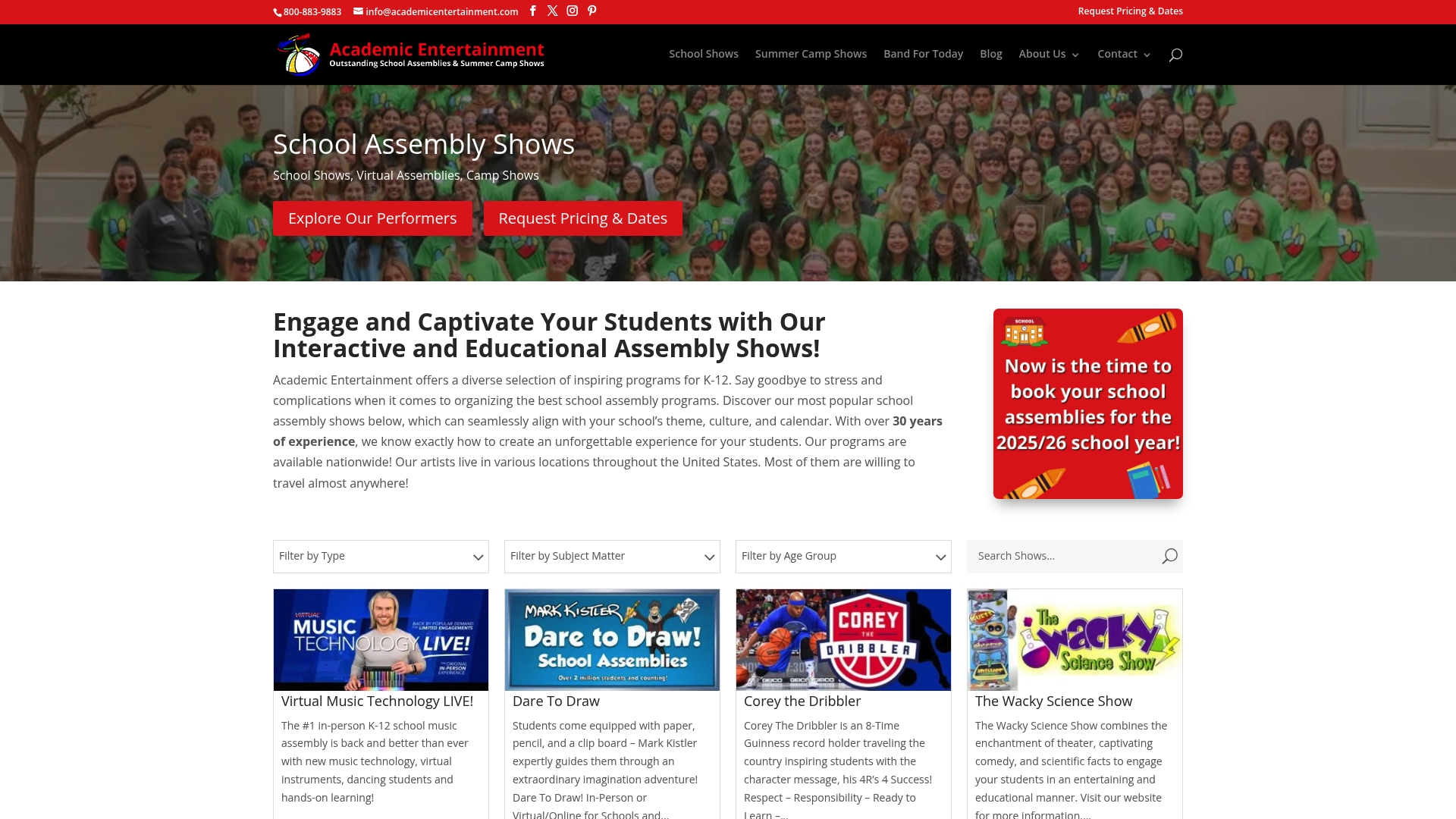
Discover how you can bring these powerful character assemblies to your students by exploring Academic Entertainment’s homepage. Learn about the diverse types of educational assemblies designed to promote social skills and ethical understanding. Don’t wait for change to happen organically. Act now to create meaningful, inclusive learning experiences that empower your students and elevate your school community.
Frequently Asked Questions
What are character education assemblies?
Character education assemblies are school-wide events designed to promote positive behaviors, social skills, and ethical values among students through interactive presentations and engaging performances.
How do character education assemblies benefit students?
These assemblies help students develop essential social and emotional competencies, fostering respect, empathy, integrity, and personal responsibility, which are crucial for their overall growth and future success.
What elements make an effective character education assembly?
Key characteristics include interactive presentations, developmental messaging, engaging storytelling, clear moral lessons, and opportunities for student reflection and discussion.
How can schools ensure successful implementation of character education assemblies?
Schools can achieve success by establishing clear objectives, creating consistent messaging, training educators, involving the community, and assessing the impact of the assemblies to continuously improve the programs.
Recommended
- Understanding the Character Education Assembly Guide – Academic Entertainment
- Character Building, Education, and PBIS School Assemblies – Academic Entertainment
- What is Character Development for Students: Understanding the Basics – Academic Entertainment
- How School Assemblies support Social Emotional Learning (SEL) Initiatives – Academic Entertainment