

Educational assembly providers are shaking up how schools inspire and teach kids. Nearly 80 percent of schools in the US use these specialized programs to make learning stick, combining live performances with real educational punch. Most people think assemblies are just quick breaks from class, but they actually deliver powerful lessons about science, character, and culture that students remember long after the show ends.
Table of Contents
- Defining Educational Assembly Providers And Their Role
- The Importance Of Educational Assemblies In Schools
- How Educational Assembly Providers Operate
- Key Types Of Educational Assemblies And Their Benefits
Quick Summary
| Takeaway | Explanation |
|---|---|
| Educational assemblies enhance student engagement. | These programs provide interactive experiences that captivate students beyond traditional classroom learning. |
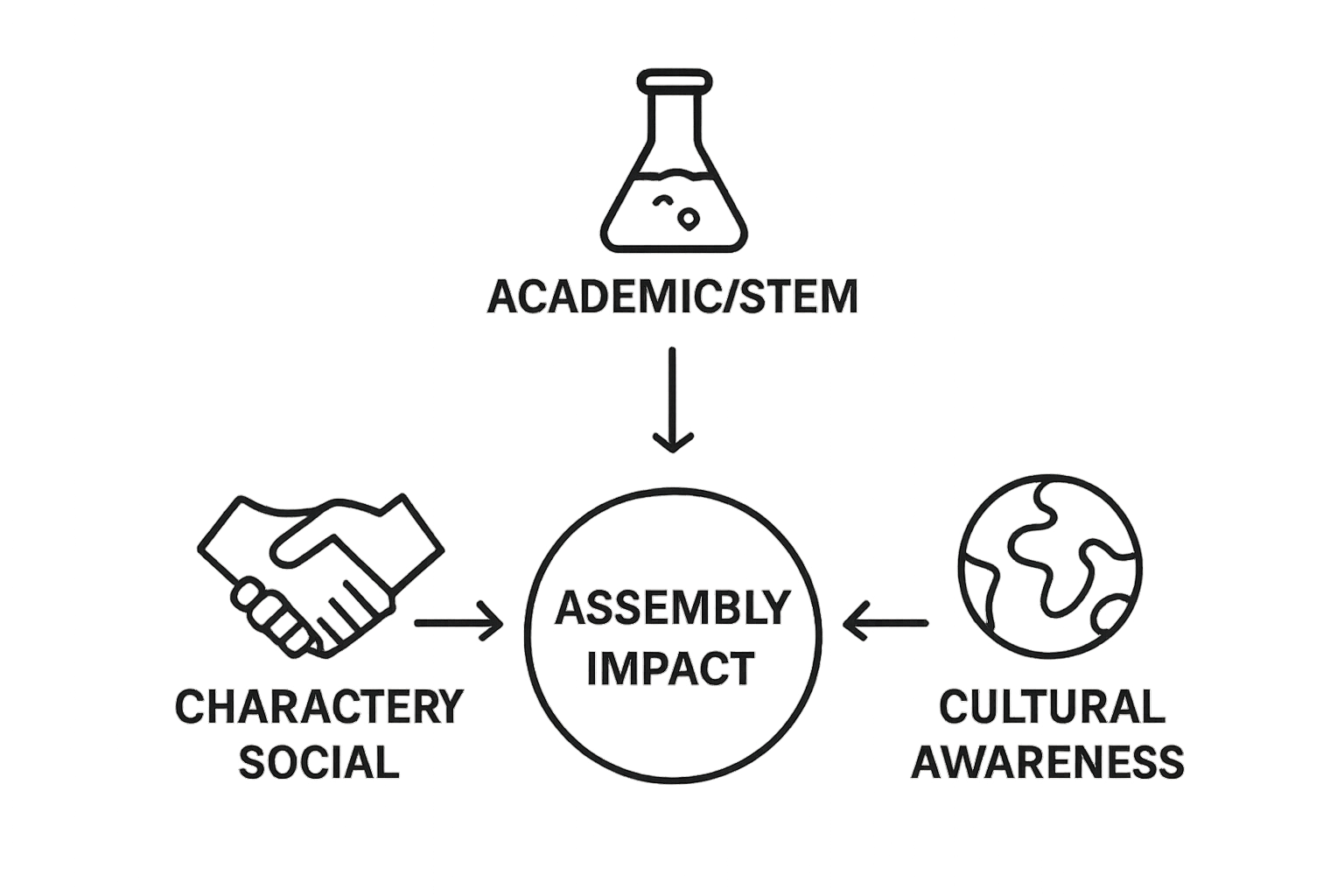
| Programs address diverse educational goals. | Assemblies cover various topics including science, character education, and cultural awareness, catering to different student needs. |
| Assemblies promote social and emotional development. | They foster critical thinking, empathy, and social skills through engaging presentations on important topics. |
| Customizable programs are tailored to student demographics. | Educational assembly providers design their content based on specific student ages and learning objectives to maximize effectiveness. |
| Collaboration with schools is essential for success. | Effective providers engage with school administrators to ensure alignment with curriculum standards and operational needs. |
Defining Educational Assembly Providers and Their Role
An educational assembly provider represents a specialized service focused on delivering engaging, informative performances and presentations designed specifically for school environments. These providers craft unique programs that blend entertainment with meaningful educational content, targeting students across various age groups and learning contexts.
Understanding the Core Functions
Educational assembly providers develop comprehensive programs that go beyond traditional classroom instruction. They create dynamic presentations that capture students’ attention while simultaneously delivering substantive learning experiences. Explore our comprehensive school assembly offerings that transform educational engagement.
Their primary objectives typically include:
- Supplementing academic curriculum with interactive learning experiences
- Introducing complex concepts through engaging storytelling and performance
- Addressing critical social and developmental topics through specialized programming
Types of Educational Assembly Programs
Educational assembly providers offer diverse program categories tailored to specific educational goals. According to research from the National Education Association, these programs can significantly enhance student learning and retention.
Program types often include:
- Science and STEM demonstrations
- Character education performances
- Cultural awareness presentations
- Anti-bullying and social skills workshops
- Historical reenactments and interactive historical programs
By combining professional performance skills with educational expertise, these providers create memorable experiences that inspire students to engage more deeply with learning.
The following table summarizes the main types of educational assembly programs discussed in the article along with their key focus areas and typical benefits for students.
| Program Type | Primary Focus | Typical Benefits |
|---|---|---|
| Science and STEM Demonstrations | Scientific concepts and technology | Enhances curiosity, critical thinking, and problem-solving skills |
| Character Education Performances | Personal values and ethics | Fosters empathy, decision-making, and social skills |
| Cultural Awareness Presentations | Diversity and global understanding | Promotes inclusivity, respect, and perspective taking |
| Anti-Bullying/Social Skills Workshops | Interpersonal skills and bullying prevention | Builds conflict resolution, teamwork, and emotional intelligence |
| Historical Reenactments/Interactive History | Historical events and figures | Makes history relatable, deepens knowledge retention |
Their approach transforms traditional educational delivery by making complex subjects accessible, entertaining, and impactful.
The Importance of Educational Assemblies in Schools
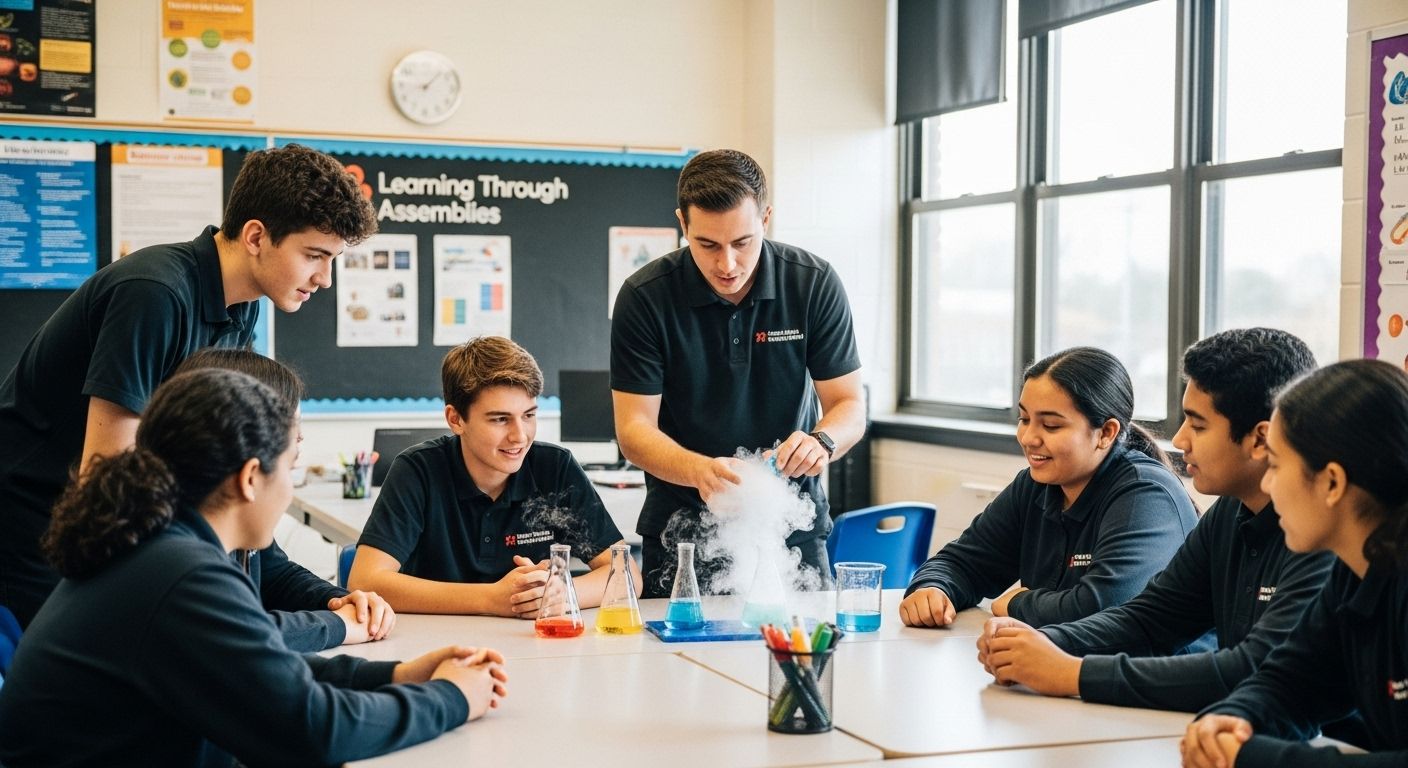
Educational assemblies serve as powerful platforms for enriching student learning experiences beyond traditional classroom instruction. These strategic gatherings provide unique opportunities for schools to introduce comprehensive educational concepts, foster community engagement, and create memorable learning moments that extend far beyond standard curriculum delivery.
Enhancing Learning Through Holistic Experiences
Schools leverage educational assemblies as transformative tools for student development. Learn more about our innovative assembly programs that support comprehensive student growth. These events offer structured environments where complex ideas can be presented through interactive, engaging formats that capture students’ attention and imagination.
Key benefits of educational assemblies include:
- Providing exposure to diverse perspectives and learning styles
- Creating immersive experiences that complement traditional academic instruction
- Developing critical thinking and social skills through interactive presentations
Building School Community and Cultural Understanding
According to research from the National Education Association, educational assemblies play a critical role in building school community and promoting cultural awareness. These events offer platforms for students to explore important social topics, understand different perspectives, and develop empathy.
Assemblies contribute to school culture by:
- Promoting inclusive learning environments
- Addressing complex social issues through structured presentations
- Encouraging student engagement and participatory learning
- Supporting emotional and social intelligence development
By integrating entertainment with substantive educational content, these assemblies transform traditional learning paradigms. They create dynamic spaces where students can explore new ideas, challenge existing perspectives, and develop a deeper understanding of themselves and the world around them.
Below is a comparison table showing the core functions and benefits of educational assemblies, as outlined in the article, to help clarify their multi-faceted impact in schools.
| Core Function | How Assemblies Support This Function |
|---|---|
| Supplement Academic Curriculum | Provide interactive learning experiences beyond standard instruction |
| Introduce Complex Concepts | Use engaging storytelling, demonstrations, and performances |
| Address Social/Developmental Topics | Facilitate structured discussion on ethics, empathy, and behavior |
| Build School Community and Culture | Create shared experiences that foster inclusion and engagement |
| Promote Critical Thinking and Creativity | Encourage students to question, analyze, and explore new ideas |
How Educational Assembly Providers Operate
Educational assembly providers function through a sophisticated process of curriculum development, performance design, and strategic engagement with schools. Their operational model combines professional expertise, creative programming, and a deep understanding of educational objectives to deliver impactful learning experiences.
Program Development and Customization
These providers craft meticulously designed programs tailored to specific educational goals and student demographics. Learn more about creating engaging school presentations that resonate with diverse student populations. The development process involves comprehensive research, collaboration with educational experts, and innovative content creation that bridges entertainment and academic learning.
Key components of program development include:
- Analyzing curriculum standards and learning objectives
- Consulting with educational professionals
- Designing interactive and age-appropriate content
- Integrating multimedia and performance techniques
Execution and Delivery Strategies
According to research from the National Education Association, successful educational assembly providers employ multifaceted delivery strategies that maximize student engagement and learning retention.
Typical operational approaches encompass:
- Conducting pre-assembly consultations with school administrators
- Developing flexible presentation formats
- Providing professional performers with educational backgrounds
- Offering post-assembly follow-up materials and resources
The operational model of educational assembly providers is characterized by a dynamic, adaptive approach that transforms traditional learning experiences. By combining professional performance skills with rigorous educational research, these providers create memorable, impactful programs that inspire students and support broader educational objectives.
Key Types of Educational Assemblies and Their Benefits
Educational assemblies represent diverse learning opportunities designed to engage students through innovative, interactive presentations that transcend traditional classroom instruction. Each assembly type serves unique educational objectives, targeting specific developmental and academic needs across different student age groups and learning environments.
Academic and STEM-Focused Assemblies
Discover engaging ways to enhance student learning through interactive educational experiences. Academic assemblies provide immersive platforms for exploring complex scientific, technological, mathematical, and historical concepts through dynamic, hands-on presentations that spark curiosity and critical thinking.
Key academic assembly formats include:
- Science demonstration programs
- Historical reenactment experiences
- Mathematics and problem-solving workshops
- Technology and innovation showcases
- Career exploration presentations
Character Development and Social Learning Assemblies
According to research from the National Education Association, assemblies focused on character development play a crucial role in students’ social and emotional growth. These programs address important interpersonal skills, ethical considerations, and personal development strategies.
Character-focused assembly types encompass:
- Anti-bullying awareness programs
- Leadership and teamwork workshops
- Diversity and inclusion presentations
- Mental health and emotional intelligence seminars
- Ethical decision-making interactive sessions
By offering diverse assembly experiences, educational providers create comprehensive learning environments that complement traditional academic instruction. These strategic interventions help students develop holistic skills, broaden their perspectives, and cultivate meaningful personal and academic growth.
Bring Educational Assemblies to Life in Your School
Are you struggling to find school assemblies that truly engage your students, reinforce curriculum, and address important topics like character building, anti-bullying, or diversity? This article shows how educational assembly providers can transform the learning experience by mixing fun with valuable lessons, but finding tailored, age-appropriate programs that meet your school’s unique needs is not always easy. With so many critical goals—from boosting academic achievement to supporting social growth—you deserve reliable solutions that actually work and fit your budget.
Discover how Academic Entertainment can help you easily book inspiring, interactive assemblies for K-12 students. Choose from a wide range of engaging program options and customize events for your school’s theme, special event, or community goals. Act now to access forty years of expertise and create memorable experiences that encourage learning and a positive school culture. Connect with us today to start planning your next school assembly and see the difference firsthand.
Frequently Asked Questions
What is an educational assembly provider?
An educational assembly provider is a specialized service that delivers engaging and informative performances and presentations specifically designed for school environments, blending entertainment with educational content.
What types of programs do educational assembly providers offer?
Educational assembly providers offer a variety of programs, including science and STEM demonstrations, character education performances, cultural awareness presentations, anti-bullying workshops, and historical reenactments.
How do educational assemblies enhance learning?
Educational assemblies enhance learning by providing immersive experiences that complement traditional academic instruction, exposing students to diverse perspectives and encouraging critical thinking and engagement through interactive presentations.
What is the process for developing an educational assembly program?
The development of an educational assembly program involves analyzing curriculum standards, consulting with educational professionals, designing age-appropriate content, and integrating multimedia and performance techniques to create impactful learning experiences.
Recommended
- Unforgettable School Assemblies
- What is a School Assembly?
- What are the Importance & objectives of the morning school Assembly?
- Assembly Programs Benefits
Article generated by BabyLoveGrowth


