

Planning a school assembly that truly engages students while aligning with educational goals can feel overwhelming for Lexington administrators. Between managing logistics, coordinating schedules, and selecting meaningful content, the process often becomes rushed or disorganized. This guide provides actionable steps, proven timelines, and best practices to help you create assemblies that enhance student learning, strengthen school culture, and run smoothly from start to finish.
Key Takeaways
| Point | Details |
|---|---|
| Clear goals drive success | Aligning assembly objectives with student needs and school values maximizes educational impact and engagement. |
| Early planning prevents chaos | Starting logistics 12-24 months ahead and detailed prep 6 months prior reduces conflicts and stress. |
| Diverse teams improve outcomes | Including teachers, administrators, and student voices enhances creativity, buy-in, and problem-solving. |
| Technical prep avoids failures | Thorough equipment testing and venue coordination ensure smooth execution on assembly day. |
| Feedback enables improvement | Post-event surveys and discussions inform future planning and build sustainable assembly success. |
Prerequisites: What You Need Before You Start
Before diving into assembly planning, you need foundational resources and commitments in place. Without these essentials, even the best intentions can lead to disorganized events that frustrate staff and disengage students.
Start by identifying how assemblies fit within your school’s educational priorities. Are you focusing on character development, academic enrichment, or community building? This clarity shapes every decision moving forward.
Next, assemble a planning team of teachers, administrators, and student representatives. Diverse perspectives catch blind spots and generate creative solutions you might miss alone.
You also need a clear understanding of available venues and technical resources. Know your auditorium capacity, AV equipment capabilities, and any limitations that might affect program choices. Finally, maintain an updated academic calendar showing key events, testing periods, and holidays to avoid scheduling conflicts.
Pro Tip: Create a shared digital calendar accessible to all planning team members to track deadlines, meetings, and milestone progress in real time.
Step 1: Setting Clear Goals and Objectives
Vague goals like “have a good assembly” won’t cut it. You need precise, measurable objectives that guide decisions and allow you to evaluate success later. The SMART framework provides the structure you need.
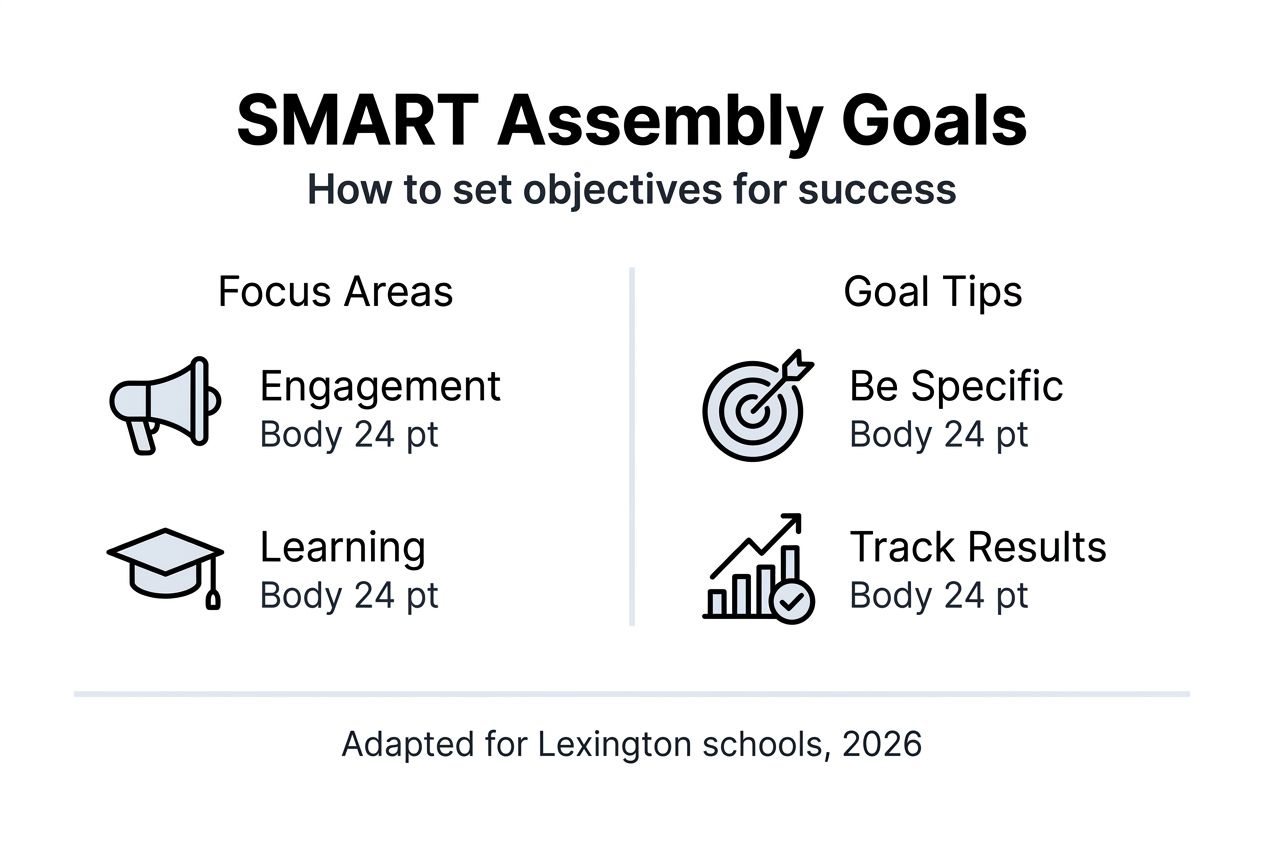
SMART stands for Specific, Measurable, Achievable, Relevant, and Time-bound. Instead of “improve behavior,” aim for “reduce cafeteria incidents by 15% within two months following our character education assembly.” This specificity helps you choose appropriate programs and track real outcomes.
When setting objectives, focus on student engagement, learning outcomes, and behavioral improvements. Ask what skills or values you want students to develop. Will this assembly reinforce curriculum concepts? Promote inclusivity? Address bullying concerns?
Document these goals in writing and share them with your planning team. Clear objectives keep everyone aligned and prevent scope creep as planning progresses. They also provide the benchmark for post-event assessment and continuous improvement.
Pro Tip: Involve student representatives when defining goals to ensure objectives resonate with actual student interests and needs, not just adult assumptions.
Step 2: Building a Diverse Planning Team
Your planning team’s composition directly affects assembly quality and execution efficiency. A principal working alone misses crucial perspectives that teachers, support staff, and students bring to the table.
Ideal teams include administrators for budget approval and policy guidance, teachers who understand student dynamics and curriculum connections, student leaders who know what resonates with peers, and facilities staff who grasp technical and logistical realities. Including diverse voices improves engagement and planning effectiveness.

Assign clear roles to prevent confusion. Who handles vendor communication? Who manages the timeline? Who coordinates student conduct plans? Regular communication through brief weekly check-ins keeps everyone informed and accountable.
Foster collaborative decision-making by creating space for all voices. Junior team members often spot issues senior administrators overlook. When conflicts arise, return to your documented SMART goals to guide resolution.
Pro Tip: Rotate student representatives each planning cycle to build leadership skills across your student body while keeping assembly content fresh and relevant to current student interests.
Step 3: Selecting Relevant Themes and Programs
The right theme transforms an assembly from a mandatory time-filler to a memorable learning experience. Generic programs rarely connect, while carefully chosen themes that reflect student interests and curricular goals create lasting impact.
Start by surveying students and consulting teachers about topics students find engaging. What subjects spark curiosity? What social issues matter to them? This input ensures relevance from the student perspective, not just adult assumptions about what kids should care about.
Align themes with educational standards and social-emotional learning objectives. A STEM assembly can reinforce science curriculum while demonstrating real-world applications. Character education programs addressing respect, responsibility, and resilience support schoolwide behavioral goals.
Consider diverse program types. Shows like Wacky Science bring curriculum concepts to life through interactive demonstrations. Adventures in Reading inspires literacy through storytelling. The Laugh Factory teaches social skills through clean comedy. For 2026, Uncle Sam’s Comedy Jam offers a perfect way to celebrate America’s 250th anniversary while promoting civic values.
Ensure age appropriateness and cultural sensitivity. Elementary students need different content than high schoolers. Programs should reflect your community’s diversity and promote inclusive values.
Step 4: Timeline and Scheduling Best Practices
Poor timing ruins even well-planned assemblies. Starting too late creates stress, limits options, and increases errors. Starting early gives you negotiating power with vendors and prevents calendar conflicts.
For major events or popular performers, begin planning 12-24 months ahead. This timeline secures first-choice dates and gives ample time for budget approval. For standard assemblies, no less than 6 months lead time is essential for quality preparation.
Coordinate with your school calendar to avoid testing periods, holidays, and other major events. An assembly scheduled the day before finals week won’t receive the attention it deserves. Similarly, avoid scheduling during the peak cold and flu season when absences might thin your audience.
| Planning milestone | Recommended deadline | Key actions |
|---|---|---|
| Initial planning | 12-24 months out | Define goals, form team, set budget |
| Program selection | 9-12 months out | Research options, request proposals, book performer |
| Detailed logistics | 6 months out | Confirm venue, plan student conduct, assign staff roles |
| Technical prep | 2-4 weeks out | Test equipment, conduct walkthroughs, finalize schedules |
| Final review | 1 week out | Confirm all details, brief staff, prepare contingencies |
Build buffer time into your planning timeline. Unexpected delays happen. Vendors reschedule. Equipment fails. Extra weeks absorb these disruptions without derailing your event.
Step 5: Logistical Coordination and Technical Setup
Flawless execution depends on mastering mundane details. Book your venue early, especially if multiple schools share facilities. Reserve AV equipment well in advance, and arrange backup options for critical items like microphones and projectors.
Seating arrangements affect engagement significantly. Position younger students closer to the stage where they can see clearly. Create sight lines that allow all students to view the performance without obstruction. For large groups, assign specific sections to classes to streamline entry and exit.
Early technical reservation and final-day equipment checks greatly reduce event disruptions. Even if you tested speakers last week, test the morning of your assembly again. Sound systems mysteriously fail overnight.
Develop a detailed checklist covering:
- Venue confirmation and key access
- AV equipment reservation and setup
- Seating chart and class assignments
- Student entrance and exit procedures
- Staff supervision assignments
- Emergency procedures and first aid access
Conduct a full technical rehearsal at least one day before your assembly. Run through audio levels, lighting cues, and presentation equipment. If your performer provides technical requirements, ensure your setup meets every specification.
Pro Tip: Designate a “tech troubleshooter” whose sole responsibility on assembly day is resolving equipment issues, freeing other staff to focus on student management and program flow.
Step 6: Common Mistakes to Avoid and Troubleshooting
Even experienced administrators fall into predictable traps. Last-minute planning and neglected equipment tests cause most assembly failures. Recognizing these patterns helps you avoid them.
Rushed planning forces compromises on quality. You settle for available vendors instead of ideal matches. You skip important steps because deadlines loom. This stress cascades through your team, creating errors and oversights.
Skipping equipment tests is equally dangerous. Assuming “it worked last time” leads to embarrassing technical failures with hundreds of students watching. Always test everything, even familiar equipment.
Other common pitfalls include:
- Failing to communicate conduct expectations before assemblies
- Underestimating setup and breakdown time
- Ignoring accessibility needs for students with disabilities
- Neglecting backup plans for weather or technical emergencies
“The best assemblies look effortless because extensive preparation handled every detail before students arrived. The worst assemblies reveal exactly where planning stopped.”
Create contingency plans for likely problems. What happens if your performer’s flight is delayed? If equipment fails? If students become disruptive? Having predetermined responses reduces panic and maintains professional composure.
Step 7: Assessment and Feedback Collection
Your assembly ends when students leave, but your planning cycle continues. Post-event feedback improves quality and stakeholder satisfaction for future assemblies.
Design brief surveys for students, teachers, and staff. Keep questions focused on specific aspects: Did the content match your expectations? Was the message clear? How engaged were students? Rate technical quality, pacing, and relevance.
Complement surveys with small group discussions. Teachers often notice nuances surveys miss. Students share honest reactions in casual conversation, they might filter in formal feedback. These qualitative insights reveal why an assembly succeeded or fell short.
Compare results against your original SMART goals. If you aimed to reduce cafeteria incidents by 15%, track behavior data over the following months. Did the character education assembly create measurable change? Document what worked and what needs adjustment.
Track longitudinal metrics across multiple assemblies. Are attendance rates improving? Is student participation increasing? Are teachers requesting more assemblies? These trends indicate whether your planning improvements are creating sustained positive outcomes.
Conclusion: Expected Outcomes and Long-Term Benefits
Following this structured approach transforms assemblies from logistical headaches into powerful educational tools. Effective planning increases social skills, positive school culture, and planning efficiency.
You’ll see higher student attendance and active participation when assemblies consistently deliver engaging, relevant content. Students recognize quality and respond with enthusiasm when programs respect their intelligence and interests.
Stronger community values and positive behavioral outcomes emerge from assemblies that deliberately reinforce character education and inclusivity. These aren’t abstract benefits. They manifest in reduced disciplinary incidents, improved peer relationships, and more respectful school climate.
Teacher and staff satisfaction improves dramatically when smooth coordination eliminates last-minute scrambling and technical disasters. Confident, well-prepared teams deliver better experiences while experiencing less stress.
Key long-term benefits include:
- Sustainable improvement cycles driven by systematic feedback
- Enhanced reputation attracting quality performers and programs
- Stronger stakeholder relationships built on consistent success
- More efficient resource allocation through refined processes
Each assembly you plan using these methods builds institutional knowledge and refines your approach. Over time, planning becomes faster, smoother, and more effective.
Discover Professional Assembly Support and Resources
Planning assemblies becomes significantly easier when you partner with experienced providers who understand educational needs and logistical realities. Academic Entertainment specializes in school assemblies and educational entertainment designed specifically for K-12 environments.
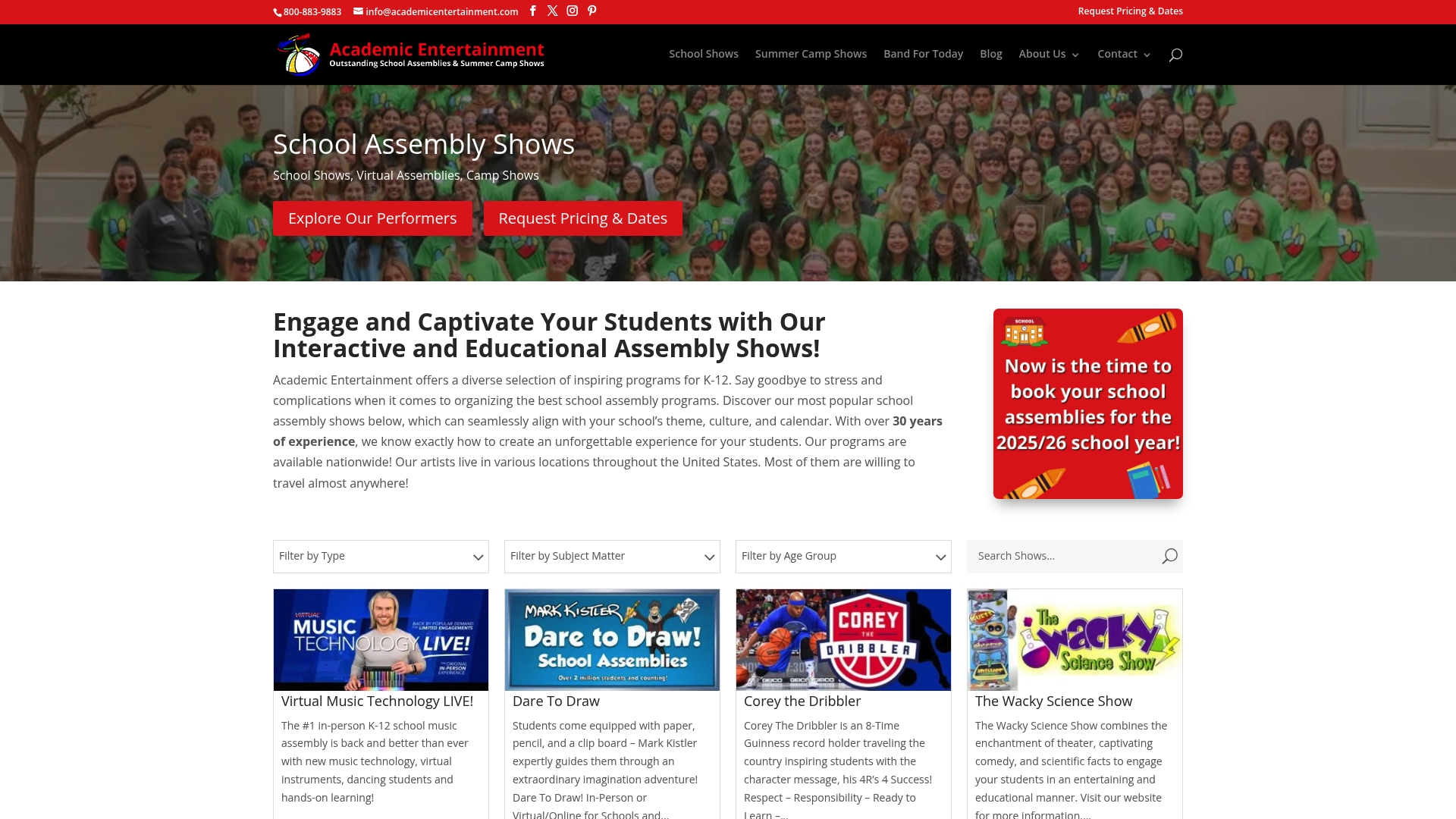
Explore programs like Dumpster Doug’s environmental education, Mathical Mystery Tour’s curriculum-connected problem-solving, or STEM assemblies that make science concepts tangible and exciting. Each show aligns with educational standards while keeping students thoroughly engaged. Professional performers bring technical expertise and proven content, reducing your planning burden while elevating assembly quality. Browse available programs to find perfect matches for your school’s unique needs and educational goals.
Frequently Asked Questions
How far in advance should I start planning a school assembly in Lexington, KY?
Begin major logistics planning 12-24 months in advance for large events or popular performers to secure preferred dates and negotiate favorable terms. For standard assemblies, start detailed preparation at least 6 months prior. Early planning dramatically reduces scheduling conflicts, budget constraints, and last-minute stress while expanding your program options.
What roles should be included in a school assembly planning team?
Include teachers who understand curriculum connections and student dynamics, administrators who handle budgets and policies, student leaders who provide peer perspectives, and facilities staff who manage technical and logistical realities. Diverse teams improve engagement, catch potential problems early, and generate creative solutions that single planners miss.
How can I ensure student engagement during assemblies?
Select themes reflecting genuine student interests gathered through surveys and teacher input, then choose age-appropriate programs with interactive elements. Incorporate student voices in planning decisions and align content with topics students find relevant. Programs like Adventures in Reading or The Laugh Factory maintain engagement through dynamic presentation styles and relatable content.
What are common mistakes to avoid when planning assemblies?
Avoid waiting until the last minute to begin planning, which forces quality compromises and increases errors. Never skip equipment testing, assuming familiar technology will work without verification. Other critical mistakes include unclear student conduct expectations, inadequate buffer time in schedules, and missing contingency plans for technical or weather emergencies.
How do I collect and use feedback after assemblies?
Distribute brief surveys to students, teachers, and staff immediately following assemblies, asking specific questions about content relevance, engagement levels, and technical quality. Supplement surveys with small group discussions to capture nuanced observations. Compare feedback against your original SMART goals, then systematically incorporate lessons learned into your next planning cycle for continuous improvement.
Recommended
- When is the best time to schedule school assemblies for the next school year? – Academic Entertainment
- How to Host a Successful School Assembly – Academic Entertainment
- This Could Be Your School! – Academic Entertainment
- Elementary School Assembly Ideas | K-6 School Assembly Programs – Academic Entertainment


