

TL;DR:
- Teachers spend an average of $750 yearly on classroom supplies, often without acknowledgment.
- Effective appreciation involves early planning, community support, and recognizing effort beyond test scores.
- Year-round recognition, personalized gestures, and inclusive activities foster lasting staff morale and retention.
Teachers quietly spend an average of $750 annually out of their own pockets for classroom supplies, often without a word of thanks. They arrive early, stay late, and carry the emotional weight of dozens of students every single day. Yet meaningful recognition remains rare in many schools. This guide is built for administrators, PTA and PTO leaders, and parent organizations who want to change that. You will find practical, creative, and evidence-based ideas that go beyond a gift card or a cake in the break room, covering everything from community-driven planning to year-round recognition cultures.
Key Takeaways
| Point | Details |
|---|---|
| Sustained appreciation matters | Ongoing recognition throughout the year has a greater impact than single events. |
| Focus on personal gestures | Handwritten notes and time-saving help are more valued than generic gifts. |
| Involve the whole community | Combining support from leadership, parents, and students makes appreciation more meaningful. |
| Diversity prevents favoritism | Recognize contributions from all staff to build unity and boost morale. |
| Use creative, budget-friendly ideas | Even small, low-cost initiatives can make a big difference to teachers. |
Gathering support and setting appreciation goals
Now that you have committed to recognizing your teachers, start with a foundation of strong community involvement. Appreciation efforts that feel scattered or last-minute often miss the mark. The most effective programs begin weeks in advance, with a clear team behind them.
Start by pulling together a planning group that includes school leadership, your PTO or PTA, classroom volunteers, and even a few older students. Each group brings something different. Parents bring energy and time. Administrators bring authority and budget access. Students bring authenticity, which teachers feel immediately. When gathering community support this way, you also distribute the workload so no single person burns out before Teacher Appreciation Week even begins.
Next, assess what your school actually needs. Not every staff prefers public recognition. Some teachers love a surprise breakfast in the lounge. Others would rather have an extra prep period. A short anonymous survey sent four to six weeks before your event gives you real data to work with.
Set goals that are specific and positive. Examples include reducing visible signs of burnout, building a stronger sense of belonging, or celebrating effort rather than just outcomes. School leadership support and recognition significantly correlate with higher teacher retention rates, so framing your goals around retention is a smart move for administrators to make.
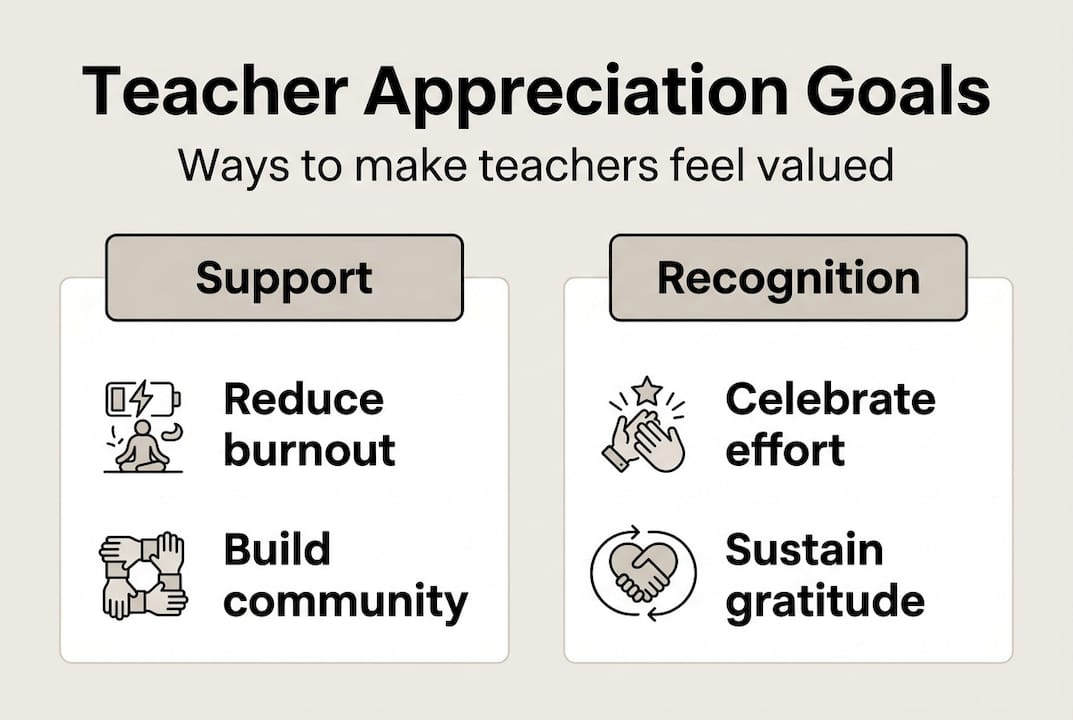
Finally, map your plans to the school calendar. Avoid scheduling appreciation events during high-stress periods like state testing weeks. Check out coordinated activities ideas to find timing strategies that work for most school types.
Key planning goals to align on:
- Celebrate effort and creativity, not just test scores
- Recognize every staff member, not only classroom teachers
- Balance formal events with informal daily gestures
- Keep volunteer roles manageable and clearly defined
- Align timing with low-stress calendar windows
Pro Tip: Use a simple shared spreadsheet to assign tasks, track budgets, and set deadlines. Transparency prevents duplication and keeps volunteers motivated.
| Planning element | Low-effort approach | High-impact approach |
|---|---|---|
| Team size | 2-3 parents | Cross-functional team with admin |
| Timeline | 1 week out | 4-6 weeks of preparation |
| Teacher input | None | Anonymous survey |
| Budget tracking | Informal | Shared spreadsheet with line items |
Planning creative, inclusive appreciation events
Once your support network and goals are clear, it is time to organize memorable events every teacher will appreciate. The best appreciation weeks feel intentional, not improvised.
Daily themed appreciation weeks with coordinated activities boost morale and create a genuine sense of celebration throughout the building. Think Monday as “Motivational Message Day,” Tuesday as “Treat Your Teacher” with donated snacks, and Friday as a student-led tribute assembly. Structure keeps volunteers on track and gives teachers something to look forward to each morning.
Student-led efforts carry enormous emotional weight. A class video of students sharing their favorite memory with a teacher, a collection of handwritten joke cards, or a door-decorating contest organized by parent volunteers all cost almost nothing and land with real impact. These gestures feel personal because they are.
Inclusivity is non-negotiable. Custodians, counselors, librarians, and paraprofessionals shape school culture just as powerfully as classroom teachers. If your appreciation plan only spotlights a handful of popular teachers, it creates resentment rather than unity. Plan at least one event or gesture that reaches every adult in the building. Student art shows can be organized to honor all staff, not just one department.
For elementary school events, keep activities sensory-friendly and visually engaging. Younger students love making things, so craft-based tributes work especially well at this level.
Steps to plan an inclusive appreciation week:
- Confirm your budget and volunteer roster before announcing any events
- Assign a theme to each day of the week
- Create a sign-up sheet for parents to donate snacks, supplies, or time
- Brief student council or class representatives on their roles
- Prepare a backup plan for any activity that depends on weather or outside vendors
Pro Tip: Borrow low-cost creative ideas from teacher-focused communities online, then adapt them to your school’s specific culture and staff size.
| Event type | One-time impact | Ongoing value |
|---|---|---|
| Themed appreciation week | High immediate morale boost | Low, fades quickly |
| Monthly small gestures | Moderate per event | High cumulative effect |
| Student-led tributes | Very high emotional impact | Medium, memorable long-term |
| Formal awards ceremony | High for recipients | Medium if criteria are clear |
Meaningful gestures: practical help and personalized thanks
Beyond events, ongoing support and gratitude make teacher appreciation truly meaningful. The gestures that stick are usually the ones that save time or reduce stress, not the ones with the biggest price tag.
Organizing a supply shower is one of the most practical things a PTA or PTO can do. Out-of-pocket expenses averaging $750 annually place a real financial burden on teachers, and a community-organized donation drive for copy paper, dry-erase markers, or art supplies addresses that burden directly. Set up a simple wish list through an online registry so donors know exactly what is needed.
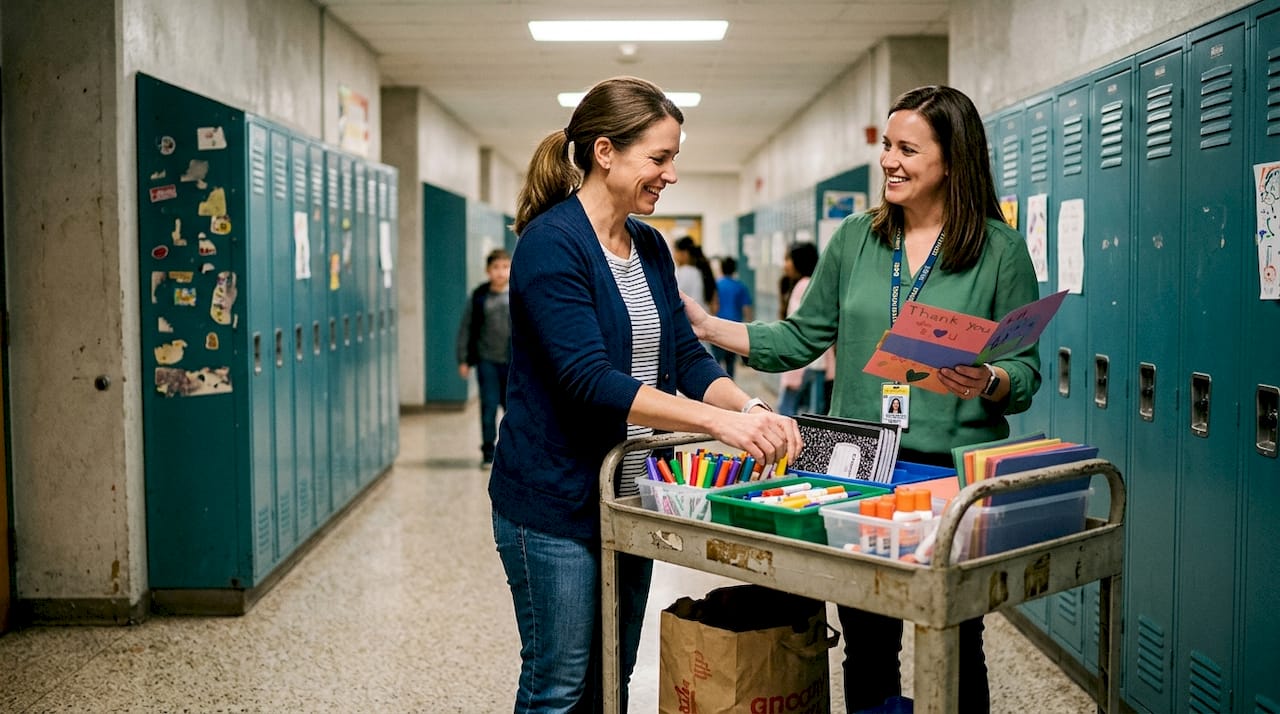
Meal trains during high-stress periods like report card season or the week before standardized tests are another underrated tool. A rotating schedule of parent-provided lunches or breakfast items requires minimal coordination but delivers maximum comfort.
Time-saving gestures like duty coverage and planning relief are among the most valued forms of appreciation teachers report. Administrators who offer a free prep period, take over a recess duty, or arrange for a substitute so a teacher can attend a personal appointment send a powerful message: your time matters.
Personalized thank-you notes outperform generic praise every time. A note that references a specific moment, “I watched you stay calm when the fire drill interrupted your lesson and the students followed your lead,” lands differently than “Thanks for all you do.” Encourage parents and students to be specific. Explore personalized thank you notes strategies that give writers a simple framework to follow.
“The most meaningful appreciation I ever received was a note from a parent who described exactly how I helped her son feel safe at school. I still have it.” This kind of specificity is what separates memorable recognition from forgettable gestures.
For ideas that connect wellness and staff relief to broader school culture, think about how fun appreciation activities can give teachers a moment to laugh and recharge alongside their students.
Practical gestures that make a real difference:
- Classroom supply wish lists shared with the school community
- Meal trains during report card and testing seasons
- Admin-led duty coverage as a surprise gift
- Handwritten notes with specific, observed details
- Voluntary parent help coupons redeemable for classroom tasks
Ongoing and formal recognition: sustaining appreciation throughout the year
To fully honor teachers’ commitment, schools should nourish appreciation year-round, not just during designated weeks. A single appreciation week followed by eleven months of silence sends a mixed message.
Ongoing monthly recognition tied to national days sustains appreciation beyond a single week. National Coffee Day in September, World Kindness Day in November, and National Compliment Day in January all offer natural hooks for small gestures like a coffee bar in the lounge or a shout-out in the school newsletter.
Digital recognition tools are increasingly accessible. A rotating staff spotlight on the school website, a digital photo wall in the main hallway, or a short video feature in the weekly parent email keeps appreciation visible without requiring a big event every time.
Formal awards programs require more planning but deliver lasting impact. Formal teaching awards programs with objective criteria and multiple categories improve retention by 15 to 25 percent. The key is transparency. When staff understand how nominees are selected and see a range of categories, from innovation to student mentorship to behind-the-scenes support, the program feels fair rather than political.
For wrap-up celebration ideas at the end of the school year, consider combining a formal awards moment with a student performance or assembly to create a shared memory for the whole community.
Pro Tip: Create a simple “appreciation calendar” at the start of each school year. Map one small gesture per month to a relevant national day so your team is never scrambling for ideas.
Burnout recognition reduces burnout and improves overall staff wellbeing when applied consistently.
| Recognition type | Frequency | Cost | Retention impact |
|---|---|---|---|
| Monthly small gestures | Monthly | Low | Moderate |
| Digital staff spotlights | Bi-weekly | Very low | Moderate |
| Formal awards ceremony | Annual | Medium | High (15-25%) |
| Surprise admin gestures | As needed | Low | High |
Year-round gestures that sustain morale:
- Monthly coffee or snack cart tied to a national day
- Staff profile features in school newsletters
- Transparent, multi-category awards with clear criteria
- End-of-year celebration assemblies that honor all staff
- Peer-to-peer recognition boards in the staff lounge
A smarter approach: last thoughts on authentic teacher appreciation
After exploring tactical approaches, let’s zoom out for a candid perspective schools often miss. Most appreciation programs are designed around what feels good to the givers, not what actually matters to the recipients. A catered lunch is nice. A free prep period is transformative.
Flashy gifts and one-time events create a sugar rush of goodwill that fades within days. What builds lasting morale is consistency, specificity, and inclusion. When a teacher sees their name on a monthly spotlight, receives a note that references something real they did, and watches their custodian get the same respect as the department head, they feel seen in a way that no gift basket can replicate.
Balanced programs recognizing diverse contributions prevent favoritism and genuinely boost morale across the entire staff. This is not just good practice. It is the difference between a culture where people want to stay and one where they are already updating their resumes.
We encourage schools to invest in inclusive recognition ideas that reflect the full range of people who make a school run. Shift the focus from events to culture, and appreciation becomes something teachers feel every week of the year.
Bring your appreciation to life with engaging assemblies
Let your next step be a memorable event that energizes teachers and students alike. One of the most powerful ways to celebrate your staff is through a whole-school experience that brings everyone together.

Academic Entertainment has spent over 40 years helping K-12 schools create moments that matter. Our special event assemblies are designed to fit your school’s theme, size, and budget, whether you want to honor your staff with a surprise performance or energize the whole building with a shared celebration. From STEM assemblies to cultural shows, our programs give teachers and students a shared memory that reinforces community. Reach out today to find the right program for your next appreciation event.
Frequently asked questions
What are low-cost ways to show teacher appreciation?
Personalized notes, student-made artwork, and time-saving gestures like duty coverage are meaningful and inexpensive. Creative, low-cost ideas can engage entire school communities without straining any budget.
How can we make appreciation more inclusive for all staff?
Plan activities and awards that recognize diverse contributions from every staff member, including support staff and paraprofessionals, to promote unity. Balanced recognition prevents favoritism and strengthens morale across the whole building.
Do formal appreciation programs really increase teacher retention?
Yes, schools with formal awards programs see up to 25% higher retention compared to those without structured recognition. Transparent criteria and multiple award categories are the key factors that make these programs work.
What’s the best way for administrators to support teacher appreciation?
Active involvement from leadership, including taking on duties and offering planning relief, signals that appreciation is genuine. Leadership support and recognition significantly correlate with higher staff retention rates across K-12 schools.
Recommended
- School Assembly Ideas for Busy Teachers – Academic Entertainment
- Tips & Ideas for Hosting a Student Art Show – Academic Entertainment
- School Assembly Ideas for Spring, Summer and Winter Breaks – Academic Entertainment
- 10 Fun Elementary School Ideas for Creative and Engaging Learning – Academic Entertainment
- Why Card Games Matter for Classroom Learning – The World Game


