Over half of American students experience some form of peer conflict by the end of middle school. For administrators in suburban Detroit, selecting the right assembly programs is more than just an event checklist. It is about creating safe spaces where every student feels supported, understood, and empowered. Discover how a thoughtful process for choosing SEL and anti bullying assemblies can result in meaningful change and energize your school community.
Quick Summary
| Key Takeaway | Explanation |
|---|---|
| 1. Assess Student Needs Thoroughly | Gather data from various sources like academic performance and teacher insights to understand students’ unique requirements. |
| 2. Align Assemblies with Local Priorities | Choose assembly programs that target key educational goals like social emotional learning and STEM engagement in suburban Detroit. |
| 3. Choose Programs with Proven Impact | Prioritize assemblies that effectively blend entertainment with educational value and have a history of engaging students meaningfully. |
| 4. Plan Logistics Meticulously | Ensure every aspect of assembly coordination, including venue and technical requirements, is organized to enhance the experience. |
| 5. Evaluate Assembly Impact Effectively | Use diverse assessment methods to gauge the assembly’s influence on student behavior and overall school climate post-event. |
Step 1: Assess School Goals and Student Needs
Successful school assemblies start with a strategic assessment of your unique student population and institutional objectives. By understanding your specific context, you can select programs that genuinely resonate and create meaningful impact.
The process begins with comprehensive data gathering. Student performance indicators provide crucial insights into academic and social emotional landscapes. Principals and administrators should review recent academic assessments, discipline records, and engagement metrics to identify areas requiring targeted intervention. Pay special attention to trends in mental health, social dynamics, and learning challenges specific to suburban Detroit school environments.
Engaging your teaching staff becomes critical during this assessment phase. Educators’ classroom perspectives offer nuanced understanding of student needs that raw data might miss. Schedule collaborative meetings where teachers can share observations about student motivation, social interactions, and potential knowledge gaps that assembly programs could address.
Practical Advice: Create a comprehensive assessment survey that includes input from students, teachers, and administrators to ensure a holistic view of school goals and student needs.
Step 2: Match Assemblies to Detroit-area Priorities
Selecting the right assembly programs requires strategic alignment with the unique educational landscape of suburban Detroit schools. Your goal is to choose experiences that not only entertain but meaningfully address specific community learning needs.
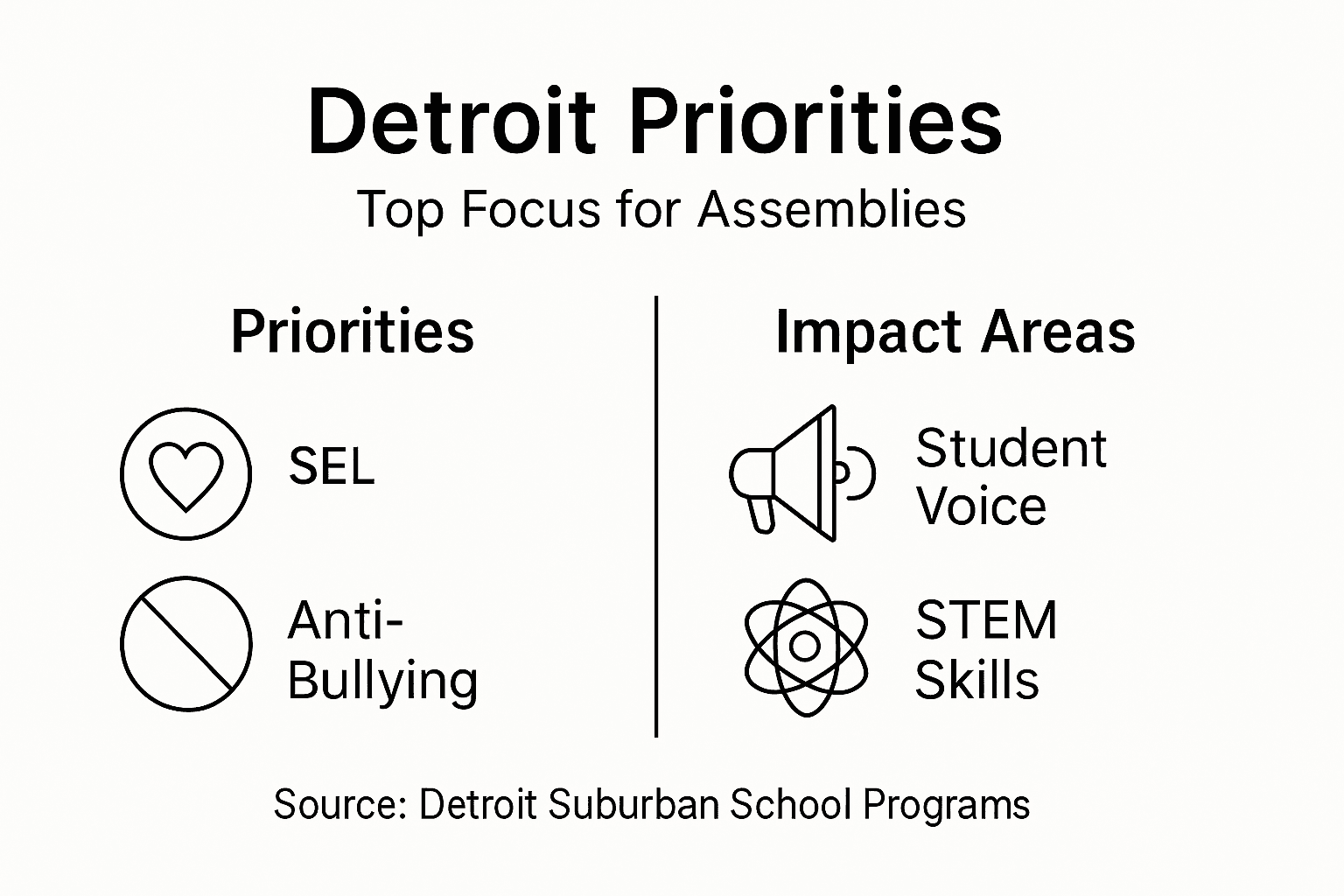
Start by mapping local educational priorities. Detroit-area schools frequently emphasize social emotional learning, anti bullying initiatives, and STEM engagement. Look for assemblies that directly target these core objectives. Programs like Mr Peace, Adventures in Reading, and the Wacky Science Show offer comprehensive approaches to addressing student development across multiple dimensions. Consider the specific challenges facing your student population such as building resilience, promoting inclusivity, and sparking curiosity in scientific disciplines.
Evaluate potential assembly programs through a rigorous selection lens. Examine program content for alignment with district curriculum standards, age appropriateness, and potential for meaningful student interaction. Seek out presenters who can blend entertainment with substantive educational messaging sustainable student learning and personal growth.
Practical Advice: Create a detailed rubric for evaluating assembly programs that weights educational value, student engagement potential, and direct alignment with school improvement goals.
Here’s a summary of key considerations for aligning assembly programs with Detroit-area school priorities:
| Local Priority | Potential Impact Area | Example Program | Key Benefit |
|---|---|---|---|
| Social Emotional Learning | Student well-being | Mr. Peace | Improves empathy and respect |
| Anti-bullying | School climate | BrainBreak Academy | Reduces conflict and exclusion |
| STEM Engagement | Academic curiosity | Wacky Science Show | Sparks interest in sciences |
| Inclusivity | Peer relationships | Diversity Circus | Fosters a welcoming atmosphere |
Step 3: Select Shows like Mr. Peace and BrainBreak Academy
Successfully choosing impactful school assembly programs demands a strategic approach that goes beyond surface entertainment. Your selected shows must deliver substantive educational experiences that resonate with student learning objectives and engagement needs.
Prioritize programs with proven track records of meaningful student interaction. Mr. Peace school assembly represents an excellent example of a program designed to address critical social emotional learning and character development goals. Look for assemblies that blend interactive storytelling with powerful messages about respect, conflict resolution, and personal growth. Programs like BrainBreak Academy and the Diversity Circus offer comprehensive approaches that can transform student perspectives while maintaining high energy and entertainment value.
Consider the specific learning outcomes you want to achieve. Examine each potential assembly program through multiple lenses: educational content, presentation style, age appropriateness, and alignment with your school district’s core values. The most effective shows will create memorable experiences that students discuss long after the performance ends.
Practical Advice: Request preview materials and performer references before making a final selection to ensure the assembly truly matches your educational goals and student engagement expectations.
Step 4: Coordinate Logistics and Confirm Assembly Details
Successful school assembly implementation requires meticulous planning and precise coordination. Your goal is to create a seamless experience that minimizes disruption and maximizes educational impact for students and staff.
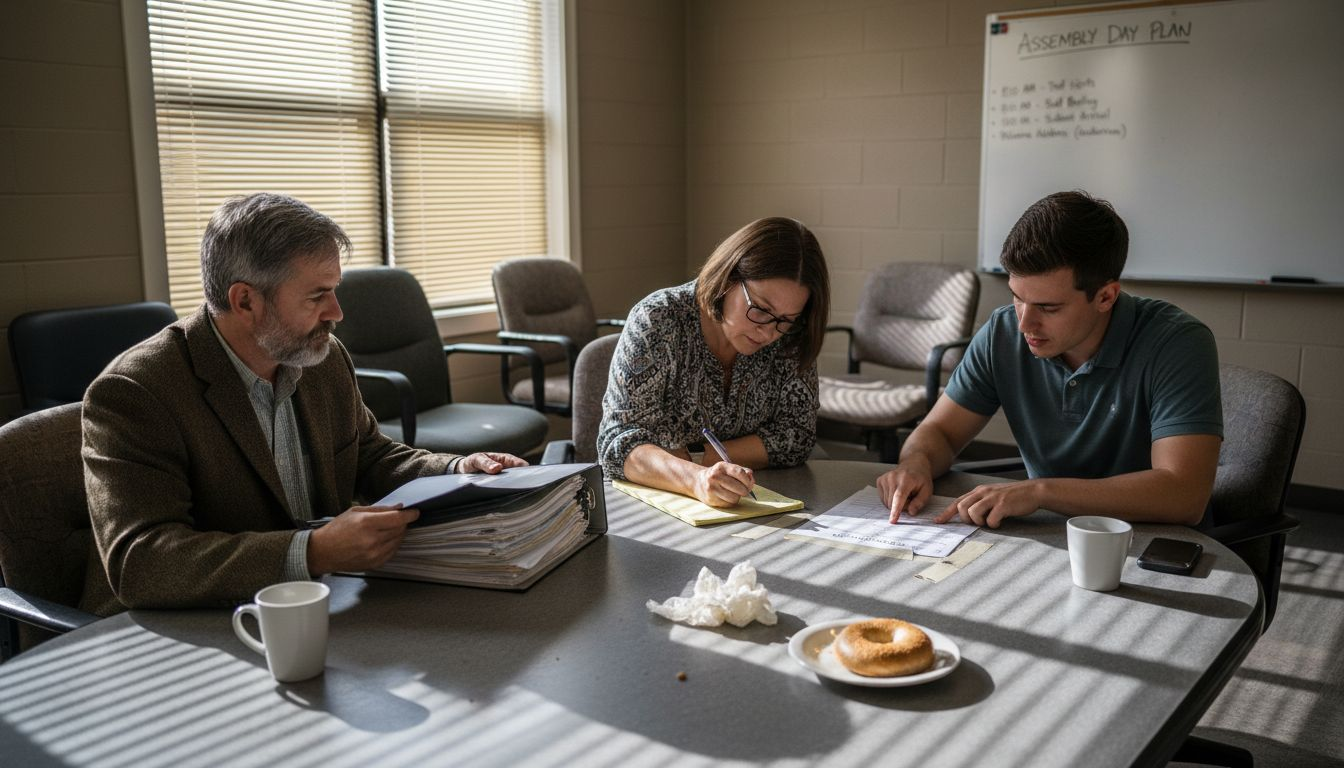
School assembly coordination strategies demand comprehensive communication and advance preparation. Begin by creating a detailed logistics checklist that covers every critical aspect of the event. Confirm performance space requirements with the presenter including stage dimensions, audio visual needs, electrical requirements, and setup time. Coordinate with your facilities team to ensure the selected venue can accommodate the assembly program smoothly. Verify technical specifications like microphone availability, projection equipment, and any special staging needs well in advance.
Establish clear communication channels with the assembly presenters to discuss precise timing expectations, audience size, grade levels, and any specific school guidelines or behavioral expectations. Request a detailed run of show that outlines the program flow, interactive segments, and potential engagement moments. Prepare your staff and students by sharing preliminary information about the assembly theme and anticipated learning outcomes.
Practical Advice: Develop a comprehensive event timeline that includes setup preparation, performance duration, and breakdown procedures to ensure a professional and organized assembly experience.
Step 5: Evaluate Impact and Boost School Spirit
Transforming a single school assembly into a lasting catalyst for student engagement requires strategic reflection and proactive measurement. Your ultimate goal is to turn an educational performance into a memorable experience that resonates throughout the school community.
Building a stronger school community demands comprehensive evaluation strategies that go beyond surface level observations. Develop a multifaceted assessment approach that captures student reactions through structured feedback surveys, teacher observations, and direct engagement metrics. Track changes in student behavior, classroom discussions, and overall school climate in the weeks following the assembly. Look for subtle indicators of impact such as increased peer support, improved communication skills, and enhanced understanding of the assembly’s core messages.
Create opportunities for students to continue exploring the assembly themes through follow up activities, discussion groups, and reflection sessions. Celebrate the positive moments and learning experiences generated by the assembly to reinforce its significance. Share success stories with school leadership, parents, and the broader community to amplify the assembly’s impact and demonstrate the tangible value of these educational experiences.
Practical Advice: Design a simple yet comprehensive evaluation template that captures qualitative and quantitative data to measure the assembly’s true educational and inspirational impact.
Use this reference to compare types of assessment methods for assembly impact:
| Assessment Method | Data Type | Who Provides Input | Useful For |
|---|---|---|---|
| Student Feedback Survey | Quantitative & Qualitative | Students | Gauging immediate reaction |
| Teacher Observation Notes | Qualitative | Teachers | Monitoring behavior changes |
| Engagement Metrics | Quantitative | Administrators | Measuring participation rates |
| Peer Discussion Groups | Qualitative | Students | Exploring long-term effects |
Elevate Detroit Suburban Schools with Unforgettable SEL, Anti-Bullying, and STEM Assemblies
The challenge suburban Detroit schools face is clear. They need school assemblies that do more than entertain. Your goal is to deliver programs that foster social emotional learning, promote anti-bullying, and ignite passion for STEM while engaging students in ways they will remember. This requires carefully selected shows tailored to student needs and school priorities, just like the thoughtful strategies outlined in the article.
Academic Entertainment understands these specific pain points and offers a rich variety of assembly programs designed to strengthen school culture and inspire lasting student growth. From impactful character education like Mr. Peace assemblies to innovative STEM presentations, our solutions align perfectly with your priorities. We provide resources and customizable options to ensure your event is seamless and powerful.
Ready to bring big energy that transforms your students’ experience? Visit Academic Entertainment now to explore tailored assembly programs that connect with your school goals. Discover how our expert team can help you book the perfect show that creates lasting impact in your Detroit-area school community.
Frequently Asked Questions
What are the key elements to consider when assessing student needs for school assemblies?
Successful assessments should focus on student performance indicators, recent academic assessments, and teacher observations. Gather input from students, teachers, and administrators through a comprehensive survey to create a complete picture of the school’s objectives and student needs.
How can I select the right assembly programs to support SEL and anti-bullying initiatives?
Begin by mapping local educational priorities, such as social emotional learning and anti-bullying. Choose assemblies that align with these needs and have proven methods to engage students, improving their understanding and empathy within 30 days post-event.
What steps should I take to ensure assembly programs effectively engage students?
Prioritize programs with interactive storytelling and proven impact on student learning. Evaluate each assembly’s content, presentation style, and alignment with educational values to ensure it captivates and resonates with students.
How do I coordinate logistics for a successful assembly event?
Create a detailed logistics plan that includes setup requirements, technical needs, and communication with presenters. Work on confirming all details well in advance to minimize disruptions and ensure a smooth experience on assembly day.
How can I measure the impact of school assemblies on student behavior and engagement?
Develop a multifaceted evaluation strategy that uses surveys, observation notes, and engagement metrics to track student responses. Analyze the data collected within 30 days to assess changes in behavior or attitudes stemming from the assembly.
Recommended
- How School Assemblies support Social Emotional Learning (SEL) Initiatives – Academic Entertainment
- Empowering School Assemblies for SEL, Anti-Bullying & Charter Education
- SEL Assemblies: Boosting Student Behavior and Engagement – Academic Entertainment
- Anti-Bullying School Assemblies – Academic Entertainment