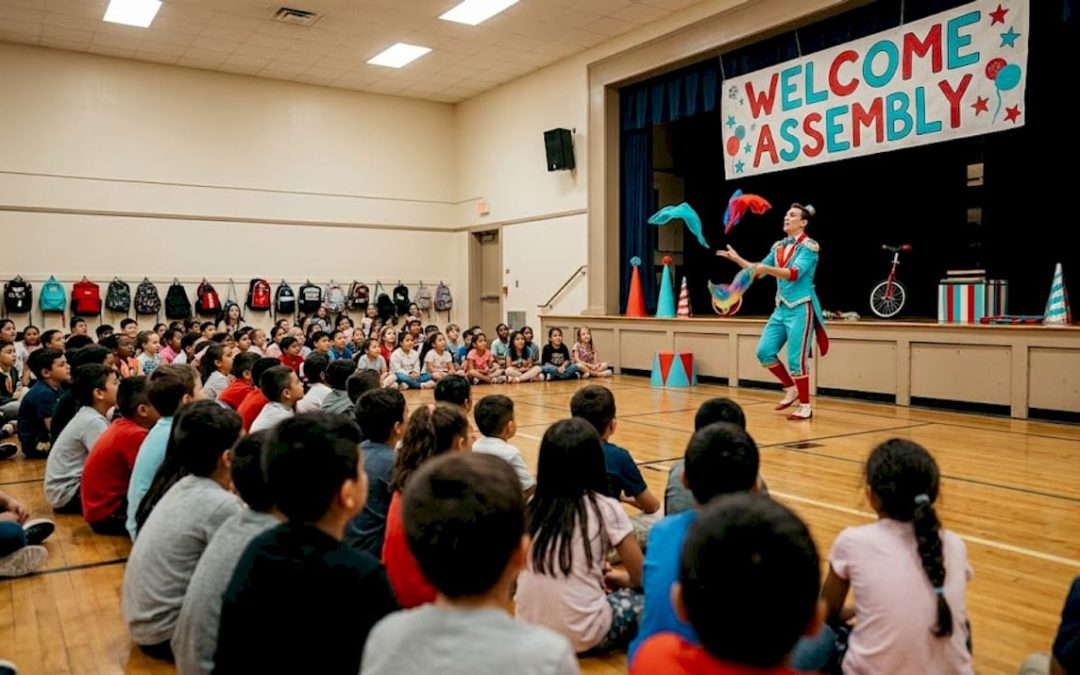
School assembly shows get a bad reputation. Too many educators still see them as a welcome break from instruction rather than a genuine extension of it. That view costs schools a remarkable opportunity. A well-designed assembly show can reinforce academic content, shift student behavior, build community, and introduce topics that traditional classroom formats simply cannot replicate. This guide walks you through the evidence behind assembly programs, the formats available to K-12 schools, how to plan them for maximum impact, and what measuring success actually looks like in practice.
Key Takeaways
| Point | Details |
|---|---|
| Assembly shows enhance engagement | High-quality assemblies spark student interest and reinforce classroom learning. |
| Program variety supports growth | Offering arts, STEM, and SEL assemblies ensures all students benefit from diverse learning experiences. |
| Strategic planning boosts impact | Thoughtful assembly planning and classroom integration produce the greatest long-term benefits. |
| Measuring outcomes matters | Collecting feedback and tracking engagement enable ongoing improvement of assembly programs. |
| Follow-up is essential | Lasting school culture change happens when educators carry assembly lessons into daily routines. |
Why Assembly Shows Matter: Beyond a Break From Routine
The word “assembly” often triggers a specific image: students filing into a gymnasium, sitting on a cold floor, half-listening to a speaker. That version of an assembly is a relic. Modern assembly program benefits go far beyond crowd management or a convenient scheduling gap. Today’s best assembly shows are designed experiences that combine performance, storytelling, science demonstrations, or music to make learning stick in ways that a worksheet simply cannot.
Research consistently confirms that students retain information better when they experience it emotionally and physically, not just cognitively. The arts in early childhood benefits research confirms that exposure to performance-based learning in the early grades builds stronger pathways for attention, empathy, and memory. These same principles apply across the K-12 spectrum.
“When schools treat assembly shows as a core instructional strategy rather than a supplementary event, they see measurable gains in student engagement, teacher morale, and school-wide culture.”
Consider what a single, well-executed assembly can accomplish:
- Introduce complex topics like environmental responsibility, mental health awareness, or historical equity in age-appropriate, memorable ways
- Reinforce classroom lessons on STEM, literacy, or social-emotional learning (SEL) through a different modality
- Model school values by presenting anti-bullying, kindness, or inclusion as living concepts rather than posted rules
- Build community across grades, pulling students together around shared experiences
Understanding the benefits of school assemblies requires shifting your frame entirely. The goal is not to entertain students while teachers catch their breath. The goal is to create experiences that extend what teachers are already doing in the classroom and deepen students’ connection to learning.
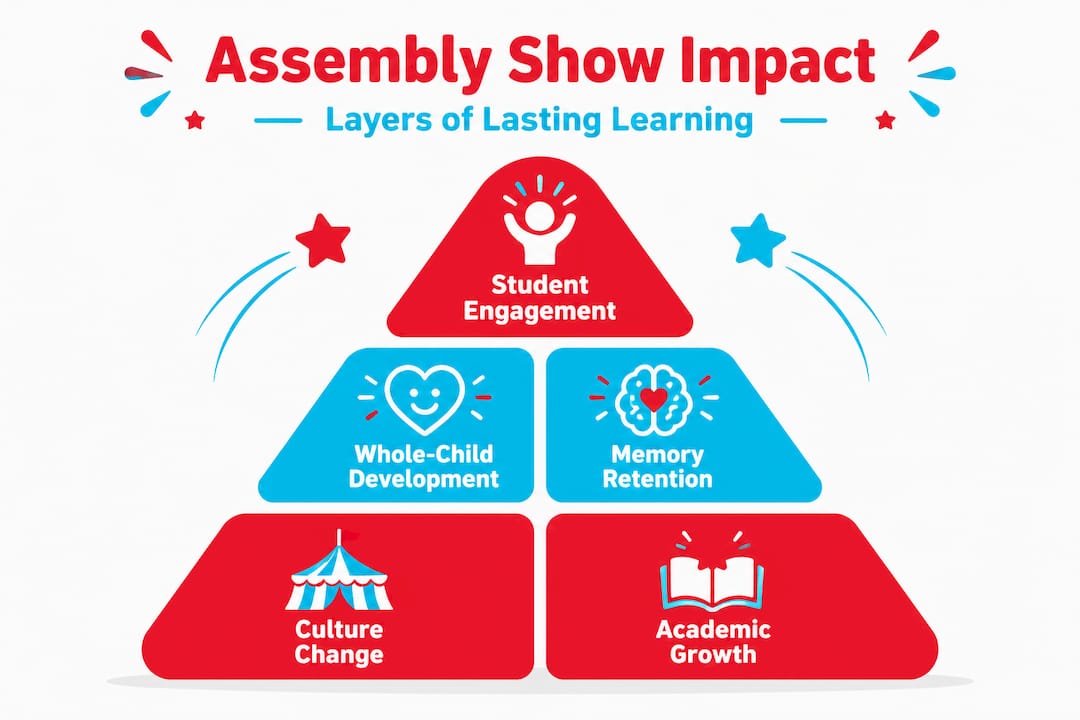
A case study at Maxwell Elementary School found that assembly programs can drive sustained changes in teaching when designed around core educational objectives. That finding is significant. It means the impact does not stop when the performers pack up and leave. A well-designed assembly shapes how teachers think about their own instruction.
For a deeper look at how these outcomes translate across school environments, the guide to assembly impact offers practical frameworks used by experienced K-12 coordinators.
Types of Assembly Shows and Their Educational Goals
Not all assembly shows are created equal, and that is actually a strength. The variety of available formats means you can choose a show that meets your school exactly where it is, whether you are focused on building character, sparking curiosity about science, celebrating cultural heritage, or supporting students’ emotional growth.
Here is a breakdown of the most common assembly formats and their primary educational focus:
| Assembly type | Primary educational focus | Best-fit grade range |
|---|---|---|
| Arts and theater | Creative expression, literacy, empathy | K-8 |
| STEM and science | Critical thinking, inquiry, careers | 3-12 |
| Character education | Values, decision-making, leadership | K-12 |
| Cultural celebration | Diversity, inclusion, global awareness | K-12 |
| SEL-focused shows | Emotional regulation, empathy, relationships | K-8 |
| Anti-bullying programs | Safety, respect, peer dynamics | 3-12 |
| Career exploration | Goal-setting, motivation, real-world skills | 6-12 |
Each of these formats plays a distinct role in what researchers call “whole-child development,” the idea that academic achievement is inseparable from emotional, social, and creative growth. Programs built around curriculum development examples confirm that exposing students to diverse learning modalities, including performance and interactive demonstrations, leads to stronger overall outcomes.
For elementary coordinators, elementary assembly ideas offer a wide range of formats calibrated for younger learners who respond especially well to music, puppetry, magic, and storytelling.
For schools focused on social-emotional learning, programs specifically designed as assemblies for SEL are structured to help students identify emotions, practice empathy, and build conflict-resolution skills in ways that feel natural and engaging rather than lecture-based.
Academic cases show that well-designed programs lead to sustained changes in pedagogy, but only when the format is chosen deliberately. A high-energy magic show may be a poor fit for a week focused on grief awareness. A somber historical theater performance may feel jarring at the start of a celebration week. Intentionality is everything.
Key considerations when selecting an assembly type:
- Age appropriateness. Content and pacing need to match your students’ developmental stage.
- Curriculum alignment. The closer the assembly theme connects to what students are currently studying, the stronger the retention.
- Diversity of format. Rotating through different assembly types throughout the year keeps students engaged and reaches learners with different strengths.
- Interactive elements. Shows that involve student participation almost always outperform passive viewing formats.
Pro Tip: Blend two formats when possible. A STEM show that weaves in character education moments, for example, delivers double value. Students are learning scientific concepts and seeing persistence, curiosity, and teamwork modeled in real time.
Planning for Impact: How to Choose and Organize Assembly Shows
The quality of your planning determines whether an assembly becomes a forgotten Tuesday or a turning point for your school culture. Strong planning is not complicated, but it is specific. Here is a step-by-step process that works across grade levels and school sizes:
- Define your goal clearly. Are you addressing a spike in bullying? Kicking off a STEM unit? Celebrating a cultural heritage month? The goal shapes every other decision.
- Align with your curriculum calendar. Map your assemblies to moments in the school year where they reinforce or preview what teachers are already working on.
- Set your budget and logistics early. Know your available dates, venue capacity, and technical requirements (sound systems, projectors, staging) before reaching out to providers.
- Research and book providers. Look for programs with documented educational outcomes, clear age recommendations, and strong testimonials from comparable schools.
- Brief your teachers in advance. Share key themes, vocabulary, and discussion prompts so educators can prime students before the show and debrief afterward.
- Execute with a clear day-of timeline. Assign staff roles for student supervision, AV support, and performer logistics to prevent chaos.
- Collect feedback immediately after. Student reaction forms, quick teacher surveys, and brief admin notes create a feedback loop that improves future events.
The planning guide for assemblies provides customizable checklists and timeline templates that experienced coordinators have used to run smooth, high-impact events across large and small schools alike.
Here is a sample planning timeline for a mid-year assembly:
| Weeks before event | Key action |
|---|---|
| 8 weeks out | Confirm educational goals and budget |
| 6 weeks out | Research and contact providers |
| 4 weeks out | Book program and confirm logistics |
| 2 weeks out | Brief faculty, send parent notice |
| 1 week out | Confirm day-of schedule and tech check |
| Day before | Final walk-through with staff |
| Day of | Execute and document with photos/notes |
| Week after | Collect feedback, plan classroom integration |
Common pitfalls that undermine even well-intentioned assemblies include booking too close to the event date, failing to communicate the theme to teachers in advance, or neglecting post-event integration entirely. The assembly case study confirms that time constraints are the most common challenge cited by educators implementing assemblies. Building lead time into your calendar is not optional; it is the difference between a forgettable event and a meaningful one.
Tips for hosting an assembly that students actually remember include greeting the performer personally, prepping students on expected behavior, and keeping transitions tight so momentum does not stall. And if energy needs a boost, ideas for making assemblies fun range from student spotlight moments to interactive Q&A segments and themed decor that connects to the show’s content.
Pro Tip: Block 30 minutes of classroom time in the two days following any assembly for structured discussion. Even a brief teacher-led debrief dramatically increases how much students retain and apply from the experience.
Measuring Assembly Show Success: Outcomes, Challenges, and Long-term Value
Understanding how to select and run assemblies is important, but knowing how to measure if they really work is just as critical. Too many schools run a terrific show and then move on without tracking what changed. That is a missed opportunity for continuous improvement.
What measurable outcomes should you look for?
- Student engagement levels during and immediately after the assembly
- Teacher-reported behavior changes in the days and weeks that follow
- Classroom discussion quality linked to assembly themes
- Attendance patterns and school climate surveys
- Follow-up projects, artwork, writing, or conversations inspired by the show
Formal measurement does not have to be complicated. A simple pre-and-post survey for both students and teachers, combined with classroom observation notes, gives you enough data to evaluate whether an assembly hit its goals.
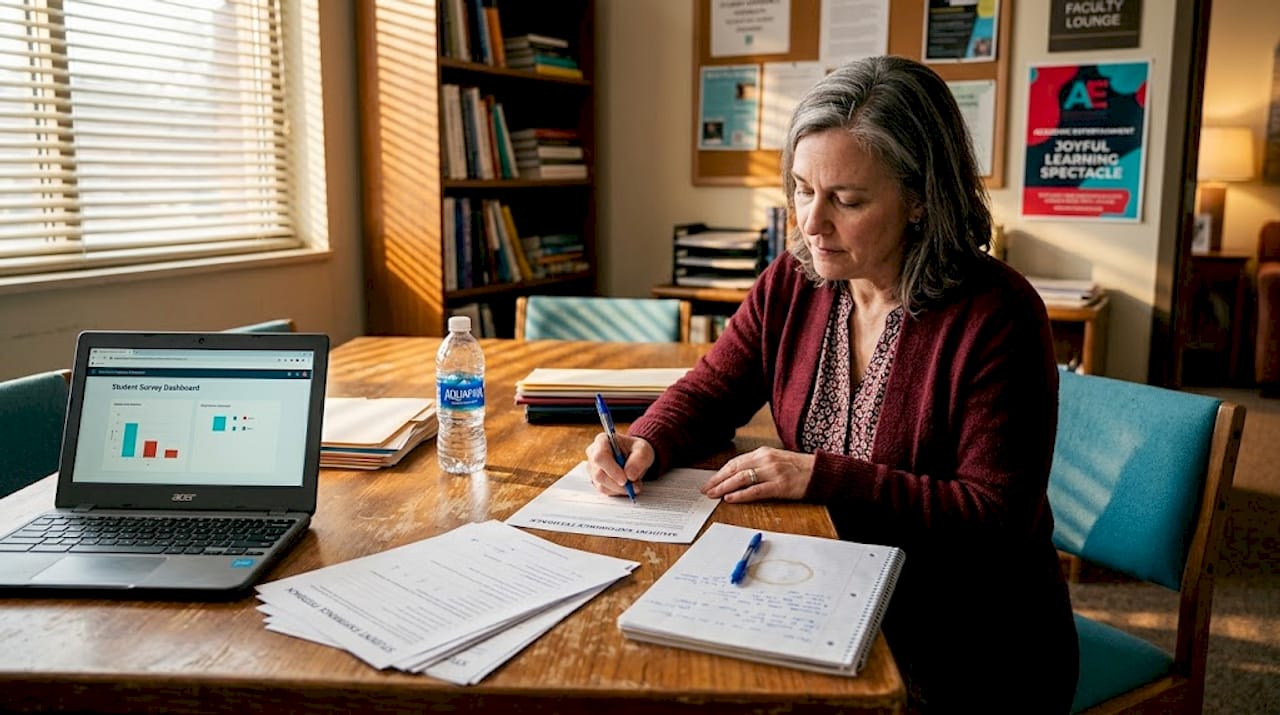
The role of educational technology in tracking outcomes is growing, and several schools now use digital check-in tools and mood trackers to gauge student responses before and after major school events, including assemblies.
Real challenges exist, and pretending otherwise sets schools up for frustration. The Maxwell Elementary case study findings note that time constraints often limit the full implementation of assembly-based initiatives, even when they are effective. That is an honest and important finding. Assembly programs are not a magic fix. They require sustained attention, teacher buy-in, and deliberate integration.
Common implementation challenges:
- Teachers feel unsure how to connect the assembly content to their curriculum
- Students get excited in the moment but the energy fades by Thursday
- Administrators do not have a clear system for tracking assembly-related outcomes
- Budget constraints limit frequency or quality of programming
The solution to most of these challenges is not more funding or more time. It is better strategy. Connecting your assemblies and student achievement data to existing school improvement goals gives assembly programs institutional weight. When a principal can point to behavior data, teacher feedback, and student surveys that trace back to a well-executed assembly series, the case for continued investment becomes obvious.
Our Perspective: What Most Educators Miss About Assembly Shows
Here is an uncomfortable truth that 40-plus years of working with K-12 schools has taught us: the schools that get the least value from assembly shows are not the ones with the smallest budgets. They are the ones who treat assemblies as isolated events.
The show ends. The performers leave. Students file back to class. And that is it. No debrief. No classroom connection. No follow-up. The assembly becomes exactly what skeptics always feared: a pleasant distraction.
The schools that see genuine, measurable culture change treat every assembly as a launchpad. The performers leave, and that is when the real work begins. Teachers pick up the thread. Counselors reference the show’s themes in small group sessions. Principals mention it in morning announcements for the next week. The experience becomes a shared reference point for the entire school community.
Academic cases show that sustained changes in pedagogy happen only when educators integrate assembly lessons into daily routines, not when they treat the assembly as its own complete unit.
The most effective school leaders we have worked with do not ask, “Was that a good show?” They ask, “What are we doing with this show?” That shift in question changes everything. It forces intentionality at every stage, from selection through follow-up.
If you want assembly programs to support your SEL initiatives or your broader school culture goals, build the follow-up into your plan before you book the show. The assembly is not the destination. It is the spark.
Find the Perfect Assembly Show for Your School
You now have a clear picture of why assembly shows work, how to plan them, and what to do after the curtain falls. The next step is finding programs that are built to deliver on all of it.
Academic Entertainment offers more than 40 years of experience connecting K-12 schools with live and virtual programs specifically designed to educate, inspire, and engage. Whether your school needs arts education assemblies that bring creativity to life, STEM assemblies that make science unforgettable, or assemblies that encourage learning across character, health, and diversity themes, the catalog is built to match your goals and your students’ needs. Programs are tailored by age group, topic, and format so you are never choosing blindly. Explore the full lineup and start building an assembly calendar that actually moves the needle for your school.
Frequently Asked Questions
How do assembly shows support curriculum goals?
When coordinated with classroom topics, assemblies reinforce lessons and introduce concepts through engaging, memorable experiences. Academic research confirms that assemblies drive sustained changes in teaching when designed around core educational objectives.
What is the best timing for scheduling assemblies?
Assemblies are most effective when spread throughout the school year and aligned with key curricular or social-emotional learning milestones, rather than clustered at the start or end of the year.
Which topics work best for elementary vs. middle or high school assemblies?
Arts, character education, and SEL topics resonate strongly with elementary grades, while STEM, career exploration, and leadership-focused programs tend to land better with middle and high school students.
How can we keep students engaged during assemblies?
Incorporate interactive elements, involve students directly in presentations, use diverse formats across the year, and choose programs that match your students’ developmental stage and current interests.
What evidence exists that assemblies have a lasting impact?
Research and case studies show that assemblies lead to sustained changes in pedagogy and school culture, but the lasting impact depends heavily on post-assembly classroom integration and deliberate follow-up by educators.
Recommended
- How to Engage Students in Assemblies Effectively – Academic Entertainment
- Why interactive assembly shows elevate K-12 learning – Academic Entertainment
- 6 Keys: From Passive to Participating—Why Interactive School Assemblies Keep Students Engaged Longer – Academic Entertainment
- Education Entertainment for Schools: 3 ways school assemblies encourage learning – Academic Entertainment