Overnight summer camps can reduce anxiety symptoms in children, and yet most parents still think of camp entertainment as little more than s’mores and silly songs. The reality is far more exciting. Today’s best summer camp entertainment programs are carefully designed to build confidence, spark curiosity, and develop the kind of character traits that follow kids into adulthood. This guide walks you through the top program types, what to look for when choosing, and how to make sure your child gets the most out of every camp experience.
Key Takeaways
| Point | Details |
|---|---|
| Evidence-based impact | Summer camp entertainment programs can reduce anxiety and foster emotional health in children. |
| Holistic development | Top camps blend learning, character-building, and inclusive fun for lasting growth. |
| Educational choices | STEM, arts, and adventure camps provide hands-on experiences that build confidence and skills. |
| Diversity matters | The best programs respect varied participation rates, screen time, and activities across all demographics. |
| Resources for families | Curated entertainment assemblies are available to bring camp-style enrichment home or to your child’s camp. |
What Defines a Top Summer Camp Entertainment Program?
Not every fun activity qualifies as a top-tier entertainment program. The best programs strike a balance between genuine enjoyment and measurable growth. When kids are laughing and learning at the same time, that’s when real development happens.
Research confirms this. Structured nature experiences at camp support mental, emotional, and social health in ways that classroom settings often cannot replicate. The combination of novelty, peer interaction, and guided challenges creates a unique environment for growth. That’s why the benefits of summer camp go well beyond what most parents expect.
Here’s what separates a truly impactful program from a generic activity schedule:
- Learning integration: Every activity connects to a skill, concept, or value
- Emotional safety: Kids feel free to try, fail, and try again
- Social engagement: Programs encourage teamwork and communication
- Inclusivity: Activities are designed for diverse backgrounds and abilities
- Counselor quality: Trained staff who model and reinforce positive behavior
The table below shows how different program types stack up across these key attributes:
| Program type | Learning focus | Character building | Inclusivity | Emotional growth |
|---|---|---|---|---|
| STEM camps | Very high | Moderate | High | Moderate |
| Arts and creative camps | High | High | Very high | Very high |
| Adventure camps | Moderate | Very high | Moderate | High |
| Performing arts camps | High | High | High | Very high |
| Character education programs | Moderate | Very high | Very high | Very high |
Looking at camp activity ideas through this lens changes how you evaluate options. A zip line is fun. A zip line that teaches risk assessment, trust, and goal-setting is transformational.
Educational Entertainment: STEM, Arts, and Creative Camps
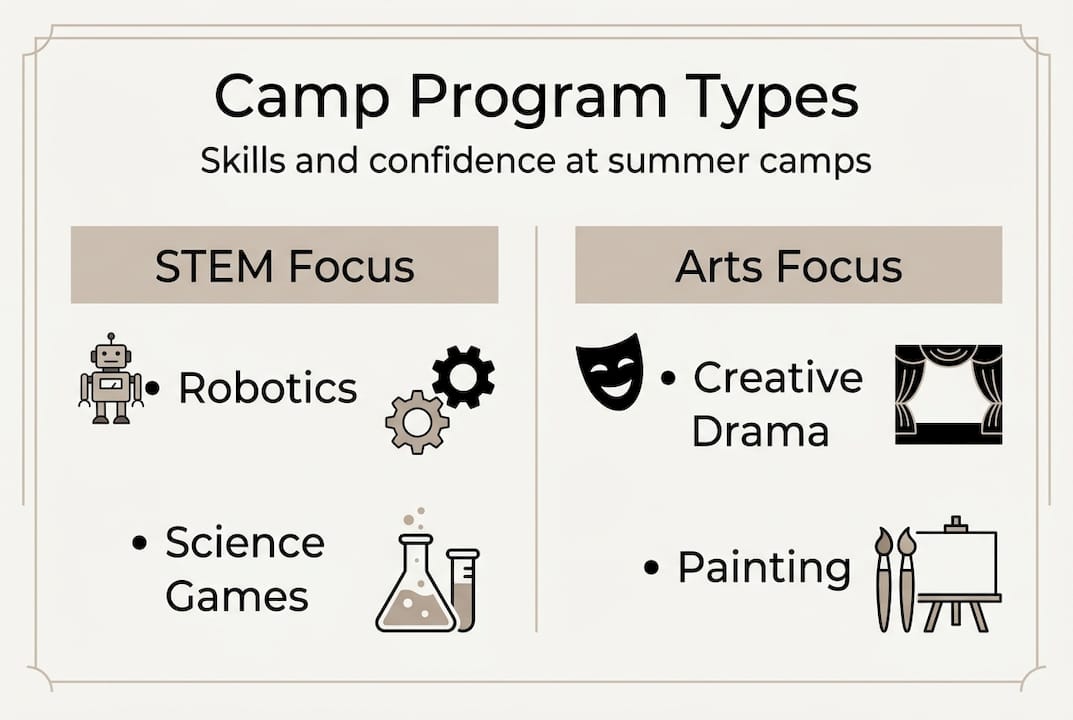
Knowing what matters, let’s look at the educational entertainment options parents can choose for their children. STEM camps have exploded in popularity, and for good reason. They give kids hands-on access to science, technology, engineering, and math in ways that feel more like play than school.
Camp Kennedy Space Center is a standout example. It uses age-grouped STEM challenges and astronaut simulations to create a lasting impact, turning abstract concepts into lived experiences. Kids don’t just learn about space exploration. They simulate it. That kind of immersive learning sticks.
Arts and creative camps offer a different but equally powerful path. These programs build self-expression, boost confidence, and teach kids how to collaborate toward a shared creative vision. A child who performs in a camp musical learns public speaking, emotional regulation, and teamwork all at once.
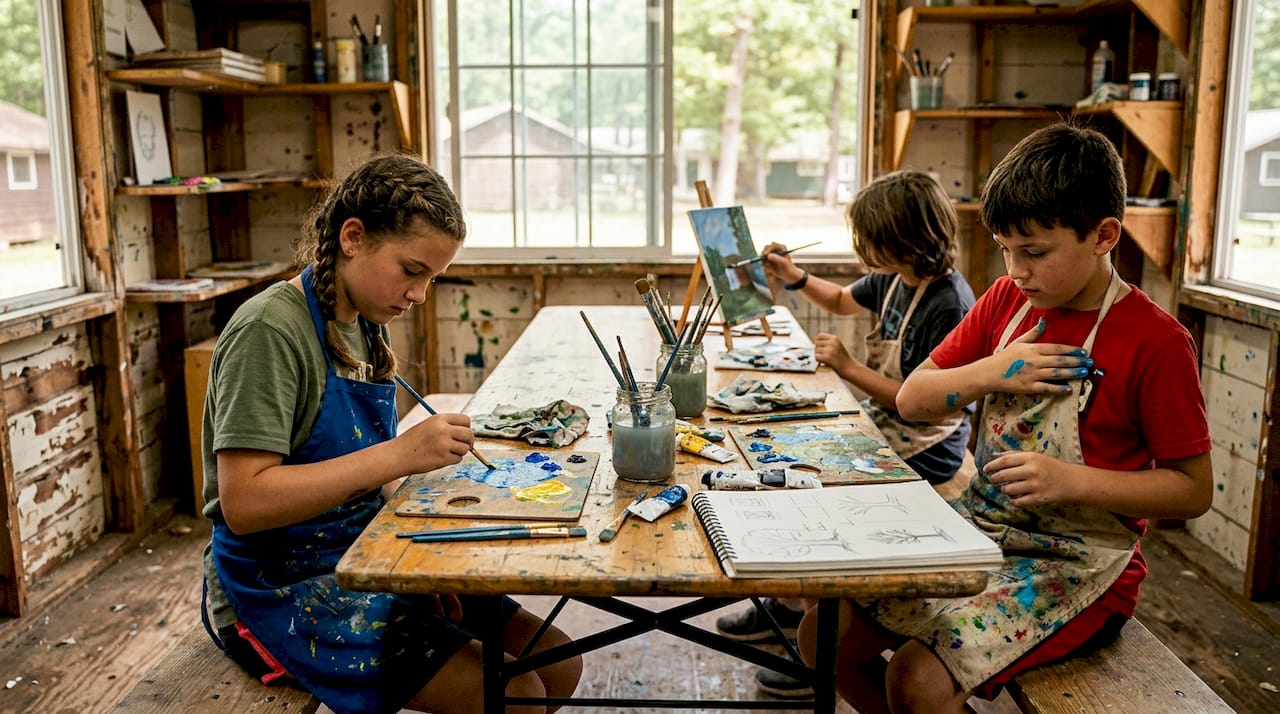
Here’s a snapshot of what leading educational camp types offer:
| Camp type | Key features | Age range | Developmental focus |
|---|---|---|---|
| STEM camps | Lab work, coding, simulations | 8 to 16 | Problem-solving, critical thinking |
| Arts camps | Theater, visual arts, music | 6 to 18 | Creativity, confidence, collaboration |
| Creative writing camps | Storytelling, publishing, workshops | 10 to 17 | Communication, imagination |
| Performing arts camps | Dance, drama, voice | 7 to 18 | Expression, discipline, teamwork |
Parents looking to extend the magic of educational entertainment beyond the campfire will find virtual STEM shows and summer camp show options that bring the same energy into any setting. Choosing the perfect camp show for your community center or local program is easier than you think.
Pro Tip: Look for camps that group kids by age and developmental stage rather than just grade level. Age-grouped activities allow counselors to pitch challenges at exactly the right level, which keeps kids engaged and growing without feeling overwhelmed or bored.
Character-building and adventure entertainment programs
Alongside academic learning, character-building entertainment is a pillar of top summer camp programs. Adventure activities are not just thrilling. They are carefully designed to push kids past their comfort zones in safe, supported ways.
Camp Ondessonk is recognized for promoting social skills, resilience, and independence through adventure activities that challenge campers physically and emotionally. Rock climbing, canoeing, and wilderness navigation all require kids to trust themselves and their peers. That trust becomes a foundation for lifelong confidence.
Some camps go even deeper with structured character programs. Birch Rock Camp uses a “Help the Other Fellow” philosophy, building heart, mind, and will through badges, mottos, and daily rituals. These aren’t just feel-good gestures. They create a shared language around values that kids carry home.
“The best camp programs don’t just keep kids busy. They give children a framework for who they want to become, reinforced every day through activity, community, and intentional mentorship.”
River Way Ranch Camp counselors are specifically trained to foster confidence, independence, and emotional safety. That counselor relationship is often what kids remember most, not the activities themselves but the adult who believed in them.
Key traits to look for in character-building programs include:
- Counselors trained in social-emotional learning
- Daily rituals that reinforce camp values
- Peer mentorship opportunities for older campers
- Structured reflection time after challenging activities
- Recognition systems like badges or awards that celebrate growth
For a side-by-side look at how different programs compare, check out student program comparisons to find the right fit. You can also browse summer camp games that reinforce character values in a fun, low-pressure format.
Pro Tip: Look for camps accredited by the American Camp Association (ACA). ACA accreditation means the camp meets over 300 health, safety, and program quality standards, including specific benchmarks for character development programming.
Diversity, Inclusivity, and Screen Time in Entertainment Programs
To ensure every child benefits, it’s essential to consider how inclusivity and balance are achieved at summer camps. Not all kids arrive at camp with the same background, access, or comfort level. The best programs recognize this and design accordingly.
Research on camp participation shows that Black parents tend to have their kids attend more camp hours, while non-White groups engage in more screen-based activities with varying levels of academic programming. These differences matter because they reveal gaps in how entertainment and enrichment are delivered across communities. A one-size-fits-all approach simply doesn’t serve every child well.
Here’s how leading camps address diversity and inclusion in their entertainment programs:
- Offering culturally representative stories, music, and art in creative programs
- Training counselors to recognize and respond to different learning and social styles
- Providing scholarships and sliding-scale fees to reduce access barriers
- Designing activities that don’t require prior experience or specific physical ability
- Actively recruiting staff from diverse backgrounds to reflect the camper community
Balancing screen time with offline enrichment is another area where parents need to stay engaged. Here are practical steps you can take:
- Ask camps directly about their screen time policies and how digital activities are integrated
- Look for programs that use technology as a tool for creation, not just consumption
- Prioritize camps that offer a mix of physical, creative, and reflective activities each day
- Talk to your child about what they enjoyed and what felt like too much screen time
- Review the daily schedule before enrolling to check for variety and balance
For camp organizers and parents who want to run programs that truly work, summer camp management tips offer practical guidance on building inclusive, engaging schedules that serve every child.
Bring Summer Camp Entertainment Home: Next Steps for Parents
Once you know what to look for, you can bring the best entertainment and enrichment directly to your child’s camp or community program. Academic Entertainment has spent over 40 years helping schools and camps find programs that combine genuine fun with lasting educational impact.
Whether you’re looking for arts education assemblies that spark creativity, STEM assemblies that make science unforgettable, or character-building assemblies that reinforce values kids carry for life, Academic Entertainment has a curated program to match. Every show is designed to engage K-12 students while delivering real developmental value. Reach out today to find the right program for your child’s summer camp or community center.
Frequently Asked Questions
How do summer camp entertainment programs promote character development?
Many camps use adventure activities, daily rituals, and trained counselor guidance to build compassion, resilience, and independence. Programs like Camp Ondessonk and Birch Rock Camp use structured approaches like badges and mottos to make character growth a daily practice.
What types of educational entertainment are offered at summer camps?
Camps offer STEM challenges, arts performances, creative workshops, and hands-on learning experiences tailored to different age groups. Camp Kennedy Space Center is one example that uses hands-on STEM labs and astronaut simulations to make learning stick.
How do summer camp programs ensure inclusivity and diversity?
Entertainment schedules and counselor training help camps address different participation rates and screen preferences among diverse groups. Demographic research shows that participation patterns vary significantly, which is why intentional program design matters.
Can summer camps reduce anxiety and improve emotional health?
Research shows that overnight camps reduce anxiety symptoms in youth, and structured nature experiences support mental, emotional, and social health competencies. These benefits are most consistent in camps with trained counselors and intentional programming.
Recommended
- Summer Camp Shows – Academic Entertainment
- Hire the Best Entertainers for Summer Camp Shows – Academic Entertainment
- Find the Perfect Summer Camp Show for Your Community Center – Academic Entertainment
- Summer Camp Activities Ideas – Academic Entertainment