Engaging students in meaningful health and fitness programs is no longer limited to the occasional gym class. Administrators across the United States know that creating a truly healthy school environment demands attention to physical, mental, and social well-being. By connecting students with dynamic assembly experiences, school leaders have the power to spark enthusiasm around wellness and support academic achievement. Discover how innovative assemblies can become the cornerstone of a truly health-promoting school.
Key Takeaways
| Point | Details |
|---|---|
| Holistic Health Approach | Schools must implement comprehensive health programs that address physical, mental, and social well-being to foster overall student development. |
| Active Stakeholder Engagement | Collaboration among educators, parents, and community leaders is crucial for creating effective school health initiatives. |
| Integrated Wellness Initiatives | Successful health programs should combine physical activity, nutrition education, and mental wellness to ensure comprehensive student support. |
| Continuous Improvement | Administrators should focus on developing flexible health strategies with mechanisms for ongoing evaluation and adaptation based on feedback. |
Defining Health and Fitness in Schools
Health and fitness in schools represent a comprehensive approach to nurturing students’ overall well-being, extending far beyond traditional physical education classes. Schools today recognize that true health encompasses physical, mental, and social dimensions, requiring a holistic strategy for student development.
The World Health Organization defines a health-promoting school as an environment that continuously strengthens its capacity to support student wellness through multiple strategic approaches. Whole school health frameworks engage diverse stakeholders, including educators, parents, health professionals, and community leaders, to create supportive learning environments.
Key components of comprehensive school health programs typically include:
- Physical education and regular exercise opportunities
- Nutrition and healthy eating programs
- Mental health support and emotional wellness resources
- Health education curricula
- Policies promoting student well-being
- Safe and supportive school environments
The Centers for Disease Control emphasizes that schools play a critical role in establishing lifelong health behaviors during students’ most formative developmental years. By implementing evidence-based health policies and creating collaborative community partnerships, schools can significantly influence students’ long-term health trajectories.
Here’s a comparison of whole-school versus traditional health program approaches:
| Approach Type | Stakeholder Involvement | Program Scope | Long-term Student Impact |
|---|---|---|---|
| Whole-school Approach | Educators, parents, professionals | Comprehensive, integrated | Strong holistic well-being |
| Traditional Programs | Mostly PE teachers | Focused, isolated | Limited to physical health |
Pro tip: Design school health programs that integrate physical activity, nutrition education, and mental wellness strategies to create comprehensive student support systems.
Key Benefits for Student Learning and Well-Being
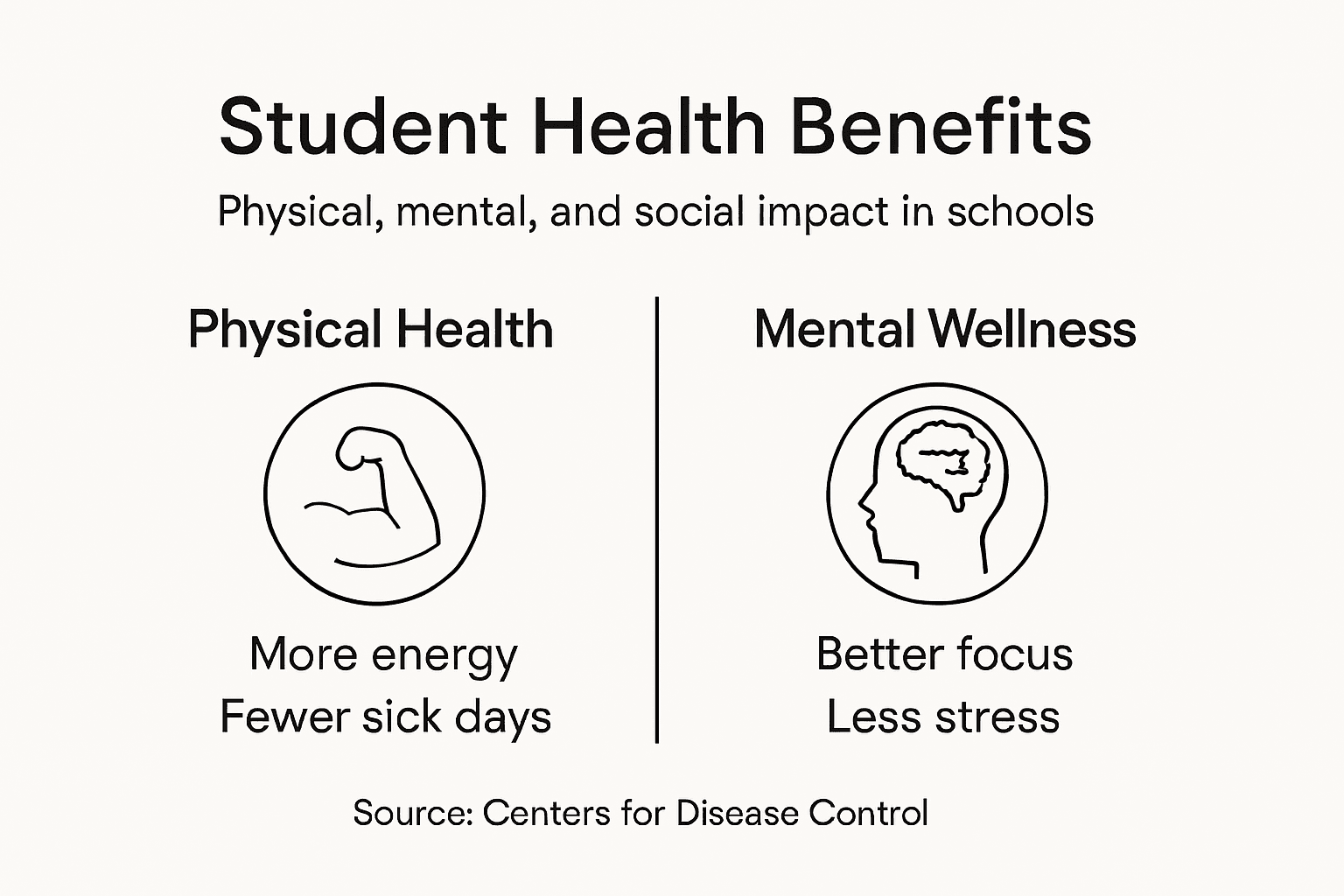
Health and fitness programs in schools deliver transformative advantages that extend far beyond physical development, fundamentally impacting students’ academic performance, emotional resilience, and long-term life outcomes. School health interventions create comprehensive support systems that address students’ holistic developmental needs.
The critical benefits of integrating health and fitness into educational frameworks include:
- Enhanced cognitive function and academic concentration
- Improved mental health and emotional regulation
- Reduced absenteeism and increased school engagement
- Development of lifelong healthy lifestyle habits
- Better stress management skills
- Increased self-confidence and social interaction abilities
UNESCO research highlights that healthy children demonstrate significantly better learning capabilities. Nutrition and health programs directly correlate with improved academic performance, highlighting the intrinsic connection between physical wellness and educational success. Schools that prioritize student health create environments where learners can truly thrive, developing critical skills that extend well beyond traditional academic metrics.

By implementing comprehensive health strategies, educational institutions can transform student experiences, preparing young individuals not just academically, but holistically for future challenges and opportunities.
Pro tip: Create integrated health programs that connect physical activity, nutrition, and mental wellness to support comprehensive student development.
Popular Health and Fitness Initiatives for K-12
K-12 schools across the United States are implementing innovative health and fitness programs designed to combat childhood obesity, promote physical activity, and support holistic student development. Physical activity initiatives have become crucial strategies for addressing student wellness and long-term health outcomes.
Some of the most impactful health and fitness initiatives include:
- NFL PLAY 60 program encouraging 60 minutes of daily physical activity
- Kids Heart Challenge promotes cardiovascular health awareness
- School-based nutrition education programs
- Comprehensive physical education curriculum redesigns
- Mindfulness and stress management workshops
- Intramural sports and fitness club opportunities
The Healthy People 2030 framework provides national guidance for improving youth physical activity, emphasizing strategic approaches that support student health. These initiatives focus not just on physical movement, but on creating comprehensive wellness ecosystems that address nutrition, mental health, and long-term lifestyle habits.
Successful school health programs integrate multiple dimensions of wellness, transforming physical education from a standalone class to a holistic approach that empowers students to make informed, healthy choices throughout their lives.
The following table summarizes how popular health initiatives support different aspects of student development:
| Initiative | Physical Health | Mental Wellness | Social Skills Development |
|---|---|---|---|
| NFL PLAY 60 | High | Moderate | Low |
| Kids Heart Challenge | High | Low | Moderate |
| Mindfulness Workshops | Low | High | Moderate |
Pro tip: Design multifaceted health initiatives that connect physical activity, nutrition education, and mental wellness to create comprehensive student support systems.
How School Assemblies Motivate Students
School assemblies represent powerful platforms for inspiring and engaging students beyond traditional classroom learning environments. Purpose of school assemblies extends far beyond simple information sharing, transforming into dynamic experiences that motivate, educate, and energize entire student populations.
Key ways school assemblies effectively motivate students include:
- Creating shared emotional experiences
- Breaking monotonous learning patterns
- Introducing inspirational role models
- Providing interactive learning opportunities
- Fostering school-wide community spirit
- Demonstrating real-world applications of academic concepts
These gatherings leverage the power of collective engagement, allowing students to simultaneously learn and feel connected to broader educational objectives. High school assembly activities are carefully designed to capture student attention, spark curiosity, and create memorable moments that transcend traditional instructional methods.
Motivational assemblies work by interrupting routine, presenting information through dynamic storytelling, interactive demonstrations, and compelling performances that resonate with students’ natural desire for excitement and meaningful connection.
Pro tip: Design assemblies with multiple engagement layers that appeal to different learning styles and interests to maximize student motivation and participation.
Common Mistakes Administrators Should Avoid
Health and fitness initiatives in schools often fail due to systemic oversights that can undermine their effectiveness. School health service challenges reveal critical areas where administrators frequently make strategic missteps that compromise student wellness programs.
Common mistakes school administrators tend to make include:
- Treating health programs as isolated interventions
- Lacking comprehensive staff training
- Ignoring mental health components
- Failing to create integrated support systems
- Underestimating the importance of holistic wellness
- Neglecting continuous program evaluation
- Overlooking student and parent feedback mechanisms
Successful health initiatives require a whole-school approach that transcends traditional programmatic thinking. By understanding these potential pitfalls, administrators can design more robust, responsive health and fitness strategies that genuinely support student development and well-being.
The most effective administrators recognize that health programs are not checkboxes to complete, but dynamic ecosystems requiring constant adaptation, genuine commitment, and a deep understanding of student needs.
Pro tip: Develop flexible health strategies with built-in feedback loops that allow continuous improvement and responsive program design.
Elevate Student Health and Engagement Through Inspiring School Assemblies
The article highlights the critical need for schools to adopt a whole-school approach to health and fitness that integrates physical activity, mental wellness, and nutrition. One challenge many educators face is motivating students to embrace these healthy habits while fostering emotional resilience and social skills. At Academic Entertainment, we understand these goals and provide school assembly programs designed to energize students and promote wellness themes such as character development, diversity, and anti-bullying.

Bring these vital lessons to life with dynamic live and virtual assemblies that connect on a personal level with K-12 students. Our programs are tailored to support your school’s health initiatives by offering engaging content that supplements physical education and mental health education. Discover how your school can inspire students to build lifelong healthy habits now by exploring the variety of educational and entertaining shows at Academic Entertainment. Start planning your next impactful assembly today by visiting Academic Entertainment’s booking page and taking the first step toward a healthier, happier school community.
Frequently Asked Questions
Why is health and fitness important in schools?
Health and fitness in schools are crucial as they promote the overall well-being of students, enhancing their physical, mental, and emotional health. These programs support academic performance, emotional resilience, and the development of lifelong healthy habits.
What are the key components of comprehensive school health programs?
Key components include physical education, nutrition programs, mental health support, health education, well-being policies, and safe school environments, all aimed at fostering a holistic approach to student health.
How do school health programs impact academic performance?
Research indicates that healthy students typically display better cognitive function, improved concentration, and higher academic engagement, thus enhancing overall academic success.
What mistakes should school administrators avoid when implementing health programs?
Administrators should avoid treating health initiatives as isolated interventions, neglecting mental health components, failing to provide staff training, and overlooking the importance of continuous evaluation and feedback mechanisms.
Recommended
- 3 Health and Fitness School Assemblies to Better Your Students – Academic Entertainment
- Health and Fitness School Assemblies – Academic Entertainment
- Health and Fitness School Assemblies for Student Wellness
- Organizing Health Education Assemblies for Schools – Academic Entertainment