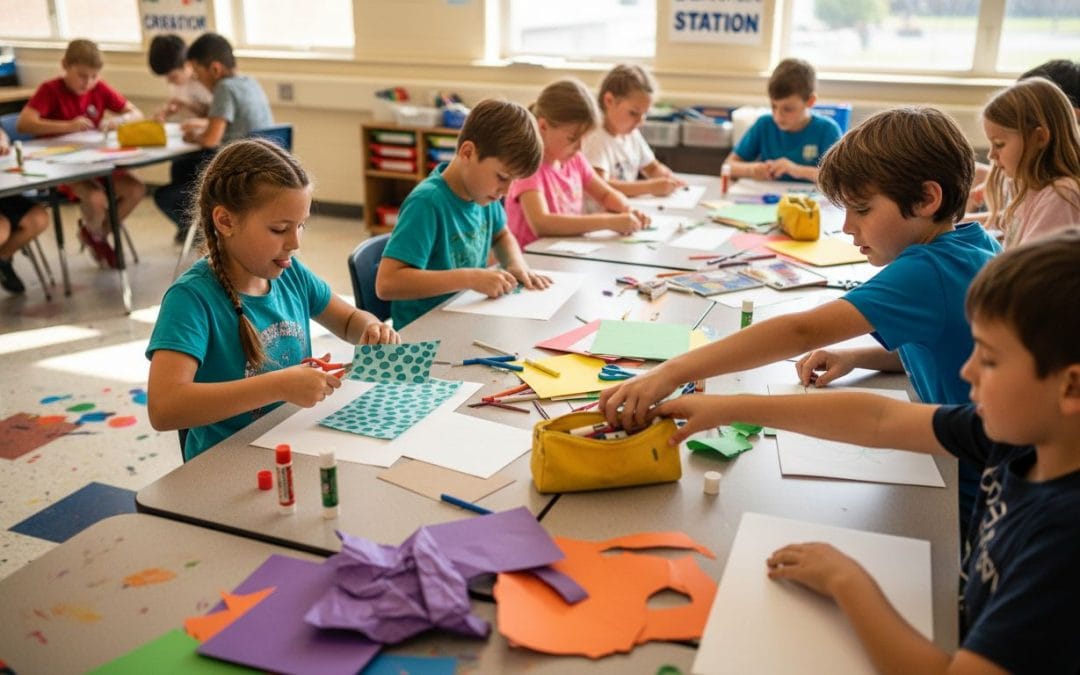
More than 90 percent of American parents agree that arts education is vital for a child’s growth. In classrooms across the United States, the arts are doing more than filling schedules—they are shaping confident, creative thinkers prepared for life’s challenges. From music and theater to digital design, this guide sheds light on how the arts transform everyday learning and why their impact goes far beyond the studio or stage.
Key Takeaways
| Point | Details |
|---|---|
| Comprehensive Arts Education | Focuses on five core disciplines: visual arts, music, dance, theater, and media arts, fostering creativity and critical thinking in students. |
| Cognitive and Social Development | Engaging in arts education enhances critical thinking, communication, and emotional intelligence, proving beneficial across all academic areas. |
| Arts Integration Benefits | Combining arts with core subjects increases student engagement and understanding of complex concepts through multiple learning pathways. |
| Strategies for Arts Funding | Schools should pursue diverse funding sources, including grants and community partnerships, to support robust arts education programs. |
Defining Arts in K-12 Education
Arts education represents a comprehensive learning approach that encompasses multiple creative disciplines within elementary and secondary school curricula. Arts education standards fundamentally integrate five core artistic domains: visual arts, music, dance, theater, and media arts. Each discipline offers students unique opportunities to explore creativity, develop critical thinking skills, and express themselves through structured yet imaginative learning experiences.
The Arizona Department of Education emphasizes that arts education is not merely about producing artists, but about cultivating essential life skills. By engaging students in artistic processes, schools help develop critical capabilities such as collaboration, communication, and creative problem-solving. These skills transcend artistic boundaries and become fundamental tools for academic and personal success across multiple disciplines.
In practice, K-12 arts education involves structured learning approaches that encourage students to create, perform, respond, and connect with various art forms. The Minnesota Department of Education highlights that artistic literacy involves more than technical proficiency—it requires students to understand context, analyze artistic works, and develop a deeper appreciation for creative expression. By integrating arts across educational experiences, schools can transform learning from passive absorption to active, engaging exploration that stimulates intellectual and emotional growth.
Key characteristics of comprehensive arts education include:
- Sequential skill development across grade levels
- Integration of multiple artistic disciplines
- Emphasis on both technical skills and creative thinking
- Opportunities for personal expression and cultural understanding
- Development of cognitive skills transferable to other academic areas
Types of Arts Programs for Schools
Arts programs in K-12 schools represent diverse learning opportunities that encompass multiple creative disciplines designed to develop students’ artistic skills and cognitive abilities. K-12 visual arts curricula typically include comprehensive approaches that teach students not just technical skills, but also critical thinking and creative problem-solving techniques through structured artistic experiences.
Schools generally offer five primary arts program categories: visual arts, music, theater, dance, and media arts. Each discipline provides unique learning experiences that help students explore creativity, develop self-expression, and understand cultural contexts. Visual arts programs might include drawing, painting, sculpture, and digital design, while music programs can range from instrumental lessons to choral training and music theory classes.
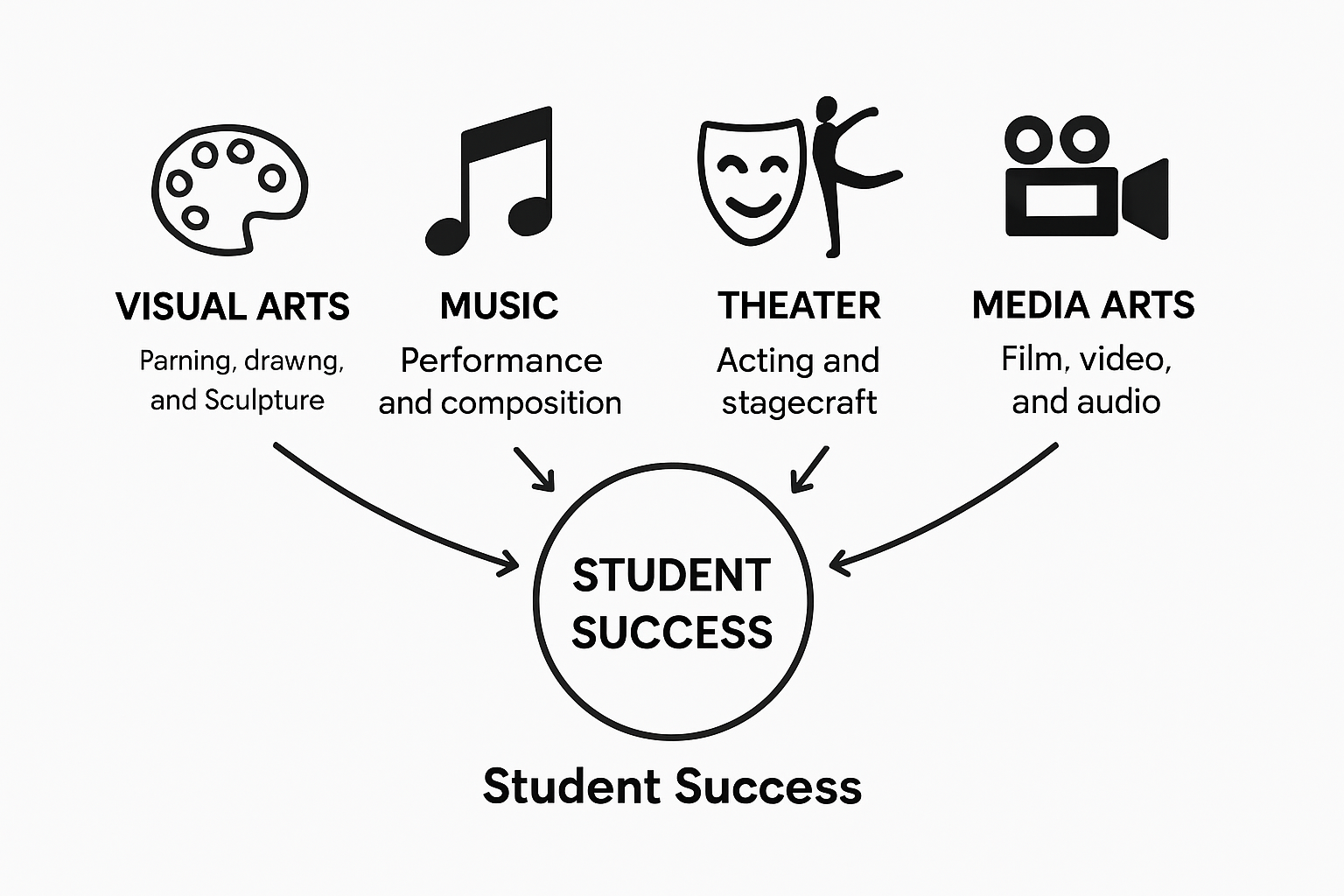
Theatrical arts programs often focus on performance skills, script analysis, stage design, and collaborative creative processes. These programs help students develop communication skills, build confidence, and learn about storytelling through dramatic expression. Dance programs similarly emphasize physical movement, choreography, cultural dance traditions, and understanding body mechanics as an artistic form of expression.
Key characteristics of comprehensive school arts programs include:
- Structured skill progression across grade levels
- Integration of historical and cultural contexts
- Development of technical and creative capabilities
- Opportunities for individual and group artistic projects
- Emphasis on cross-disciplinary learning and creative thinking
How Arts Foster Academic and Social Growth
Arts education benefits provide students with transformative experiences that extend far beyond traditional academic learning. Engaging in artistic disciplines helps students develop critical cognitive skills, emotional intelligence, and social capabilities that are essential for personal and academic success. By encouraging creative exploration, arts programs cultivate an environment where students learn to think critically, communicate effectively, and approach challenges with innovative perspectives.

Students participating in arts education experience significant cognitive and personal development. According to research from Arkansas State University, exposure to various art forms helps students develop crucial life skills such as problem-solving, collaboration, and clear communication. These skills are transferable across multiple academic disciplines and professional environments, demonstrating the profound impact of arts education on holistic student growth.
The social-emotional benefits of arts education are equally remarkable. Through collaborative artistic projects, students learn to work in teams, respect diverse perspectives, and build self-confidence. Performance-based arts like theater and dance require students to develop empathy, understand complex emotional landscapes, and communicate non-verbally. These experiences help students build resilience, learn effective communication strategies, and develop a deeper understanding of human interactions.
Key academic and social growth benefits include:
- Enhanced critical thinking skills
- Improved emotional intelligence
- Stronger communication abilities
- Increased self-confidence
- Better teamwork and collaboration skills
- Development of creative problem-solving approaches
- Deeper cultural understanding and empathy
Arts Integration and Student Engagement
Arts integration strategies represent a transformative approach to education that goes beyond traditional subject-based learning. This innovative method connects artistic expression with core academic disciplines, creating dynamic learning experiences that actively engage students and enhance their understanding of complex concepts. By weaving creative processes into standard curriculum, educators can unlock student potential and make learning more interactive, memorable, and meaningful.
The fundamental principle of arts integration is to use artistic methods as a vehicle for exploring and demonstrating understanding across multiple subject areas. Students might create a visual representation of a historical event, choreograph a dance explaining scientific processes, or compose musical compositions that reflect mathematical patterns. These approaches not only make learning more engaging but also help students develop critical thinking skills, creativity, and deeper comprehension of academic content.
Student engagement increases dramatically when arts are integrated into core academic subjects. This approach recognizes that students learn differently and provides multiple pathways for understanding and expressing knowledge. By allowing students to approach learning through creative mediums, educators can tap into diverse learning styles, boost motivation, and help students connect abstract concepts with tangible, creative experiences. The result is a more holistic educational approach that values individual creativity and supports comprehensive cognitive development.
Key benefits of arts integration include:
- Enhanced student motivation
- Improved critical thinking skills
- Multiple pathways for learning and expression
- Increased understanding of complex concepts
- Development of creative problem-solving abilities
- Greater emotional connection to academic material
- Support for diverse learning styles
Challenges and Solutions for Arts Funding
Arts education policy faces significant funding challenges that require innovative solutions and strategic advocacy. Schools nationwide struggle with limited resources, forcing administrators to make difficult decisions about maintaining comprehensive arts programs. These financial constraints often result in reduced course offerings, minimal supplies, and limited opportunities for students to engage with creative disciplines.
Funding barriers significantly impact the consistency and quality of arts instruction in schools. Research from EdVestors highlights that many educational institutions lack the necessary financial support to provide robust arts education experiences. This funding shortfall particularly affects disciplines like theater and dance, which often require specialized equipment, dedicated spaces, and trained instructors. School districts must develop creative strategies to secure funding, including exploring grant opportunities, seeking community partnerships, and advocating for arts education at local and state government levels.
Successful arts funding strategies involve multiple approaches. Schools can leverage federal policies like the Every Student Succeeds Act, which recognizes the arts as part of a well-rounded education. Additionally, districts can explore alternative funding sources such as corporate sponsorships, local arts council grants, and community fundraising initiatives. Collaborative efforts between schools, arts organizations, and local businesses can help bridge the financial gaps and ensure students continue to receive comprehensive arts education.
Key strategies for addressing arts funding challenges include:
- Pursuing federal and state grant opportunities
- Developing community partnership programs
- Creating targeted fundraising campaigns
- Demonstrating the academic value of arts education
- Exploring corporate sponsorship options
- Implementing cost-effective arts integration approaches
- Advocating for arts education at policy levels
Elevate Student Success Through Engaging Arts and Educational Programs
Addressing the challenges highlighted in the article on the importance of arts in education means overcoming limited resources while ensuring students develop essential skills like critical thinking, collaboration, and emotional intelligence. At Academic Entertainment, we understand that comprehensive arts education and arts integration are vital for fostering creativity and academic growth. Our carefully curated live and virtual school assembly programs, ranging from music and dance to cultural performances and character education, directly support schools looking to boost student engagement and social-emotional development.
Bring the power of the arts to your school community now by exploring our wide selection of educational entertainment designed to complement core curriculum goals and support holistic student growth. Discover how over 40 years of experience can help your school overcome funding and program challenges with inspiring, customizable shows that promote creativity, diversity, and positive culture. Take the first step by visiting Academic Entertainment to learn more and book programs that make lasting impacts on your students’ lives.
Frequently Asked Questions
What are the key benefits of arts education in K-12 schools?
Arts education provides significant benefits, including enhanced critical thinking skills, improved emotional intelligence, stronger communication abilities, and increased self-confidence. It also fosters teamwork and collaboration while developing creative problem-solving approaches and cultural understanding.
How does arts integration enhance student engagement?
Arts integration enhances student engagement by connecting artistic expression with core academic subjects, making learning more interactive and meaningful. This method provides multiple pathways for understanding concepts, accommodating diverse learning styles and boosting motivation.
What challenges do schools face in funding arts education programs?
Schools face significant funding challenges that can lead to reduced course offerings and limited resources for arts education programs. Financial constraints often impact the quality and consistency of instruction, particularly in disciplines like theater and dance that require specialized resources.
How can schools secure funding for arts education?
Schools can secure funding for arts education by pursuing federal and state grant opportunities, developing community partnerships, creating targeted fundraising campaigns, and advocating for the academic value of arts education at policy levels.
Recommended
- Why Students Need Arts Education Experiences and Fine Arts Courses – Academic Entertainment
- The Importance of Art Classes For Kids – Academic Entertainment
- Why is Music Important in Schools – Academic Entertainment
- Amazing Arts Education Assemblies – Academic Entertainment