More than 60 percent of american schools are now shifting their focus toward STEAM education, blending science, technology, engineering, arts, and mathematics into daily lessons. This shift matters because students face an increasingly complex world that demands both creativity and practical problem-solving. By redefining how subjects connect, STEAM opens new doors for discovery and equips learners with skills they need for future success, making learning both relevant and inspiring.
Key Takeaways
| Point | Details |
|---|---|
| Integration of Disciplines | STEAM education combines Science, Technology, Engineering, Arts, and Mathematics to foster interdisciplinary learning. |
| Hands-On Learning | Effective STEAM programs emphasize active engagement through experiential learning and real-world problem solving. |
| Innovative Teaching Methods | Methods such as assembly shows and project-based learning offer dynamic ways to stimulate student curiosity and understanding. |
| Real-World Applications | Programs like Supermarket Science connect academic concepts to everyday experiences, enhancing the relevance of education for students. |
Defining STEAM Education for K-12 Schools
STEAM education represents a dynamic learning approach that integrates Science, Technology, Engineering, Arts, and Mathematics into a cohesive educational framework designed to prepare students for complex 21st-century challenges. Unlike traditional isolated subject learning, STEAM educational strategies encourage students to explore interconnected disciplines through interdisciplinary problem solving.
At its core, STEAM education transforms traditional learning by breaking down academic silos and promoting critical thinking skills. Students engage in hands-on learning experiences that mirror real-world scenarios, such as the Supermarket Science program where mathematical calculations intersect with technological design, or the Mathical Mystery Tour that blends storytelling with complex numerical reasoning. These innovative approaches help students understand how different academic domains naturally communicate and collaborate.
The methodology goes beyond simply teaching individual subjects by fostering innovative thinking and creative problem solving. Through educational assemblies and interactive programs, students learn to apply scientific principles through artistic expression, engineer solutions using mathematical models, and develop technological skills that complement humanistic perspectives. Programs like Balloon Air Talk demonstrate how physics, mathematics, and communication skills can seamlessly integrate, allowing students to explore complex concepts through engaging, multisensory experiences.
Key characteristics of successful STEAM education include:
- Interdisciplinary curriculum design
- Project-based learning approaches
- Emphasis on practical, real-world applications
- Encouragement of student-driven inquiry
- Development of collaborative problem-solving skills
By embracing STEAM education, K-12 schools in the Trenton suburbs can transform traditional learning environments into dynamic, innovative spaces that prepare students for future academic and professional challenges.
Key Principles of Hands-On STEAM Learning
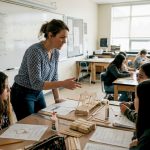
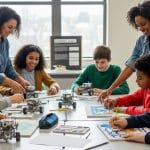
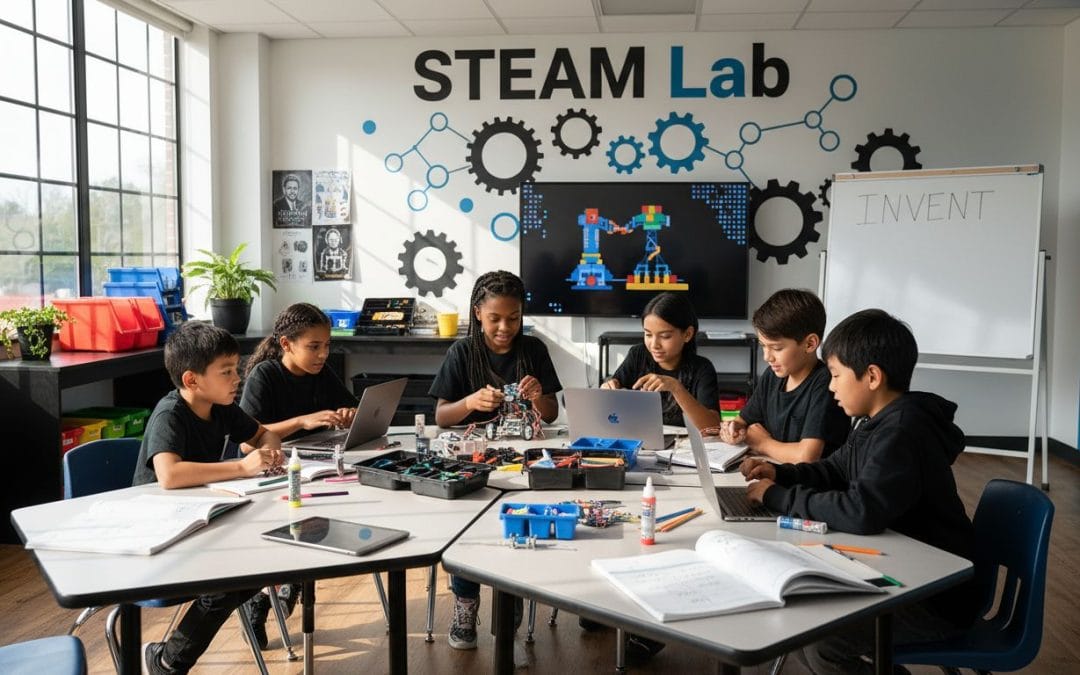
Hands-on STEAM learning transforms traditional education by immersing students in interactive, multidisciplinary experiences that go far beyond textbook knowledge. Hands-on learning strategies prioritize active engagement, allowing students to explore complex concepts through direct manipulation, experimentation, and creative problem solving.
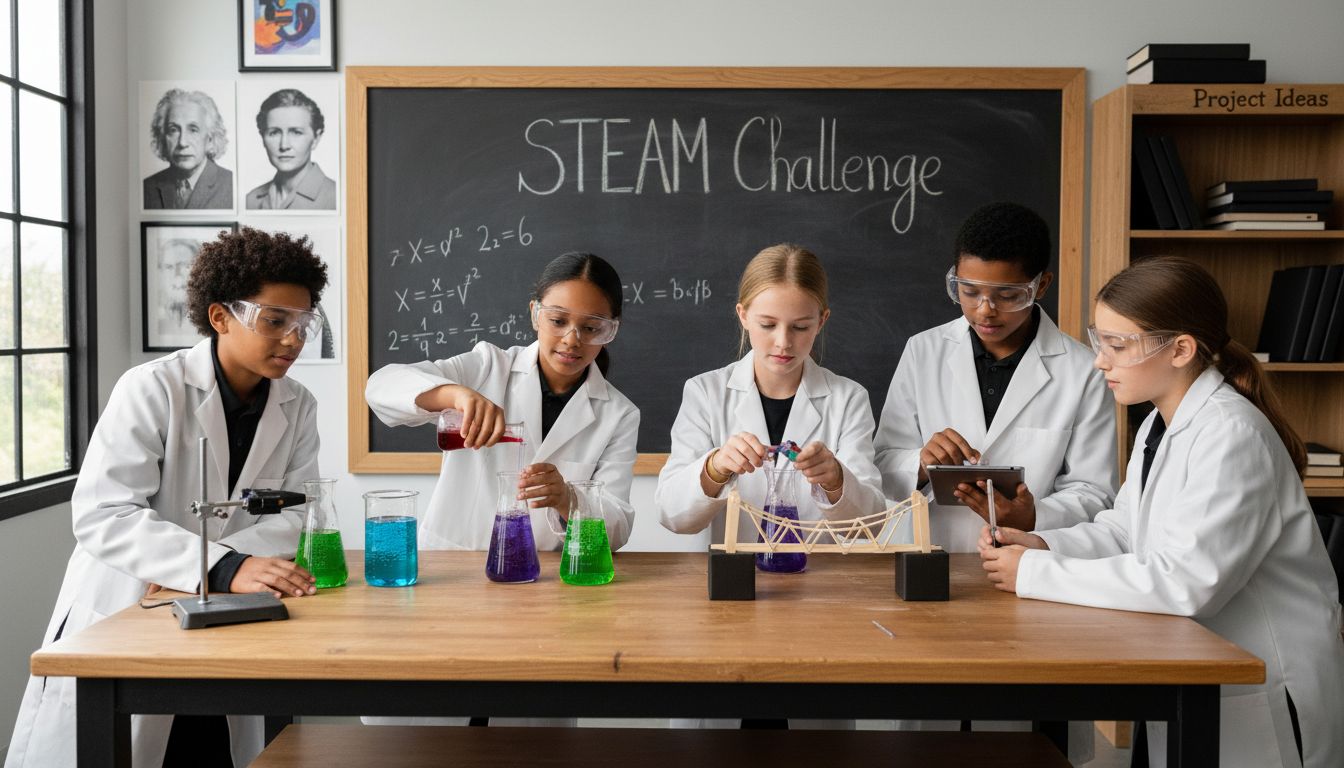
The core principles of effective hands-on STEAM learning center on interactive learning experiences that integrate multiple disciplines seamlessly. Authentic problem solving becomes the cornerstone of this approach, where students tackle real-world challenges using scientific inquiry, technological tools, engineering design processes, artistic creativity, and mathematical reasoning. By mimicking professional workflows, students develop critical thinking skills that extend well beyond traditional academic boundaries.
Key elements of successful hands-on STEAM learning include:
- Design thinking approaches that encourage iterative problem solving
- Curriculum integration across scientific and artistic domains
- Emphasis on student-driven exploration and innovation
- Use of digital technologies and contemporary learning tools
- Promotion of collaborative learning environments
In the Trenton suburbs, schools can implement these principles by creating dynamic learning spaces that encourage curiosity, experimentation, and interdisciplinary thinking. By embracing hands-on STEAM methodologies, educators prepare students to become adaptable, creative professionals capable of addressing complex challenges in an increasingly interconnected world.
Role of Assembly Shows in Student Engagement
Assembly shows represent a powerful mechanism for transforming student learning experiences, particularly within STEAM education frameworks. Interactive assemblies serve as dynamic educational platforms that break traditional classroom barriers, offering immersive experiences that spark curiosity and encourage active participation among students in the Trenton suburbs.
These engaging performances go beyond entertainment, strategically designed to introduce complex scientific and technological concepts through memorable, hands-on demonstrations. By incorporating elements like the Supermarket Science and Balloon Air Talk programs, assembly shows create multisensory learning environments that translate abstract academic principles into tangible, comprehensible experiences. Students witness real-world applications of STEAM concepts, transforming theoretical knowledge into practical understanding.
Key benefits of assembly shows in student engagement include:
- Providing interactive learning experiences outside traditional classroom settings
- Introducing complex concepts through visually stimulating demonstrations
- Encouraging student curiosity and exploratory thinking
- Bridging theoretical knowledge with practical applications
- Creating memorable educational moments that inspire further learning
In the Trenton suburbs, schools can leverage these assembly shows as critical educational tools that not only entertain but fundamentally transform how students perceive and interact with scientific, technological, and mathematical concepts. By making learning an exciting, dynamic experience, these shows play a crucial role in developing the next generation of innovative thinkers and problem solvers.
Spotlight on Supermarket Science and More
Supermarket Science represents a groundbreaking approach to STEAM education, transforming everyday shopping experiences into dynamic learning opportunities for students in the Trenton suburbs. Educational resources like TeachEngineering demonstrate how hands-on, real-world experiences can make complex scientific concepts accessible and engaging for K-12 learners.
This innovative program goes beyond traditional classroom instruction by integrating mathematical calculations, technological observations, and scientific reasoning into a familiar environment. Students explore concepts like measurement, nutrition, economics, and inventory management through interactive demonstrations that turn a typical grocery store into a living laboratory. By connecting academic principles to practical scenarios, Supermarket Science helps students understand how STEAM disciplines intersect in real-world settings.
Key learning objectives of Supermarket Science include:
- Applying mathematical calculations in practical contexts
- Understanding food science and nutritional principles
- Exploring economic concepts through product analysis
- Developing observation and data collection skills
- Connecting multiple academic disciplines through a single experience
In the Trenton suburbs, programs like Supermarket Science, Mathical Mystery Tour, and Balloon Air Talk are revolutionizing educational approaches. These interactive experiences demonstrate that learning can be dynamic, enjoyable, and deeply connected to students’ everyday experiences, ultimately preparing them for future academic and professional challenges.
Planning High-Energy STEAM Assemblies in Trenton NJ
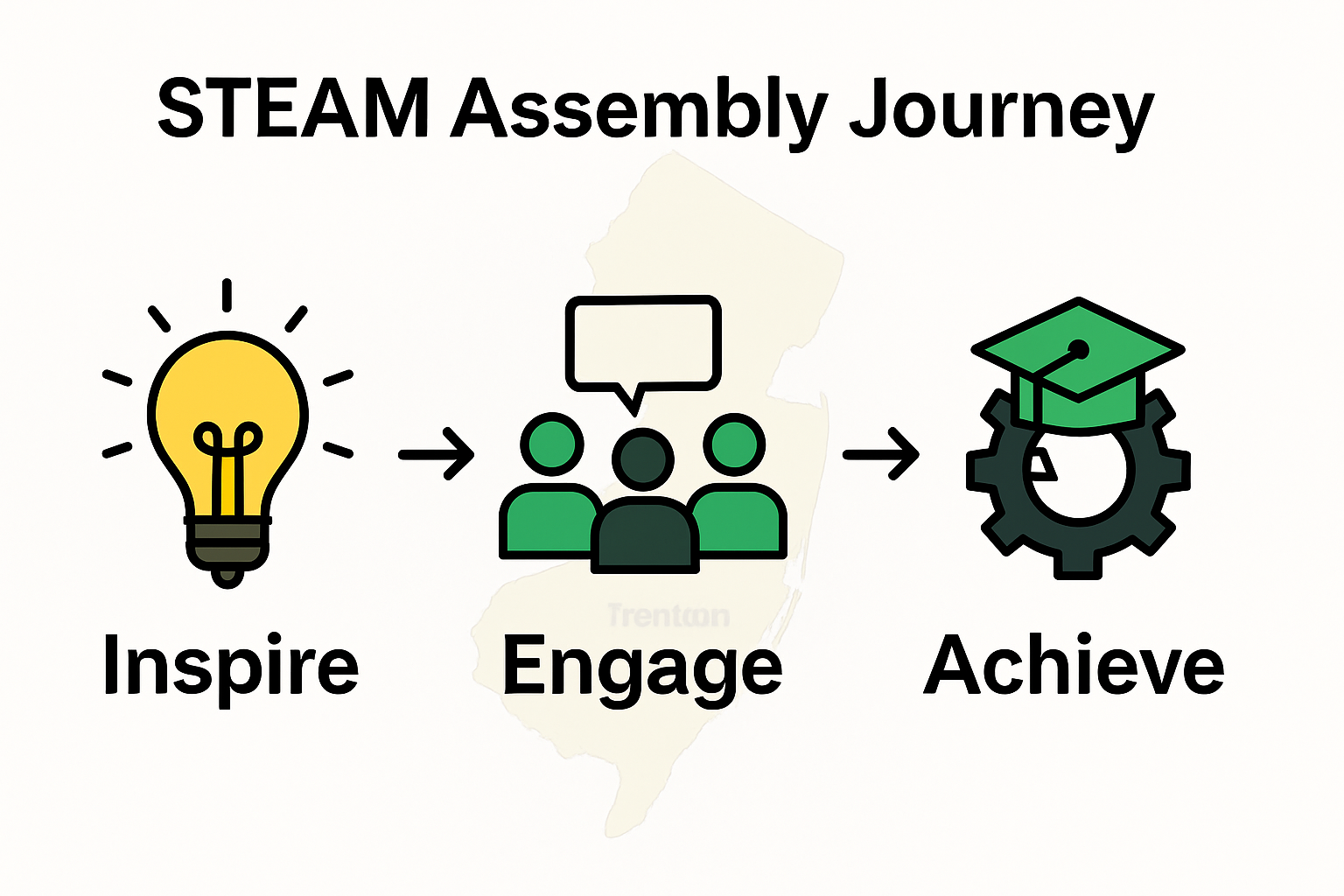
Designing high-energy STEAM assemblies for Trenton schools requires strategic planning and innovative approaches that captivate student interest. Dynamic educational tools enable educators to create tailored experiences that transform traditional learning environments into interactive exploration zones, particularly in suburban settings like the Trenton area.
Successful STEAM assemblies integrate multiple disciplines through engaging, hands-on demonstrations that make complex concepts accessible and exciting. Programs like Supermarket Science, Balloon Air Talk, and Mathical Mystery Tour exemplify this approach by turning abstract scientific principles into tangible, memorable experiences. These assemblies strategically blend performance, technology, and interactive learning to spark curiosity and encourage students to see scientific exploration as an adventurous journey.
Key considerations for planning high-energy STEAM assemblies include:
- Aligning content with state educational standards
- Creating interactive, multisensory learning experiences
- Incorporating real-world problem solving scenarios
- Designing age-appropriate scientific demonstrations
- Ensuring active student participation and engagement
In the Trenton suburbs, schools can leverage these innovative assembly strategies to transform traditional educational approaches, making learning a dynamic, collaborative experience that inspires future scientists, engineers, and creative thinkers. By prioritizing student engagement and interactive learning, these assemblies become powerful catalysts for academic curiosity and interdisciplinary understanding.
Bring STEAM Education to Life in Your School Today
Many schools in the Trenton suburbs face the challenge of making STEAM education engaging while connecting multiple disciplines through hands-on exploration and real-world problem solving. This article highlights the importance of interactive assemblies like Supermarket Science and Balloon Air Talk to inspire student curiosity and creativity. You want to empower your students with memorable learning experiences that foster critical thinking and collaborative skills.
Academic Entertainment offers expertly designed STEAM educational assemblies that turn complex concepts into captivating, multisensory shows tailored to K-12 learners. These programs combine science, technology, engineering, arts, and math into energized performances that ignite passion and deepen understanding. Schools can now overcome the challenge of making STEAM accessible and exciting with our trusted assemblies backed by over 40 years of experience.
Explore how our innovative assemblies can transform your school’s approach to STEAM education by visiting Academic Entertainment. Take the next step toward an inspiring academic year by booking an interactive assembly that brings hands-on STEAM learning to your students. Discover the difference engaging educational entertainment makes today.
Frequently Asked Questions
What is STEAM education?
STEAM education integrates Science, Technology, Engineering, Arts, and Mathematics into a cohesive learning framework, promoting interdisciplinary problem-solving and critical thinking skills in students.
How does hands-on STEAM learning enhance student engagement?
Hands-on STEAM learning prioritizes active engagement through interactive, multidisciplinary experiences that involve direct manipulation, experimentation, and real-world problem solving, making complex concepts more accessible and relatable for students.
What are the benefits of using assembly shows in STEAM education?
Assembly shows provide interactive learning experiences, introduce complex concepts through memorable demonstrations, encourage curiosity and exploratory thinking, and bridge theoretical knowledge with practical applications, all of which enhance student engagement and learning.
How can schools implement successful STEAM programs?
Schools can implement successful STEAM programs by designing interdisciplinary curricula, creating hands-on learning experiences, encouraging student-driven inquiry, and utilizing dynamic educational tools like assembly shows that foster collaboration and innovative thinking.
Recommended
- Understanding Are Your Programs Tied to STEM/STEAM Learning Goals? – Academic Entertainment
- 10 Inspiring Examples of Educational Programs – Academic Entertainment
- What is a Virtual School Program? Understanding Its Impact – Academic Entertainment
- 7 Engaging STEM Assembly Examples for Educators – Academic Entertainment