

Over 80 percent of U.S. public schools now offer some form of after-school programming, reflecting the growing demand for learning that goes beyond the classroom. For many families, these programs are more than a convenience. They offer safe, structured spaces where students discover new skills, build confidence, and get extra academic support. Understanding after-school enrichment can help parents, educators, and students tap into opportunities that spark curiosity and support growth in every area of life.
Key Takeaways
| Point | Details |
|---|---|
| Growth in After-School Programs | 87% of U.S. public schools provide after-school programs, with 64% focused on academics, highlighting their critical role in education. |
| Variety of Enrichment Activities | After-school programs encompass academic, cultural, and holistic development areas, addressing diverse student needs and interests. |
| Benefits for Students and Schools | These programs enhance academic performance, social-emotional skills, and community engagement while also reducing unsupervised time. |
| Key Implementation Considerations | Successful programs require curriculum alignment, measurable objectives, safety protocols, and adaptive structures to cater to various student needs. |
Defining After-School Enrichment Programs
After-school enrichment programs are structured educational activities designed to extend learning beyond traditional classroom hours, offering students additional opportunities for academic, social, and personal development. According to the National Center for Education Statistics (nces.ed.gov), an impressive 87% of U.S. public schools currently provide some type of after-school programming during the 2023-24 school year, with 64% specifically offering academically focused programs like academic assistance and targeted enrichment.
These programs go far beyond simple supervision, creating dynamic learning environments that complement standard classroom instruction. After-school enrichment represents a strategic approach to student engagement, providing structured activities that build upon core academic curriculum while introducing new skills, experiences, and learning modalities. The Afterschool Alliance emphasizes that these programs offer unique environments and resources that extend classroom learning without merely replicating existing educational approaches.
Typical after-school enrichment programs often include a diverse range of activities designed to support holistic student development:
- Academic skill reinforcement
- STEM and technology exploration
- Arts and creative expression
- Physical fitness and sports
- Leadership and character development
- Language and cultural learning
- Social-emotional skill building
By providing these comprehensive learning opportunities, after-school enrichment programs create safe, stimulating spaces where students can explore interests, develop new competencies, and receive personalized academic support outside traditional classroom constraints.

Common Types and Program Categories
According to the files from the Eric Institute of Education Sciences, after-school enrichment programs encompass a remarkable diversity of program types designed to support comprehensive student development. These programs strategically address multiple dimensions of student growth beyond traditional academic instruction, creating targeted learning experiences that cater to varied student needs and interests.
Academic Enrichment Programs represent the foundational category of after-school offerings, focusing on core skill development and academic reinforcement. The National Center for Education Statistics identifies several key focus areas for these programs, which typically include:
- Tutoring in core subjects like mathematics, reading, and science
- Homework assistance centers
- Computer and technology instruction
- College awareness and preparation initiatives
- Language learning programs
Cultural and Creative Enrichment Programs provide alternative pathways for student engagement, emphasizing artistic expression, cultural understanding, and personal skill development. These programs often include:
- Fine arts instruction (music, drama, visual arts)
- Cultural and ethnic activity exploration
- Youth leadership development
- Community service and volunteer opportunities
- Performing arts training
Beyond academic and creative domains, many after-school programs incorporate holistic development categories that address social-emotional learning and personal growth. These specialized programs focus on critical life skills such as conflict resolution, character building, health education, and mentorship, ensuring students receive comprehensive support that extends well beyond traditional classroom learning experiences. Learn more about the comprehensive benefits of these programs in our guide on school enrichment programs.
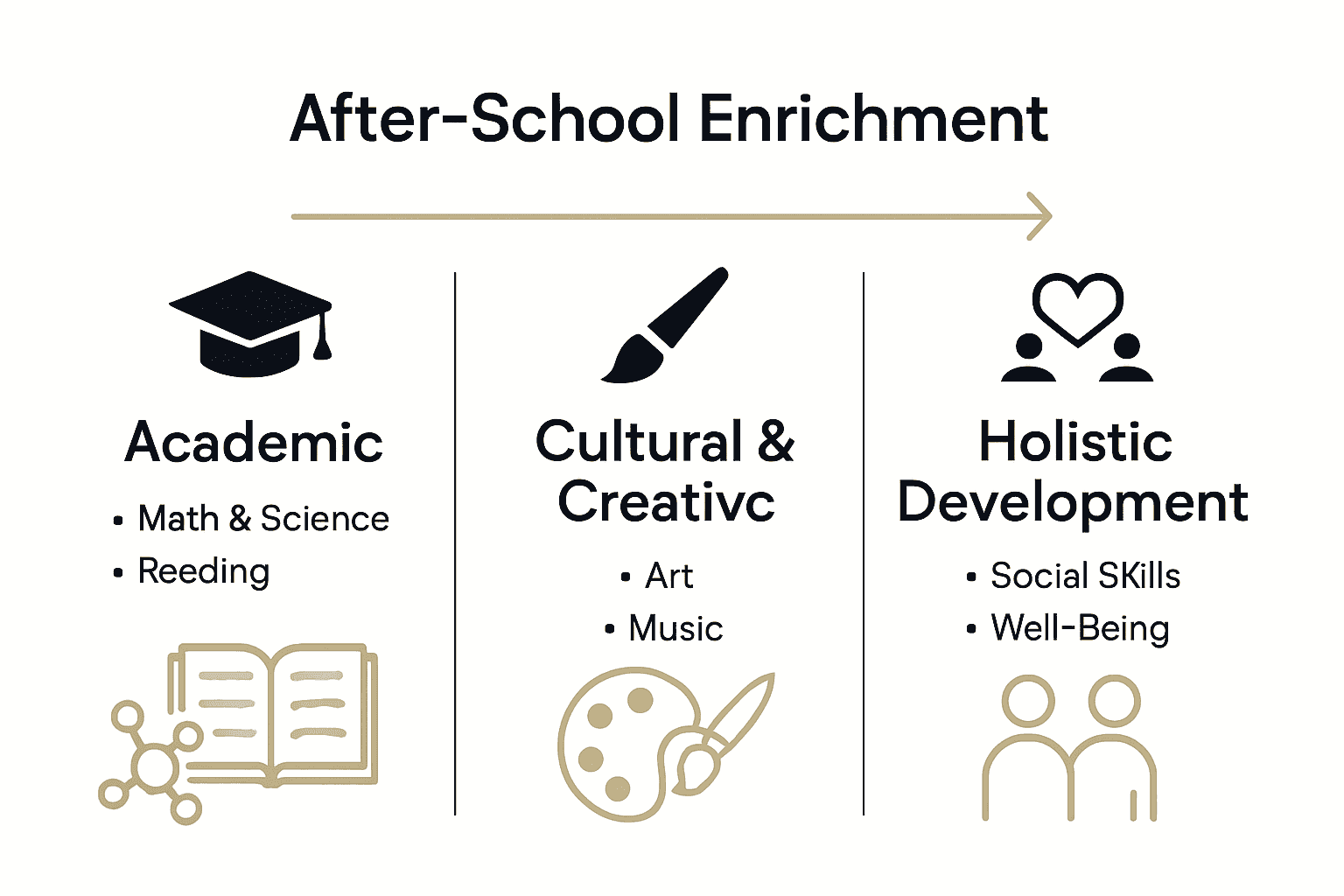
Here’s a summary of the most common after-school enrichment program categories:
| Program Category | Main Focus Areas | Typical Activities |
|---|---|---|
| Academic Enrichment | Core academics Skill building | Tutoring Homework help Tech instruction |
| Cultural & Creative | Arts Cultural awareness Leadership | Music & drama Cultural clubs Volunteer work |
| Holistic Development | Social-emotional skills Personal growth | Mentoring Conflict resolution Health education |
Key Benefits for Students and Schools
According to the Afterschool Alliance, after-school enrichment programs provide unique learning environments that build upon traditional classroom instruction, offering students innovative opportunities for engagement and personal growth. These programs go beyond simple academic reinforcement, creating comprehensive support systems that benefit both individual students and broader educational institutions.
Student-Centered Benefits include critical developmental advantages that extend across multiple domains:
- Academic skill enhancement
- Improved social and emotional competencies
- Increased self-confidence and motivation
- Safe, structured environments during non-school hours
- Personalized learning experiences
- Exploration of diverse interests and talents
- Reduced risk of academic disengagement
Institutional Benefits for schools and educational organizations are equally significant. Research from educational files highlights that successful programs demonstrate strong connections between school-day curriculum and after-school programming, creating sustainable educational ecosystems that support holistic student development.
These programs also generate substantial institutional advantages, including:
- Enhanced student retention rates
- Improved overall academic performance
- Stronger community and parent engagement
- Expanded educational resources and learning opportunities
- Development of comprehensive support networks
- Reduction of students’ unsupervised time after school
By integrating innovative learning approaches, after-school enrichment programs transform traditional educational models, creating dynamic environments that support student growth and institutional excellence. Learn more about the comprehensive benefits of after-school programs in our detailed guide.
Implementing Effective Enrichment Activities
According to research from educational files, successful after-school enrichment programs require a strategic approach that goes beyond simple activity planning. The most effective programs demonstrate key characteristics such as strong curriculum alignment, clear goal setting, sustainable management, and rigorous legal compliance.
Implementing successful enrichment activities involves several critical considerations:
- Align activities with core academic curriculum
- Develop clear, measurable program objectives
- Create diverse and engaging learning experiences
- Ensure consistent program quality and supervision
- Integrate student feedback and interests
- Maintain flexible and adaptive program structures
- Establish robust assessment and evaluation mechanisms
The National Center for Education Statistics highlights the importance of program diversity, recommending a multifaceted approach that incorporates various focus areas including:
- Academic instruction and tutoring
- Cultural and ethnic activities
- Fine arts and creative expression
- Mentorship programs
- Violence prevention and character development
School administrators and program coordinators must also prioritize creating inclusive environments that cater to different learning styles, skill levels, and student interests. This requires careful program design, ongoing staff training, and a commitment to adaptive, student-centered approaches. For comprehensive strategies on promoting student engagement, explore our guide on creating impactful school events.
Safety, Supervision, and Legal Considerations
According to research from educational files, successful after-school enrichment programs must prioritize comprehensive safety protocols, rigorous legal compliance, and consistent supervision. Meeting legal requirements is not just a bureaucratic necessity, but a critical component of creating trustworthy, secure learning environments for students.
Key Safety and Supervision Considerations for after-school programs include:
- Comprehensive background checks for all staff
- Maintaining appropriate student-to-staff ratios
- Developing clear emergency response protocols
- Implementing robust communication systems
- Creating detailed attendance tracking mechanisms
- Ensuring physical facility safety and accessibility
- Developing comprehensive medical and behavioral intervention plans
The National Center for Education Statistics emphasizes the importance of proactive approaches to student safety, particularly in programs focused on violence prevention and character development. This involves creating structured environments that not only protect students physically but also support their emotional and social well-being.
Legal compliance requires a multifaceted approach that addresses various regulatory requirements:
- Adherence to state and federal educational guidelines
- Compliance with child protection laws
- Maintaining proper insurance coverage
- Following disability accommodation regulations
- Protecting student privacy and data security
- Meeting mandated reporting requirements
School administrators must develop comprehensive policies that balance student engagement with rigorous safety standards. Learn more about creating safe and engaging school environments in our guide on promoting student engagement.
Transform Your After-School Enrichment Programs with Engaging Educational Entertainment
After-school enrichment programs aim to expand learning beyond the classroom by offering academic support and social-emotional growth opportunities. Yet many schools face challenges in creating dynamic, enjoyable experiences that also align with their educational goals. If your program needs a boost in student engagement or a fresh way to reinforce core subjects, focusing on diverse and interactive activities can make all the difference. Incorporating live or virtual shows in areas like character development, health education, and cultural awareness directly supports the holistic development emphasized in these programs.
Discover how Academic Entertainment has over 40 years of experience helping schools across the U.S. bring after-school enrichment to life through tailored performances. From science and magic to music and dance, our educational programs are designed to captivate students while reinforcing important lessons covered in your enrichment curriculum. Don’t wait to create memorable experiences that strengthen academic skills and build character — explore our offerings and easily customize your next event. Visit Academic Entertainment now to find the perfect assembly that enhances your after-school learning and helps your students thrive.
Frequently Asked Questions
What are after-school enrichment programs?
After-school enrichment programs are structured activities designed to extend learning beyond classroom hours, focusing on academic, social, and personal development in a dynamic environment.
What types of activities are included in after-school enrichment programs?
Typical activities include academic skill reinforcement, STEM exploration, arts and creative expression, physical fitness, leadership development, language learning, and social-emotional skill building.
How do after-school enrichment programs benefit students?
These programs enhance academic skills, boost social and emotional competencies, increase self-confidence, provide safe environments, offer personalized experiences, and reduce the risk of academic disengagement.
What key considerations are important for implementing effective enrichment activities?
Successful enrichment activities should align with core academic curriculum, set clear program objectives, ensure consistent quality, gather student feedback, and maintain safety and legal compliance.
Recommended
- Understanding What Are Enrichment Programs and Their Impact – Academic Entertainment
- What are the Benefits of After School Programs for Kids? – Academic Entertainment
- 5 Benefits of School Enrichment Programs – Academic Entertainment
- Fun After School Program Ideas – Academic Entertainment


