
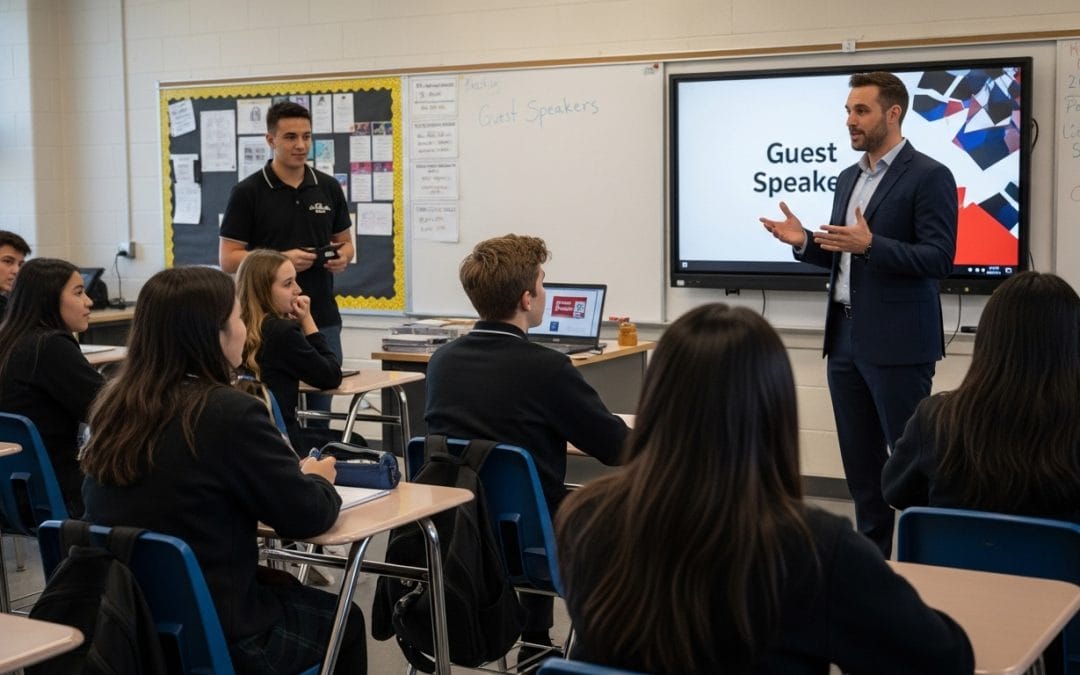
Schools bring in guest speakers for more than just a break from routine. Students exposed to guest speakers are up to 29 percent more likely to report increased motivation and clearer career goals, according to a peer-reviewed SAGE Open study. That sounds like a huge deal for learning. But most people overlook that these speakers also transform the entire school’s connection with the local community and open doors most students never knew existed.
Table of Contents
- What Are Guest Speakers And Their Purpose In Schools?
- The Importance Of Diverse Perspectives In Education
- How Guest Speakers Enhance Student Learning Experiences
- Building Community Connections Through Guest Speakers
Quick Summary
| Takeaway | Explanation |
|---|---|
| Guest speakers enhance real-world learning | They connect academic theories to practical applications, enriching student understanding of complex concepts. |
| Diversity of perspectives boosts learning | Exposing students to varied viewpoints fosters critical thinking and empathy, preparing them for global society. |
| Guest speakers bridge school and community | They facilitate connections between education and local industries, enhancing civic engagement and professional networking. |
| Authentic experiences promote intellectual growth | Engaging presentations encourage intellectual curiosity and practical skills beyond traditional education methods. |
What are Guest Speakers and Their Purpose in Schools?
Guest speakers represent external professionals, experts, and community leaders who visit educational institutions to share specialized knowledge, personal experiences, and professional insights directly with students. Their involvement goes beyond traditional classroom instruction, creating dynamic learning opportunities that bridge academic concepts with real-world applications.
Defining Guest Speaker Roles
In the educational landscape, guest speakers serve multiple critical functions. Youth motivational speakers are typically professionals who bring unique perspectives that complement standard curriculum. According to Pennsylvania State University, these presenters can enhance student learning by:
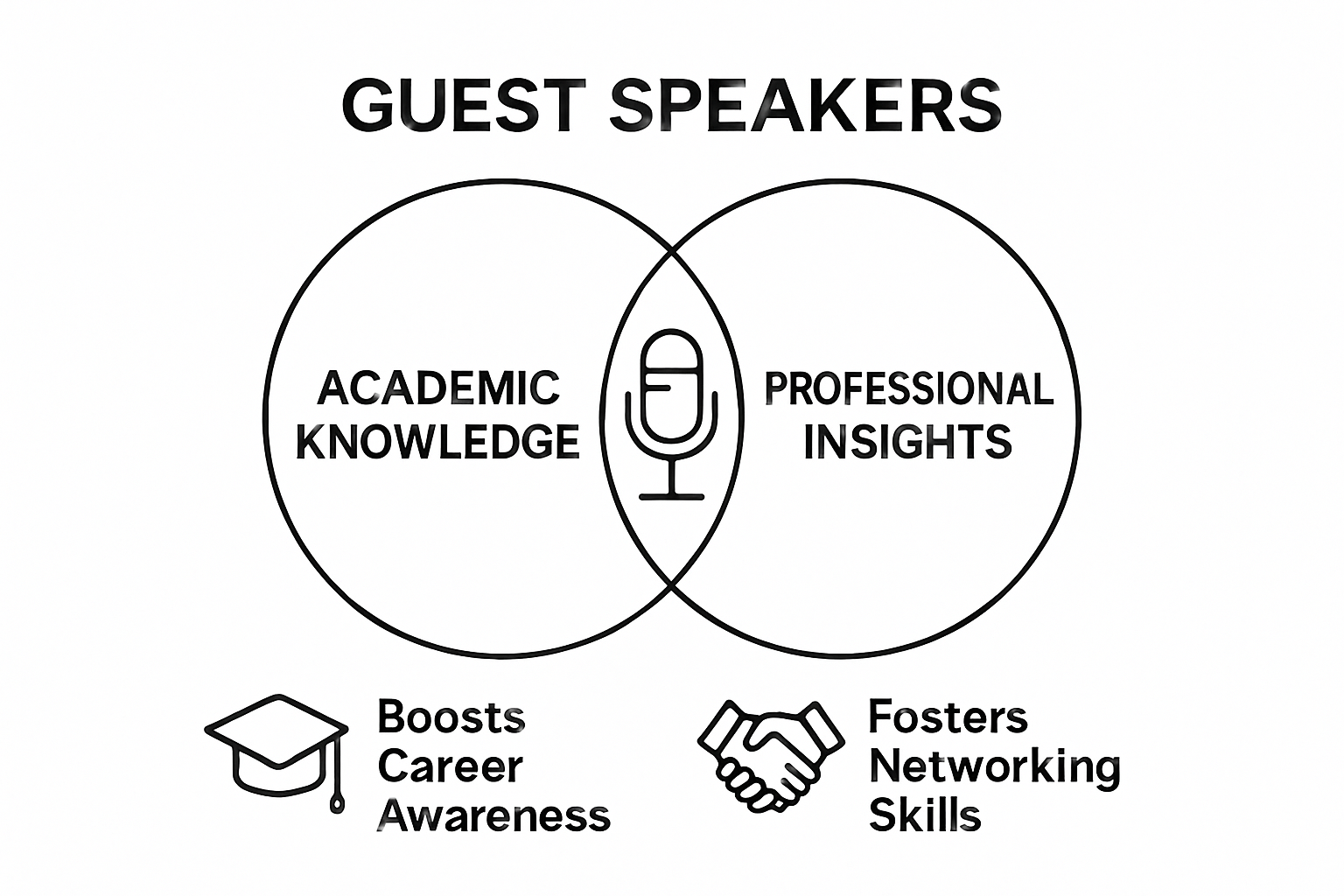
- Connecting academic knowledge with professional practice
- Providing diverse perspectives from various industries
- Offering inspiration and motivation beyond textbook learning
Purpose and Educational Impact
The role of guest speakers in schools extends far beyond simple information sharing. These professionals help students understand practical applications of their academic learning, expose them to potential career pathways, and provide mentorship through storytelling and personal experiences. By introducing students to professionals from different backgrounds, schools create opportunities for:
- Career exploration and professional networking
- Expanding students’ understanding of real-world challenges
- Developing critical thinking skills through external perspectives
Through carefully curated presentations, guest speakers transform traditional educational environments into interactive learning spaces where students can gain insights that textbooks cannot provide. Their contributions represent a powerful supplementary educational strategy that prepares students for future professional and personal challenges.
Below is a table summarizing the distinct roles and educational impacts of guest speakers in schools to clarify how they complement standard classroom instruction.
| Role of Guest Speaker | Explanation |
|---|---|
| Connect Academic Knowledge | Bridge theoretical classroom concepts with professional and real-world applications |
| Provide Diverse Perspectives | Offer insights from different industries, cultures, and backgrounds |
| Inspire and Motivate | Share personal stories and career journeys to encourage student aspirations |
| Facilitate Career Exploration | Introduce students to various career pathways and networking opportunities |
| Develop Critical Thinking | Challenge students to consider new viewpoints and question assumptions |
| Mentor Through Storytelling | Use personal and professional narratives to illustrate overcoming challenges and achieving success |
The Importance of Diverse Perspectives in Education
Diverse perspectives represent a fundamental cornerstone of transformative educational experiences, enabling students to develop broader understanding, critical thinking skills, and cultural competence. By intentionally incorporating varied viewpoints and experiences into learning environments, educational institutions can create powerful opportunities for intellectual growth and social development.
Understanding Perspective Diversity
Perspective diversity goes beyond demographic representation, encompassing a rich tapestry of lived experiences, professional backgrounds, cultural insights, and unique problem-solving approaches. Understanding cultural diversity in education helps students recognize the complexity of human experiences and challenges traditional single-narrative learning models. According to Cornell University’s Center for Teaching Innovation, engaging with diverse viewpoints is essential for preparing students to participate effectively in a multifaceted, global society.
Benefits of Multifaceted Learning Environments
Integrating diverse perspectives into educational settings produces multiple significant advantages for student development:
- Enhanced critical thinking skills through exposure to different interpretations
- Improved empathy and cross-cultural communication abilities
- Preparation for collaborative professional environments
- Development of more nuanced problem-solving strategies
By deliberately creating learning spaces that welcome multiple perspectives, educators can help students develop intellectual flexibility, cultural sensitivity, and a more comprehensive understanding of complex social dynamics. These experiences prepare students not just academically, but as engaged, thoughtful global citizens capable of navigating increasingly interconnected and diverse professional and personal landscapes.
This table outlines key benefits of integrating diverse perspectives and viewpoints into educational environments, helping readers quickly compare multifaceted advantages for students.
| Benefit of Diverse Perspectives | Description |
|---|---|
| Enhanced Critical Thinking | Students engage with differing interpretations, strengthening analytical skills |
| Improved Empathy | Exposure to varied backgrounds builds understanding and compassion |
| Cross-Cultural Communication | Develops ability to interact in multicultural, global contexts |
| Collaborative Preparation | Fosters teamwork skills necessary for modern professional environments |
| Nuanced Problem-Solving | Offers multiple approaches to addressing complex academic or real-world challenges |
| Intellectual Flexibility | Prepares students to adapt to novel or changing situations |
How Guest Speakers Enhance Student Learning Experiences
Guest speakers serve as transformative educational catalysts, bridging theoretical knowledge with practical, real-world insights that traditional classroom instruction cannot fully capture. By introducing students to professionals from diverse backgrounds, these presentations create immersive learning opportunities that extend far beyond standard curriculum frameworks.
Creating Authentic Learning Connections
Authentic learning experiences emerge when students can directly connect academic concepts with professional application. Motivational keynotes for high school students demonstrate how external experts can translate complex ideas into understandable, engaging narratives. According to Pennsylvania State University, these interactions provide students with invaluable opportunities to:
- Observe professional communication strategies
- Understand industry-specific problem-solving approaches
- Gain insights into career pathway possibilities
Expanding Cognitive and Experiential Horizons
Guest speakers contribute significantly to student development by introducing perspectives that challenge existing knowledge frameworks. Their presentations encourage students to think critically, question assumptions, and develop more nuanced understanding of complex subjects. By sharing personal experiences, professional challenges, and innovative solutions, these speakers help students:
- Develop intellectual curiosity
- Recognize the practical applications of academic learning
- Build confidence in exploring unfamiliar professional territories
Through carefully curated presentations, guest speakers transform educational environments into dynamic, interactive spaces where learning transcends textbook boundaries. Their contributions represent a powerful strategy for preparing students to navigate increasingly complex professional and personal landscapes with adaptability, insight, and genuine understanding.
Building Community Connections through Guest Speakers
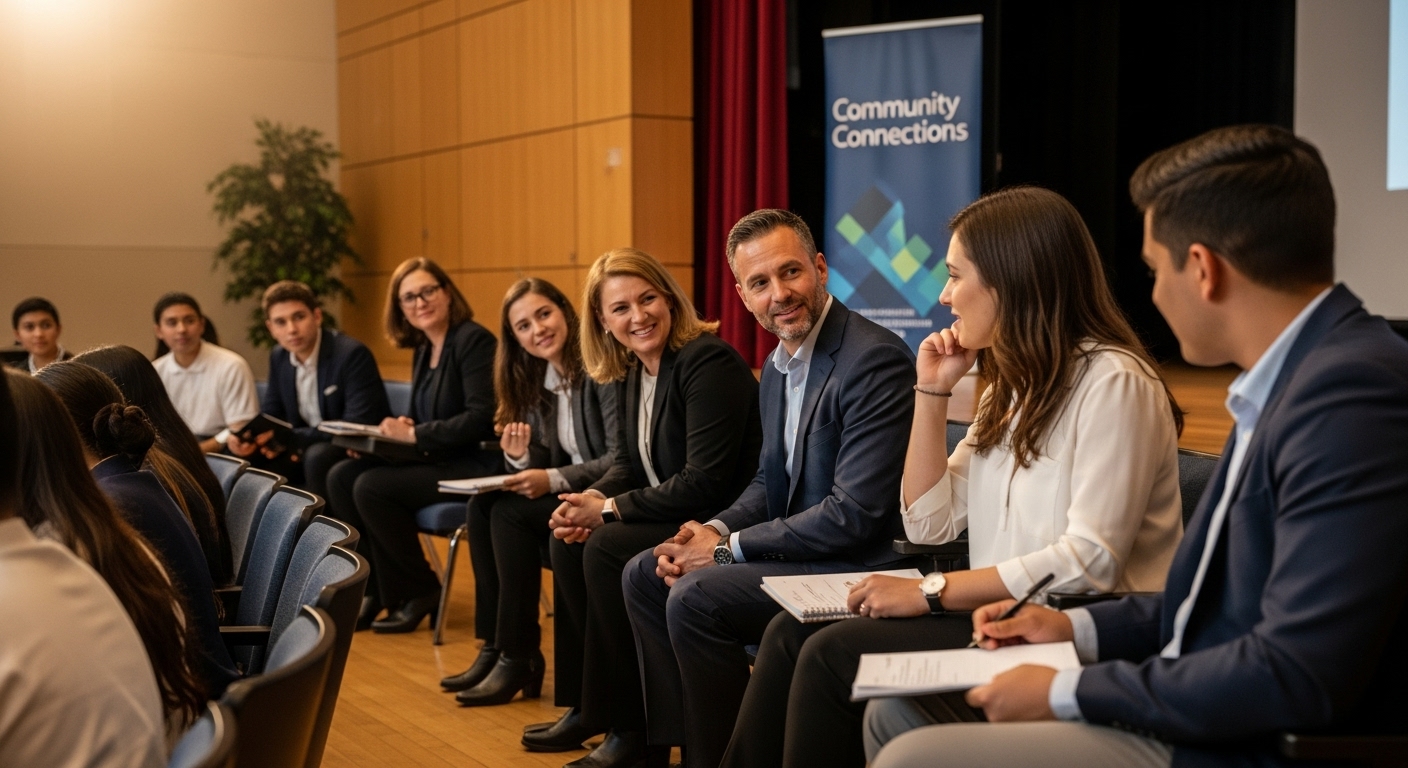
Guest speakers represent more than educational resources. They function as critical bridges connecting academic institutions with broader community networks, creating dynamic pathways for mutual understanding, professional development, and social engagement. By facilitating meaningful interactions between students and local professionals, schools transform traditional learning environments into collaborative platforms for shared growth.
Bridging Educational and Professional Worlds
Effective community connections require intentional strategies that go beyond superficial interactions. Understanding why booking motivational speakers matters reveals the profound impact of carefully selected external presenters who can authentically represent local industries, professional sectors, and community experiences. According to a peer-reviewed study in SAGE Open, guest speakers play a crucial role in:
- Increasing students’ civic engagement
- Providing tangible role models from local communities
- Creating sustained institutional-community relationships
Fostering Reciprocal Learning Environments
Community connections through guest speakers are fundamentally reciprocal processes. Local professionals gain opportunities to shape educational experiences, while students receive direct insights into professional landscapes. These interactions produce multifaceted benefits that extend beyond traditional classroom boundaries:
- Developing professional networks for future opportunities
- Encouraging knowledge exchange between institutions and industries
- Supporting localized workforce development initiatives
By strategically integrating guest speakers, educational institutions transform themselves from isolated learning centers into dynamic community hubs. These interactions represent powerful mechanisms for social mobility, professional preparation, and collaborative knowledge creation that benefit students, professionals, and broader community ecosystems.
Unlock the Transformative Power of Guest Speakers for Your School
Are you searching for a way to close the gap between classroom lessons and real-world experience? The article highlights the real need to connect students with diverse perspectives, give them authentic learning opportunities, and help them envision their future roles in society. Many educators face the challenge of finding guest speakers who not only inspire, but also align with school goals in areas like diversity, character development, and career exploration.
Now is the moment to bring impactful, professional voices to your students. Visit Academic Entertainment to discover a proven platform for thoughtfully curated school assembly programs and guest speaker experiences designed for K-12 audiences. Explore options for youth motivational speakers and learn more about the importance of cultural diversity in education. Take the next step today and elevate your school culture with engaging, hands-on learning that lasts beyond the assembly—start customizing your event with Academic Entertainment now.
Frequently Asked Questions
What are the primary roles of guest speakers in schools?
Guest speakers serve multiple functions, including connecting academic knowledge with real-world applications, providing diverse perspectives, and inspiring students through personal experiences.
How do guest speakers impact student learning experiences?
They enhance learning by bridging theoretical concepts with practical insights, encouraging critical thinking, and expanding students’ understanding of various professions and industries.
Why is perspective diversity important in education?
Perspective diversity enriches learning by exposing students to a variety of viewpoints, fostering empathy, enhancing critical thinking, and preparing them for collaborative environments in their future careers.
How can schools effectively engage guest speakers?
Schools can engage guest speakers by carefully selecting professionals who represent local industries, planning interactive presentations, and ensuring that the guests share relevant experiences that connect to the curriculum.
Recommended
- Youth Motivational Speakers – Academic Entertainment
- Motivational Keynotes Speaker for High School Students – Academic Entertainment
- Understanding Why Book Motivational Speakers Matters – Academic Entertainment
- Motivational Speakers to Inspire Students at Your School Assembly – Academic Entertainment

