Over 60 percent of American K-12 schools report a rise in student engagement after hosting targeted assembly programs. San Antonio event coordinators face the challenge of selecting shows that truly support both academic growth and character development. This article lays out proven steps for choosing and organizing impactful assemblies, featuring insights on programs like Nick Scott and The Wacky Science Show that help transform learning beyond the classroom.
Quick Summary
| Key Point | Explanation |
|---|---|
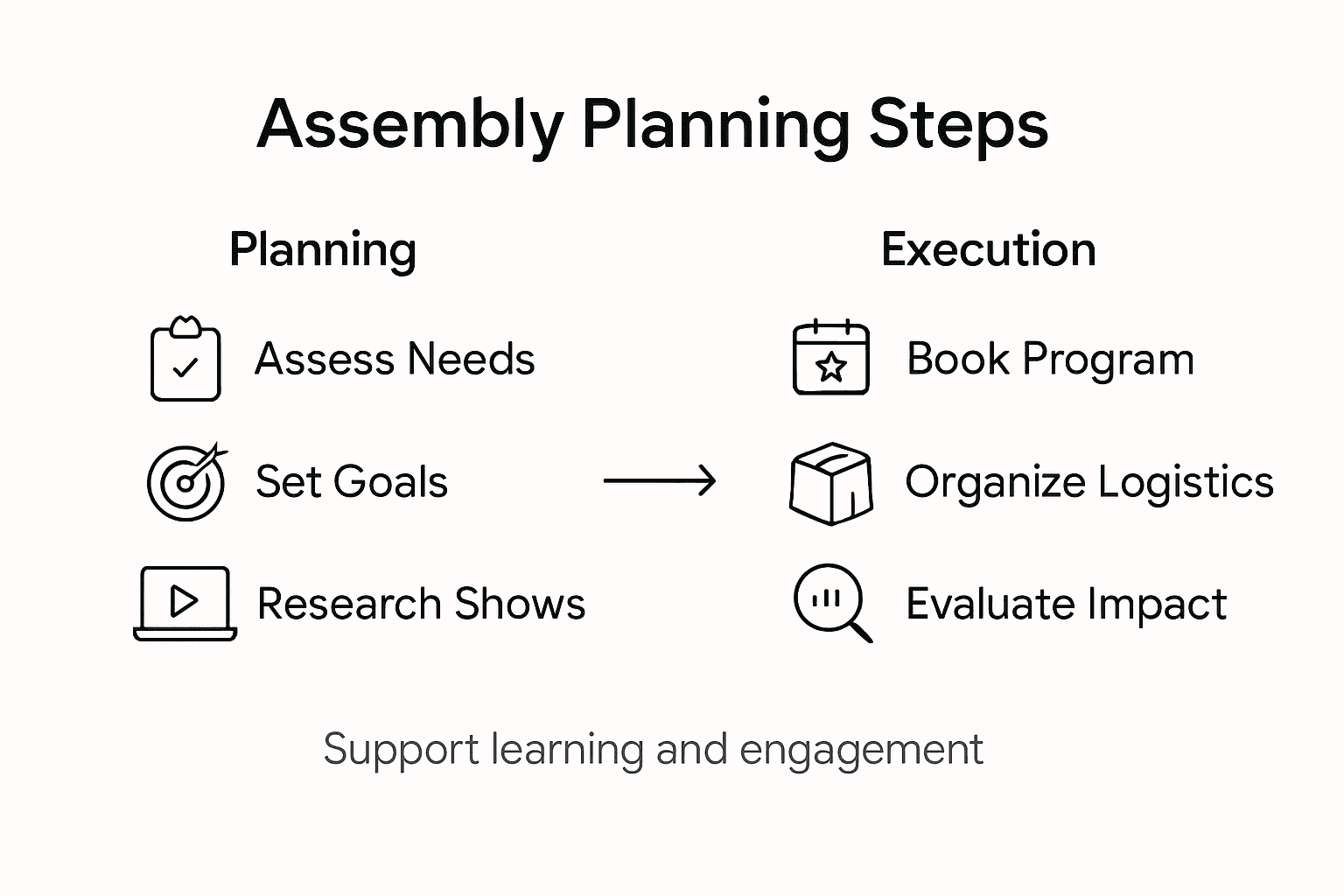
| 1. Assess School and Student Needs | Conduct a needs assessment involving students, teachers, and parents to identify learning goals and interests for assemblies. |
| 2. Select Themed Shows Wisely | Research and choose assembly programs that engage students while aligning with educational objectives such as STEM or character development. |
| 3. Book Recognized Performers | Contact well-reviewed performers like Nick Scott and The Wacky Science Show with clear information on logistics and educational themes. |
| 4. Plan Assembly Logistics Thoroughly | Create a detailed timeline and assign clear roles for staff to ensure a smooth assembly experience for students. |
| 5. Evaluate Assembly Impact Effectively | Use pre and post assembly surveys to measure student engagement and learning outcomes, analyzing changes in attitudes and knowledge. |
Step 1: Assess student and school needs for assemblies
Successfully planning school assemblies starts with understanding your specific educational environment and student requirements. The goal is to develop a targeted approach that maximizes learning potential while keeping students engaged.
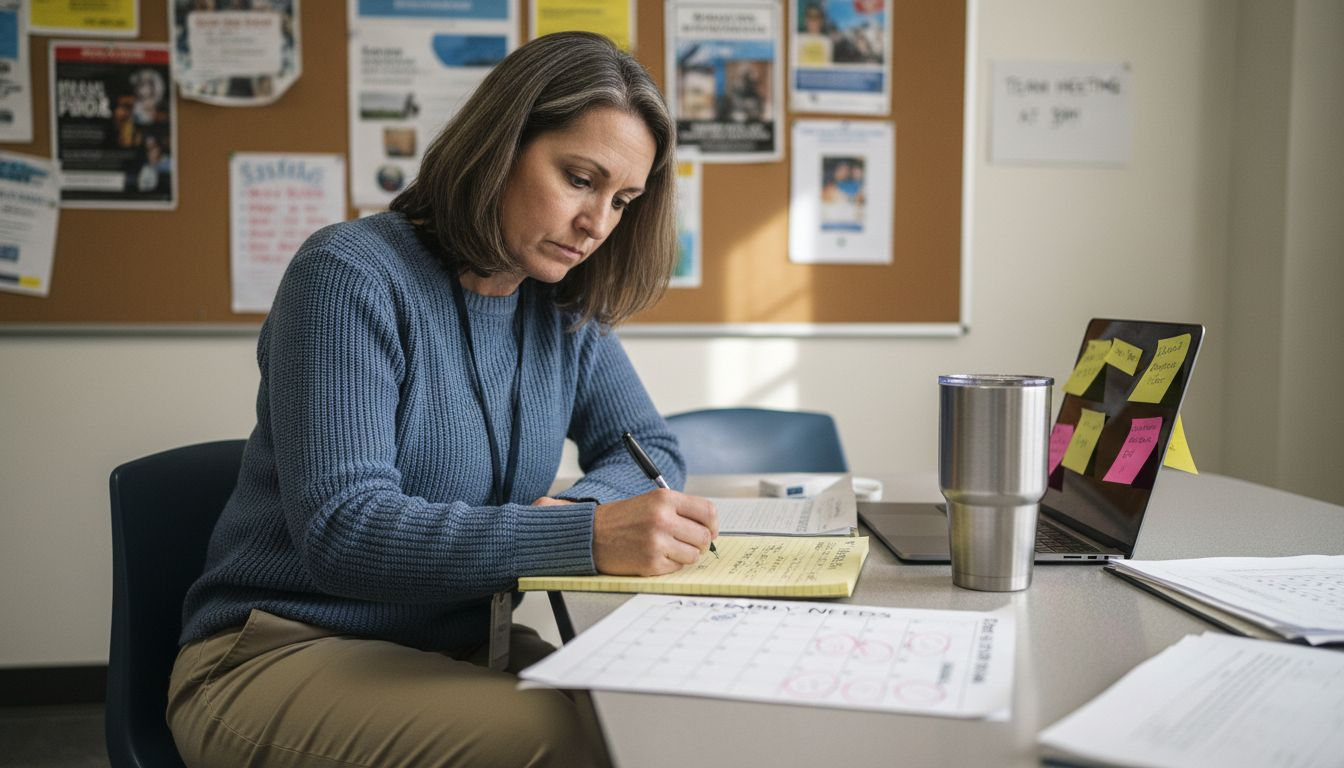
To effectively assess your school’s assembly needs, begin by conducting a comprehensive needs assessment that involves multiple stakeholders. This means gathering input from teachers, administrators, parents, and most importantly students. Use surveys, focus groups, and direct conversations to uncover specific learning objectives, interests, and potential knowledge gaps that an assembly program could address. Pay attention to academic performance data, behavioral trends, and current curriculum themes that might benefit from supplemental educational entertainment.
Review your school’s strategic goals and identify areas where an assembly could provide meaningful support. This might include character development, STEM engagement, cultural awareness, or social emotional learning. Consider the age groups involved and select assembly programs that align with developmental stages and educational standards. Programs like Nick Scott, The Wacky Science Show, and The Laugh Factory offer diverse options that can meet various educational objectives while maintaining student interest.
Pro tip: Create a structured evaluation matrix that scores potential assembly programs against your school’s specific learning goals and student engagement metrics.
Step 2: Research and select engaging themed shows
Selecting the right assembly shows can transform a routine school event into an unforgettable learning experience. Your goal is to find programs that not only entertain but also align with your educational objectives and student interests.
Begin your research by exploring educational entertainment options that support student engagement. Look for programs that combine interactive elements with meaningful content. Specifically for San Antonio schools, consider performers like Nick Scott, The Wacky Science Show, and The Laugh Factory, which offer diverse and engaging presentations. Evaluate each potential show against key criteria such as age appropriateness, curriculum relevance, student learning outcomes, and entertainment value.
Narrow down your selections by reviewing detailed program descriptions, watching performance previews, and checking references from other schools. Pay special attention to shows that offer interactive elements, live demonstrations, or opportunities for student participation. Consider the specific themes your school wants to emphasize like STEM learning, character development, cultural awareness, or social emotional skills. Each assembly should provide more than just entertainment it should spark curiosity, encourage critical thinking, and support your broader educational goals.
Pro tip: Create a scoring rubric that rates potential assembly shows across multiple dimensions including educational value, student engagement potential, and alignment with school learning objectives.
Step 3: Book top programs like Nick Scott and The Wacky Science Show
Booking the perfect assembly show requires strategic planning and careful consideration to ensure you select a program that will captivate and educate your students. Your objective is to transform a standard school event into an extraordinary learning experience that students will remember.
Start by exploring science shows that are proven hits with kids, focusing on performers like Nick Scott, The Wacky Science Show, and The Laugh Factory. Contact these performers directly to discuss availability, program details, and pricing. Request comprehensive information including show duration, age recommendations, technical requirements, and specific educational themes. Verify the performer’s credentials, request references from other schools, and ask about their ability to customize content to match your specific curriculum or school goals.
Prepare for booking by gathering key logistical information from your school administration. Confirm your venue specifications, available time slots, budget constraints, and any special technical needs like sound systems or stage requirements. Create a comparison chart that evaluates each potential performer across multiple dimensions including educational value, student engagement potential, cost effectiveness, and alignment with your school’s learning objectives. This systematic approach will help you make an informed decision that goes beyond simple entertainment.
Here’s a comparison of popular school assembly programs and their distinct benefits:
| Program Name | Educational Focus | Student Engagement Style | Customization |
|---|---|---|---|
| Nick Scott | Character development | Motivational speaking | High |
| The Wacky Science Show | STEM concepts | Interactive experiments | Moderate |
| The Laugh Factory | Social emotional skills | Comedy performances | Moderate |
Pro tip: Schedule performer interviews or preview videos to get a firsthand sense of their presentation style and how well they might connect with your specific student population.
Step 4: Prepare logistics for a smooth assembly day
Successful school assemblies require meticulous planning and coordination to ensure everything runs seamlessly. Your goal is to create a well-organized event that minimizes potential disruptions and maximizes student engagement.
Effective assembly logistics planning involves comprehensive coordination among school staff and detailed technical preparation. Begin by creating a detailed timeline that outlines every aspect of the event from setup to breakdown. Confirm venue specifications including seating arrangements, sound system requirements, and stage setup. Coordinate with your technical team to ensure all necessary equipment like microphones, projectors, and lighting are tested and ready well in advance. Assign specific roles to staff members including setup crew, student supervision, technical support, and cleanup responsibilities.
Establish clear communication protocols with the performance team and school staff. Create a backup plan for potential technical issues or unexpected challenges. Prepare a comprehensive checklist that includes equipment inventory, performer requirements, student movement logistics, and emergency contact information. Review the entire plan with key stakeholders to ensure everyone understands their role and the event flow. Practice the setup and transition processes to identify and resolve potential bottlenecks before the actual assembly day.
Below is a summary of essential logistics tasks for a successful assembly day:
| Logistics Task | Responsible Team | Impact on Event |
|---|---|---|
| Equipment setup | Technical staff | Ensures smooth show |
| Student movement | Supervisors | Maximizes safety |
| Sound & lighting | Audio crew | Improves engagement |
| Emergency prep | All staff | Reduces disruptions |
Pro tip: Conduct a brief rehearsal or walkthrough with key staff members to identify and resolve potential logistical challenges before the actual assembly.
Step 5: Evaluate assembly impact on learning and fun
Assessing the true value of school assemblies requires a strategic and comprehensive approach that goes beyond surface level observations. Your objective is to understand how these events contribute to student learning and overall school experience.
Ongoing assessment strategies recommend regular and varied data collection on student engagement and learning outcomes. Design a multi-dimensional evaluation framework that captures both quantitative and qualitative insights. Develop pre and post assembly surveys for students and teachers that measure knowledge retention, attitude changes, and overall enjoyment. Include specific questions about key learning objectives, memorable moments, and how the assembly content connects to classroom learning. Observe student behavior and participation during the event, noting levels of interaction, attention span, and genuine interest.
Analyze the collected data systematically by comparing student responses, tracking changes in academic performance related to assembly themes, and gathering feedback from teachers about observed student impact. Look for patterns that demonstrate how the assembly influenced student thinking, motivation, or understanding of specific topics. Consider both immediate reactions and long term learning indicators. Invite students to write reflective essays or create presentations about what they learned, providing deeper insights into the assembly’s educational and entertainment value.
Pro tip: Create a standardized evaluation template that can be used across different assembly types to build a comprehensive understanding of assembly effectiveness over time.
Elevate Your San Antonio School Assemblies with Proven Educational Entertainment
Planning assemblies that truly boost learning and fun means addressing key challenges like student engagement, curriculum relevance, and seamless execution. If you are aiming to transform ordinary assembly days into memorable experiences that inspire curiosity and support school goals such as character development or STEM learning you need reliable, tailored programs designed with your students in mind. Academic Entertainment brings over 40 years of expertise partnering with K-12 schools to provide dynamic assembly shows including interactive science performances, motivational speakers like Nick Scott, and engaging cultural acts that connect directly to your school’s unique needs.
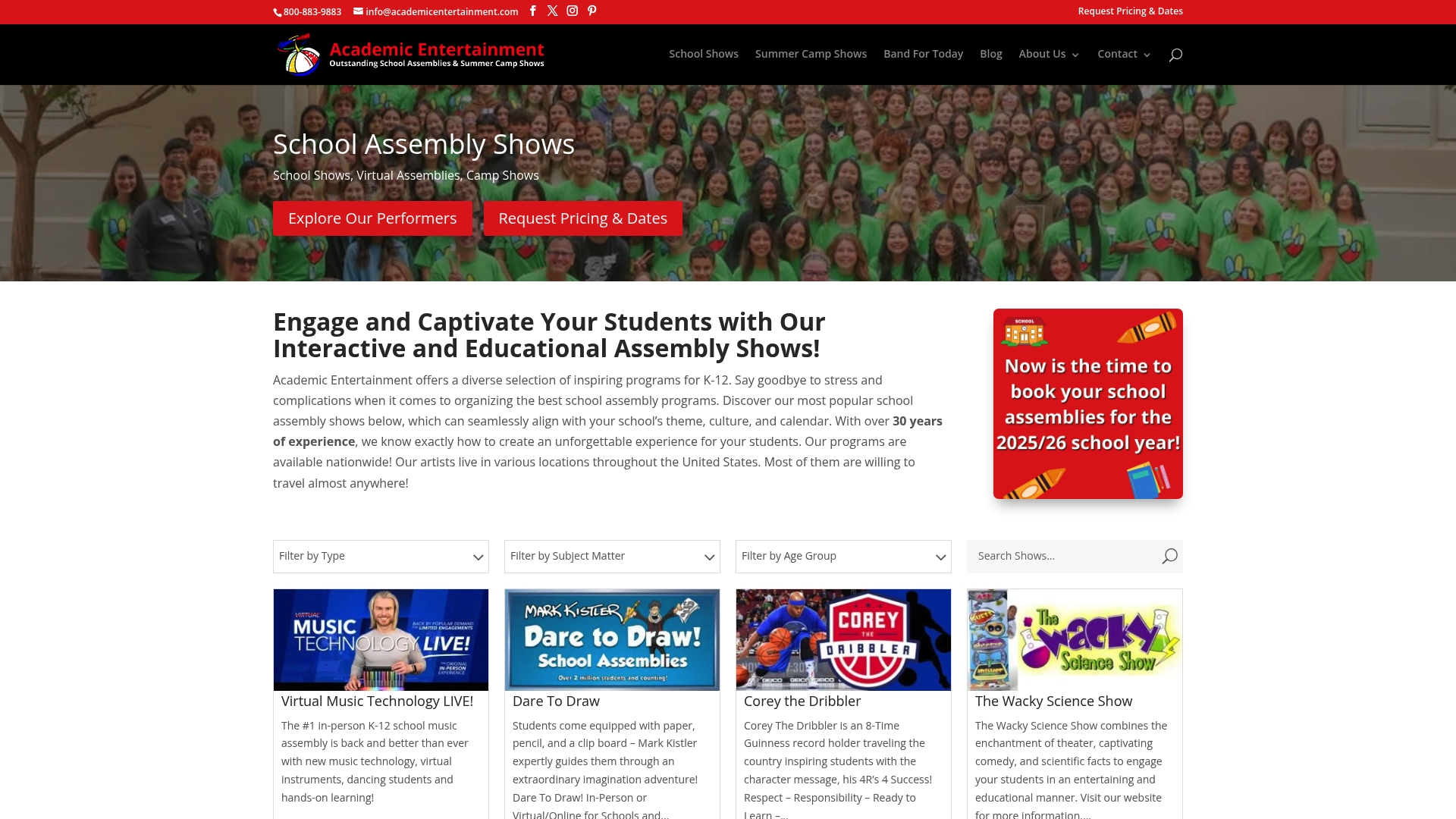
Don’t settle for assemblies that miss the mark on impact or engagement. Discover how easy it is to access a diverse selection of customized educational entertainment that aligns with your school’s objectives at Academic Entertainment. Ready to plan your next successful assembly visit https://www.academicentertainment.com/ now and explore our wide range of programs—from inspiring character education to exciting science shows like The Wacky Science Show—that make every event unforgettable and effective.
Frequently Asked Questions
How can I assess my school’s needs for assemblies?
To assess your school’s assembly needs, gather input from teachers, administrators, parents, and students. Use surveys or focus groups to identify specific learning objectives and areas where assemblies can enhance student engagement and performance.
What types of themes should I consider for school assemblies?
Consider themes that align with your educational objectives, such as STEM engagement, character development, cultural awareness, or social emotional skills. Select programs that resonate with your students’ interests and match their developmental stages.
How do I choose engaging assembly shows for my students?
Research educational entertainment options that combine interactive elements with meaningful content. Evaluate shows based on criteria like age appropriateness, curriculum relevance, and student engagement potential to ensure they align with your school’s learning goals.
What logistics should I plan for on assembly day?
Create a detailed timeline that includes setup, student supervision, and communication protocols among staff. Confirm technical requirements, seating arrangements, and roles for staff members to ensure a smooth assembly experience.
How can I evaluate the impact of assemblies on student learning?
Design a multi-dimensional evaluation framework that includes pre and post assembly surveys to capture student engagement and knowledge retention. Analyze the feedback systematically to track academic performance changes related to assembly themes over time.
Recommended
- How to Make School Assemblies Even More Fun – Academic Entertainment
- Understanding the Role of Assemblies for Elementary Students – Academic Entertainment
- What’s The Purpose Of An All-School Assembly – Academic Entertainment
- Best High School Assembly Activities and Games Idea for Students
- Fun Food Safety Games for Kids in Schools and Restaurants – Probe IT