Over half of American schools report challenges meeting students’ diverse health education needs while keeping engagement high. School administrators understand that traditional lessons often fall short when tackling complex wellness topics for all learners. Health education assemblies offer a powerful solution, uniting entire student bodies with dynamic, age-appropriate experiences proven to improve health knowledge and participation. This overview reveals how strategic assemblies address wellness, mental health, and inclusion—helping every American student thrive.
Key Takeaways
| Point | Details |
|---|---|
| Importance of Assemblies | Health education assemblies provide comprehensive health messaging and facilitate student engagement across K-12 settings. |
| Dynamic Learning Experiences | These assemblies utilize interactive presentations and multimedia content to effectively communicate health concepts. |
| Actionable Health Behaviors | The assemblies aim to motivate students to adopt positive health attitudes and develop practical skills for personal wellness. |
| Collaborative Planning | Successful implementation requires collaboration with health professionals to ensure content accuracy and relevance to student populations. |
Defining Assemblies in Health Education
Health education assemblies represent strategic large-group learning experiences designed to communicate essential health information to students across K-12 educational settings. These structured events serve as powerful platforms for delivering comprehensive health messaging that extends beyond traditional classroom instruction. National health education standards frame these assemblies as critical opportunities for introducing prevention strategies, wellness concepts, and skill-building approaches that support holistic student development.
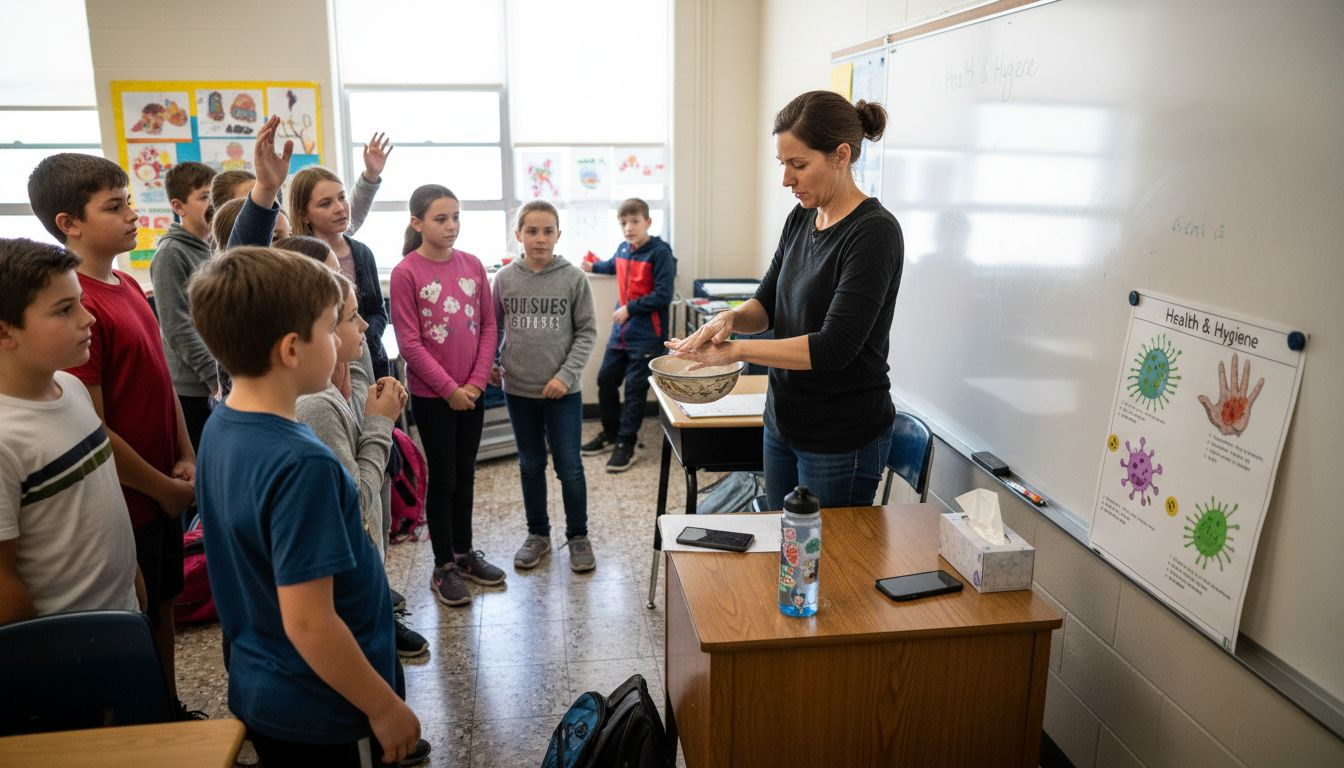
Unlike standard classroom lessons, health education assemblies offer unique advantages in reaching entire student populations simultaneously. These gatherings enable schools to address complex health topics through dynamic presentations, interactive demonstrations, and engaging multimedia content. School-wide health assemblies can cover diverse subjects including nutrition, mental wellness, physical fitness, substance prevention, and personal safety, creating a unified approach to health awareness that transcends individual classroom limitations.
The core purpose of these assemblies centers on transforming health knowledge into actionable student behaviors. UNESCO’s global health education framework emphasizes that effective assemblies must go beyond information transmission, focusing instead on motivating students to develop positive health attitudes and practical life skills. By presenting health information through compelling storytelling, expert presentations, and age-appropriate content, schools can create memorable learning experiences that resonate with students long after the assembly concludes.
Pro tip: When planning health education assemblies, collaborate with local health professionals to ensure content is scientifically accurate, culturally sensitive, and developmentally appropriate for your specific student population.
Types of Health Education Assemblies
Health education assemblies span a diverse range of formats and topics designed to address the comprehensive wellness needs of students from elementary through high school. K-12 health education programming includes multiple assembly types that target different aspects of student health, each tailored to specific age groups and developmental stages. These assemblies can be categorized into several key formats: preventive health, intervention-focused, awareness campaigns, and interactive skill-building events.
Preventive health assemblies concentrate on early education and awareness about critical health topics. These might include presentations on nutrition, physical fitness, disease prevention, and personal hygiene. Interactive demonstrations, such as the Magic of 5 a Day program focusing on dietary habits, allow students to engage directly with health concepts. Mental health and wellness assemblies represent another crucial category, addressing topics like stress management, emotional intelligence, and positive coping strategies for students navigating complex social and academic environments.
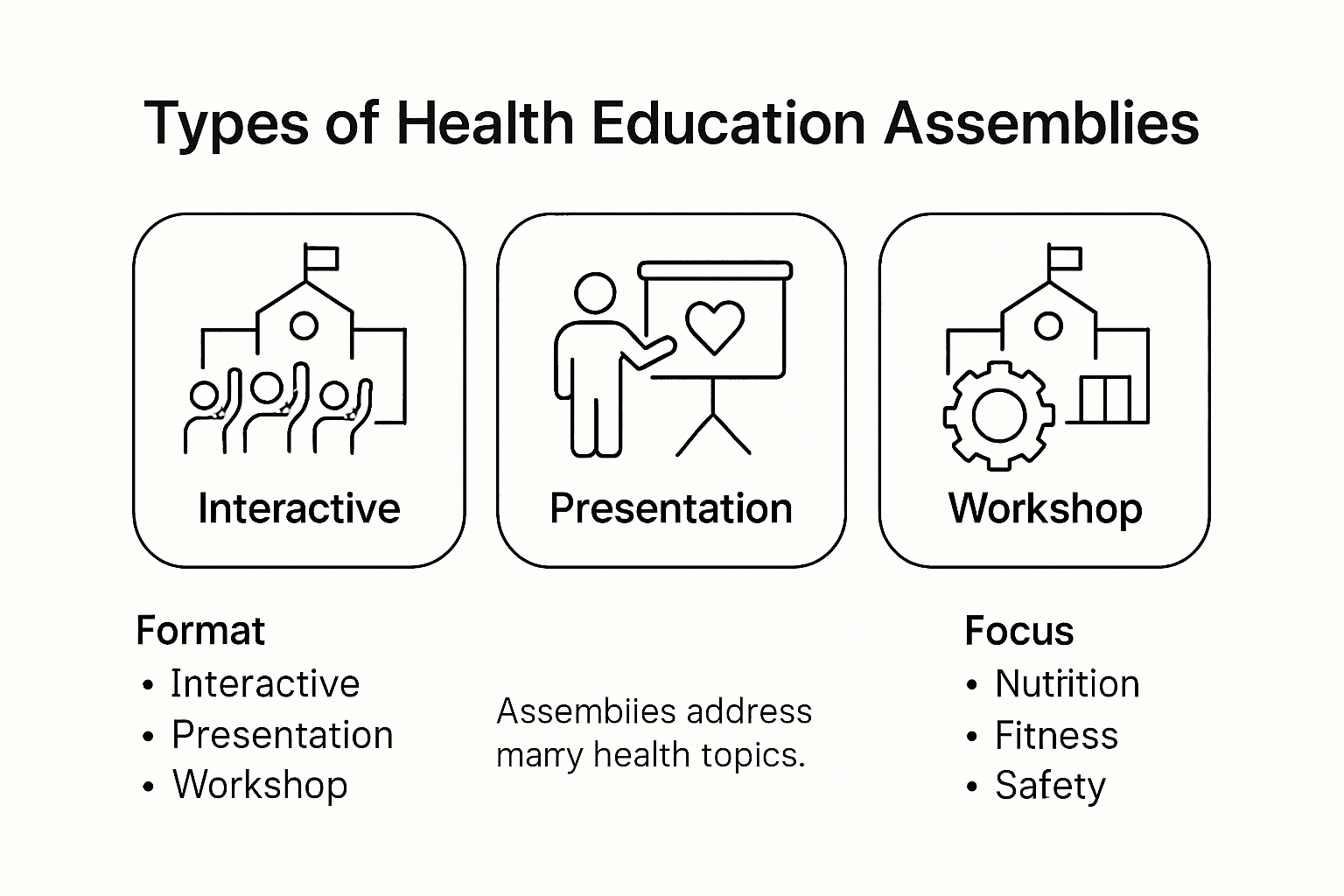
The Centers for Disease Control’s school health guidelines emphasize the importance of age-appropriate content and engagement strategies. Specialized assemblies like the bFit show and Flamenco Fit demonstrate how movement and cultural experiences can be integrated into health education. These dynamic programs not only educate students about physical wellness but also promote cultural awareness and inclusive approaches to health. Additional assembly types might include substance abuse prevention, sexual health education, safety training, and community health awareness initiatives that connect students with broader wellness resources.
Pro tip: When selecting health education assembly programs, prioritize interactive, multimedia approaches that encourage student participation and provide practical, actionable health information relevant to their specific developmental stage.
Key Features of Magic of 5-a-Day, bFit, and Flamenco Fit
Health education assemblies leverage innovative programs that engage students through interactive and targeted approaches. The Magic of 5-a-Day assembly program is designed specifically for PreK to grade 6. It uses magic, comedy, audience participation, and visual aids to teach elementary students why they should eat at least five servings of fruits and vegetables a day. Its unique methodology of using “color groups” for fruits and vegetables shows how the colors support different parts of the body. By using magic, comedy, and interactive lessons, the program creates a multifaceted approach to nutrition education that extends beyond traditional lecture-style presentations.
bFit represents another transformative health assembly program. It teaches kids to bFueled, bActive, and bCreative, choosing healthier foods, getting 60 minutes of activity a day, and finding fun ways to move, even during screen time. This assembly uses magic, comedy, juggling, music, and a lot of audience participation to get students excited about healthy eating, nutrition, excercise and overall wellness.
Flamenco Fit! is a 45-minute, PreK-12 assembly that gets students moving, blending fitness and dance so kids build strength, posture, and heart health while having “epic fun”. This show mixes high-energy participation with true, kid-friendly facts about how bodies move. Therefore helping students learn safe, useful wellness knowledge while they dance.
Pro tip: When selecting health assembly programs, evaluate their ability to create interactive, memorable experiences that connect multiple learning domains—physical health, emotional well-being, and cultural understanding.
Here’s a quick comparison of three popular health assembly programs and their distinctive benefits:
| Program | Core Focus | Engagement Strategy | Impact Area |
|---|---|---|---|
| Magic of 5-a-Day | Nutrition habits | Characters, family outreach | Healthy eating |
| bFit | Fitness & wellness | Goal-setting, flexible activity | Physical & emotional health |
| Flamenco Fit | Cultural fitness | Dance, teamwork | Movement & diversity |
Benefits for Student Engagement and Wellness
Health education assemblies represent powerful mechanisms for driving student engagement and comprehensive wellness across K-12 educational environments. School health initiatives directly link healthy behaviors with academic achievement, creating a holistic approach to student development that extends far beyond traditional classroom learning. These dynamic programs engage students through interactive experiences that transform abstract health concepts into tangible, actionable insights, ultimately motivating students to make informed decisions about their personal well-being.
Student engagement emerges as a critical outcome of well-designed health assemblies. By presenting health information through compelling storytelling, interactive demonstrations, and culturally relevant content, these programs capture students’ attention in ways traditional lectures cannot. The Magic of 5-a-Day, bFit, and Flamenco Fit programs exemplify this approach by integrating movement, cultural awareness, and personalized learning experiences that speak directly to students’ diverse interests and learning styles. Such approaches not only educate but also inspire students to view health as an exciting, empowering journey of personal growth and self-discovery.
The long-term benefits of these engagement strategies extend well beyond immediate health knowledge acquisition. By creating positive, memorable experiences around health topics, schools can fundamentally reshape students’ attitudes toward wellness, physical activity, and personal responsibility. These assemblies help students develop critical skills like emotional intelligence, self-awareness, and proactive health management. Moreover, they provide safe, supportive environments for students to explore complex health topics, ask questions, and build confidence in making healthy lifestyle choices that can impact their academic performance and overall quality of life.
Pro tip: Design health assembly programs that prioritize student interaction, personal relevance, and multi-sensory learning experiences to maximize engagement and long-term wellness impact.
Practical Considerations for Schools Using Assemblies
Implementing health education assemblies requires strategic planning and thoughtful integration into the broader educational ecosystem. Schools must carefully evaluate assembly programs to ensure they align with developmental stages, curricular objectives, and the unique needs of their student populations. This process involves comprehensive assessment of program content, delivery methods, and potential long-term impact on student wellness and academic performance.
Successful assembly implementation demands a multifaceted approach that considers several critical factors. Schools should develop a robust framework for selecting and evaluating health education programs, which includes examining the credibility of program providers, assessing age-appropriate content, and ensuring cultural sensitivity. Key considerations include the program’s ability to engage students, its alignment with existing health curriculum, and its potential to create meaningful, lasting behavioral changes. Programs like Magic of 5-a-Day, bFit, and Flamenco Fit demonstrate how targeted, interactive approaches can effectively address complex health topics while maintaining student interest.
Logistical planning plays a crucial role in maximizing the effectiveness of health education assemblies. School administrators must coordinate multiple elements, including scheduling, venue preparation, student grouping, and follow-up activities that reinforce assembly content. This might involve collaboration with teachers to develop complementary classroom lessons, creating opportunities for student reflection, and establishing mechanisms to measure the assembly’s impact on student knowledge and behavior. Additionally, schools should consider the financial aspects of implementing these programs, including program costs, potential grant funding, and long-term sustainability.
Pro tip: Create a comprehensive evaluation framework that includes pre and post-assembly assessments, student feedback mechanisms, and clear metrics for measuring the program’s educational and wellness impacts.
This summary table highlights essential factors schools should consider when implementing health assemblies:
| Factor | Why It Matters | Practical Steps |
|---|---|---|
| Age Appropriateness | Ensures relevance for students | Tailor content to grade level |
| Program Credibility | Guarantees trustworthy info | Vet providers and resources |
| Student Engagement | Boosts retention and impact | Include interactive elements |
| Sustainability | Supports long-term wellness | Plan for ongoing follow-up |
Elevate Your Health Education Assemblies with Engaging School Programs
Health education assemblies play a vital role in shaping positive student behaviors and fostering holistic wellness across K-12 schools. Yet, delivering interactive, age-appropriate, and culturally sensitive content that truly motivates students can be challenging. Whether you seek to enhance nutrition awareness, promote physical and emotional well-being, or celebrate cultural fitness, connecting with dynamic assembly programs is key to transforming health messages into memorable learning experiences.
Boldly address these challenges with carefully tailored, interactive shows that captivate your entire student body. At Academic Entertainment, we offer over 40 years of expertise in providing educational and entertaining assembly programs that align perfectly with health education goals. From live performances to virtual events, our diverse offerings—including dance, music, character education, and wellness-focused presentations—help schools like yours engage students deeply while reinforcing essential health concepts and positive attitudes.
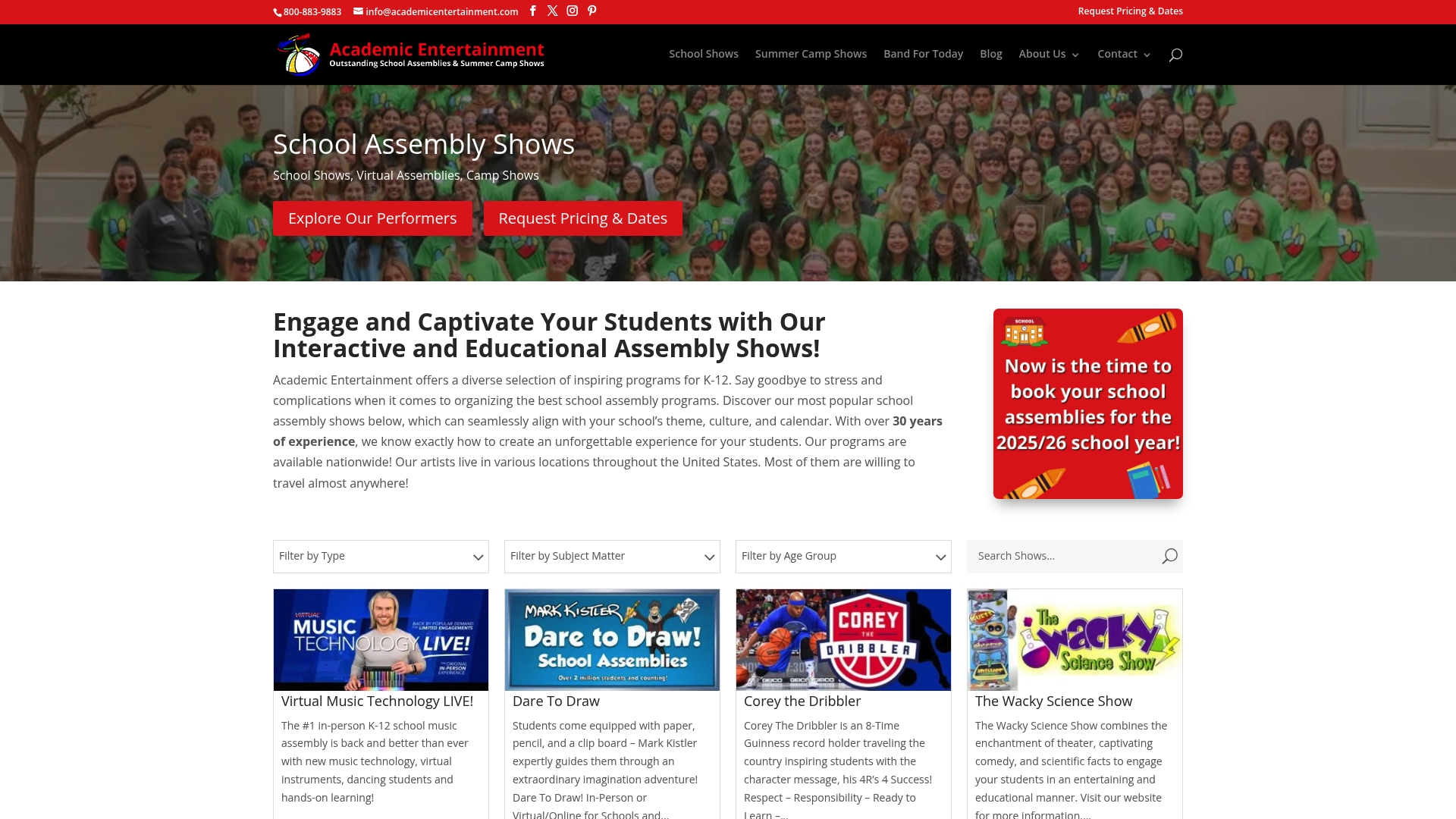
Discover how your school can boost student engagement and wellness through expertly crafted assembly programs. Visit Academic Entertainment today to explore our wide range of options and customize a health-centered event that fits your school theme and student needs. Take action now to create an interactive health assembly that inspires lasting positive change across your campus.
Frequently Asked Questions
What are health education assemblies?
Health education assemblies are large-group learning experiences in K-12 schools designed to communicate essential health information and promote wellness among students.
Why are health education assemblies important for students?
These assemblies engage students in interactive and meaningful ways, transforming health knowledge into actionable behaviors, fostering positive health attitudes, and improving overall wellness.
What types of topics are covered in health education assemblies?
Common topics include nutrition, mental wellness, physical fitness, substance prevention, and personal safety, tailored to be developmentally appropriate for different age groups.
How can schools ensure the effectiveness of health education assemblies?
Schools can collaborate with local health professionals, choose age-appropriate content, and implement engaging strategies that involve students actively, enhancing both knowledge retention and behavioral change.
Recommended
- Benefits of Assemblies: Complete Guide for Schools – Academic Entertainment
- Organizing Health Education Assemblies for Schools – Academic Entertainment
- Understanding the Role of Assemblies for Elementary Students – Academic Entertainment
- What are the benefits of morning school assemblies? – Academic Entertainment