

Over half of U.S. students face at least one chronic health issue that impacts their daily learning. Schools are searching for ways to connect health education with what matters most to their students. When assemblies are tailored to real needs, they become more than just a break from class. They offer real value, addressing problems students see and feel every day.
Quick Summary
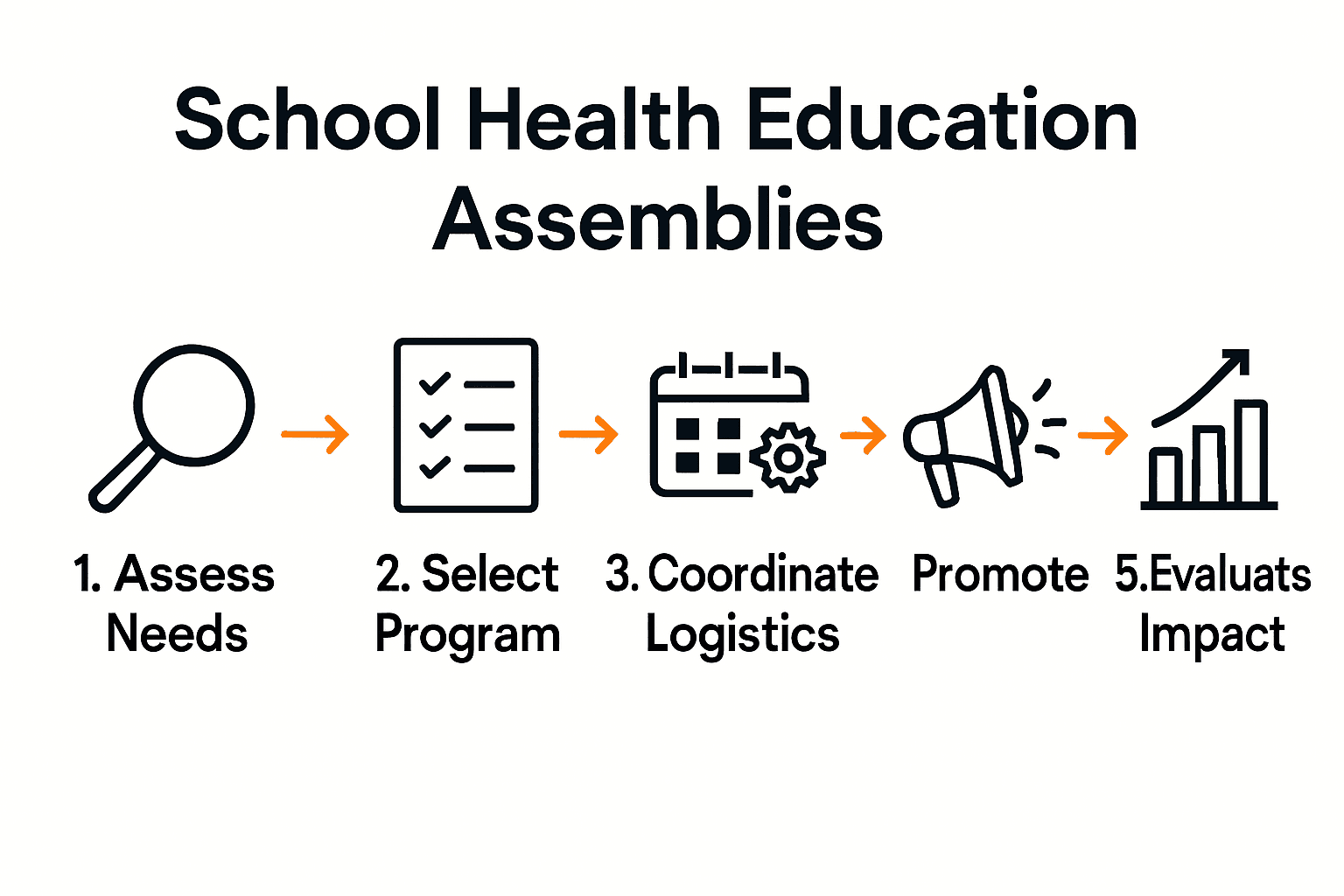
| Key Point | Explanation |
|---|---|
| 1. Assess health goals accurately | Use comprehensive assessments to identify specific health needs and gaps within your student population. |
| 2. Select engaging programs | Choose dynamic assembly programs that align with identified health needs and resonate with students. |
| 3. Coordinate logistics effectively | Ensure meticulous planning and communication to create seamless assembly experiences tailored to your school’s wellness goals. |
| 4. Promote the assembly strategically | Develop targeted communication strategies that generate excitement and reach diverse stakeholders to maximize attendance. |
| 5. Evaluate impact thoroughly | Gather specific feedback to measure effectiveness and identify improvements for future health education initiatives. |
 |
|
Step 1: Assess school health goals and student needs
Assessing health goals and student needs forms the critical foundation for designing meaningful health education assemblies that truly resonate with your student population. This initial evaluation helps you create targeted programs that address specific wellness challenges and interests within your school community.
The Centers for Disease Control and Prevention provides an exceptional self-assessment tool called the School Health Index that can guide this crucial first step. This comprehensive resource allows schools to systematically examine their current health promotion policies and practices. When conducting your assessment, focus on several key areas:
- Student health data and trends
- Current wellness curriculum gaps
- Physical and mental health challenges specific to your student population
- Feedback from teachers, nurses, and counseling staff
- Recent health screening or survey results
To gather meaningful insights, consider implementing a multifaceted approach. Conduct anonymous student surveys, review existing health metrics, and schedule collaborative meetings with school health professionals. Academic Entertainment’s health and fitness school assemblies can complement your assessment by providing targeted educational experiences that fill identified wellness gaps.
Warning: Avoid making assumptions about student health needs. Hard data and direct input from students and staff will provide the most accurate roadmap for your health education strategy. Your goal is to create programs that students will find genuinely engaging and informative.

Once you complete this assessment, you’ll be ready to design health education assemblies that speak directly to your students’ specific wellness needs and interests.
Step 2: Select engaging health education assembly programs
Selecting the right health education assembly programs is crucial for capturing student attention and delivering meaningful wellness messages. Your goal is to find programs that not only educate but also inspire students to make positive health choices.
The Centers for Disease Control and Prevention emphasizes the importance of age-appropriate, culturally inclusive content that effectively engages students. When choosing assembly programs, consider these key criteria:
- Alignment with identified student health needs
- Interactive and dynamic presentation styles
- Age appropriate content and messaging
- Credible presenters with expertise in youth health education
- Programs that blend entertainment with educational value
To maximize impact, look for assembly programs that go beyond traditional lecture formats. Academic Entertainment’s health and fitness school assemblies offer innovative approaches that transform health education into memorable experiences.
Warning: Avoid programs that feel preachy or disconnected from student experiences. The most effective health assemblies create genuine connections and spark meaningful conversations about wellness.
After selecting your programs, you’ll be ready to schedule and prepare for impactful health education experiences that truly resonate with your students.
Step 3: Coordinate logistics and program customization
Coordinating logistics and customizing health education assembly programs requires strategic planning and clear communication. Your objective is to create a seamless experience that maximizes educational impact while meeting your school’s specific wellness goals.
The Centers for Disease Control and Prevention recommends developing a comprehensive action plan that integrates health program details into your overall School Improvement Plan. When coordinating logistics, focus on these critical elements:
- Confirm precise scheduling and venue requirements
- Establish clear communication channels with assembly presenters
- Verify technical and audiovisual equipment needs
- Develop a comprehensive communication plan for students and staff
- Create backup contingency strategies
Academic Entertainment’s interactive assembly ideas can help you design customized programs that align perfectly with your school’s unique wellness objectives. Work closely with presenters to tailor content to your specific student population and health assessment findings.
Pro Tip: Request a pre assembly consultation to discuss your school’s specific health education goals and allow presenters to adapt their approach accordingly. This collaborative process ensures maximum relevance and student engagement.
Once logistics are finalized, you will be prepared to deliver a transformative health education experience that inspires and educates your students.
Step 4: Promote the assembly to maximize participation
Successfully promoting your health education assembly requires strategic communication that generates excitement and ensures maximum student engagement. Your goal is to create anticipation and demonstrate the value of the upcoming program.
The Centers for Disease Control and Prevention emphasizes the importance of engaging multiple stakeholders when promoting health initiatives. Develop a comprehensive communication strategy that reaches students, teachers, parents, and the broader school community through various channels:
- Create eye catching posters and digital announcements
- Use school newsletter and email communications
- Leverage social media platforms
- Incorporate student leadership and peer ambassadors
- Design preview materials that highlight the assembly’s unique value
Hosting a successful school assembly requires thoughtful promotion that connects directly with student interests. Consider involving student council members or health club representatives to help spread the word and generate peer enthusiasm.
Warning: Avoid generic marketing approaches. Tailor your promotional messages to address specific student health concerns and interests identified during your initial needs assessment. Authentic communication builds genuine interest.
With an effective promotion strategy, you will set the stage for a powerful health education experience that students are eager to attend and engage with deeply.
Step 5: Evaluate assembly impact and gather feedback
Evaluating the impact of your health education assembly is crucial for understanding its effectiveness and improving future programs. Your goal is to collect meaningful insights that demonstrate the assembly’s value and identify areas for enhancement.
PubMed research emphasizes the importance of assessing school health education programs to determine their effectiveness in promoting health enhancing behaviors. Develop a comprehensive feedback strategy that captures multiple perspectives:
- Create targeted student surveys with specific questions
- Conduct focus groups with student representatives
- Gather feedback from teachers and staff
- Collect quantitative data on student knowledge and attitudes
- Track long term behavioral changes related to the assembly topics
Understanding interactive assemblies can help you design more effective evaluation methods. Consider using both immediate feedback mechanisms and follow up assessments to capture the full impact of the health education program.
Warning: Avoid generic feedback forms. Design questions that directly relate to the specific health topics and learning objectives of your assembly. Specific targeted feedback provides the most actionable insights.
By systematically evaluating the assembly impact, you will continuously improve your health education approach and demonstrate tangible value to students, parents, and school administrators.
Bring Health Education Assemblies to Life with Expertly Tailored Programs
Organizing school health education assemblies can feel overwhelming when trying to address your students’ unique wellness needs while keeping them fully engaged. This article highlights the importance of carefully assessing student health goals, selecting age-appropriate and interactive programs, and customizing logistics to maximize impact. If you want to create memorable health and wellness experiences that truly connect with your students, consider partnering with a trusted resource.
At Academic Entertainment, we understand the challenge of designing assemblies that educate, inspire, and resonate. With over 40 years of experience, our wide selection of live and virtual health and fitness school assemblies aligns perfectly with the targeted wellness objectives you identify in your school’s needs assessment. Our proven approach combines interactive presentations and expert educators who bring health topics to life in ways that spark student enthusiasm and meaningful conversations. Start crafting your impactful health education assembly today by exploring our health and fitness school assemblies that support your goals at every stage. Visit Academic Entertainment now to discover how easily you can book and customize programs that fit your school’s unique vision and inspire positive student health choices.
Frequently Asked Questions
How do I assess student health needs before organizing a health education assembly?
To assess student health needs, conduct anonymous surveys, review existing health metrics, and gather feedback from teachers and counselors. Aim to identify at least three key health challenges within your student population to inform your program selection.
What criteria should I use to select health education assembly programs?
When selecting assembly programs, focus on alignment with identified health needs, interactive presentation styles, and age-appropriate content. Evaluate at least five options to find the best fit for your students’ interests and wellness goals.
How can I promote the health education assembly effectively?
Promote the assembly by using engaging communication tools like posters, newsletters, and social media. Involve student leaders to help share the message and create excitement among your peers, aiming for a 30% increase in attendance compared to previous events.
What steps should I take to customize the assembly program for my school?
To customize the assembly program, initiate a pre-assembly consultation with presenters to discuss your specific health goals and student needs. Collaboratively adapt the content to ensure it resonates with your students, targeting at least two unique aspects of their health concerns.
How can I evaluate the impact of the health education assembly?
Evaluate the assembly’s impact by designing targeted student surveys and gathering feedback from teachers and staff. Collect data immediately after the event and conduct follow-up assessments within 30 days to measure knowledge retention and behavioral changes.
What should I include in the feedback strategy for the assembly?
Include a mix of surveys, focus groups, and quantitative data collection in your feedback strategy to gather comprehensive insights. Design feedback instruments specifically focused on the health topics addressed, aiming for a 75% response rate from attendees for effective analysis.
Recommended
- 3 Health and Fitness School Assemblies to Better Your Students – Academic Entertainment
- Best High School Assembly Activities and Games Idea for Students
- Understanding the Role of Assemblies for Elementary Students – Academic Entertainment
- What’s The Purpose Of An All-School Assembly – Academic Entertainment


