Why Live Performances Belong in Every K-12 School’s Calendar
By Whitney | Academic Entertainment | Updated September 2026
A theater troupe walks into a gymnasium, and for the next forty-five minutes, three hundred kids who were fidgeting through morning announcements are completely still, completely locked in. That shift — from distracted to riveted — is why live performance has quietly become one of the most effective tools schools have for reaching students who don’t respond to a textbook the same way.
Live performances in K-12 schools cover a lot of ground: musical concerts, theater productions, dance, show choirs, interactive artist workshops, even livestreamed shows for districts spread across a wide area. What they share is a simple mechanic — students learn differently when a real person is performing in front of them than when they’re reading about a topic on a page. A choreographed show choir number teaches teamwork and discipline in a way a worksheet on collaboration never will. A scripted drama about a historical event sticks with students longer than the chapter it’s based on.
What the Research Actually Shows
Two studies are worth knowing if you’re building a case for a performance budget.
A University of Arkansas study on school field trips to live theater found that students who attended a live performance scored higher on tests of literary knowledge and tolerance, and retained plot and vocabulary details significantly longer than students who read the same play or watched a film version.
Separately, a large randomized study of Houston-area schools participating in arts education programs found measurable gains in writing scores and a drop in disciplinary referrals among students with regular exposure to live arts programming, alongside self-reported increases in empathy.
Neither study claims live performance is a silver bullet. But both point to the same thing: performances that are well-chosen and tied to what students are already learning move the needle on outcomes schools actually track — literacy, behavior, engagement.
The Main Formats Schools Use
- Musical concerts — build music appreciation and listening skills, often the easiest entry point for elementary schools
- Theater productions — scripted storytelling that reinforces literacy and reading comprehension
- Dance performances — introduce cultural traditions and give students a physical, non-verbal way to engage
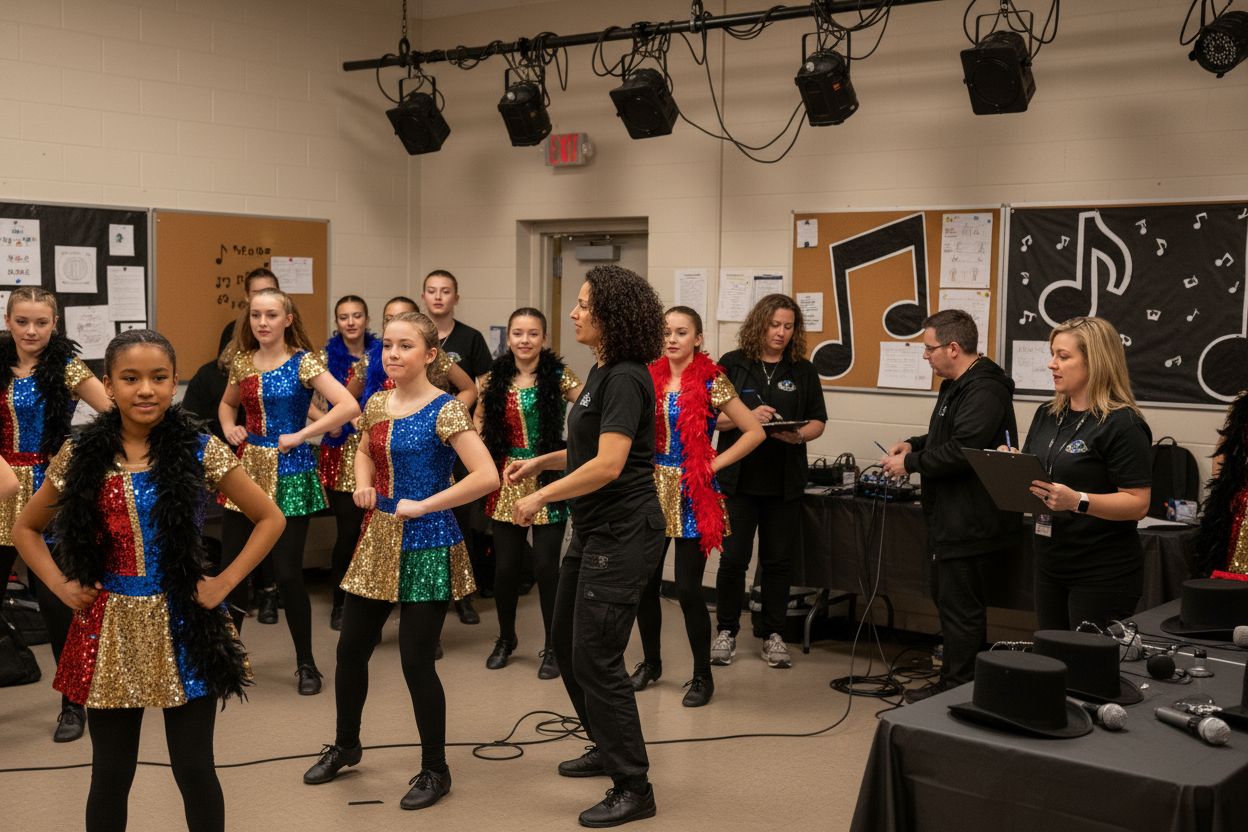
- Show choirs — combine singing and choreography; popular in middle and high schools for building confidence and ensemble skills
- Interactive workshops — artists lead hands-on activities rather than just performing, good for smaller groups or specific skill-building
- Livestreamed performances — useful for rural districts or schools without an auditorium, though they trade some of the in-person impact for reach
Matching the format to the grade level and the goal matters more than picking the flashiest option. A high-energy show choir performance works well as a whole-school assembly; a smaller theater piece with a talkback afterward does more for a single English class studying the source material.
Planning: What Actually Takes the Time
The artistic part of booking a performance is usually the easy part. The logistics are where schools get stuck:
- Book early. Popular touring programs fill their calendars a full school year out, especially around fall and spring assembly seasons.
- Decide in-person vs. virtual based on venue size, budget, and whether every grade needs to attend at once or in shifts.
- Ask for curriculum-aligned materials. A performer or agency worth working with should be able to hand you a study guide that ties the show to specific standards, not just a flyer.
- Check for a facilitator workshop option. Many touring artists offer a shorter add-on session — a Q&A or skills workshop — that extends the learning past the performance itself.
- Line up transportation and ticket funding in the same planning cycle, not as an afterthought once the date is set.
If your district doesn’t have a dedicated arts coordinator, one person should still own vendor communication, budget tracking, and the AV/equipment checklist — split across three people, these details are the ones that fall through the cracks.
Safety, Consent, and Accessibility
A few requirements aren’t optional, particularly for anything recorded or livestreamed:
- Get explicit parent/guardian consent before recording or streaming any performance that includes student participants or student footage.
- Confirm who owns the recording and how long it will be retained — this should be in writing with the performing group or agency.
- Protect students who can’t be publicly identified (custody situations, safety concerns) by building an opt-out into your consent process, not an afterthought.
- Meet WCAG 2.1 Level AA accessibility standards for any digital or livestreamed content. Large districts face an April 2026 compliance deadline; smaller districts have until April 2027, but building accessible habits now avoids a scramble later.
Paying for It
Performance budgets rarely come from one line item. The sources that come up most often:
- National Endowment for the Arts grants — federal funding specifically earmarked for K-12 arts programming, including theater and music presentations
- Save the Music Foundation — has donated over $78 million in instruments and technology to public schools since 1997, which frees up general funds for programming rather than equipment
- Booster clubs and PTA fundraising — often the fastest-moving source for a single assembly or event
- Community and local business partnerships — smaller sponsorships that cover ticket costs or transportation
Most schools that run performances consistently, rather than as a one-off, are combining two or three of these rather than relying on a single grant.
Bringing a Performance to Your School
Academic Entertainment has been booking and customizing live school performances for over 40 years, handling the touring artists, the curriculum tie-ins, and the logistics so your team isn’t managing all of it alone. If you’re planning your next assembly and want performance options matched to your grade levels and budget, reach out to see what’s available for your district.
Frequently Asked Questions
What counts as a live performance in a K-12 setting? Any artistic presentation delivered in person or via livestream to students — concerts, theater, dance, show choirs, or interactive workshops — usually built around a curriculum tie-in rather than pure entertainment.
Do live performances actually improve academic outcomes? Research on school theater trips and arts-integrated programming links regular exposure to gains in literacy, vocabulary retention, and engagement, along with fewer disciplinary incidents in some studies. The effect is strongest when performances connect to what students are already studying.
How far in advance should a school book a performance? Most touring programs recommend booking a full school year ahead, especially for fall or spring assembly slots, since popular acts fill up quickly.
What funding is available for school performances? NEA grants, the Save the Music Foundation, booster club fundraising, and local business sponsorships are the most common sources, often combined rather than used alone.
Recommended
- How to Choose Educational Performers for Engaging Events – Academic Entertainment
- Planning Guide For School Assembly Shows | Academic Entertainment
- Full Education Next article (“The Fine Art of School Engagement”): https://www.educationnext.org/fine-art-of-school-engagement-how-expanding-arts-education-affects-learning-behavior-social-emotional-growth/