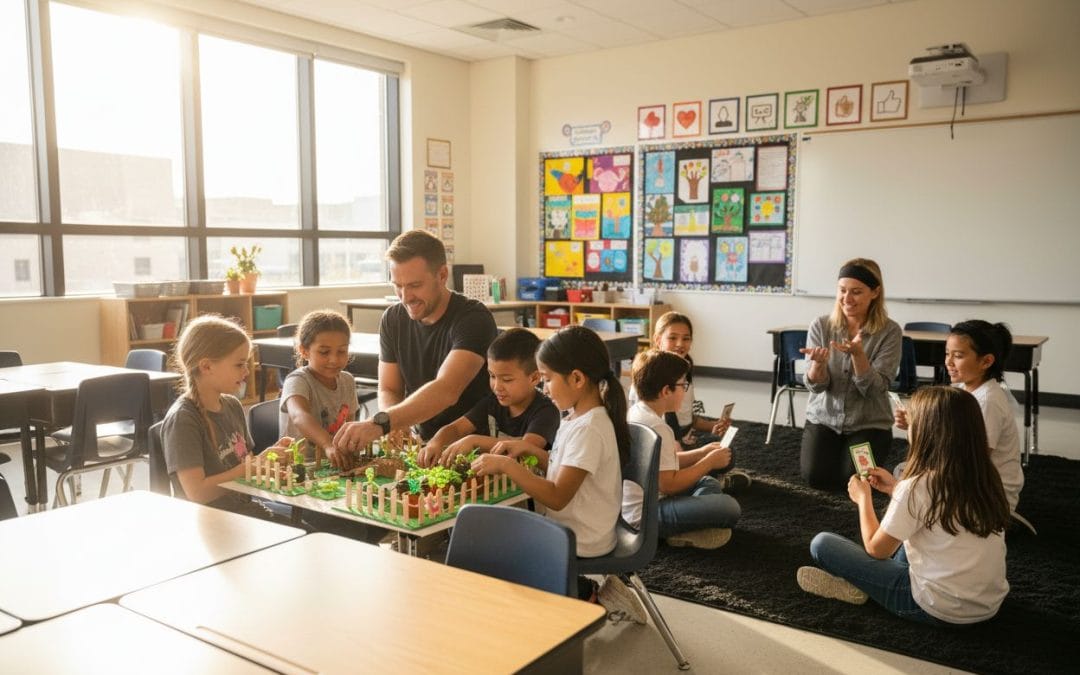
Schools everywhere push for higher test scores, yet more educators are realizing numbers alone do not predict a student’s future. Here’s something that stands out. Character education programs have been shown to reduce behavioral issues and improve academic performance at the same time. That flips the old classroom myth on its head. Because building character might matter even more than cramming facts.
Table of Contents
- Understanding Character Education And Its Importance
- The Three Rs: Respect, Responsibility, And Resourcefulness
- The Character Counts! Program Fundamentals
- Implementing The Leader In Me Framework
- The Role Of Social Emotional Learning In Character Education
- Service-Learning Projects As Character Education Tools
- Evaluating And Sustaining Your Character Education Program
Quick Summary
| Takeaway | Explanation |
|---|---|
| Implement character education systematically. | Consistent and structured character education programs help instill core values in students for personal growth and societal interactions. |
| Focus on the Three Rs: Respect, Responsibility, Resourcefulness. | These principles guide students towards ethical behavior, accountability, and proactive problem-solving in their lives. |
| Integrate Social Emotional Learning (SEL) into education. | SEL enhances character education by developing emotional intelligence and relationship skills crucial for student success. |
| Utilize service-learning projects effectively. | Connecting classroom learning with community service helps students develop empathy and social responsibility through real-world experiences. |
| Continuously evaluate and adapt character education programs. | Ongoing assessment and feedback are essential for sustaining relevant and impactful character education initiatives over time. |
1: Understanding Character Education and Its Importance
Character education represents a strategic approach to developing students’ moral and ethical foundations within school environments. This educational framework goes far beyond traditional academic learning, focusing on nurturing core values that shape students’ personal growth and societal interactions. Character education programs aim to systematically cultivate essential life skills and ethical principles that prepare young learners for complex personal and professional challenges.
At its core, character education involves intentional strategies designed to help students understand and internalize positive behavioral traits. According to Character.org, these programs are crucial in developing students who demonstrate integrity, respect, responsibility, and empathy.
The fundamental goals of character education include:
Developing emotional intelligence and self-awareness
Teaching students how to make ethical decisions
Promoting positive social interactions and conflict resolution skills
Encouraging personal accountability and mutual respect
Schools implementing comprehensive character education recognize that academic success is intrinsically linked to students’ emotional and social development. By integrating these principles into daily learning experiences, educational institutions create environments that support holistic student growth. Our guide on character development for students provides deeper insights into these transformative educational approaches.
Research consistently demonstrates that robust character education programs contribute to reduced behavioral issues, improved academic performance, and enhanced student engagement. Students who participate in these programs develop stronger interpersonal skills, greater empathy, and a more nuanced understanding of ethical behavior. These competencies are critical in preparing young individuals to become responsible, compassionate community members capable of navigating increasingly complex social landscapes.
2: The Three Rs: Respect, Responsibility, and Resourcefulness
Character education centers around three fundamental principles that form the cornerstone of student development: respect, responsibility, and resourcefulness. These core values provide a comprehensive framework for guiding students toward ethical and effective personal growth. Understanding and implementing these principles transforms educational experiences from simple academic learning to holistic personal development.
Respect forms the foundational layer of character education. Respect involves recognizing the inherent dignity of every individual, regardless of differences in background, perspective, or ability. According to Greater Good Magazine from UC Berkeley, respect goes beyond mere politeness and encompasses genuine acknowledgment of human worth.
The key aspects of respect in character education include:
Listening actively and empathetically to others
Valuing diverse perspectives and experiences
Treating all individuals with kindness and consideration
Responsibility complements respect by emphasizing personal accountability and commitment. Students learn that their actions have consequences and they are accountable for their choices. This principle encourages students to take ownership of their learning, behavior, and personal growth. Our comprehensive character education resources offer deeper insights into developing responsible young learners.
Resourcefulness represents the proactive dimension of character education. It empowers students to approach challenges creatively, develop problem-solving skills, and adapt to changing circumstances. Resourceful students demonstrate resilience, innovative thinking, and the ability to leverage available resources effectively.
By integrating these three principles, schools create dynamic learning environments that prepare students not just academically, but as well-rounded, ethical individuals capable of navigating complex personal and professional landscapes. The Three Rs provide a robust framework for developing students who are respectful, responsible, and equipped with the skills to address real-world challenges with confidence and integrity.
3: The Character Counts! Program Fundamentals
The Character Counts! Program represents a comprehensive framework for character development that has revolutionized how schools approach ethical education. Developed by the Josephson Institute of Ethics, this evidence-based approach provides educators with a structured method for teaching core ethical principles across multiple age groups and educational settings.
The program is built around six fundamental pillars of character, which create a holistic approach to moral development:
Trustworthiness: Building integrity and honest communication
Respect: Valuing individual differences and demonstrating empathy
Responsibility: Practicing accountability for personal actions
Fairness: Treating all individuals equitably and justly
Caring: Demonstrating compassion and genuine concern for others
Citizenship: Understanding community responsibilities and contributing positively
According to Character Counts Coalition, this framework provides schools with a systematic approach to embedding ethical principles into daily educational experiences. The program goes beyond traditional moral lectures by creating interactive, engaging learning environments that help students internalize these critical values.
Our character building and PBIS school assemblies offer practical implementations of these fundamental principles. The Character Counts! approach recognizes that character development is not a one-time event but a continuous process requiring consistent reinforcement and modeling.
Schools implementing this program typically see significant improvements in student behavior, academic engagement, and overall school climate. By providing clear, actionable guidelines and emphasizing positive reinforcement, the Character Counts! Program transforms abstract ethical concepts into practical life skills that students can readily understand and apply in real-world situations.
4: Implementing the Leader in Me Framework
The Leader in Me Framework transforms traditional educational approaches by empowering students to develop leadership skills and personal agency. Inspired by Stephen Covey’s 7 Habits of Highly Effective People, this comprehensive program provides schools with a structured methodology for nurturing student potential beyond traditional academic metrics.
According to Franklin Covey Education, the framework focuses on developing holistic leadership capabilities in students, emphasizing personal and interpersonal effectiveness. The program operates on the fundamental belief that every student has leadership potential waiting to be discovered and cultivated.
The core principles of the Leader in Me Framework include:
Developing self-awareness and personal responsibility
Encouraging proactive problem-solving skills
Promoting effective communication and collaboration
Creating a culture of continuous personal growth
The framework integrates seven key habits that serve as foundational leadership skills:
Be Proactive: Taking ownership of personal choices
Begin with the End in Mind: Setting clear goals and vision
Put First Things First: Prioritizing important tasks
Think Win-Win: Seeking mutually beneficial solutions
Seek First to Understand, Then to Be Understood: Practicing empathetic communication
Synergize: Valuing collaborative teamwork
Sharpen the Saw: Committing to continuous personal improvement
Our character building and educational programs complement these leadership development strategies by providing interactive experiences that reinforce these critical skills.
Schools implementing the Leader in Me Framework report significant improvements in student engagement, academic performance, and overall school culture. By shifting the narrative from traditional classroom dynamics to a leadership-oriented approach, the program empowers students to become confident, self-directed learners capable of navigating complex personal and professional challenges.
5: The Role of Social Emotional Learning in Character Education
Social Emotional Learning (SEL) represents a critical component in modern character education strategies, providing students with essential skills for personal growth, interpersonal understanding, and emotional intelligence. Unlike traditional academic frameworks, SEL focuses on developing students’ internal capacities to understand and manage emotions, establish positive relationships, and make responsible decisions.
According to CASEL (Collaborative for Academic, Social, and Emotional Learning), social emotional learning encompasses five core competencies that form the foundation of student development:
Self-awareness: Recognizing personal emotions and motivations
Self-management: Regulating emotions and behaviors effectively
Social awareness: Understanding diverse perspectives and empathetic engagement
Relationship skills: Building and maintaining positive connections
Responsible decision-making: Making ethical and constructive choices
SEL transforms character education from a theoretical concept into a practical, actionable framework. By integrating emotional intelligence skills with character development, schools create environments that support holistic student growth. Our character building and educational programs offer interactive experiences that reinforce these essential skills.
Research demonstrates that comprehensive SEL programs produce significant positive outcomes. Students who participate in robust social emotional learning initiatives demonstrate improved academic performance, reduced behavioral challenges, and enhanced interpersonal competencies. These skills prepare students not just for academic success, but for meaningful engagement in complex social environments.
Effective SEL implementation requires consistent, intentional strategies that embed emotional intelligence principles across curriculum and school culture. By treating emotional skills as fundamental learning objectives, schools can develop students who are not only academically proficient but also emotionally resilient, empathetic, and socially competent.
6: Service-Learning Projects as Character Education Tools
Service-learning projects represent a powerful approach to character education, transforming theoretical ethical principles into tangible, real-world experiences that profoundly impact student development. By connecting classroom learning with meaningful community service, these programs create dynamic opportunities for students to develop empathy, social responsibility, and practical leadership skills.
According to National Service-Learning Clearinghouse, effective service-learning initiatives provide structured experiences that integrate academic learning with genuine community engagement. These projects go beyond traditional volunteerism by creating intentional connections between service activities and educational objectives.
Key characteristics of impactful service-learning projects include:
Addressing genuine community needs
Connecting service experiences to curriculum objectives
Providing structured reflection opportunities
Encouraging student-driven initiative and leadership
The transformative power of service-learning lies in its ability to develop students’ understanding of social responsibility and community interconnectedness. Students learn critical lessons about empathy, collaboration, and personal impact that cannot be replicated through traditional classroom instruction. Our character building and educational programs emphasize these experiential learning approaches.
Typical service-learning project examples might include environmental conservation efforts, supporting local food banks, tutoring younger students, or developing community improvement initiatives. These projects enable students to apply academic skills while developing deeper understanding of social challenges and personal capabilities.
Research consistently demonstrates that students participating in well-designed service-learning programs show significant improvements in social-emotional skills, civic engagement, and personal confidence. By creating opportunities for meaningful contribution, schools can transform character education from an abstract concept into a lived experience that genuinely shapes students’ worldviews and personal development.
7: Evaluating and Sustaining Your Character Education Program
Successful character education programs require systematic evaluation and continuous improvement, transforming initial implementations into long-term, sustainable strategies that genuinely impact student development. Schools must move beyond simple implementation to creating robust, adaptive frameworks that evolve with changing educational landscapes.
According to Character.org’s National Standards, comprehensive program evaluation involves multiple interconnected dimensions of assessment and refinement. Effective evaluation goes far beyond measuring immediate behavioral changes, focusing instead on holistic, long-term student growth and institutional cultural transformation.
Critical evaluation metrics for character education programs include:
Student behavioral improvement tracking
Academic performance correlation
Staff and student engagement levels
Long-term personal development indicators
Sustaining character education requires a multifaceted approach that integrates stakeholder perspectives and maintains ongoing momentum. Our character building educational strategies emphasize the importance of continuous adaptation and collaborative development.
Key strategies for program sustainability involve:
Regular stakeholder feedback mechanisms
Consistent professional development for educators
Flexible curriculum design
Data-driven program refinement
Successful character education programs recognize that evaluation is not a one-time event but a continuous process of reflection, adaptation, and improvement. By creating dynamic, responsive frameworks, schools can ensure that their character education initiatives remain relevant, engaging, and transformative. The ultimate goal is developing not just academic knowledge, but fostering students’ intrinsic moral compasses and social-emotional capabilities that will serve them throughout their lives.
Below is a comprehensive table summarizing the main character education programs, strategies, and outcomes discussed throughout the article.
| Program/Strategy | Core Components & Principles | Key Benefits for Students |
|---|---|---|
| Understanding Character Education | Develops moral and ethical foundations, promotes emotional intelligence, self-awareness, ethical decision-making, conflict resolution, and social growth | Reduces behavioral issues, improves academics and engagement |
| The Three Rs: Respect, Responsibility, Resourcefulness | Respect: Dignity and empathy; Responsibility: Accountability and ownership; Resourcefulness: Problem-solving, resilience, adaptability | Guides ethical behavior, fosters independence, and confident navigation |
| Character Counts! Program | Six pillars: Trustworthiness, Respect, Responsibility, Fairness, Caring, Citizenship; structured, evidence-based, interactive approach | Improves behavior, engagement; builds practical ethical life skills |
| Leader in Me Framework | Seven Habits: Proactivity, Goal-setting, Prioritization, Win-Win thinking, Empathy, Teamwork, Continuous improvement; leadership-focused | Empowers leadership, self-direction, and school culture |
| Social Emotional Learning (SEL) | Five competencies: Self-awareness, Self-management, Social awareness, Relationship skills, Responsible decision making; emphasizes emotional intelligence | Increases academic performance, resilience, positive relationships |
| Service-Learning Projects | Classroom-community connections; real-world service linked to curriculum, reflection, and student initiative | Builds empathy, civic engagement, teamwork, and practical leadership |
| Evaluation and Sustainability | Ongoing assessment, stakeholder feedback, adaptable curriculum, regular improvement; tracking behavior and academic correlation | Ensures long-term impact, relevancy, and continuous student growth |
Bring Character Education to Life With Impactful School Programs
Is your school seeking real solutions to bridge the gap between theory and practice in character education? If you are looking to help students truly internalize concepts like respect, responsibility, resourcefulness, and social-emotional learning, you are not alone. Many schools struggle to transform these essential values from classroom discussions into meaningful, lived experiences. While the article “7 Examples of Character Education Programs for Schools” explores trusted frameworks such as Character Counts! and Leader in Me, many educators still face a common challenge: How can these important lessons become a vibrant part of everyday student life?
Now is the time to turn proven character education strategies into dynamic and memorable school experiences. At Academic Entertainment, you can book powerful live or virtual assemblies that engage students through interactive programs, skilled performers, and relevant topics—from anti-bullying to social-emotional development. These events are designed to inspire empathy, leadership, and positive relationships in K-12 learners. Take the next step and discover our signature character education and PBIS assemblies or explore all our school assembly offerings. Give your students the tools to live out the values your curriculum teaches. Act now and help make your school’s character education efforts truly unforgettable.
Frequently Asked Questions
What is character education?
Character education is a strategic approach aimed at developing students’ moral and ethical foundations, focusing on nurturing core values that shape their personal growth and societal interactions.
Why is character education important in schools?
Character education is important because it develops essential life skills, emotional intelligence, and ethical principles, preparing students for personal and professional challenges and contributing to improved academic performance and reduced behavioral issues.
What are the core principles of the Character Counts! program?
The Character Counts! program is based on six fundamental pillars: Trustworthiness, Respect, Responsibility, Fairness, Caring, and Citizenship, which provide a comprehensive framework for moral development in students.
How can service-learning projects enhance character education?
Service-learning projects enhance character education by connecting academic learning with community service, allowing students to experience empathy, social responsibility, and practical leadership skills through meaningful contributions to their communities.
Recommended
- 8 Effective Character Education Examples for Schools – Academic Entertainment
- 7 Key Character Education Pillars for Schools – Academic Entertainment
- What is Character Development for Students: Understanding the Basics – Academic Entertainment
- Character Building, Education, and PBIS School Assemblies – Academic Entertainment