Student engagement is not just about listening to a teacher or raising a hand in class. Students who are actively engaged outperform their peers in nearly every measurable way, from test scores to graduation rates. That may sound obvious, but most people miss what really drives those results. True engagement starts with emotional and psychological connection, not just participation, flipping the script on what learning success actually looks like.
Table of Contents
- Defining Student Engagement: What It Really Means
- The Importance Of Student Engagement In Learning
- Key Concepts And Theories Behind Student Engagement
- Practical Applications Of Student Engagement Strategies
- Real-World Impact: Case Studies And Examples Of Engagement Success
Quick Summary
| Takeaway | Explanation |
|---|---|
| Student engagement is multidimensional. | It includes behavioral, cognitive, and emotional dimensions that enhance learning experiences. |
| Active participation enhances academic performance. | Engaged students achieve higher grades and retention through consistent involvement in learning activities. |
| Collaboration fosters effective learning environments. | Schools must work together to create dynamic settings that promote active student engagement. |
| Technology boosts student interaction. | Integrating digital tools allows for personalized and adaptive learning experiences that resonate with students. |
| Focus on ongoing engagement strategies. | Institutions should continuously assess and adapt their engagement approaches to meet evolving student needs. |
Defining Student Engagement: What It Really Means
Student engagement represents a multifaceted concept that extends far beyond simple classroom participation. At its core, it describes the psychological and emotional connection students develop with their learning environment, academic experiences, and educational goals.
The Psychological Investment in Learning
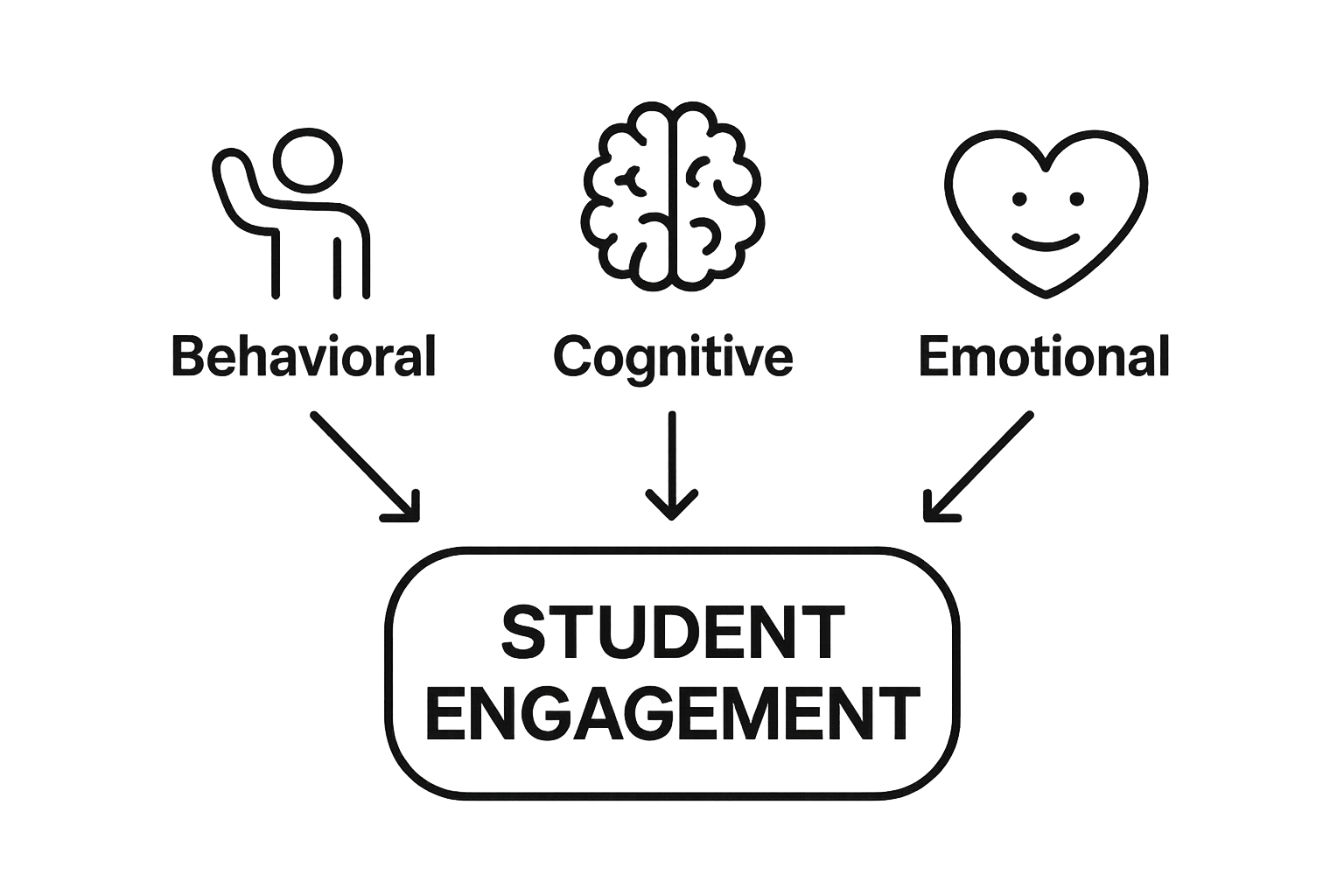
What is student engagement really about? It is the profound energy, commitment, and genuine interest students invest in their educational journey. According to research from the National Center on Safe Supportive Learning Environments, student engagement encompasses three critical dimensions:
Here is a comparison table summarizing the three dimensions of student engagement and their key characteristics, helping clarify the distinct focus of each dimension.
| Dimension | Description | Example Behaviors |
|---|---|---|
| Behavioral Engagement | Physical participation in academic and extracurricular activities | Attending class, joining clubs, asking questions |
| Cognitive Engagement | Mental investment in learning and understanding complex concepts | Critical thinking, deep learning, problem-solving |
| Emotional Engagement | Positive feelings and connections with learning experiences | Feeling excited about learning, enjoying discussions |
- Behavioral Engagement: Physical participation in academic and extracurricular activities
- Cognitive Engagement: Mental investment in understanding complex concepts and critical thinking
- Emotional Engagement: Positive feelings and connections with learning experiences
Indicators of Meaningful Student Engagement
True student engagement goes beyond passive listening or mere physical presence. It involves active participation, intrinsic motivation, and a genuine desire to learn. Students who are authentically engaged demonstrate:
- Asking thoughtful questions during lessons
- Voluntarily participating in discussions
- Showing curiosity about subject matter
- Connecting classroom learning to real world applications
- Displaying persistence when confronting challenging academic tasks
Creating an Engaging Learning Environment
Engagement is not a one-sided process. It requires collaborative efforts from educators, administrators, and interactive learning experiences that stimulate student interest.
 By designing dynamic, responsive educational environments that respect student perspectives and encourage active participation, schools can transform traditional learning spaces into vibrant communities of intellectual exploration and personal growth.
The Importance of Student Engagement in Learning
Student engagement is not merely an educational buzzword but a critical determinant of academic success and personal development. Beyond traditional academic performance metrics, engagement shapes how students perceive learning, interact with educational content, and ultimately prepare for future challenges.
Academic Performance and Long-Term Success
Engaged students demonstrate significantly higher academic achievements and long-term educational outcomes. Research from the National Center for Education Statistics reveals that students who are actively involved in their learning process consistently outperform their less engaged peers. The impact of engagement extends beyond immediate classroom results:
- Higher standardized test scores
- Improved retention of academic material
- Greater likelihood of completing advanced coursework
- Enhanced critical thinking skills
- Increased motivation for continuous learning
Psychological and Emotional Benefits
Engagement transcends academic performance, profoundly influencing students’ psychological and emotional well-being. When students feel connected to their learning environment, they develop crucial life skills such as resilience, self-confidence, and intrinsic motivation. Exploring group learning strategies can further amplify these psychological advantages by creating supportive, collaborative educational experiences.
Preparing Students for Future Challenges
In an increasingly complex and dynamic world, student engagement serves as a foundational skill for future success. By fostering active participation, curiosity, and a genuine love for learning, educational institutions prepare students not just academically, but holistically. Engaged learners develop adaptability, communication skills, and the ability to approach challenges with creativity and persistence, qualities essential in professional and personal contexts.
The following table provides an overview of several research-backed benefits of student engagement, showcasing its positive effects on both academic and personal outcomes.
| Benefit | Explanation |
|---|---|
| Higher standardized test scores | Engaged students consistently outperform less engaged peers |
| Improved retention of academic material | Greater involvement leads to better knowledge retention |
| Increased likelihood of completing advanced coursework | Engaged learners pursue more challenging academic paths |
| Enhanced critical thinking skills | Active engagement fosters deeper reasoning and analysis |
| Increased motivation for continuous learning | Engagement nurtures long-term love for learning |
| Development of resilience and self-confidence | Emotional engagement builds key life skills |
| Greater adaptability and communication | Engagement prepares students for evolving future challenges |
Key Concepts and Theories Behind Student Engagement
Student engagement is a complex construct rooted in psychological and educational theories that explore how learners connect with their academic environment. Understanding these foundational concepts provides insights into creating more effective and motivating educational experiences.
Motivational Theories and Student Investment
According to research from the National Center on Safe Supportive Learning Environments, student engagement emerges from intricate motivational processes. The Self-Determination Theory highlights three critical psychological needs that drive student motivation:
- Autonomy: The desire to have control over one’s learning journey
- Competence: The need to feel capable and effective in academic tasks
- Relatedness: The importance of feeling connected to peers and educators
Cognitive Perspectives on Learning Engagement
Cognitive theories reveal different learner approaches that significantly impact engagement. Students typically demonstrate three primary learning orientations:
- Deep Learners: Motivated by genuine understanding and mastery of subject matter
- Strategic Learners: Focused on achieving high academic performance
- Surface Learners: Primarily concerned with avoiding academic failure
Practical Application of Engagement Theories
Translating theoretical understanding into practical strategies requires intentional design of learning environments. Encouraging student participation in school activities becomes crucial in creating spaces that address psychological needs and motivational dynamics. By recognizing individual learning differences and creating supportive, interactive educational experiences, schools can foster more meaningful and sustained student engagement.
Practical Applications of Student Engagement Strategies
Transforming theoretical understanding into actionable strategies requires comprehensive and innovative approaches that address students’ cognitive, emotional, and social learning needs. Effective engagement strategies create dynamic educational environments that inspire curiosity, participation, and meaningful learning experiences.
Creating Interactive Learning Environments
Interactive assemblies represent one powerful method of boosting student engagement. According to research from Purdue University’s Innovative Learning, establishing authentic human connections and varying pedagogical approaches can significantly enhance student motivation:
- Implementing diverse instructional methods
- Encouraging active classroom participation
- Designing collaborative learning experiences
- Personalizing educational content
- Providing real world context for academic concepts
Designing Meaningful Learning Experiences
Successful engagement strategies focus on creating learning environments that respect individual student differences and learning styles. Educators can achieve this by developing adaptive teaching approaches that challenge and support students simultaneously. Key elements include:
- Promoting student autonomy
- Offering choice in learning activities
- Providing constructive and timely feedback
- Establishing clear learning objectives
- Creating opportunities for student reflection
Technology and Student Engagement
Modern educational technology offers unprecedented opportunities to enhance student engagement. By integrating digital tools and interactive platforms, schools can create more dynamic and personalized learning experiences. These technologies enable educators to track student progress, provide immediate feedback, and design adaptive learning pathways that respond to individual student needs and learning preferences.
Real-World Impact: Case Studies and Examples of Engagement Success
Student engagement transcends theoretical discussions, finding powerful validation through concrete examples that demonstrate its transformative potential in educational settings. By examining successful implementations, educators and administrators can understand the profound impact of intentional engagement strategies.
School Transformation Through Targeted Interventions
Motivational speakers represent one innovative approach to boosting student engagement. According to Washington State University’s research on case studies, strategic interventions can dramatically reshape student motivation and academic performance:
- Identifying specific engagement barriers
- Developing personalized intervention strategies
- Creating supportive learning environments
- Implementing peer mentorship programs
- Recognizing and celebrating student achievements
Measuring Engagement Impact
Successful engagement strategies are characterized by their ability to produce measurable outcomes. Schools that systematically track and analyze student participation witness significant improvements in multiple academic and social domains:
- Increased classroom participation rates
- Higher academic performance metrics
- Improved student retention
- Enhanced social and emotional learning skills
- Reduced behavioral incidents
Long-Term Educational Transformation
Engagement is not a short-term solution but a comprehensive approach to educational redesign. By understanding student experiences and continuously adapting educational strategies, institutions can create dynamic learning environments that respond to evolving student needs. The most successful schools view engagement as an ongoing process of understanding, listening, and responding to student perspectives, ultimately preparing students for future academic and professional challenges.

Transform Student Engagement Into Lasting Success
Are you searching for real solutions to create an environment that fuels behavioral, cognitive, and emotional engagement? The article you just read explains why true student involvement is not just about physical presence. It is about sparking curiosity, building confidence, and fostering a genuine connection between students and their school experience. Yet many educators struggle to achieve deep engagement with traditional methods alone. If you are facing challenges with passive classrooms or looking for ways to make learning relevant and exciting, it’s time for a new approach.

Discover how Academic Entertainment brings energy and inspiration directly to your school. Our engaging live and virtual assembly programs are specially designed to break down barriers and create dynamic, interactive learning environments. From interactive learning experiences that encourage participation to programs focused on encouraging student participation in school activities, we tailor our shows to boost motivation and connect classroom content to real life. Now is the time to put theory into practice. Let your students experience firsthand the power of engagement with our proven K-12 programs. Visit https://academicentertainment.com today and start transforming your school culture for lasting success.
Frequently Asked Questions
What is student engagement?
Student engagement refers to the psychological and emotional connection that students develop with their learning environment and academic experiences. It involves active participation, intrinsic motivation, and a genuine desire to learn.
Why is student engagement important?
Student engagement is critical for academic success and personal development. Engaged students typically achieve higher academic performance, demonstrate better retention of material, and develop essential life skills such as resilience and self-confidence.
What are the key dimensions of student engagement?
The three key dimensions of student engagement are behavioral engagement (physical participation), cognitive engagement (mental investment in learning), and emotional engagement (positive feelings towards learning experiences).
How can educators create engaging learning environments?
Educators can enhance student engagement by implementing interactive teaching methods, encouraging active participation, providing real-world context, and personalizing learning experiences to meet individual student needs.
Recommended
- Understanding Interactive Learning Experiences for Educators – Academic Entertainment
- How to Encourage Students to Participate in School Activities – Academic Entertainment
- What Are Interactive Assemblies? Understanding Their Impact – Academic Entertainment
- Understanding Benefits of Educational Entertainment for Parents – Academic Entertainment